Salakayan Festival
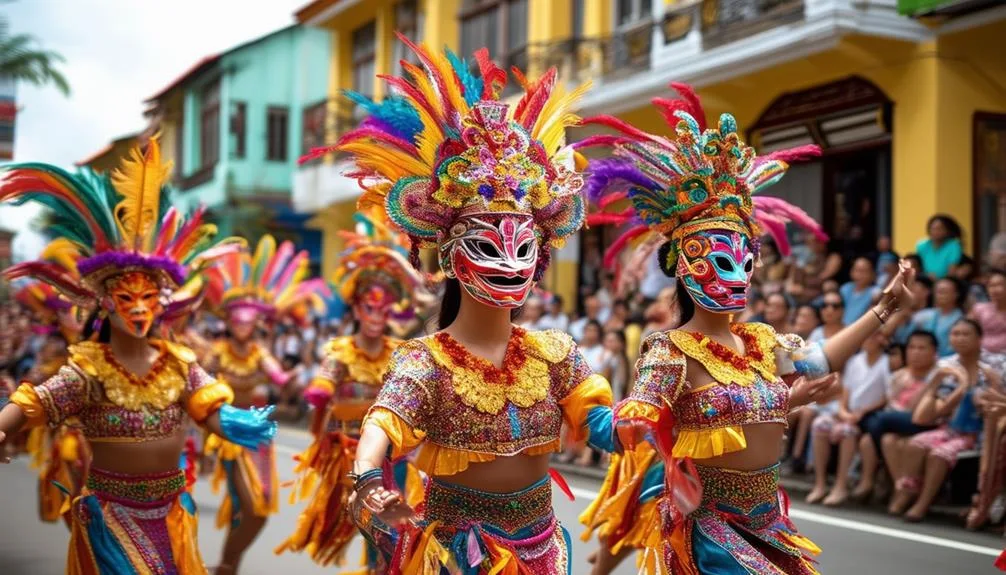
Every February, the coastal town of Miagao in Iloilo turns its streets into a stage for a fight that happened over 270 years ago. The Salakayan Festival reenacts May 7, 1754, the day townsfolk repelled a raid by Moro forces from Mindanao and kept their settlement intact.
The name itself is the plot summary. Salakayan comes from the Hiligaynon word salakay, meaning to attack. Where most Philippine town fiestas celebrate a patron saint or a harvest, Miagao built its festival around defense, and that choice shapes everything from the choreography to the costumes worn in the street.
Salakayan Festival at a Glance
| Detail | Information |
|---|---|
| Location | Miagao, Iloilo province, Panay Island |
| Held | First two weeks of February, annually |
| First celebrated | 1999 |
| Commemorates | A Moro raid on Miagao, traditionally dated May 7, 1754 |
| Main event | Street dance drama competition among Miagao’s public high schools |
| Other highlights | Food fair, trade fair, fluvial parade, Higante contest, hablon and patadyong fashion show |
| Getting there | Bus or van from Iloilo City, about 40 kilometers, roughly 1 hour |
| Nearby landmark | Miagao Church, a UNESCO World Heritage Site |
Key point
Salakayan is a civic history festival, not a religious one. Miagao’s own tourism office admits the historical record of the 1754 battle is thin: no casualty count, no confirmed battle site, and no agreement on which Moro group took part.
What Happened on May 7, 1754
The Moro Wars ran for roughly three centuries between Muslim communities in Mindanao and Spanish colonial forces allied with Christianized towns across the Visayas and Luzon. Coastal settlements on Panay Island were frequent targets because they sat exposed along open sea lanes.
Miagao, then a small parish built around the church of St. Thomas of Villanova, was one of those settlements. According to the municipal government’s own historical account, raiders attacked the town on May 7, 1754, and burned the original church structure, which stood at that time in Sitio Ubos. Residents organized a defense and drove the attackers off, and the town later built the Cotta watchtower near the same period to guard against a repeat raid.
The primary source for this account is Elias N. Failagao’s 1979 book “History of Miagao,” which the Philippine National Historical Commission vetted before Miagao adopted it as the town’s official version of events. Even so, Miagao’s tourism office is candid about the gaps: there is no surviving record of how long the fighting lasted, how many people were involved on either side, or precisely where in town it took place.
Note
Miagao’s own historians flag a timeline problem worth knowing before you visit. The current Miagao Church, the one tourists photograph as a symbol of the town’s defense, was not built until 1787 to 1797, over thirty years after the raid the festival reenacts.
A Fortress Church, Built After the Fact
Miagao Church, formally the Church of Santo Tomas de Villanueva, is part of the Baroque Churches of the Philippines, a set of four colonial-era churches that UNESCO inscribed as a World Heritage Site in 1993. Construction ran from 1787 to 1797.
The finished walls run about 4.5 feet thick, built from coral stone, adobe, and limestone, with foundations reported at roughly 18 feet deep. It sits on the highest point in town, which is why later writers describe its towers as lookouts rather than purely decorative features.
Three features drive the “fortress church” label:
- Walls thick enough to double as a defensive barrier, not just a load-bearing structure
- A hilltop position that gave watchers a clear view of the coast
- Unequal bell towers that later writers read as lookout points
That hilltop position and defensive mass earned it the label, and many retellings connect the building directly to the 1754 raid. Miagao’s municipal website pushes back on that link. It notes there is no record the church itself was ever attacked, since Moro raids after 1797 shifted to other fronts such as Mindoro, Samar, and Cavite.
The church is still worth the walk. Its facade blends Spanish, Chinese, and local motifs, including a relief of a coconut palm and a Saint Christopher figure dressed in native clothing rather than Spanish robes.
Festival Week: What Actually Happens
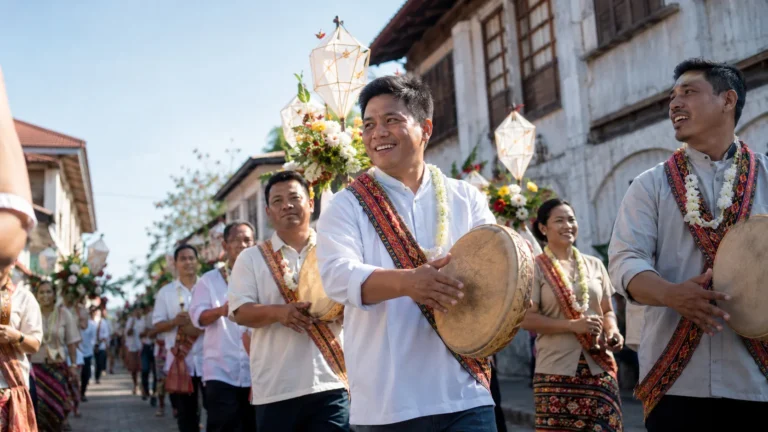
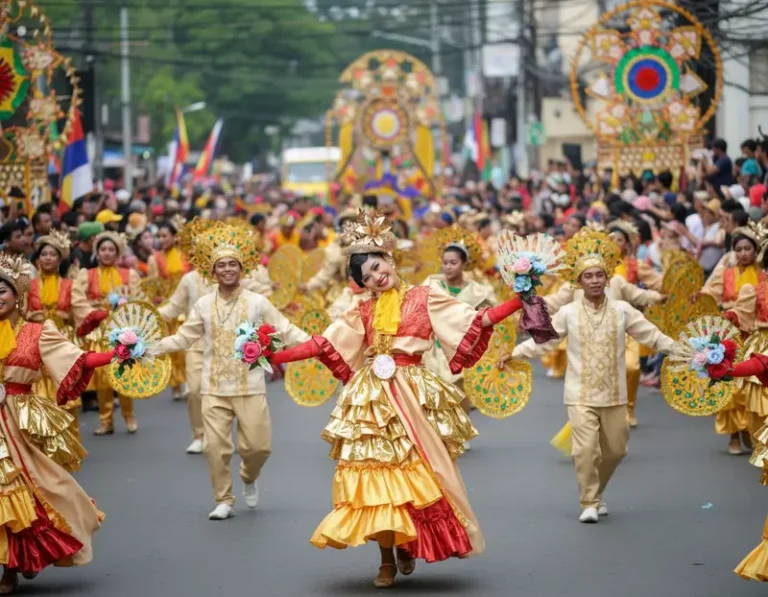
Salakayan runs as a multi-day civic celebration rather than a single parade. The centerpiece is a street dance drama competition where teams from Miagao’s public high schools reenact the 1754 battle through choreography, live percussion, and elaborate costume work.
Around that core event, the municipality schedules a full program of trade and cultural activities:
- A food fair and an agro-industrial trade fair showcasing Miagao’s produce and crafts
- A fluvial parade along the coast, tied to a blessing for the fishing season
- A Higante contest, featuring oversized mascot figures representing local historical characters
- A hablon and patadyong fashion show, spotlighting handwoven textiles native to the region
- A literary and musical contest and evening socials that close out the week
Tip
Book Miagao accommodation early if you plan to attend in the first week of February. The town has limited guesthouse inventory, and most visitors base themselves in Iloilo City and travel in for the day instead.
Tribu Kirayanon and the 2026 Results
The festival’s dance drama competition changes champions most years, since a different public high school squad, called a tribu, wins the crown. In 2026, seven school-based tribus competed at the Miagao Municipal Hall grounds on February 8 and 9, following a separate Cavalcade of Dances on February 2 that gave elementary school pupils their own showcase ahead of the main event.
Tribu Kirayanon of Kirayan National High School took the overall crown that year, sweeping the costume, choreography, and performance awards on top of the top prize.
| Award | Winner |
|---|---|
| Overall champion | Tribu Kirayanon (Kirayan National High School) |
| 1st runner-up | Tribu Baklayanon |
| 2nd runner-up | Tribu Tabun-ak |
| Street dancing winner | Tribu Kabugwason |
| Best in costume, choreography, performance | Tribu Kirayanon |
| People’s Choice Award | Tribu Kabugwason |
Miagao also fields a separate tribu, distinct from the school competitors above, to represent the town at Iloilo City’s Kasadyahan sa Kabanwahanan, the regional festival showcase held during Dinagyang week. That contingent has competed under the Salakayan name since 2012, when it won its debut year, and returned again in January 2026 after a hiatus, performing the same 1754 story for a province-wide audience with dancers drawn from local high schools.
Planning Your Visit
Miagao sits roughly 40 kilometers southwest of Iloilo City, a drive of about an hour along the coastal highway. Buses and vans leave Iloilo City’s terminals throughout the day, and jeepneys and tricycles handle short trips once you arrive in town.
Most travelers pair a Salakayan Festival trip with a wider look at the province, since Iloilo City itself has museums, heritage houses, and a revived riverside esplanade within easy reach. Our guide to things to do in Iloilo City covers those options if you want to build a longer itinerary around the festival dates.
Beyond the festival grounds, Miagao offers Rizal Tansyong Beach and the church itself, both walkable from the town center. Bring cash, since many food fair stalls and craft vendors do not accept cards, and expect the street dance drama route to close vehicle traffic during performance hours. Early February still sits in the dry season on Panay Island, so pack light clothing and sun protection for daytime events at the municipal grounds.
How Salakayan Fits Among Philippine Town Festivals
Salakayan belongs to a category of Philippine festivals built around remembered conflict rather than a saint’s feast day. The Kanlahi Festival follows a similar pattern elsewhere in the country, using dance drama to retell a founding or defining local event. Miagao’s fluvial parade also echoes coastal celebrations such as Pistay Dayat, which blesses a fishing community’s waters rather than its battle history.
Town-level festivals like these rarely draw the crowds of national events, yet they carry real weight locally, since students spend months rehearsing and families plan their year around festival week. Our complete guide to festivals in the Philippines maps how Salakayan compares with hundreds of other town celebrations by region and month.
Frequently Asked Questions
What does Salakayan mean?
Salakayan comes from the Hiligaynon word salakay, meaning to attack or to raid. Miagao chose the name because the festival reenacts a raid on the town, which is different from how most Philippine town fiestas got their names.
Where is the Salakayan Festival held?
The festival takes place in the municipality of Miagao, Iloilo province, on Panay Island in the Western Visayas. Miagao sits about 40 kilometers southwest of Iloilo City along the coastal road toward Antique.
When does Salakayan take place?
Miagao holds Salakayan during the first two weeks of February. In 2026 the Cavalcade of Dances ran on February 2, and the main street dance drama competition took place on February 8 and 9 at the Miagao Municipal Hall grounds.
What historical event does Salakayan commemorate?
It commemorates a raid on Miagao by Moro forces from Mindanao, traditionally dated to May 7, 1754, during the long conflict known as the Moro Wars. Local defenders repelled the attackers, and the town has marked that outcome as a civic milestone since 1999.
Is Miagao Church connected to the 1754 battle?
Not directly. The present Miagao Church was built between 1787 and 1797, more than three decades after the raid. Its thick walls and hilltop position later served a defensive purpose, but the municipality’s own historical notes say there is no record it was ever attacked.
Final Word
Salakayan works because Miagao is honest about what it does and does not know. The town commemorates a fight it cannot fully document, using students and craftsmanship rather than certainty, and that mix of civic pride and admitted gaps is rare for a small-town festival.
If a single street dance drama is not enough Philippine festival culture for one trip, our festivals hub lists dozens more celebrations by region and month.