From Laptop to Lechon: A Digital Nomad’s Feast in the Philippines
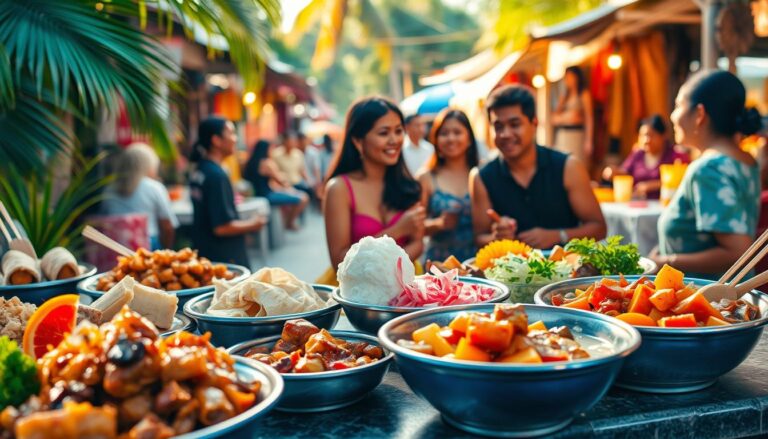
Imagine closing your laptop after a productive work session and stepping into a world of incredible flavors. This is the reality for many remote workers exploring Southeast Asia. The Philippines offers a unique blend of tropical paradise and rich culinary traditions.
Our journey explores how digital professionals can immerse themselves in local food culture. The star of this adventure is lechon, the Philippines’ most celebrated dish. This isn’t just about eating amazing food – it’s about understanding the stories behind each recipe.
Whether you’re working remotely from a beachside cafe or your home kitchen, this guide connects your professional life with authentic culinary experiences. We’ll show you how to balance work commitments with cultural exploration.
You’ll discover traditional cooking methods and modern adaptations. Our comprehensive approach covers everything from sourcing ingredients to mastering preparation techniques. This ensures you can recreate restaurant-quality dishes anywhere in the world.
Key Takeaways
- Discover how remote work and culinary exploration can beautifully coexist
- Learn about lechon’s central role in Filipino culture and celebrations
- Understand the balance between productive work days and immersive food experiences
- Gain practical knowledge for preparing authentic Filipino dishes
- Explore recipes that bridge digital nomad lifestyle with local traditions
- Learn techniques for creating professional-quality meals in any kitchen
- Connect with Philippine culture through its most iconic culinary treasure
A Digital Nomad’s Culinary Adventure
For location-independent professionals, the Philippines offers more than just beautiful beaches. It provides a gateway to rich food traditions that transform the remote work experience.
Embracing the Digital Nomad Lifestyle
The typical day begins early with coffee and focused work on a portable computer. This flexible schedule allows for afternoon explorations of local markets and street vendors.
Remote professionals can immerse themselves in authentic food experiences unavailable in traditional offices. The work-life balance becomes truly harmonious when cultural discovery follows productive mornings.
The Unique Charm of Filipino Cuisine
Filipino food combines indigenous ingredients with Spanish, Chinese, and American influences. This creates bold, savory flavors that appeal to diverse palates.
The crown jewel remains lechon, a whole roasted pork dish served at celebrations. This succulent meat represents hospitality and abundance in Filipino culture.
Traditional recipes emphasize communal eating where large dishes are shared among family and friends. Understanding this food culture goes beyond following instructions to appreciating the love in every preparation.
Mastering the Art of Lechon Preparation
Achieving restaurant-quality lechon involves balancing centuries-old practices with today’s kitchen innovations. This iconic Filipino dish represents the perfect harmony of tradition and modernity.
Traditional Techniques and Modern Twists
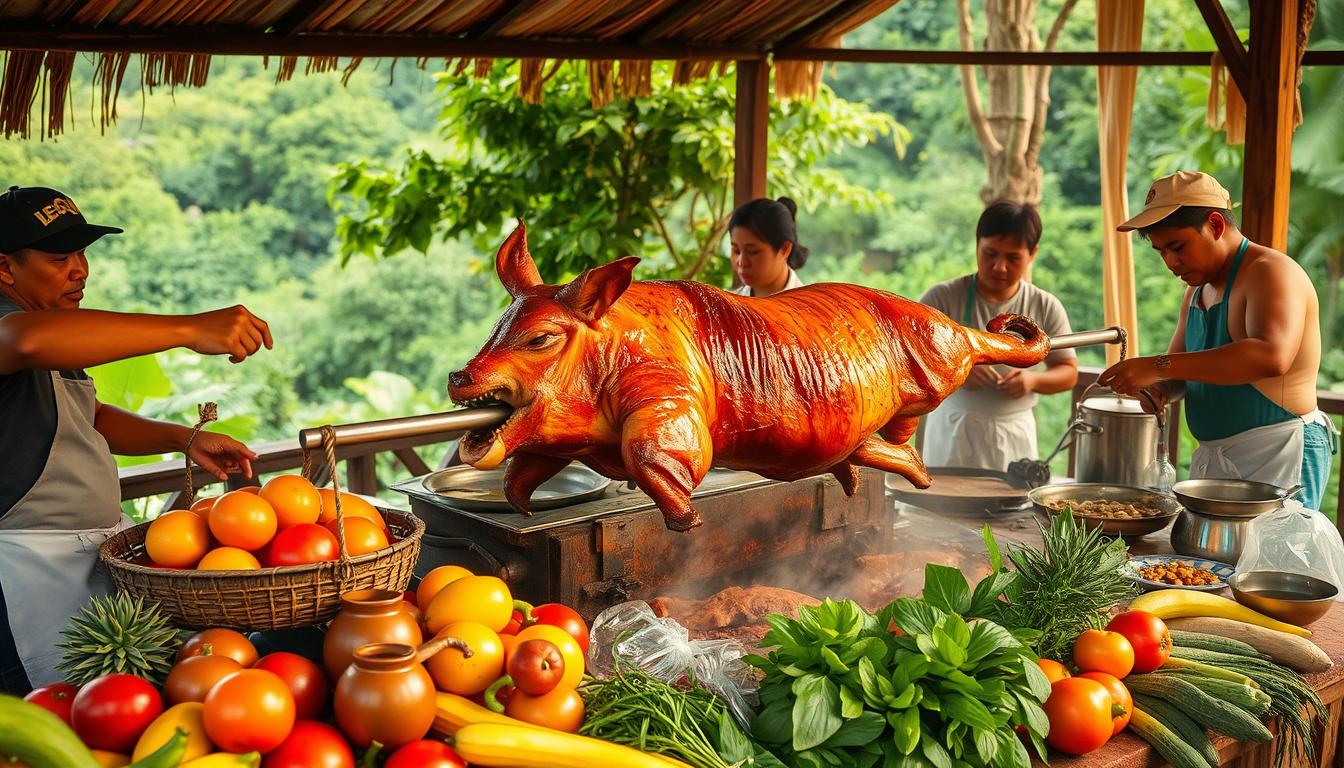
The classic method involves roasting a whole pig over charcoal for hours. This creates incredibly tender meat with crackling skin that defines authentic lechon.
For modern households, lechon liempo offers a practical alternative. Using just the pork belly portion makes this recipe accessible for smaller gatherings.
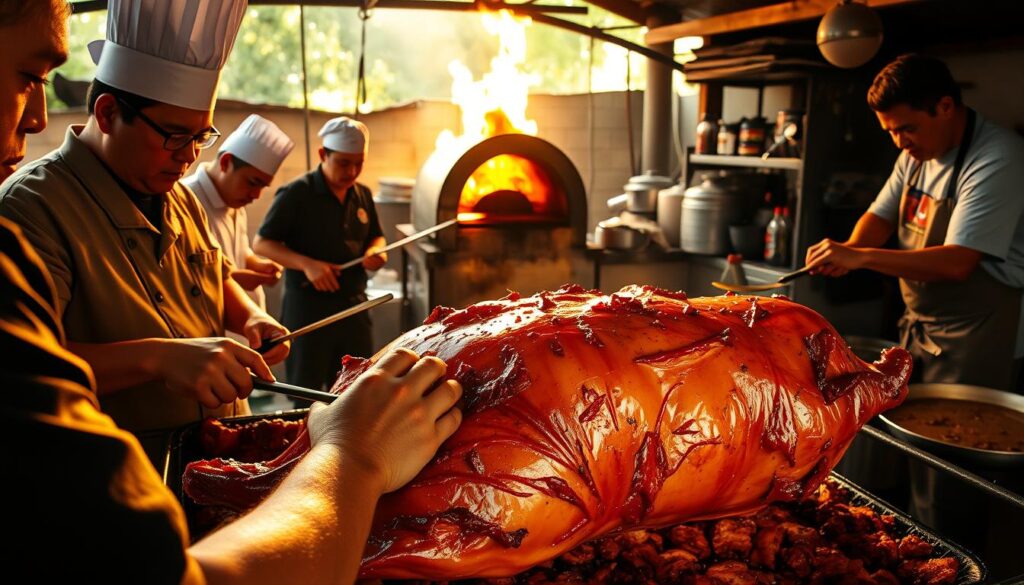
Cebu-style lechon stands out for its intense seasoning. The meat becomes so flavorful it needs no additional sauce.
Essential Tools and Quality Ingredients
Selecting premium pork with good fat distribution is crucial. Fresh spices like lemongrass and garlic create authentic flavors.
The right tools make all the difference in your roast. From rotisserie attachments to instant-read thermometers, proper equipment ensures success.
| Method | Traditional Approach | Modern Adaptation | Key Feature |
|---|---|---|---|
| Whole Pig | Charcoal spit roast | Commercial rotisserie | Festival-scale preparation |
| Pork Belly | Open fire cooking | Oven or turbo broiler | Home kitchen friendly |
| Seasoning | Hand-rubbed spices | Pre-mixed marinades | Consistent flavor profile |
| Crispy Skin | Natural air drying | Refrigerator method | Controlled environment |
Mastering the perfect crispy skin requires understanding moisture control. The balance between juicy meat and crunchy exterior defines exceptional lechon.
From Laptop to Lechon: Recipe and Cooking Techniques
Achieving that perfect balance of tender meat and crispy skin requires careful attention to preparation details. This section guides you through essential techniques for creating authentic Filipino lechon.
Prepping the Pork Belly for Perfection
Start with a 5-pound pork belly piece with the skin intact. This size serves 10-12 people and takes about 3 hours total. Proper preparation ensures excellent results.
Lay the pork belly skin-side down on your cutting board. Use a sharp knife to score the flesh diagonally every 2 inches. Repeat in the opposite direction to create diamond patterns.
Marinating, Scoring, and Seasoning Tips
Create an authentic marinade by whisking together 4 tablespoons olive oil and 2 tablespoons minced garlic. Add 2 tablespoons salt, 1 tablespoon vinegar, and 2 teaspoons ground black pepper.
Spread this mixture evenly over the scored flesh. Roll the pork belly into a tight cylinder. Secure it with butcher’s twine every inch to maintain shape during cooking.
Grilling, Rotisserie, and Oven Methods
For rotisserie cooking, arrange charcoal on either side of the grate with a foil pan between them. Cook at medium heat for 3 hours until the internal temperature reaches 160°F.
For oven preparation, simmer the pork belly in salted water for 40 minutes. Air-dry on a wire rack for one hour before broiling.
| Cooking Method | Preparation Time | Cooking Time | Key Feature |
|---|---|---|---|
| Rotisserie Grill | 45 minutes | 3 hours | Authentic charcoal flavor |
| Oven Broiling | 1 hour drying | 40 minutes | Kitchen-friendly option |
| Turbo Broiler | 1 hour drying | 40 minutes | Consistent heat distribution |
Let the cooked pork rest for 10 minutes before slicing. This allows juices to redistribute throughout the meat. Serve with steaming hot rice and authentic dipping sauce.
Conclusion
The ultimate connection between remote work and cultural immersion happens around the dining table. Your journey through Philippine cuisine transforms remote work into a rich cultural experience.
This celebrated roasted pork dish truly brings everyone together. It creates memorable gatherings that strengthen bonds between loved ones.
Don’t hesitate to try preparing this iconic meal yourself. Both outdoor rotisserie and indoor oven methods deliver fantastic results.
Remember that practice leads to perfection in the kitchen. Each attempt brings you closer to authentic Filipino flavors.
Share your culinary creations with those you cherish most. Continue exploring the diverse world of Philippine recipes beyond this classic dish.
Wherever your work takes you, bring these authentic tastes into your home. Create your own meaningful food experiences that blend professional life with cultural discovery.