Dancing Through Deadlines: Festival-Season Vibes in The Philippines
Welcome to the world of Filipino celebrations. These events are far more than simple parties. They are the heartbeat of the nation, deeply woven into the fabric of identity and pride.
In this island nation, the spirit of a festival is a year-round affair. Every month brings new reasons for a celebration. Cities and towns across the country burst into life with color, music, and dance.
These gatherings are immersive experiences. They blend religious devotion, history, and artistic expression. Unlike many Western events, you are encouraged to join in, not just watch.
The importance of these festivals is immense. They provide a vital boost to local economies by attracting visitors. They also support artisans and keep precious traditions alive for future generations.
From massive city parades to intimate rural harvest thanksgivings, the diversity is stunning. The warmth of the people is the true highlight. You are not a spectator but a guest, invited to share in the joy.
Key Takeaways
- Filipino festivals are a core part of national identity and community pride.
- Celebrations happen throughout the year, not confined to a single season.
- These events are immersive, blending religion, history, and art in a unique way.
- Festivals are economically vital, supporting local businesses and tourism.
- They play a crucial role in preserving traditional crafts and cultural practices.
- The experience is highly participatory, welcoming visitors to join the festivities.
- The range of events is vast, from huge city spectacles to small community gatherings.
Capturing the Essence of Philippine Festivals
Each festival carries the weight of history while celebrating the vitality of contemporary life. These events are not just parties but living connections to centuries of heritage.
Historical Significance and Origins
The Ati-Atihan festival dates back approximately 800 years, making it one of the oldest continuous celebrations in Southeast Asia. It honors Santo Niño while preserving ancient indigenous traditions.
Spanish colonization introduced Catholic devotion that Filipinos beautifully integrated with existing spiritual practices. This blending created a unique cultural fusion visible in today’s festivals.
Traditional Practices Unveiled
The Sinulog dance steps mimic water currents, showing how natural elements shape religious expression. These movements connect participants to both pagan roots and Christian faith.
Traditional practices include body painting, tribal costumes, and bamboo drum music. They tell stories of ancestors through ritual performances that engage the entire community.
What makes these activities special is their participatory nature. Locals and visitors join together in street dancing, creating a shared experience of culture and tradition.
This living celebration allows people to experience heritage in a dynamic way. It’s not just observation but active participation in preserving tradition.
Exploring Festival-Season Vibes in The Philippines
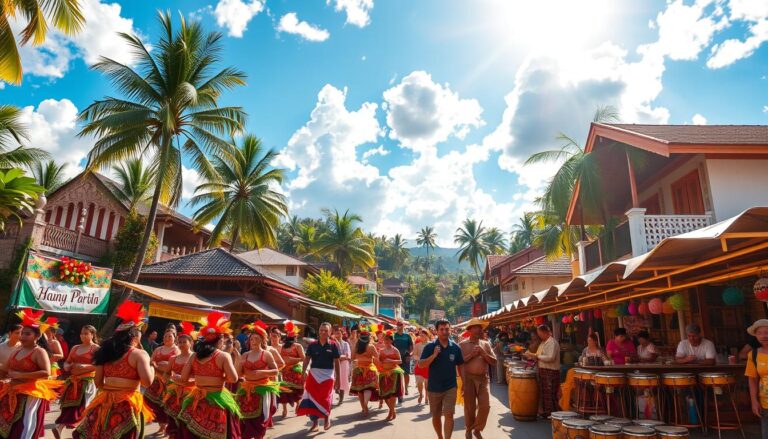
Imagine streets normally filled with traffic suddenly bursting with color, music, and dance. Entire cities transform into massive stages for cultural expression during these vibrant periods. The energy is electric and contagious.
The main celebration months run from January through May, but the spirit continues year-round. Major events like Kadayawan in August and MassKara in October ensure there’s always something happening. Nearly every month offers unique cultural experiences.
Being immersed in these events is a full sensory experience. Thundering drums and brass bands fill the air while vibrant costumes create a riot of color. The mingling scents of street food and tropical flowers add to the atmosphere.
Each region offers distinct celebrations. Coastal cities feature fluvial processions on decorated boats. Mountain communities showcase indigenous traditions and flower festivals. Agricultural areas celebrate harvest abundance with produce-decorated streets.
Modern travelers can experience multiple festivals in one trip, especially during the packed January-May season. This makes festival travel an exciting way to explore different regions and cultures.
The most remarkable aspect is the inclusive, joyful atmosphere. Strangers become dance partners as the boundary between performer and spectator blurs. The entire community—plus visitors—becomes one large, moving celebration.
| Month | Festival Name | Location | Key Features |
|---|---|---|---|
| January | Sinulog, Ati-Atihan | Cebu, Kalibo | Street dancing, religious processions |
| February | Panagbenga | Baguio | Flower floats, street performances |
| March-April | Moriones, Kaamulan | Marinduque, Bukidnon | Mask traditions, indigenous rituals |
| May | Pahiyas, Flores de Mayo | Quezon, nationwide | Harvest decorations, floral offerings |
| August-October | Kadayawan, MassKara | Davao, Bacolod | Fruit displays, smiling masks |
Historical Roots and Cultural Heritage
The rich tapestry of Philippine festivals reveals centuries of cultural evolution. These celebrations blend indigenous traditions with colonial influences in unique ways.
Colonial Influences and Indigenous Traditions
Long before Spanish arrival, native tribes held meaningful gatherings. These events celebrated harvests, peace treaties, and spiritual ceremonies.
Spanish colonization brought Catholic traditions that merged with existing practices. This created the hybrid festival culture we see today.
The Moriones festival shows this blend perfectly. Participants dress as Roman soldiers reenacting the story of St. Longinus.
Evolution Across the Centuries
Indigenous traditions continue thriving in modern celebrations. The Kaamulan festival gathers seven ethnic tribes to showcase authentic traditions.
Newer events like Viva Vigan (started 1993) demonstrate ongoing evolution. This celebration preserves ancestral homes while honoring local heroes.
Festivals have grown from simple village rituals to elaborate spectacles. They maintain core spiritual purposes while embracing tourism.
The community spirit remains central throughout these changes. Locals and visitors alike participate in living culture.
Devotion, Tradition, and Community Spirit
Beyond the music and costumes, Philippine festivals serve as living classrooms where faith, heritage, and unity converge in powerful community expressions. These gatherings transform streets into sacred spaces where reverence and celebration dance together.
Spiritual devotion forms the foundation of most celebrations. The Saulog festival in Bohol beautifully blends religious ceremonies honoring Saint Joseph with vibrant street festivities. This fusion creates a unique experience where prayer and party coexist harmoniously.
Traditional knowledge flows from elders to youth during preparation. Grandparents teach intricate dance steps while parents demonstrate costume-making techniques. This intergenerational exchange ensures cultural practices survive modernization.
Community spirit shines through months of collaborative effort. Entire neighborhoods volunteer time and resources to ensure their festival succeeds. This collective effort strengthens social bonds across economic classes and generations.
| Festival | Location | Devotion Focus | Community Aspect |
|---|---|---|---|
| Sinulog | Cebu | Santo Niño devotion | Mass street dancing participation |
| Pahiyas | Quezon | Harvest thanksgiving | Neighborhood decoration competitions |
| MassKara | Bacolod | Resilience celebration | City-wide mask making workshops |
| Kaamulan | Bukidnon | Indigenous rituals | Seven tribal communities collaborating |
These celebrations demonstrate remarkable resilience. The MassKara festival emerged during economic crisis, while Panagbenga helped heal a city after earthquake devastation. Festivals become annual reminders of a community‘s enduring spirit.
Spectacular Street Parades and Colorful Costumes
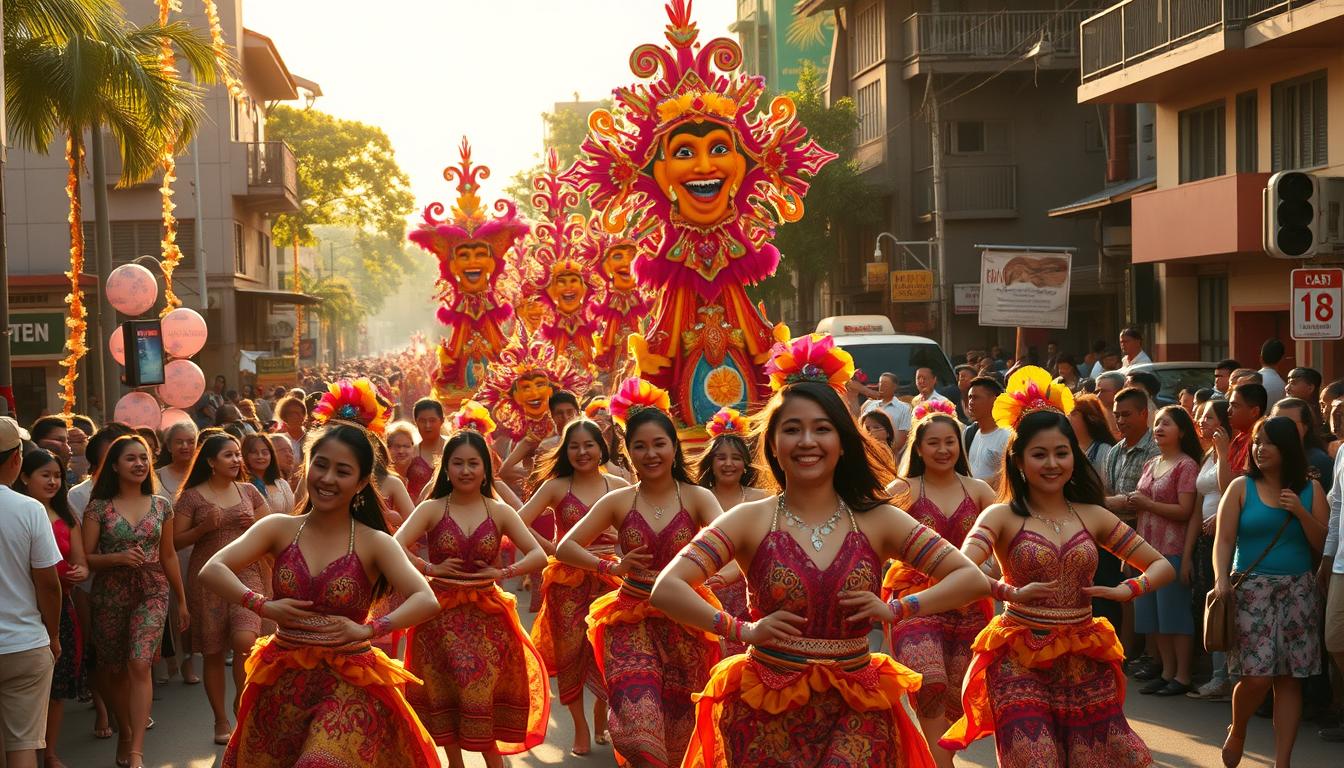
Parade routes become stages where creativity and tradition merge in spectacular displays of community artistry. Ordinary city streets transform into moving galleries of color and motion. Some processions stretch for hours, drawing hundreds of thousands of spectators.
The variety of parade elements creates an unforgettable show. Massive floats decorated with flowers, produce, or lights glide down the avenues. Giant paper mache figures called higantes tower twelve feet high. Synchronized street dancers move to thundering brass bands.
Costume artistry reaches breathtaking heights during these celebrations. Participants wear historically accurate tribal warrior attire and Spanish colonial dress. Elaborate beadwork, hand-painted fabrics, and towering headdresses showcase months of preparation. The competitive spirit drives barangays and companies to create impressive displays.
| Festival | Location | Parade Feature | Unique Element |
|---|---|---|---|
| Pasayahan sa Lucena | Lucena | Grand Parade | Elaborately designed competition floats |
| Higantes Festival | Angono | Giant Figure Parade | 12-foot paper mache figures per barangay |
| Pintados Festival | Tacloban | Warrior Parade | Body paint representing pre-colonial warriors |
| MassKara Festival | Bacolod | Electric MassKara | Colorful masks with lights and music |
Street parades democratize festival participation. Spectators line the routes for free viewing. Many events encourage spontaneous dancing, blurring lines between performers and audience. This inclusive approach lets visitors experience the celebration from within.
Religious Celebrations and Patron Saints
At the heart of nearly every Filipino town lies a special protector. Each community honors a patron saint whose feast day becomes the year’s most important spiritual event. These celebrations blend deep devotion with joyful community gatherings.
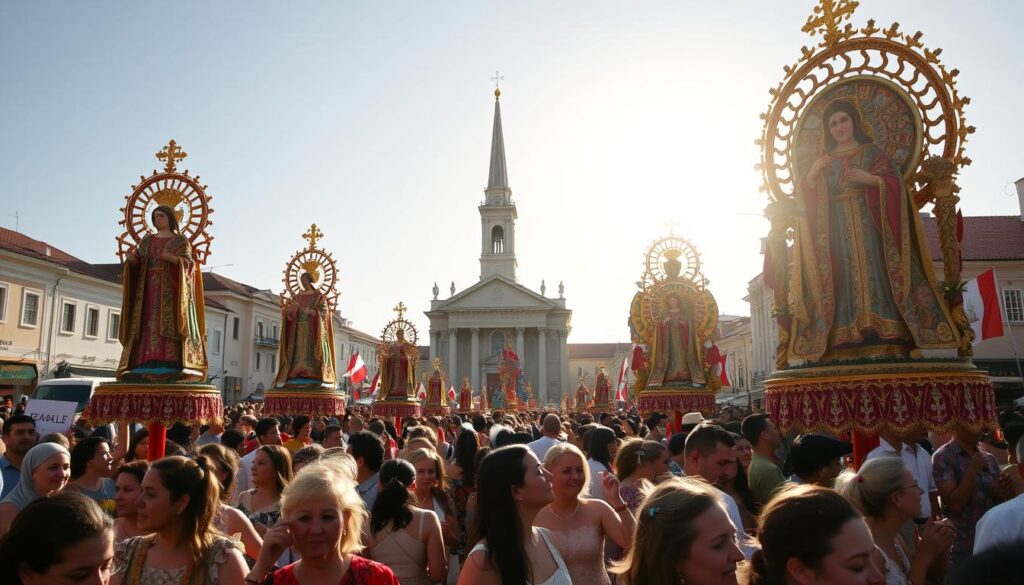
Honoring Saints in Lively Processions
Vibrant processions bring saints to the streets. Statue images travel on ornate carriages called carrozas through decorated routes. Some towns hold fluvial processions where the saint travels by decorated boat.
The Flores de Mayo festival features the beautiful Santacruzan procession. Participants dress as biblical figures while carrying flowers to Mary’s altar. This month-long celebration showcases both faith and community pride.
Spiritual and Community Rituals
Unique traditions make each feast day special. During the Carabao Festival, decorated water buffalo kneel before the church. This act shows the deep connection between agriculture and faith.
Locals prepare for months before their patron saint’s feast. The entire community comes together in prayer and preparation. What begins with solemn masses naturally flows into joyful street parties.
| Festival | Patron Saint | Unique Ritual | Date |
|---|---|---|---|
| Pahiyas | San Isidro Labrador | House decorations with harvest produce | May 15 |
| Carabao Festival | San Isidro Labrador | Water buffalo kneeling before church | May 14 |
| Flores de Mayo | Virgin Mary | Daily floral offerings throughout May | Whole May |
| Saulog Festival | Saint Joseph | Mass for city protection from disasters | May 3 |
These religious events demonstrate how people maintain centuries-old tradition while creating meaningful modern experiences. The blend of sacred and celebratory elements creates unforgettable moments for everyone involved.
Global Impact: Boosting Tourism and Local Economy
Tourism statistics reveal the staggering economic power of traditional gatherings. Major celebrations like Sinulog drew 4 million visitors in 2025, while Dinagyang attracted over half a million people.
These numbers represent more than just attendance. They translate into massive economic activity for host cities. Local businesses thrive during these peak periods.
The multiplier effect spreads through entire communities. Visitor spending on accommodations, food, and souvenirs supports countless suppliers. Artisans and performers find crucial markets for their skills.
Festivals have become strategic destination marketing tools. Each city establishes a unique identity through its signature event. This attracts both domestic and international travel year after year.
Infrastructure improvements benefit communities long-term. Temporary employment surges in hospitality and security sectors. The entire country gains international exposure through media coverage.
Diaspora Filipinos often return home during these celebrations. This strengthens cultural ties while generating foreign currency. The economic impact extends far beyond the festival dates themselves.
Culinary Delights and Festive Feasts
The true flavor of Filipino culture comes alive not just through dance and music, but through shared meals and generous hospitality. Food forms the heart of every celebration, transforming streets into open-air banquets where everyone is welcome.
At the Pahiyas festival, houses become edible art galleries. Families decorate their homes with colorful fruits, vegetables, and traditional kipling rice wafers. Visitors can freely pick these decorations, embodying the spirit of harvest sharing.
Temporary markets called tiangges spring up during events like Pasayahan sa Lucena. These vibrant streets overflow with grilled meats, tropical fruit shakes, and regional specialties. Locals and visitors alike fuel their celebration with these delicious treats.
Each region showcases its unique bounty. Kadayawan displays Davao’s exotic durian and other harvest treasures. Meanwhile, Pahiyas features Lucban’s famous longganisa sausage and kaldereta stew.
The communal feast extends beyond public spaces. Many families open their homes to strangers, serving traditional dishes passed through generations. This hospitality turns every meal into an authentic cultural experience.
Through these culinary traditions, people connect with heritage and land. Festival food becomes more than sustenance—it’s a living expression of gratitude and community identity.
Rhythms of Dance and Music in Festival Celebrations
The heartbeat of any great celebration pulses through its music and movement. In these vibrant events, choreographed dance competitions often become the main attraction.
Groups spend months perfecting routines that blend indigenous steps, colonial influences, and modern innovations.
Traditional Performances and Modern Influences
Specific dances carry deep meaning. The Sinulog’s signature two-steps-forward, one-step-back mimics water currents. It symbolizes a spiritual journey.
The Binatbatan festival turns the traditional craft of cotton-beating into a rhythmic, competitive street performance. This keeps old activities alive and exciting.
The music driving these events is just as diverse. You hear thundering indigenous drums and bamboo instruments. These sounds mix with powerful brass bands and modern pop music.
This fusion creates an irresistible energy. It invites everyone to join the moving community. The show is not just on stage but all around you.
These dances and songs do more than entertain. They tell stories of history and faith. They connect people to their culture in a dynamic, joyful way.
Diverse Festivals: From Sinulog to Pahiyas and Beyond
Across thousands of islands, Filipino communities create festivals as diverse as their landscapes. With numerous ethnic groups and varied geography, the archipelago offers hundreds of distinct celebrations. Each reflects unique regional history and local character.
Regional Highlights and Unique Traditions
The Sinulog festival in Cebu City stands as one of the grandest events. It draws millions each January to honor Santo Niño through iconic dance movements. The celebration has evolved from ancient rituals into a modern spectacle.
Meanwhile, the Pahiyas festival showcases agricultural gratitude in Lucban. Residents decorate homes with fresh produce to thank San Isidro Labrador. Visitors can freely take these colorful harvest offerings.
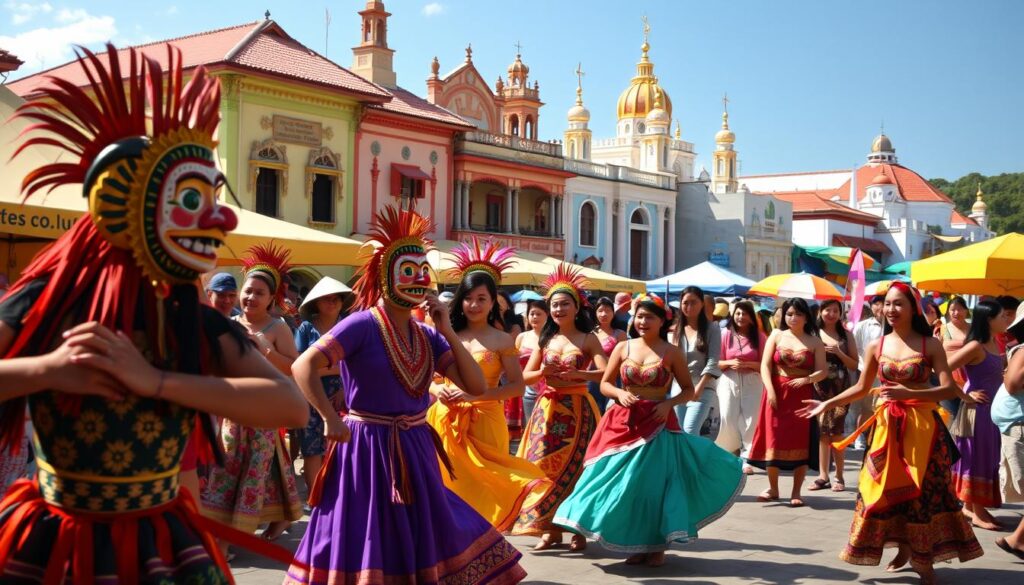
Coastal areas feature fluvial processions while mountain towns highlight indigenous traditions. Urban centers host elaborate dance competitions. Agricultural regions celebrate bounty through patron saint devotions.
Unique innovations include MassKara’s smiling masks from the 1980s crisis. The Giant Lantern festival displays massive illuminated artworks. These creative adaptations show how tradition evolves with community needs.
Indigenous heritage shines in events like Kadayawan, honoring 11 tribal groups. Such celebrations preserve authentic practices that predate colonial influence. They offer deep connections to ancestral roots.
Planning Your Unforgettable Festival Trip
Your journey to experience these vibrant celebrations begins with smart planning. The main season runs from January through May, offering the highest concentration of major events. This timing allows ambitious travelers to experience multiple festivals in one trip.
Travel Tips and Itinerary Ideas
Book accommodations months in advance. Major events like Sinulog attract millions of visitors, filling hotels quickly. Secure your lodging early for the best options and prices.
Consider this efficient January itinerary: Start in Kalibo for Ati-Atihan, then move to Iloilo for Dinagyang. Though dates sometimes overlap, careful planning lets you catch highlights from each celebration.
Pack these essentials for comfortable festival days:
- Sun protection and comfortable walking shoes
- Cash for vendors who don’t accept cards
- Portable phone charger and hand sanitizer
Cultural Etiquette for Visitors
Respect the religious significance of these events. Dress modestly when attending masses and processions. Always ask permission before photographing people in traditional costumes.
For the most authentic experience, arrive for morning ceremonies rather than just evening parties. Accept invitations to join street dancing or share meals. This welcoming spirit is the true heart of these celebrations.
Download schedules and maps before arrival. Mobile networks often become overwhelmed during large events. Being prepared ensures you won’t miss your favorite activities.
Practical Tips for Festival Hopping in the Philippines
Smart festival hopping requires balancing adventure with practical planning. These vibrant events can span entire weeks, with some like Panagbenga lasting the whole month of February.
Transportation between islands needs advance booking. Domestic flights and ferries fill quickly during peak celebration periods. Research schedules early to avoid disappointment.
Pace yourself through the long festival days. Grand parades and street dancing are physically demanding activities. Build rest periods into your schedule to maintain energy.
Safety in crowded environments is crucial. Keep valuables secure and stay hydrated in the tropical heat. Know your accommodation’s location relative to closed parade routes.
| Festival | Duration | Peak Events |
|---|---|---|
| Pasayahan sa Lucena | 1 week | Grand Parade, Float Competition |
| Viva Vigan | 1 week | Heritage Tours, Calesa Parade |
| Flores de Mayo | Entire May | Daily floral offerings, Santacruzan |
| Kadayawan | Month-long August | Indigenous shows, fruit displays |
Budget wisely as costs add up quickly. While many events are free, premium viewing and accommodations during peak times cost more. Consider visiting during shoulder periods for authentic experiences with smaller crowds.
Enhance your visit by hiring local guides or joining organized tours. Locals can provide cultural context and navigation help. Download offline maps since networks often fail under crowd loads.
These practical steps ensure you enjoy the festivals fully while staying comfortable and safe throughout your travel adventure.
Conclusion
These vibrant celebrations represent far more than calendar events. They form the cultural backbone of communities across this island nation. Festivals preserve precious traditions while fueling local economies.
The true power lies in their resilience. Communities celebrate life even during hardships. This joyful spirit defines the people and their way of life.
Each event acts as a living bridge. Ancient heritage dances alongside modern innovations. Elders pass knowledge to youth through shared celebration.
No description can capture the full experience. You must feel the drums, taste the food, and join the dancing. Strangers become friends in these welcoming spaces.
The entire country offers year-round festivals. Your unforgettable adventure awaits among the warmest hosts. Start planning your journey into this celebration-rich culture today.