Exploring the Philippines Through Food and Work
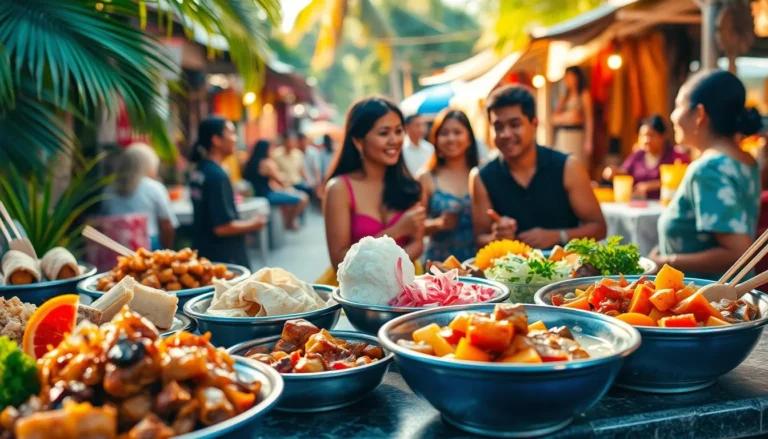
Welcome to a nation of over 7,640 islands. This archipelago offers a unique adventure for American travelers. You can dive into vibrant culinary scenes and discover growing professional opportunities in tourism.
The culinary landscape here is gaining global attention. Manila, the capital, is a fantastic starting point. Its street markets and diverse restaurants provide an authentic food experience.
Programs like Silversea’s S.A.L.T. highlight this blend of travel and taste. Created with James Beard Award winner Adam Sachs, it offers deep cultural immersion. This represents a modern approach to culinary tourism.
The country is divided into three main regions: Luzon, Visayas, and Mindanao. Each area boasts distinct flavors and traditions. This diversity creates rich experiences for visitors and work prospects in the hospitality sector.
This journey is about more than just great meals. It’s about understanding how food tourism supports local communities and creates sustainable careers. It connects passion with profession in a beautiful setting.
Key Takeaways
- The Philippines is an archipelagic nation with a rapidly growing food tourism scene.
- Manila serves as a major hub for authentic culinary experiences, from markets to fine dining.
- Innovative programs like Silversea’s S.A.L.T. offer immersive culinary and cultural journeys.
- The country’s three main regions each offer unique culinary traditions and professional opportunities.
- Culinary tourism here provides sustainable work options for both locals and international professionals.
- This travel experience combines the enjoyment of food with insights into the tourism industry.
Cultural Foundations of Filipino Cuisine
Filipino culinary traditions have been shaped by a fascinating history of trade, colonization, and cultural fusion. This rich background creates a unique food landscape that tells the story of the islands’ past.
The Influence of History and Conquest
Chinese traders arrived as early as the 10th century, bringing noodles and dumplings. These evolved into beloved staples like pancit and lumpia.
Muslim Arab merchants and Malay tribes introduced curries and coconut to the region. These ingredients remain fundamental to the cuisine today.
Spanish colonization from 1521 brought tamales and tomatoes through Mexico. This period fundamentally transformed local cooking methods.
Regional Diversity and Traditional Ingredients
American influence beginning in 1898 introduced convenience foods like ketchup and Spam. This added another layer to the evolving filipino cuisine.
As Adam Sachs observes, there’s no single style that defines this culture. Instead, it’s a complex tapestry of regional traditions.
Each island group offers distinct flavors using local resources. This variety means filipino cuisine ranges from subtle to bold tastes.
The people have creatively adapted each influence over centuries. This blending creates the vibrant cuisine we experience today.
Savoring Authentic Filipino Flavors
Authentic Filipino cuisine comes alive not in fancy restaurants, but in the bustling streets and humble homes where generations have cooked. This is where you’ll find the real soul of the nation’s culinary heritage.
Local Delicacies and Street Food Adventures
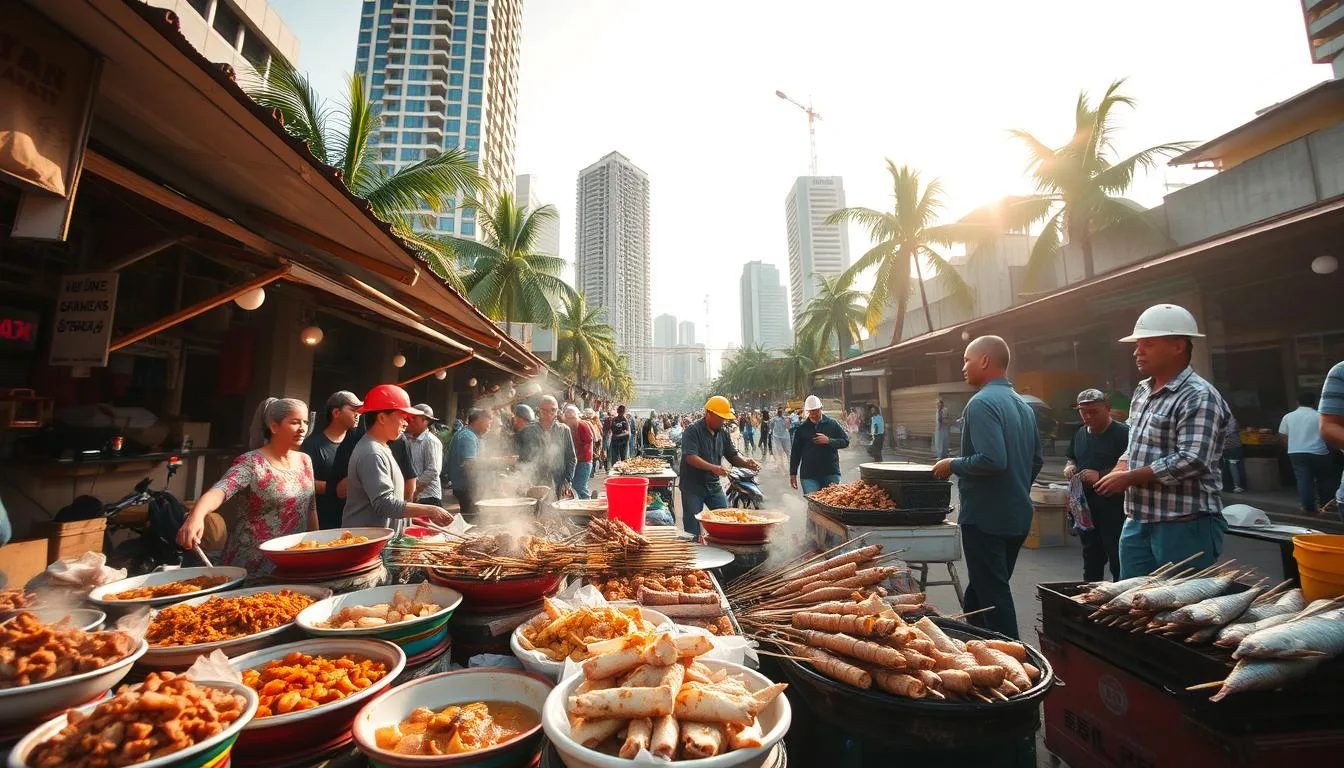
Street markets offer incredible food discoveries like sarsa na uyang from Romblon Island. This signature dish features large freshwater shrimp with fiery chili peppers and sweet coconut.
The preparation itself is a cultural experience. Families shred coconut using ancient blades, then grind ingredients like ginger and garlic into a paste. They fold the mixture into coconut leaves before roasting over open fire.
Culinary Traditions Passed Through Generations
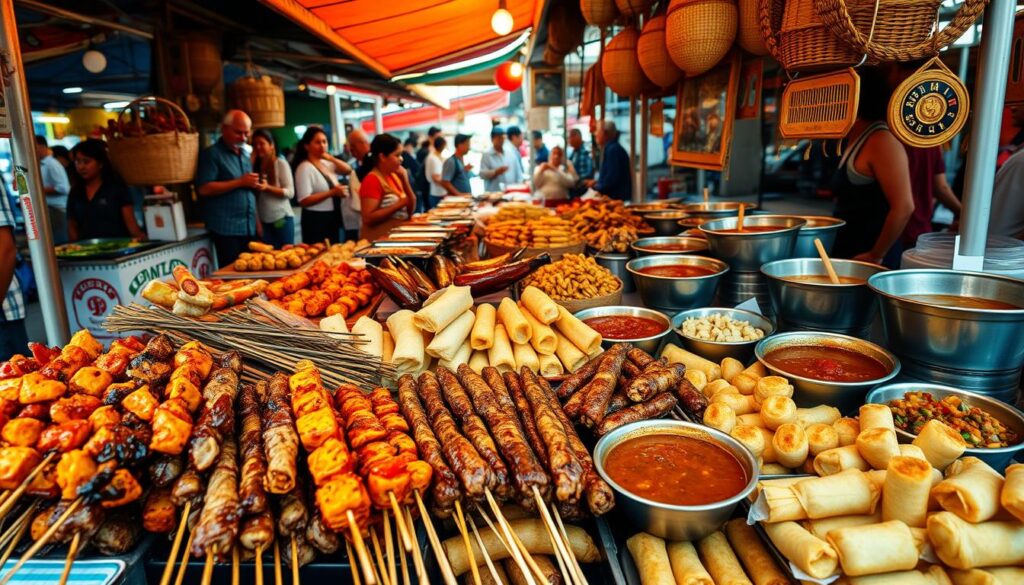
Experts like Clang Garcia preserve these cooking traditions. She grew up in her grandmother’s kitchen and carinderia, those simple food stands creating magic in tiny spaces.
Nicole Ponseca transformed her relationship with Filipino food into a celebrated career. Her New York restaurants serve authentic dishes like balut and dinuguan.
Her cookbook “I Am a Filipino” showcases dishes from across the islands. It captures the diverse tastes that define this rich culinary landscape.
These food experiences connect locals to their heritage. They offer visitors more than just meals, they provide cultural understanding passed down through families.
Exploring the Philippines Through Food and Work
Modern tourism initiatives are creating deeper connections between travelers and local communities through shared meals. These programs represent a professional approach to culinary discovery that benefits everyone involved.
Immersive Culinary Programs and Cultural Tours
Silversea’s S.A.L.T. program brings small groups to destinations like Romblon Island. Travelers visit family homes to learn traditional cooking methods firsthand.
This innovative approach creates employment for local guides and cultural ambassadors. Visitors gain authentic food experiences that go beyond typical tourist activities.
The Philippine Department of Tourism promotes Philippine Experience Tours across all 16 regions. These journeys showcase cultural assets through four key themes.
Kalinaw focuses on pilgrimage and wellness tourism. Hain/Salo-Salo highlights filipino cuisine and gastronomy. Likha explores arts and creative tourism. Pamana celebrates living cultures.
During Salo-Salo segments, guests enjoy 100% local food at the table with community members. This creates genuine cultural exchanges that support local economies.
Tours have launched in regions including Ilocos, CALABARZON, and Western Visayas. This demonstrates the breadth of filipino cuisine available nationwide.
These programs align with the National Tourism Development Plan 2023-2028. The vision transforms food tourism into meaningful economic development.
This way of traveling preserves traditional cuisine while creating professional opportunities. Visitors connect with culture through unforgettable experiences that support sustainable growth.
Experiencing Work and Sustainability in Local Tourism
Public markets across the islands are becoming vibrant classrooms where food traditions meet sustainable livelihoods. These spaces showcase how culinary experiences create professional opportunities for local communities.
Professional Landscapes and Culinary Tourism
Sarah Mae Lee Monroy leads cultural tourism development at the Philippine Department of Tourism. Her work includes creating roadmaps for gastronomy tourism that benefit both visitors and locals.
The growing network of Slow Food Communities adopts a philosophy of good, clean, and fair food. This approach creates deeper connections between people and their meals while supporting sustainable livelihoods.
Sustainable Practices: From Palengke to Farm-to-Table
The Coffee Trail in Murcia, Negros Occidental demonstrates this sustainable approach. Visitors choose from three trekking options while learning about the region‘s agricultural life.
Participants engage in hands-on activities like coffee pruning and preparing lunch with local ingredients. This farm-to-table experience supports producers while offering authentic cultural immersion.
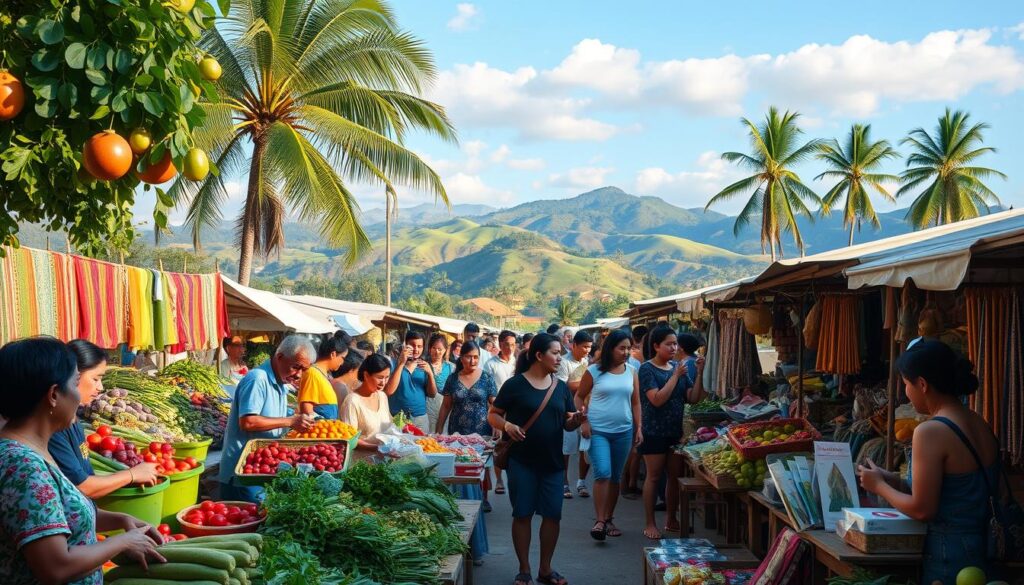
Palengke Tourism transforms traditional markets into cultural attractions. Markets like Baguio Market in the Cordilleras now feature activities like making lumpia wrappers and extracting coconut milk.
Initiatives by the Philippine Department of Tourism
Under Secretary Christina Garcia Frasco’s leadership, gastronomy tourism has flourished. The country hosted the first UN Tourism Regional Forum on Gastronomy Tourism for Asia and the Pacific.
Bacolod hosted Terra Madre Asia and the Pacific in 2025, bringing its slow-food and local-producer work to a regional audience. The city government listed the event among its 2026 tourism-award finalist entries. See the city government’s September 2026 report.
These initiatives align with the National Tourism Development Plan’s focus on sustainability. They create meaningful work that preserves traditional ways of life while welcoming visitors.
Iconic Destinations and Local Experiences
From bustling urban centers to serene island escapes, this archipelago offers diverse destinations where culinary adventures await. Each region presents unique opportunities to taste authentic dishes while exploring stunning landscapes.
Vibrant Cities and Hidden Culinary Gems
Manila’s street markets like Legazpi Sunday Market showcase the incredible variety of Filipino cuisine. In Davao City, visit Malagos Garden Resort featuring the first chocolate museum in the country.
Cebu City balances cosmopolitan dining with island experiences. Travelers enjoy fresh seafood dishes and coconut-based meals before canyoneering at Kawasan Falls.
Vigan’s UNESCO World Heritage streets reveal historical cuisine influenced by centuries of cultural exchange. Beach islands like Panglao and El Nido offer local dish specialties using fresh coastal ingredients.
Experiential Tips for the American Traveler
The famous Chocolate Hills on Bohol island demonstrate how chocolate became part of the regional identity. Meanwhile, the Ifugao Rice Terraces show how rice cultivation shaped Filipino life for generations.
Visit lesser-known spots like Siargao to decrease environmental impact. Bring reusable bags to markets and seek reef-safe sunscreen for island hopping.
Each destination offers distinct culinary experiences. From mountain rice specialties to coastal coconut dishes, exploring multiple islands provides a comprehensive understanding of this country‘s diverse food culture.
Conclusion
The true magic of this culinary landscape lies in its ability to connect travelers with sustainable livelihoods and proud traditions. As Adam Sachs notes, the food is “addictively easy to like and gratifyingly hard to sum up,” a testament to its rich history.
This journey invites you to move beyond familiar dishes. Discover regional specialties that tell a story at a family table, using fresh, local ingredients. It’s a profound cultural experience.
Thanks to dedicated advocates and thoughtful tourism programs, filipino cuisine is finally receiving global acclaim. You can be part of this exciting moment, enjoying incredible food while supporting the people and traditions of this vibrant country.