
Embracing Bayanihan: Remote Work the Filipino Way

Many companies are discovering the incredible benefits of partnering with professionals from the Philippines. These talented individuals bring more than just technical skills to the table. They carry with them a rich cultural heritage that transforms how teams collaborate.
The Philippines stands out as one of Asia’s top English-speaking nations. This makes communication smooth and effective for international partnerships. Over 1.3 million professionals work in the country’s business process outsourcing sector alone.
Hiring Filipino talent can help businesses save up to 60% on labor costs compared to US-based hires. But the real value goes beyond financial savings. It’s about accessing a work ethic rooted in deep cultural values.
Traditional concepts like community spirit and cooperation shape how Filipino professionals approach their roles. They naturally prioritize teamwork and going the extra mile for colleagues. This creates a supportive environment where everyone feels valued and motivated.
Understanding these cultural nuances unlocks the full potential of global teams. It leads to stronger relationships, enhanced productivity, and sustainable growth. This approach builds genuine community rather than just managing distant workers.
Key Takeaways
- Filipino professionals offer excellent English proficiency and cultural adaptability
- Cost savings can reach up to 60% compared to US-based hiring
- The Philippines has over 1.3 million experienced BPO professionals
- Cultural values emphasize teamwork, loyalty, and community support
- Effective communication comes naturally due to high English proficiency rankings
- Building community leads to stronger team relationships and better results
- Understanding cultural nuances maximizes team performance and satisfaction
Understanding Filipino Work Culture and Values
To truly appreciate the dedication of professionals from the Philippines, one must first understand the cultural bedrock from which it springs. This foundation is built on powerful, interconnected values that shape every interaction.
The Essence of Bayanihan and Community Spirit
The Bayanihan spirit is a core part of the national identity. It is the concept of a whole community coming together to achieve a common goal.
This translates directly into the modern workplace. There is a natural inclination towards teamwork and mutual support. Colleagues are seen as part of an extended family.
The Role of Utang na Loob and Family Orientation
Another key value is Utang na Loob, or a debt of gratitude. This fosters profound loyalty and a strong sense of responsibility.
When managers show trust and respect, they often receive exceptional dedication in return. The drive to provide for one’s family also fuels a powerful work ethic.
The table below shows how these values influence professional behavior.
| Cultural Value | Meaning | Workplace Manifestation |
|---|---|---|
| Bayanihan | Community Spirit | Proactive collaboration and group problem-solving. |
| Utang na Loob | Debt of Gratitude | Long-term loyalty and commitment to supportive employers. |
| Family Orientation | Priority on Family | Strong motivation and desire for stable, balanced roles. |
Understanding this cultural context is not just beneficial. It is essential for building a thriving, cohesive remote team where people feel genuinely valued.
Embracing Bayanihan: Remote Work the Filipino Way in Practice
Translating traditional Filipino principles into modern remote operations creates remarkable team synergy. Moving from theory to daily application requires thoughtful strategies that honor cultural strengths.
Incorporating Cultural Nuances into Daily Operations
Simple adjustments to daily work routines can honor important cultural nuances. Start meetings with personal check-ins that acknowledge relationships beyond tasks. This builds the sense of community so vital to Filipino teamwork.
Create dedicated channels where team members can request assistance. Colleagues will show natural willingness to provide support, reflecting the collaborative spirit. This transforms abstract concepts into tangible practices.
Recognizing significant holidays demonstrates respect for cultural value. Flexible scheduling for family obligations creates an inclusive workplace. These thoughtful operations build loyalty and enhance overall performance.
Celebrate collective achievements rather than only individual accomplishments. Knowledge sharing and mentorship pairings strengthen bonds. Small adjustments yield significant returns in satisfaction and productivity.
Advantages of Hiring Filipino Remote Professionals
Companies seeking to optimize their global teams find a powerful combination in Filipino talent: financial efficiency and linguistic prowess. This creates exceptional opportunities for growth and diversity.
Cost Effectiveness and High English Proficiency
The financial benefit is clear. A company can save up to 60% on labor costs compared to hiring in the U.S. These savings can be reinvested into innovation or expanding team capacity.
Beyond savings, the language skills are a major asset. The Philippines ranks 20th globally for English proficiency, second in Asia. This high skill level ensures smooth communication.
This advantage comes from a strong educational system. English is a primary medium of instruction. This makes professionals very comfortable with Western business styles.
The ideal demographic is professionals aged 26 to 40. They offer a perfect mix of experience and adaptability. They are digital natives ready for modern work.
With over 1.3 million people in the BPO sector, the talent pool is deep. These individuals have experience with international clients. They understand global expectations.
This experience builds sophisticated cross-cultural communication skills. They easily navigate different styles. This makes them highly effective in global teams.
These advantages combine into a strong value proposition:
- High-quality service and output
- Seamless language and collaboration
- Cultural adaptability for better communication
- Significant cost savings that boost a company‘s bottom line
This blend delivers outstanding services and results. It provides a clear competitive edge in today’s market.
Navigating Communication Styles in a Virtual Setting
Building successful remote teams means navigating diverse communication preferences and styles. Different cultural backgrounds shape how people express ideas and feedback in virtual settings.
Direct Versus Indirect Communication Strategies
Western professionals often use direct communication. They state opinions clearly and address issues head-on. This approach values honesty and efficiency.
Many professionals from the Philippines prefer indirect communication. They avoid confrontation to maintain team harmony. This style focuses on diplomacy and preserving relationships.
| Communication Aspect | Western Style | Filipino Approach |
|---|---|---|
| Feedback Delivery | Direct and straightforward | Diplomatic and tactful |
| Conflict Resolution | Address issues immediately | Preserve harmony first |
| Expressing Disagreement | Clear verbal opposition | Subtle non-verbal cues |

Interpreting Non-Verbal Cues in Remote Meetings
Pay attention to non-verbal signals during video calls. Smiles and nods usually indicate agreement. Looking away may suggest discomfort.
Tone of voice and pauses carry meaning too. Hesitation might signal uncertainty. Enthusiasm shows through vocal energy.
Create safe spaces for open dialogue. Encourage questions to prevent misunderstandings. This builds trust across cultural barriers.
Balancing Hierarchy with Inclusivity in Remote Teams
One of the most nuanced aspects of managing Filipino professionals involves balancing formal respect with open communication. This creates a workplace where cultural values meet modern collaboration needs.
Respectful Address and Maintaining Formality
Filipino team members naturally show deference to authority. They use honorifics like “Sir” or “Ma’am” and respectful terms. This reflects deep cultural respect rather than hesitation.
The table below shows different approaches to leadership interaction:
| Cultural Approach | Communication Style | Team Impact |
|---|---|---|
| Traditional Hierarchy | Formal address, clear chain of command | Strong discipline but limited idea sharing |
| Balanced Inclusivity | Respect maintained with open dialogue | Clear structure with full participation |
Encouraging Open Dialogue and Feedback
Managers can foster participation while honoring hierarchy. Ask specific people direct questions during meetings. Allow time for reflection before expecting responses.
Create multiple channels for sharing ideas beyond formal settings. This maintains harmony while encouraging diverse perspectives. The goal is inclusivity that values every voice.
Successful teams blend cultural respect with modern collaboration. They achieve both structure and innovation through thoughtful balance.
Overcoming Language and Cultural Barriers
Even with excellent English skills, teams can still face subtle communication hurdles. These challenges often involve industry jargon or regional expressions that don’t translate well. Recognizing these potential barriers is the first step toward smoother collaboration.
Simple and Clear Communication Techniques
Using straightforward language creates better clarity for everyone. Avoid slang and idioms that might confuse international colleagues. Explain acronyms and technical terms when introducing new concepts.
Providing ample context helps bridge understanding gaps. Share real-world examples that illustrate your points clearly. This approach ensures everyone grasps the full meaning behind your words.
Create an environment where asking questions feels comfortable. Professionals may hesitate to seek clarification due to respect for authority. Proactively invite questions during meetings and discussions.
Different communication styles can create misunderstandings. Direct approaches might feel abrupt, while indirect styles may seem unclear. Discuss preferences openly to establish team norms.
These techniques help teams navigate cultural nuances effectively. Consistent effort builds stronger connections over time. The result is more productive collaboration for everyone involved.
Leveraging Cultural Differences as Opportunities
The most successful global teams don’t just tolerate cultural differences—they actively leverage them as strategic advantages. This mindset transforms potential challenges into powerful opportunities for growth.
Professionals from the Philippines bring natural cultural fluency to diverse team environments. Their respect for diversity creates spaces where multiple perspectives are genuinely valued.
Different communication styles can create balanced approaches. Western directness combined with diplomatic sensitivity addresses difficult topics honestly while maintaining harmony.
“Diversity is not about how we differ. Diversity is about embracing one another’s uniqueness.”
The table below shows how complementary strengths create competitive advantages:
| Cultural Strength | Western Approach | Filipino Contribution | Combined Value |
|---|---|---|---|
| Problem-Solving | Innovation-focused | Detail-oriented | Comprehensive solutions |
| Communication | Direct and clear | Diplomatic and tactful | Balanced dialogue |
| Customer Service | Efficiency-driven | Relationship-building | Loyal client relationships |
Regular cross-cultural training helps teams appreciate different work values. This intentional effort turns differences into drivers of innovation.
Companies that successfully integrate diverse perspectives consistently outperform competitors. They achieve greater adaptability and employee satisfaction.
Enhancing Team Cohesion Through Filipino Traditions
Building strong connections among team members goes beyond standard professional interactions. Filipino cultural practices offer powerful methods for creating genuine bonds that transform workplace dynamics.
Team Building Through Celebrations and Shared Values
Relationship-building activities form the foundation of effective collaboration. These practices create environments where people genuinely care about each other’s success.
Celebrating personal milestones builds strong relationships within any team. Birthdays, work anniversaries, and family events deserve recognition. This approach strengthens community bonds among members.
Food plays a central role in Filipino celebration traditions. Virtual lunch gatherings create opportunities for personal connection. Sending food delivery gift cards during special occasions fosters camaraderie.
Integrating Traditional Practices into Modern Workflows
Modern remote teams can adapt meaningful traditions. Virtual “kumustahan” sessions allow checking in beyond work topics. These practices maintain personal connections despite physical distance.
Appropriate humor and lightheartedness ease workplace tensions. Digital recognition walls celebrate achievements visibly. Team rituals create shared identity and belonging.
These methods align with deep cultural values around community. Strong personal connections become the foundation for excellent professional collaboration. Teams investing in these traditions report higher morale and better communication.
Integrating Filipino Service Excellence and Work Ethic
What sets apart exceptional team members often comes down to a fundamental commitment to service and reliability. This approach goes beyond basic job requirements to create outstanding results.
Professionals from this culture demonstrate remarkable dependability in meeting deadlines and delivering quality outcomes. Their resilience helps them adapt to different time zones and communication challenges. This consistent performance builds trust across global teams.
The strong work ethic stems from cultural values around loyalty and family responsibility. This creates deep dedication rather than superficial effort. Team members show genuine commitment to collective success.
This combination of service orientation and strong principles positions these professionals as industry leaders. Clients consistently report high satisfaction with their thorough approach to work. The focus on excellence becomes a natural standard rather than an occasional achievement.
Integrating this mindset elevates overall team standards. It creates environments where helping colleagues and exceeding expectations become everyday practices. The result is sustained high performance that benefits everyone involved.
Practical Strategies for Effective Remote Management
Leading a distributed team across cultures requires a thoughtful blend of clear expectations and cultural intelligence. The right strategies build trust and drive performance while honoring important values.
Providing Constructive and Culturally Sensitive Feedback
Delivering effective feedback is a cornerstone of good management. The concept of “saving face” is crucial. Public criticism can damage morale.
Always opt for private, one-on-one conversations. Frame discussions around growth and solutions. Start by acknowledging strengths before addressing improvements.
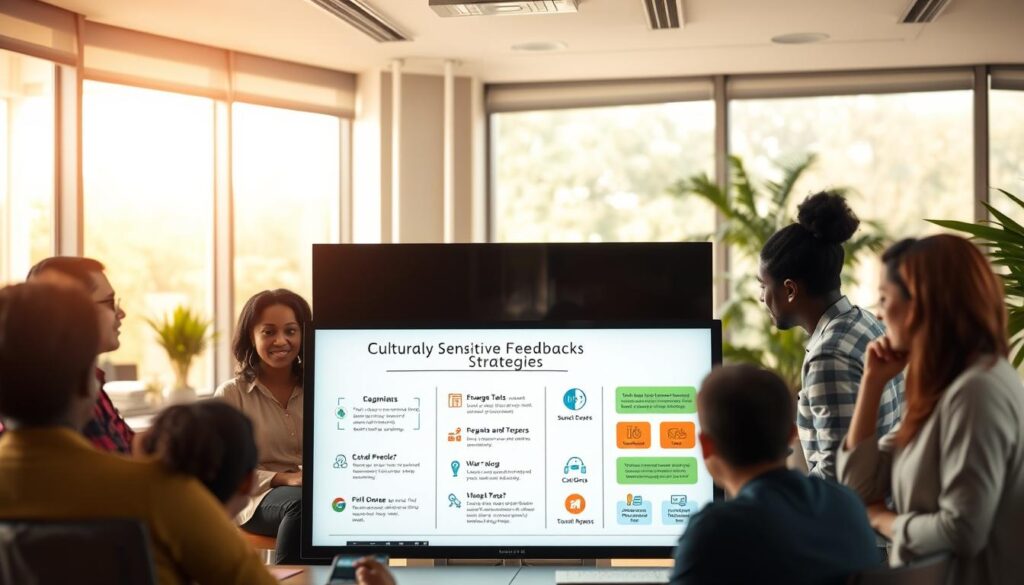
This respectful approach maintains dignity and inspires positive change. It shows support for your team members as individuals.
| Feedback Approach | Potential Impact | Recommended Strategy |
|---|---|---|
| Public Correction | Loss of face, reduced motivation | Private, constructive conversation |
| Focus on Blame | Defensiveness, strained relationships | Focus on collaborative solutions |
| Direct, Unbalanced Critique | Hurt feelings, disengagement | Start with praise, then gentle guidance |
Fostering a Supportive and Collaborative Environment
Recognition is a powerful tool. Regular shout-outs and small rewards boost morale significantly. This creates a positive environment where people feel valued.
Promoting a healthy work-life balance is essential. Flexible schedules for family needs build tremendous loyalty. This support prevents burnout and sustains long-term commitment.
Invest in your team‘s growth through training and mentorship. This investment shows your company cares about their development. A supportive environment transforms good teams into exceptional ones.
Case Studies: Success Stories of Filipino Remote Teams
Real success stories provide compelling evidence of how cultural synergy drives business results. These examples show measurable improvements in performance and satisfaction.
Real-World Examples of Teamwork and Resilience
A U.S. tech company achieved remarkable results with their Filipino customer service team. They reduced costs by 60% while improving satisfaction scores significantly.
The talent demonstrated exceptional resilience during challenging times. Natural disasters and infrastructure issues tested their commitment. They maintained productivity through all challenges.
A digital marketing agency expanded their services without increasing costs. Their Filipino creative teams brought fresh perspectives and dedication. This accelerated the company‘s growth dramatically.
| Success Factor | Before Implementation | After Implementation | Impact |
|---|---|---|---|
| Cultural Training | Communication issues | Smooth collaboration | 40% faster project completion |
| Relationship Building | High turnover | Long-term loyalty | 75% retention improvement |
| Clear Communication | Misunderstandings | Efficient workflow | 30% quality increase |
Lessons Learned from Cross-Cultural Collaboration
Business owners discovered unexpected benefits beyond cost savings. The relationship advantages proved more valuable than financial gains. This created genuine partnership opportunities.
Effective teamwork requires understanding different communication styles. Combining direct and diplomatic approaches solved complex problems. This balanced method satisfied diverse stakeholder needs.
Investing in people and building community yields the best results. These case studies show that cultural respect transforms good teams into exceptional ones.
Conclusion
When companies invest in understanding and honoring cultural differences, they unlock unprecedented potential for growth and innovation. This approach transforms ordinary work relationships into genuine community partnerships.
The advantages are clear: substantial cost savings, exceptional English skills, and a powerful work ethic. But success requires genuine cultural awareness and adapted management strategies.
View cultural differences as opportunities rather than obstacles. Diverse perspectives create stronger, more innovative teams. Small investments in cultural understanding yield enormous returns.
Start building your global team today by applying these principles. Create a future where diverse talents collaboration seamlessly toward shared success.