How to Blend Travel, Work & Filipino Festivities
Welcome to your ultimate resource for creating a fulfilling lifestyle that merges your career with deep cultural exploration. This guide is designed for remote professionals and adventurous spirits seeking a richer experience.
The Philippines offers a unique opportunity for this kind of integration. Its vibrant community spirit and colorful celebrations provide a beautiful backdrop for a productive life.
You will discover practical methods to engage with the local culture while meeting your professional goals. This approach transforms a simple trip into an extraordinary journey of personal and career growth.
Understanding the local way of life is key to a successful stay. This guide will help you navigate the archipelago’s rich traditions and build meaningful connections.
Key Takeaways
- Discover practical strategies for integrating work with cultural immersion in the Philippines.
- Learn to adjust your schedule to participate in major local celebrations and events.
- Gain insights into the values that shape daily life and business on the islands.
- Find out how to build authentic relationships within the local community.
- Transform a standard visit into a deeply memorable and enriching experience.
- Achieve a harmonious balance between professional productivity and cultural discovery.
Embracing Filipino Hospitality and Work Ethic
The Filipino approach to relationships, both personal and professional, is deeply rooted in centuries-old traditions of community and care. This creates a unique sense of belonging that immediately resonates with visitors. The people embody a warmth that defines their way of life.
Hospitality: The Heart of Filipino Culture
At the heart of Filipino culture lies an exceptional form of hospitality. Guests are treated as extended family members from the very first meeting. This genuine care extends beyond simple politeness into meaningful connections.
The concept of malasakit represents deep, personal concern for others’ wellbeing. It transforms ordinary interactions into supportive relationships. This culture of care creates environments where everyone feels valued.
The Bayanihan Spirit in the Workplace
The spirit of bayanihan showcases remarkable community spirit and unity. This tradition of communal assistance translates beautifully into professional settings. Teams demonstrate natural collaboration and mutual support.
Colleagues instinctively help each other during challenging projects. This collective approach builds resilience and strengthens team bonds. The workplace becomes an extension of the community’s supportive hospitality.
| Aspect of Hospitality | Personal Context | Professional Context |
|---|---|---|
| Malasakit (Deep Care) | Family-style welcome for guests | Genuine concern for colleagues’ wellbeing |
| Paggalang (Respect) | Honorifics like “Ma’am/Sir” | Smooth hierarchical relationships |
| Community Support | Neighborhood assistance traditions | Team collaboration during deadlines |
Understanding these values enhances professional relationships significantly. The natural hospitality creates trust that benefits both personal and business connections.
Navigating Daily Life and Filipino Traditions
The rhythm of daily life in the Philippines moves to the heartbeat of family connections. This creates a warm environment where multiple generations often share homes and responsibilities.
Households commonly include grandparents, parents, children, and extended relatives. They work together on childcare, meals, and elder care. This collective approach shapes major decisions about careers and property.
Family Ties and Daily Rituals
Respect forms the core of Filipino traditions. The practice of pagmamano—taking an elder’s hand to one’s forehead—shows deep reverence. Using respectful terms like “po” and “opo” in conversation is standard.
Daily rituals strengthen these bonds. Family meals become important gathering times. Evening prayers and Sunday mass often involve the entire household.
The concept of utang na loob (debt of gratitude) creates lasting obligations across generations. Children who received educational support naturally help younger siblings later. Adult children commonly provide housing or financial support for aging parents.
Understanding these dynamics explains why family emergencies take priority in scheduling. This deep sense of duty creates remarkably resilient community support systems.
Integrating How to Blend Travel, Work & Filipino Festivities into Your Routine
Developing a lifestyle that honors both professional commitments and celebratory traditions starts with understanding local rhythms. Strategic calendar management becomes your most valuable tool for this harmonious blend.
Practical Steps for Harmonious Integration
Begin by researching the Philippine festival calendar months in advance. Identify major celebrations like Sinulog and Panagbenga to plan around these peak periods.
Build flexibility into your schedule by front-loading projects before significant cultural events. Communicate clearly with clients about potential delays during festive seasons.
| Integration Approach | Professional Application | Cultural Benefit |
|---|---|---|
| Calendar Alignment | Schedule work around major events | Full participation in celebrations |
| Flexible Policies | Accommodate cultural observances | Respect for local traditions |
| Virtual Engagement | Themed team meetings | Cultural sharing opportunities |
Synchronizing Professional and Cultural Calendars
View cultural events as opportunities for connection rather than interruptions. This mindset transforms your entire experience.
Set calendar reminders for upcoming festivals and book accommodations early. Maintain open communication about availability during celebration seasons.
The goal is finding creative ways to honor both professional responsibilities and vibrant local traditions. This creates a rich, balanced experience.
Travel Tips to Experience Filipino Festivities
The true magic of Philippine cultural events unfolds when you engage with the enthusiastic local participants. Their genuine warmth transforms ordinary visits into unforgettable cultural exchanges.
Engaging with Locals and Exploring Traditions
Building connections starts with simple greetings. Learning basic phrases like “Salamat” (Thank you) shows respect and opens doors to meaningful interactions.
Community members love sharing their heritage. They’ll explain the significance behind each celebration with visible pride.
Accept invitations to local homes during fiestas. This living tradition welcomes strangers as honored guests.
Must-Do Festive Activities and Experiences
Don’t miss major events like Sinulog in Cebu. These spectacular festivals feature vibrant street dancing and elaborate costumes.
Regional celebrations offer unique experiences. Panagbenga Festival showcases flower-decorated floats reflecting Cordillera pride.
Practical tips ensure smooth participation. Book accommodations months ahead for popular celebrations.
Join street parades and sample festival foods. Smaller island fiestas provide more intimate connections with locals.
Balancing Remote Work With Cultural Celebrations
The secret to successful cultural integration lies in viewing celebrations as opportunities for team building rather than productivity obstacles. This mindset shift transforms festive periods into valuable moments for strengthening bonds.
Flexible Work Arrangements and Scheduling
Strategic planning makes cultural participation possible. Offer floating holidays for major events and build buffer time into project deadlines during known celebration periods.
This approach shows respect for local traditions while maintaining professional commitments. Team members appreciate the flexibility and feel valued.
Incorporating Celebrations into Team Meetings
Virtual gatherings can spark cultural pride and strengthen connection. Start meetings with cultural moments or invite team members to share regional traditions.
Online costume contests and language challenges create engaging experiences. These activities build cross-cultural understanding across different locations.
Recognizing personal milestones like birthdays demonstrates genuine care. This appreciation culture extends beyond professional achievements to personal values.
Employees who feel culturally seen show higher loyalty and stronger team investment. Celebrating local heritage becomes a strategic advantage for remote teams.
Utilizing Digital Tools to Stay Connected with Filipino Culture
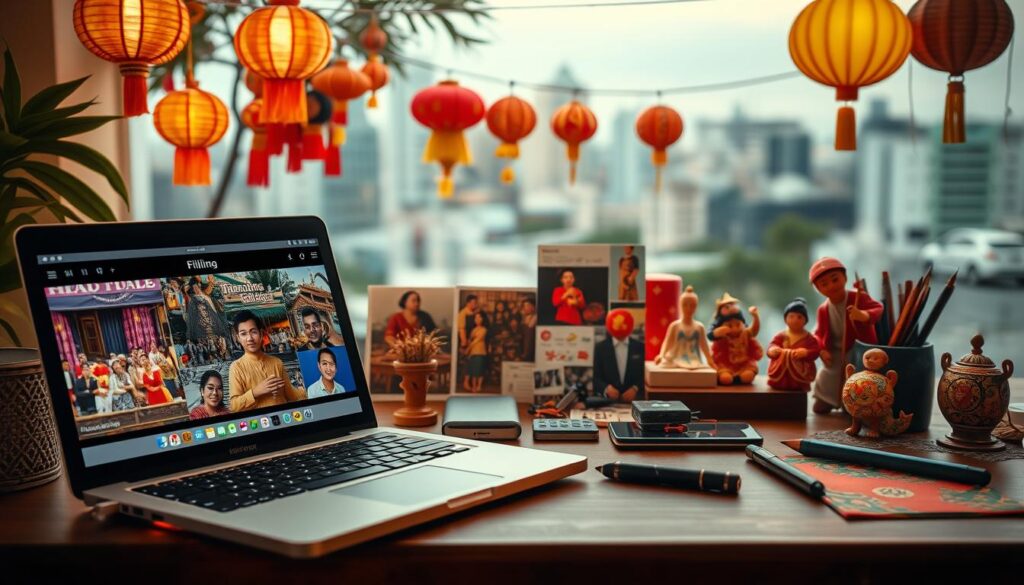
Technology now bridges geographical gaps for cultural immersion. Digital platforms create new pathways for meaningful engagement with traditions.
These tools help maintain bonds with the vibrant community. They offer authentic connection to daily life and celebrations.
Virtual Festivals and Remote Interactions
Live-streamed events bring major festivals directly to your screen. You can witness colorful parades and street dancing in real-time.
Video calls enable participation in family gatherings and religious observances. This digital access ensures nobody misses important moments.
“Technology doesn’t replace being there—it enhances understanding until you can arrive.”
Building Online Community Engagement
Social media groups dedicated to regional traditions create valuable spaces. Members share photos, recipes, and personal stories.
Active participation strengthens these online networks. Asking questions and sharing experiences builds genuine relationships.
| Digital Tool | Cultural Application | Engagement Level |
|---|---|---|
| Live Streaming | Real-time festival viewing | Passive observation |
| Social Media Groups | Recipe and tradition sharing | Interactive discussion |
| Video Conferencing | Virtual family gatherings | Direct participation |
| Mobile Apps | Language learning and event calendars | Self-directed learning |
This way of engaging with filipino culture complements physical travel. Digital tools prepare you for deeper in-person experiences later.
Insights on Filipino Festivities: Food, Costumes, and Community Spirit
The vibrant tapestry of Philippine celebrations comes alive through three essential elements: food, costumes, and community participation. These components create unforgettable experiences that engage all senses.
Signature Dishes and Traditional Costumes
Celebrations feature signature dishes that reflect regional tradition. Lechon, adobo, and kare-kare appear at major gatherings. Street vendors offer unique specialties like balut and bibingka.
The phrase “Tara, kain tayo!” embodies welcoming hospitality. It invites strangers to share abundant meals. This practice demonstrates genuine community spirit.
Traditional attire showcases incredible craftsmanship and cultural pride. Elaborate tribal outfits feature indigenous materials. Designs reflect regional identities and historical influences.
| Festival Element | Culinary Highlights | Costume Features |
|---|---|---|
| Pahiyas Festival | Rice decorations, vegetable displays | Colorful kiping wafers as ornaments |
| Sinulog & Ati-Atihan | Street food varieties | Tribal beads, woven fabrics |
| General Fiestas | Pancit, grilled seafood | Barong Tagalog, Filipiniana dresses |
Vibrant Street Celebrations and Local Events
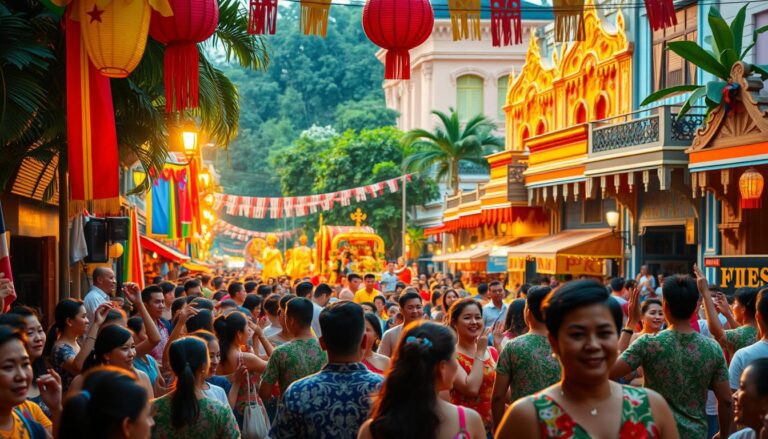
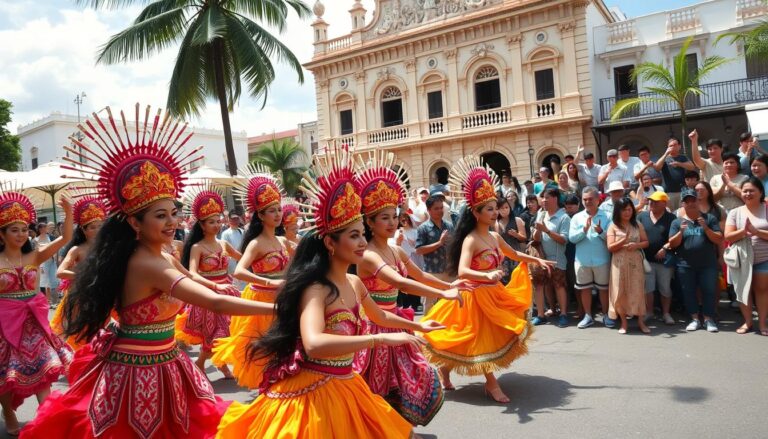
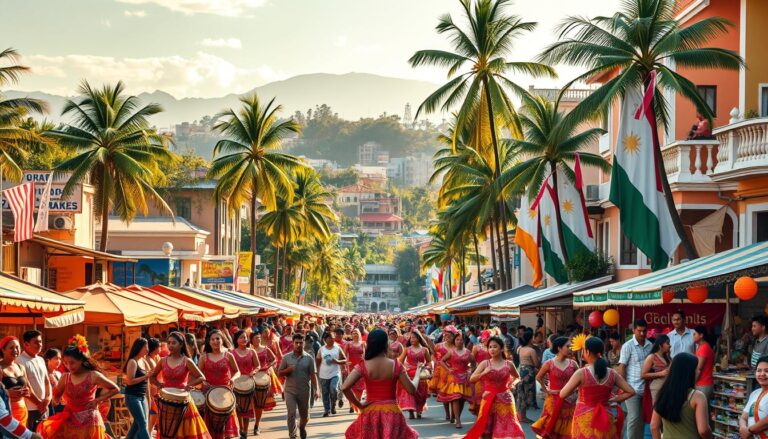
Street celebrations transform cities into rivers of color and sound. Entire communities participate in dancing and parades. These events express collective joy and cultural pride.
The Pahiyas Festival turns neighborhoods into edible art installations. Houses feature creative displays of rice, fruits, and vegetables. This honors agricultural abundance through visual spectacle.
What makes these festivals special is the underlying spirit of cooperation. Families spend weeks preparing costumes and decorations. Entire barangays collaborate on parade floats, strengthening social bonds through shared effort.
Exploring the Roots of Filipino Family and Community Values
Filipino society builds its foundation on relationships that extend far beyond blood relatives. This creates a unique social fabric where everyone plays a meaningful part in each other’s lives.
The roots of these values trace back through centuries of tradition. Multiple generations often share homes and responsibilities.
Extended Family Bonds and Community Unity
Filipino family structures include grandparents, aunts, uncles, and cousins. Godparents (ninong and ninang) add another layer of support.
The compadrazgo system creates spiritual kinship through baptisms and weddings. These relationships provide lifelong guidance and financial assistance.
“In Filipino culture, your family is your first community, and your community becomes your extended family.”
Utang na loob (debt of gratitude) creates reciprocal obligations across generations. This value explains why adult children support aging parents.
Community unity operates like an extended family. Neighborhoods function as collective support systems.
| Family Aspect | Traditional Practice | Community Impact |
|---|---|---|
| Extended Bonds | Multi-generational households | Shared childcare and elder care |
| Spiritual Kinship | Godparent relationships | Expanded support networks |
| Reciprocal Duty | Utang na loob values | Cross-generational support |
Overseas Filipino Workers demonstrate these strong bonds. They support relatives through remittances and maintain connections despite distance.
Understanding these deep roots helps appreciate Filipino social dynamics. The community truly functions as one large family.
Work Culture: Respect, Empathy, and Team Collaboration among Filipinos
The professional environment in the Philippines operates on principles that prioritize human connection alongside productivity. This distinctive approach creates workplaces where relationships matter as much as results.
Respect forms the foundation of daily interactions. Colleagues naturally use honorifics like “Ma’am” and “Sir,” reflecting paggalang (respect). This practice maintains smooth hierarchies and reduces workplace friction.
Communication styles may seem indirect to outsiders. This isn’t disengagement—it’s a cultural way of showing consideration. People avoid direct confrontation to prevent causing hiya (shame) to others.
When team members say “yes,” they might mean “I understand” rather than “I agree.” Creating psychological safety helps colleagues express concerns honestly without feeling disrespectful.
Empathy represents a core strength rather than a soft skill. Filipino professionals demonstrate emotional intelligence by default. They naturally support colleagues during challenging times.
The value of pakikisama (harmony) drives effective collaboration. Maintaining smooth relationships often takes precedence over individual recognition. This approach results in stronger team bonds and fewer conflicts.
Filipino people bring a service-oriented mindset to their roles. They frequently go beyond job descriptions to help colleagues and ensure collective success.
This combination of respect, empathy, and collaborative spirit creates exceptionally effective teams. The culture naturally fosters environments where both professional and personal growth can thrive.
Effective Time Management Amidst Cultural and Work Demands
One of the most significant adjustments visitors face involves reconciling different approaches to punctuality and scheduling. This creates unique challenges when balancing professional demands with local customs.
Adapting to “Filipino Time” in a Global Context
The concept of “Filipino time” represents a relaxed approach to scheduling. Meetings often start later than planned, and transportation follows its own rhythm. Understanding this way of life reduces frustration.

Rather than fighting this reality, successful adaptation means embracing flexibility. Building buffer time between appointments prevents stress. Patience becomes your most valuable tool.
Strategic Planning for Flexibility
Effective planning involves distinguishing between different types of commitments. International business meetings require strict punctuality. Social gatherings allow for more flexibility.
Set internal deadlines earlier than external ones. Confirm appointments multiple times. This strategic approach manages time challenges effectively.
| Time Approach | Western Context | Filipino Context | Recommended Strategy |
|---|---|---|---|
| Meeting Start Times | Precise and punctual | Flexible with 15-30 minute grace | Schedule buffer time |
| Transportation | Predictable schedules | Variable and adaptable | Have backup options |
| Social Events | Time-conscious arrival | Relationship-focused timing | Embrace cultural norms |
This balanced approach respects both professional work requirements and local culture. It transforms potential frustrations into opportunities for deeper connection.
Real-life Stories: Blending Work, Travel, and Cultural Celebrations
Real-world examples offer the clearest roadmap for combining career responsibilities with authentic cultural participation. These personal stories demonstrate practical approaches that anyone can adapt.
Employee Anecdotes and Experiences
Sarah, a digital marketing consultant from California, restructured her schedule around Cebu’s Sinulog Festival. She handled urgent tasks in the morning before joining afternoon street parades.
Miguel, a Filipino-American returning to Iloilo, discovered unexpected business opportunities while attending his grandmother’s town fiesta. Local people appreciated his commitment to family traditions.
Local Success Narratives
A Manila-based company increased employee retention by 40% after implementing flexible schedules around major celebrations. They created virtual events for distributed team members.
Local entrepreneurs built successful businesses around festival tourism. Their stories show how understanding cultural traditions can become a viable business model.
These experiences reveal that successful integration requires patience and cultural curiosity. Those who approach with respect find both personal fulfillment and professional success.
Tips for Expats: Immersing in Filipino Work and Festival Culture
Successful expatriates understand that genuine cultural immersion begins with small, daily gestures of respect. These practical tips help newcomers navigate both professional settings and community celebrations smoothly.
Practical Advice for New Arrivals
Learning basic Filipino phrases shows effort that locals appreciate. Words like “Salamat” (Thank you) and “Sarap!” (Delicious) open doors to authentic connections.
Embrace the local sense of humor. Filipinos often use light teasing to build rapport. Sharing laughs makes you part of the group faster.
Respect religious traditions even if they differ from your own. This predominantly Catholic nation values reverence during holy festivals and observances.
Understand everyday quirks like calling bathrooms “comfort rooms” and signaling for bills with a rectangle gesture. These small things make daily life easier.
Build relationships before discussing business. Personal connections often come first in professional culture. Invite colleagues to your home for shared meals.
Approach each experience with curiosity rather than judgment. This mindset transforms your stay into a meaningful journey of cultural discovery.
Sustainable Approaches to Embracing Filipino Festivities in a Global Lifestyle
The enduring strength of Philippine cultural practices lies in their remarkable ability to evolve while maintaining core values. This resilience allows traditions to thrive in a modern, interconnected world.
Sustainable engagement means honoring the past while innovating for the future. It ensures that the vibrant culture remains accessible and meaningful for generations to come, no matter where they live.
Preserving Traditions Through Modern Innovation
Technology provides powerful tools for cultural preservation. Digital archives and live-streamed events connect overseas communities to island celebrations.
This maintains a sense of pride and belonging across distances. It also introduces global audiences to the beauty of these practices.
Local businesses are creating eco-friendly festival models. They reduce waste and protect the nature that makes the islands so beautiful.
This approach supports the local economy while preserving authentic expressions. It demonstrates the adaptive power of the community.
| Sustainable Approach | Traditional Element | Modern Application |
|---|---|---|
| Digital Engagement | Community participation | Virtual festival live streams |
| Eco-Conscious Planning | Natural material use | Biodegradable decorations |
| Economic Sustainability | Local artisan support | Social enterprise models |
For individuals, sustainable participation involves active support. This can include learning about extended family dynamics or contributing to cultural organizations.
The collective pride in filipino culture fuels its continuous renewal. This ensures traditions remain a living, breathing part of global life.
Conclusion
The path to harmonizing career objectives with authentic cultural engagement unfolds through patience and genuine curiosity. This guide has illuminated the heart of a rich culture that welcomes visitors as family.
Everyday life here presents both beautiful moments and practical challenges. The remarkable resilience of the people inspires deeper connection with the local way of life.
As you share meals around the table with new friends, you’ll discover that simple things create the most meaningful memories. The stunning nature surrounding you enhances every experience.
Embrace this journey with an open mind. The islands offer not just a place to visit, but a home where professional growth and cultural discovery beautifully intertwine.