What is Bicol Express
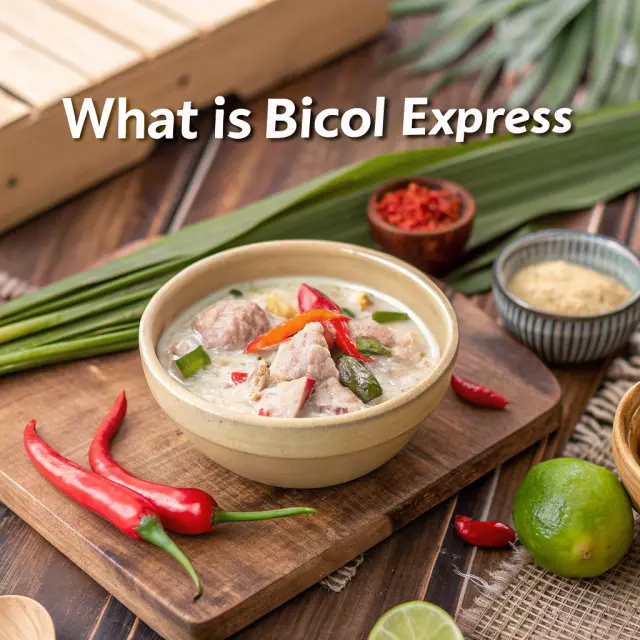
Bicol Express is one of the Philippines’ most famous spicy dishes: tender pork simmered in creamy coconut milk with a generous load of chilies and a spoonful of shrimp paste. Rich, fiery, and comforting all at once, it takes its name from a train and its fire from the chili-loving Bicol region, though its true origin is one of Filipino food’s most enjoyable debates.
This guide explains what Bicol Express is, how it got its railway name, who created it, and how it differs from its older Bicolano ancestor.
Spicy pork in coconut milk stew
Siling labuyo / siling haba chilies
Coconut milk (gata)
The Manila–Legazpi train (1970s)
Cely Kalaw, Malate, Manila
Sinilihan / gulay na lada
What Bicol Express is
Bicol Express is a stew of pork cooked with long or small chili peppers, coconut milk or cream, shrimp paste, onion, ginger, and garlic. The coconut milk gives it a smooth, slightly sweet richness that balances the heat of the chilies, while the shrimp paste adds a deep, savoury umami. The result is indulgent and warming, a dish that manages to be both creamy and genuinely spicy at the same time.
The name and the train
The dish’s name has nothing to do with cooking and everything to do with a railway. Back in the 1970s, the Philippine National Railways ran a popular service that carried passengers from Manila all the way to Legazpi in Albay, deep in the Bicol region, and back. That train was known as the Bicol Express. When the dish’s creator was searching for a name, she drew an analogy between the fiery stew and the fiery journey to chili country, and the name stuck.
Who invented it
The dish is widely credited to Cely Kalaw, a restaurateur from Laguna who ran an establishment in the Malate district of Manila. Working with the ingredients she had on hand, she developed a spicy pork stew loaded with chilies. As the story goes, while she was thinking of a name, she heard a train passing by, and the Bicol Express was born, both the meal and its memorable title.
A friendly origin debate
Here is where it gets interesting. Because Cely Kalaw was from Laguna and cooked in Manila, some argue that Bicol Express is really a Manila dish merely inspired by Bicolano flavours. Bicolanos, meanwhile, point out that chili-and-coconut stews existed in their region long before, under names like sinilihan (“spiced with chili”) or gulay na lada. Most food historians land on a middle ground: the modern, pork-rich, creamy Bicol Express was popularised in Manila in the 1970s, but it grew directly out of older Bicolano cooking. The “true” inventor remains a good-natured argument between the capital and the region.
The chili connection
Bicol is the spiciest corner of the Philippines, so it is fitting that the region lends its name to the dish. Cooks choose their chilies by how much heat they want. The milder siling haba (long green pepper) makes the dish more approachable, while the small but ferocious siling labuyo is favoured in Bicol itself, where locals are used to the fire. Interestingly, these chilies are not native: they were introduced by Spanish settlers who carried them from the Americas, and Bicolanos embraced them wholeheartedly.
Sinilihan versus Bicol Express
The original Bicolano sinilihan and the Manila-born Bicol Express are close relatives but not identical. Sinilihan uses less meat and far more chilies, making it much spicier, and it is cooked until the oil separates from the coconut cream, leaving it drier and reddish-orange, which also helps it keep longer. Bicol Express, by contrast, is paler, creamier, and saucier, with more pork and a gentler heat suited to a wider audience. In a sense, Bicol Express is the friendlier, restaurant version of a fierce home-style Bicolano dish.
Modern variations
Like all beloved dishes, Bicol Express keeps evolving. Cooks now make seafood versions with shrimp, squid, or fish, and vegetarian takes that swap the pork for tofu or mushrooms. The old vegetable-only ancestor, gulay na lada, simmered vegetables in chili coconut milk without any meat, a reminder that the dish began as humble regional home cooking before it became a national favourite.
How to make Bicol Express
Making Bicol Express at home is straightforward. Start by sauteing garlic, onion, and ginger, then brown bite-sized pieces of pork belly. Stir in a spoonful of shrimp paste to build a savoury base, then pour in coconut milk and simmer until the pork is tender and the sauce thickens. Near the end, add plenty of sliced chilies and a final splash of thick coconut cream for richness. The dish is done when the pork is soft and the sauce is creamy and glossy, flecked with green and red chilies.
Managing the heat
One of the joys of Bicol Express is that you control the fire. For a milder dish, use long green siling haba and remove the seeds; for serious heat, add small siling labuyo whole. The coconut milk naturally tempers the spice, so even a chili-heavy version stays creamy and balanced rather than punishing. Cooks often serve extra chilies on the side so bold eaters can turn up the heat to taste. This flexibility is part of why the dish appeals to spice lovers and cautious diners alike.
What to serve with it
Bicol Express is rich and intense, so it is best anchored by plenty of plain steamed rice, which soaks up the creamy, spicy sauce. It sits well alongside milder dishes and something sour or fresh to balance the palate, and a cold drink is always welcome. Because it is filling and flavourful, a modest amount goes a long way, and it is a favourite centrepiece at family meals and gatherings.
A dish that unites two regions
More than a recipe, Bicol Express tells a very Filipino story of exchange between province and capital. It carries the bold, chili-and-coconut soul of Bicolano cooking into a form that spread across the whole country from a Manila kitchen. That blend of regional tradition and city reinvention is exactly why it has become a national favourite, and why both Manila and Bicol proudly claim it as their own.
The enduring appeal of Bicol Express
Decades after it first appeared, Bicol Express remains a fixture on Filipino menus at home and abroad, and its popularity keeps growing as more people discover Filipino food. It captures something the cuisine does especially well: the marriage of coconut milk and chili, of comfort and fire. For newcomers it is an exciting introduction to Filipino flavours, and for Filipinos it is a taste of the spicy south. Creamy, fiery, and impossible to forget, it has earned its place among the country’s best-loved dishes.
Frequently Asked Questions
What is Bicol Express?
Bicol Express is a Filipino stew of pork cooked in coconut milk with chilies, shrimp paste, garlic, and ginger. It is rich, creamy, and spicy.
Why is it called Bicol Express?
It is named after the 1970s Philippine National Railways train that ran from Manila to Legazpi in the Bicol region. The dish’s creator found the fiery stew a fitting match for the name.
Is Bicol Express really from Bicol?
It draws on authentic Bicolano flavours and older dishes like sinilihan, but the modern version was popularised in Manila by restaurateur Cely Kalaw. Its exact origin is a friendly, unsettled debate.
How spicy is Bicol Express?
It can range from mild to very hot depending on the chilies used. Milder siling haba makes a gentler dish, while siling labuyo brings serious heat.
Conclusion
Bicol Express is proof that great food can come from a happy collision of region and capital, chili and coconut, home kitchen and restaurant. Named after a train and fired by the Philippines’ spiciest peppers, it remains a must-try for anyone who loves their food creamy, comforting, and gloriously hot.