Baclayon Church: Location, History, and Travel Guide
Baclayon Church, officially known as the Church of Our Lady of the Immaculate Conception, is one of the oldest stone churches in the Philippines and a key heritage landmark in Bohol. This guide explains exactly where it is located, outlines its documented historical development from early Jesuit foundations to modern restoration, and provides practical travel information such as transport options, entrance details, best time to visit, and what to expect on-site. It is written to help travelers and heritage enthusiasts plan an efficient visit while understanding the church’s religious, cultural, and architectural significance.
Location of Baclayon Church
Baclayon Church is located in the municipality of Baclayon, on the southern coast of Bohol Island in the Central Visayas region of the Philippines. It sits along the main coastal highway, facing the Bohol Sea, approximately 6-7 kilometers east of Tagbilaran City, the provincial capital.
- Municipality: Baclayon, Bohol, Philippines
- Official name: Church of Our Lady of the Immaculate Conception in Baclayon
- Coordinates: about 9.622° N, 123.913° E (approximate)
- Accessibility: Positioned directly along the Tagbilaran-Loay coastal road, accessible by jeepney, bus, van, or private vehicle.
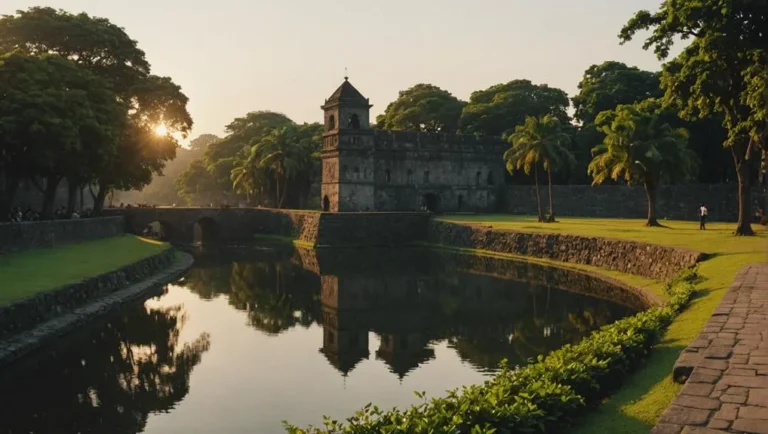
The church complex includes the main stone church, an attached convent building, an old bell tower, and a separate coral-stone watchtower nearer the sea. Its location makes it a standard stop on the “Bohol countryside tour” that normally includes the Blood Compact Shrine, Loboc River, and the Chocolate Hills.
History of Baclayon Church
Baclayon Church is widely regarded as one of the oldest Christian stone churches in the Philippines and is integral to the early history of Spanish Catholic missions in Bohol. Much of what is known about the church comes from Spanish-era records and later documentation, including material summarized in public references such as Wikipedia’s article on Baclayon Church and related entries on Bohol’s Spanish colonial churches.
Early Mission and Founding
In the mid-16th century, Spanish Augustinian missionaries made initial attempts to evangelize Bohol but were soon replaced by the Society of Jesus (Jesuits). According to historical records cited in online sources like Wikipedia, Jesuit priests established one of their earliest Bohol Christian communities in Baclayon in 1596, when Fr. Juan de Torres, S.J., and Fr. Gabriel Sánchez, S.J., founded a mission there.
This early mission included a simple church structure and residence made of light local materials such as wood and nipa. Baclayon thus became one of the earliest centers of Christianity in the region and a base for further Jesuit missionary expansion in Bohol.
Construction of the Stone Church
The present stone church is generally dated to the early 18th century. Sources referenced in Wikipedia note that construction of the substantial stone building was begun around 1717 under Jesuit supervision. The builders used coral stones quarried from the sea, cut and shaped into blocks, and bonded with a mortar that incorporated sand and egg whites, a technique associated with some colonial-era constructions in the Philippines.
The church’s design follows a typical Spanish colonial ecclesiastical layout, with:
- A longitudinal nave
- A main altar area and side altars
- An attached convent or parish house
- A stone bell tower at the façade
Over time, the structure was expanded and modified, but the core walls and overall massing preserved the original 18th-century character.
Transition from Jesuits to Augustinian Recollects
In 1768, the Jesuits were expelled from Spanish territories. In Bohol, as in many other parts of the Philippines, Jesuit parishes were turned over to the Augustinian Recollects. Baclayon Church, once a Jesuit stronghold, was administered by the Recollects following the expulsion.
Under the Recollects, additional structural and decorative work was undertaken:
- Further interior embellishments and altarpieces were added.
- Some of the religious images and liturgical items commonly associated with 19th-century Recollect parishes were introduced.
- Structural reinforcements and modifications were made as the community and liturgical needs evolved.
Architectural and Artistic Features
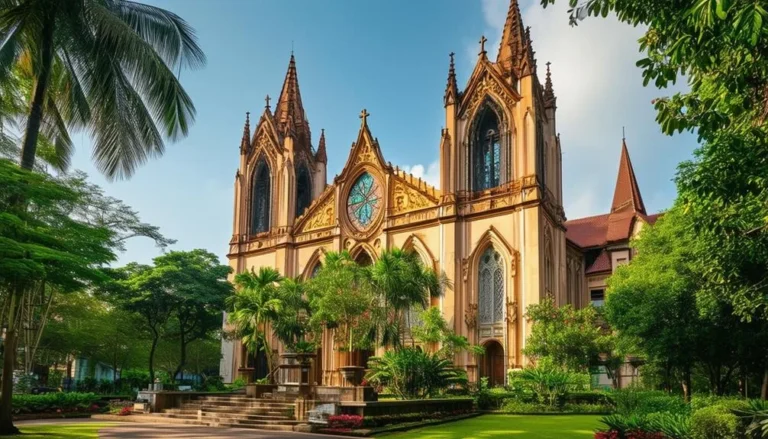
Baclayon Church is categorized as a Baroque or “Earthquake Baroque” church, part of a broader group of Spanish colonial churches in the Philippines built with massive walls designed to withstand frequent tremors. As described in historical and cultural references, including those summarized in Wikipedia, notable features include:
- Coral-stone masonry: Walls are thick and built from blocks of coral stone, giving the structure a distinct light color and texture.
- Baroque altarpieces: The retablos (altarpieces) and carved wooden elements are richly ornamented, consistent with Baroque visual traditions.
- Ceiling paintings and religious art: Interiors historically contained paintings and religious images illustrating Catholic doctrines, saints, and Biblical scenes.
- Bell tower and façade: The façade combines solid, plain surfaces with minimal but meaningful sculptural ornamentation and a prominent bell tower.
- Adjacent museum: The old convent area was adapted to house religious and colonial-era artifacts, including antique vestments, liturgical implements, and images.
These characteristics contributed to Baclayon’s inclusion among the Philippines’ important heritage churches and its recognition by cultural agencies as a National Cultural Treasure.
National Cultural Significance
Baclayon Church has been recognized by Philippine authorities as a heritage structure of national importance. As noted in public-domain references and heritage listings cited in Wikipedia, the church has been:
- Declared a National Cultural Treasure by the National Museum of the Philippines.
- Included in discussions and proposals regarding heritage conservation of Spanish colonial churches in Bohol.
It has been studied for its architecture, its connection to the Jesuit and Recollect missionary presence, and its role in the religious life of Boholanos from the Spanish period to the present.
Earthquake Damage and Restoration
On October 15, 2013, a magnitude 7.2 earthquake struck Bohol, causing heavy damage to many heritage churches. Baclayon Church was among the severely affected:
- Parts of the façade and bell tower collapsed.
- Roofing, interior sections, and some artworks were damaged or destabilized.
Following the earthquake, the Philippine government, church authorities, local communities, and heritage conservation groups coordinated to restore Baclayon Church. As reported in public updates and summarized in Wikipedia, major phases of restoration included:
- Structural stabilization of the remaining walls and foundations.
- Reconstruction of the damaged façade and bell tower using compatible materials and techniques.
- Conservation of surviving artworks and addition of new structural supports where required by modern building standards.
The church was eventually reopened to the public after restoration, allowing visitors to once again experience its historical and religious setting. The restoration paid close attention to preserving as much original material and character as possible while ensuring safety.
Present-Day Role
Today, Baclayon Church continues to function as an active Roman Catholic parish church, hosting regular Masses, feast-day celebrations, and parish activities. It is also a major attraction for cultural and religious tourism in Bohol. Many visitors include Baclayon as a core stop in their countryside itineraries, often arranged through local tour operators or independent travel.
For travelers planning broader cultural exploration in the Philippines, Baclayon can be combined with other historic churches and festivals. To explore more about Philippine culture, festivals, and destinations, you can check resources like Philippine festivals and culture guides that often highlight Bohol and its heritage.
Travel Guide to Baclayon Church
How to Get There
Baclayon Church is straightforward to visit from Tagbilaran City and other parts of Bohol. Below are common transport options:
- From Tagbilaran City (by jeepney): Ride a jeepney bound for Baclayon, Alburquerque, Loay, or other southeastern towns from the main jeepney terminals in Tagbilaran. Ask the driver to drop you at Baclayon Church. Travel time is about 15-20 minutes.
- From Tagbilaran City (by tricycle or taxi-like services): Hire a tricycle or local car-for-hire to take you directly to the church. This is more expensive than a jeepney but convenient if you are in a group or carrying luggage.
- From Panglao Island (Alona Beach area): Arrange a van or car transfer through your accommodation or tour operator. Typical countryside tours include Baclayon Church as a stop, covering the Panglao-Tagbilaran-Baclayon route. Travel time is usually 45-60 minutes, depending on traffic.
- From other Bohol towns (public bus or jeepney): If coming from towns east of Baclayon (e.g., Loay, Loboc), take a westbound bus or jeepney heading to Tagbilaran and request a stop at Baclayon Church along the coastal highway.
- By private vehicle or rental car/motorbike: Follow the coastal highway eastward from Tagbilaran toward Baclayon. The church is visible from the road and clearly signposted. Parking is generally available near the church complex.
Best Time to Visit
Baclayon Church can be visited year-round, but conditions vary with season and time of day:
- Dry Season (roughly November to May): This is generally the best period for clear skies and smoother travel. Many visitors prefer December to early March for cooler temperatures.
- Wet Season (roughly June to October): Expect more rain and occasional weather-related transport disruptions, but the site remains open except during severe weather or special safety closures.
- Time of day: Morning visits often offer cooler temperatures and softer light for photography. Midday can be very bright and hot; late afternoon offers good lighting and a more relaxed atmosphere.
- Religious events and feasts: Visiting around the parish feast of the Immaculate Conception (December 8) or other major Catholic holy days can give you a deeper sense of living tradition but expect larger crowds and potentially limited access to certain areas during liturgies.
On-Site Experience and Tips
- Dress code: As an active Catholic church, modest clothing is recommended (avoid very short shorts, bare shoulders, or revealing outfits, especially if entering during Mass or prayer times).
- Mass and prayer: Check locally for Mass schedules. Tour behavior should remain quiet and respectful inside the church during services.
- Museum access: The convent-turned-museum (if open at the time of your visit) may require a small admission fee. It displays religious artifacts, antique images, vestments, and other items illustrating the parish’s history.
- Photography: Generally allowed outside; inside, flash photography or taking photos during Mass may be restricted. Follow posted signs and staff instructions.
- Guides: Some tours include a local guide who can explain the church’s history and features; otherwise, you can inquire on-site if local guides are available.
Google Map of Baclayon Church
Use the embedded Google Map below to locate Baclayon Church and plan your route:
Frequently Asked Questions
1. Where exactly is Baclayon Church located?
Baclayon Church is in the municipality of Baclayon on the southern coast of Bohol Island in the Central Visayas, Philippines. It lies along the main coastal road about 6-7 km east of Tagbilaran City and faces the Bohol Sea.
2. How old is Baclayon Church?
The Baclayon mission was established by Jesuit priests in 1596. The present stone church construction is generally dated to around 1717, making it one of the oldest surviving stone churches in the Philippines, with core structures that are over 300 years old.
3. Is there an entrance fee to visit Baclayon Church?
Entry to the church itself is typically free as it is an active place of worship. However, there may be a small fee to enter the museum area in the former convent, which helps support maintenance and conservation. Fees and schedules can change, so confirm locally upon arrival.
4. What are the transport options from Panglao Island to Baclayon Church?
From Panglao, you can:
- Join a countryside tour that includes Baclayon Church, arranged through hotels or tour agencies.
- Hire a private van, car, or motorbike for a self-paced visit.
- Travel by tricycle or car to Tagbilaran, then transfer to a jeepney or bus that passes Baclayon.
5. Was Baclayon Church damaged by the 2013 Bohol earthquake?
Yes. The 2013 magnitude 7.2 Bohol earthquake significantly damaged Baclayon Church, particularly the façade and bell tower. A comprehensive restoration program followed, using compatible materials and conservation methods. The church has since been reopened and now functions again as both a parish church and heritage site.