Why Every Nomad Should Experience a Barrio Fiesta in Philippines
Forget the crowded tourist spots. A barrio fiesta offers a genuine look into Filipino life. It’s a vibrant community celebration filled with tradition and heartfelt hospitality.
These local festivals provide a true adventure. You step away from the usual travel routes. You join celebrations that have stayed the same for generations.
You can find a barrio fiesta happening somewhere in the country at any time of year. Each place adds its own local flavor and customs to the event.
The experience is deeply personal. Strangers quickly become friends. Visitors are welcomed into homes, creating memories that last a lifetime.
This is not a spectator event. It’s a chance to participate fully. You become part of a community’s joyful spirit.
Key Takeaways
- A barrio fiesta provides an authentic cultural immersion beyond typical tourist activities.
- These celebrations are community-focused, showcasing genuine Filipino hospitality.
- They occur throughout the year across various locations in the Philippines.
- Attending allows for active participation in traditional music, dance, and food.
- The experience fosters quick connections and creates lasting personal memories.
- It represents a grassroots celebration, distinct from commercialized city festivals.
A Glimpse into the Vibrant World of Barrio Fiestas
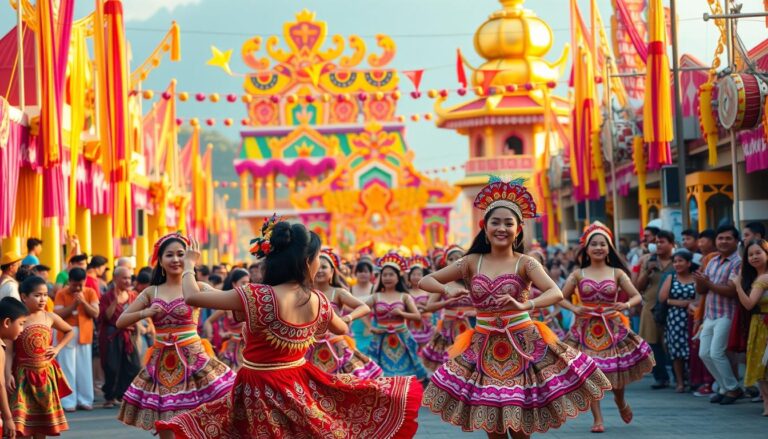
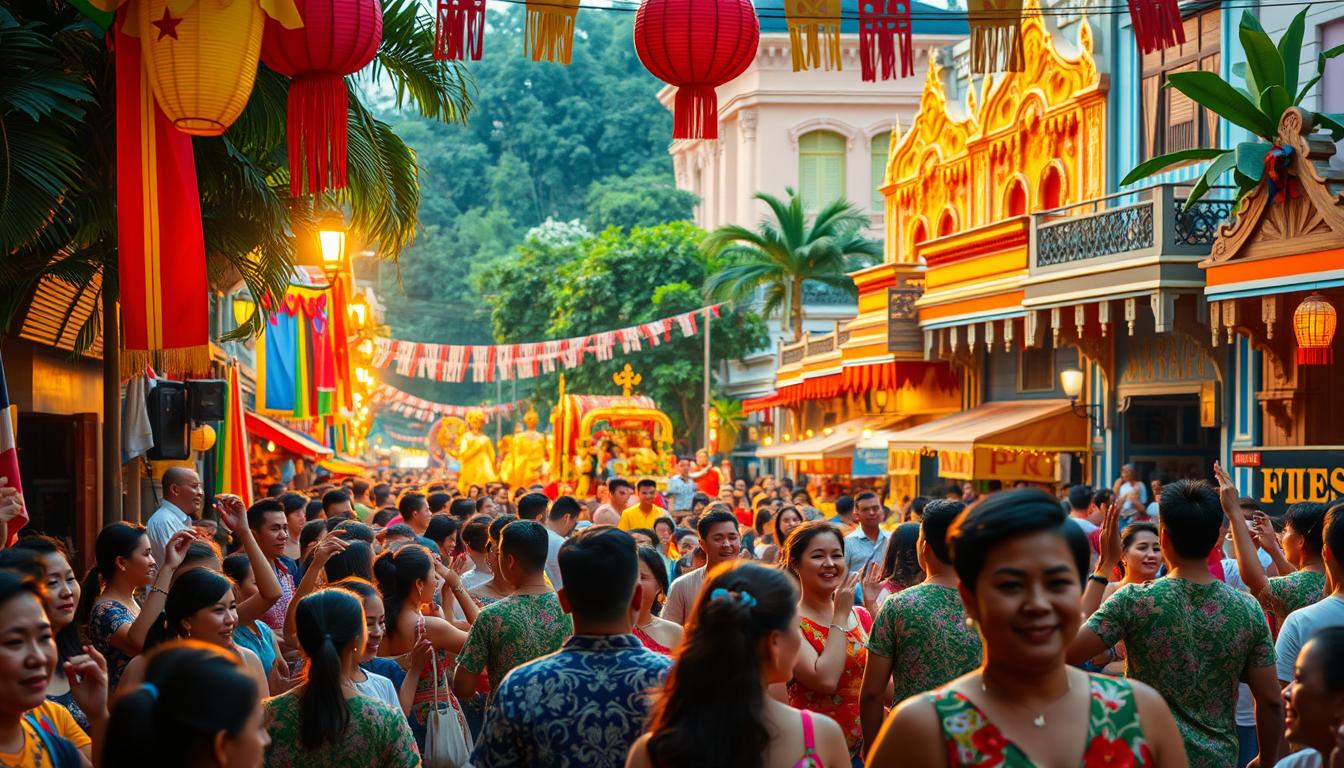
Colorful banderitas fluttering overhead welcome you to a genuine community gathering. The air fills with aromatic smoke from outdoor kitchens where families prepare feasts together. This is where authentic Filipino culture comes alive.
Embracing Traditional Filipino Culture
People of all ages participate in activities passed down through generations. Children fly hand-made kites in open fields while elders share stories. The entire barrio becomes one big family celebration.
These gatherings maintain their charm through simple pleasures. Impromptu basketball games and folk games create spontaneous fun. Visitors quickly become part of the local community.
The Role of Music, Dance, and Feasting
Evening brings the “Sayawan sa Plaza” where everyone dances under the stars. Young children and senior citizens alike join the dance. Traditional songs mix with modern favorites.
Food becomes a language of love during these celebrations. Families compete to offer generous spreads to visitors. Special dishes like tinola with native chicken showcase authentic flavors.
Real-life Stories from Rural Philippines
In places like San Isidro, Batangas, hosts prepare sumptuous pork dishes. The tradition of hopping from house to house continues. Each home offers merienda fare alongside main courses.
These celebrations differ from commercial city festivals. The smaller scale creates meaningful cultural exchanges. Visitors experience genuine hospitality that creates lasting memories.
The Rich History and Cultural Significance of Fiestas
Spanish galleons brought more than spices to the islands – they introduced the tradition of patron saint celebrations. Over 400 years of history have shaped these vibrant community fiestas. They blend Catholic traditions with indigenous Filipino values.
Evolution from Religious Feasts to Community Celebrations
What began as purely religious observances transformed into comprehensive community events. Spiritual devotion merged with cultural expression and social bonding. These celebrations became an essential part of local identity.
Communities maintain the tradition regardless of economic circumstances. This reflects deep-rooted values of faith and togetherness. The festival spirit unites people across generations.
The Heritage of Patron Saints and Fiesta Traditions
Each barrio, town, and city has its own designated protector. Their feast day becomes the most important annual celebration. Specific saints like San Isidro (May 15) honor farmers’ contributions.
| Patron Saint | Celebration Date | Community Significance | Traditional Elements |
|---|---|---|---|
| San Isidro | May 15 | Agricultural communities | Farm blessings, harvest themes |
| Nuestra Señora dela Salvacion | May 24-25 | Coastal towns | Processions, fishing rituals |
| Various Local Saints | Throughout the year | Neighborhood identity | Palo-sebo, community feasts |
The tradition continues strong in diaspora communities. The Maui Barrio Fiesta celebrated over 42 years of continuous tradition. Filipino plantation workers brought these customs in 1906.
Understanding this rich history helps appreciate the depth of these living traditions. Each celebration connects present-day joy to centuries of heritage. It’s a special time when communities honor their past while celebrating together.
Why Every Nomad Should Experience a Barrio Fiesta in Philippines
Beyond the typical tourist routes lies a vibrant celebration that transforms visitors into honored guests. This cultural immersion goes far beyond observing traditions—it invites participation in authentic community life.
A Unique Blend of Adventure and Tradition
The barrio fiesta offers an adventure unlike any standard tourist attraction. Visitors navigate house-to-house visits where hospitality flows freely. Each home welcomes strangers with generous food offerings.
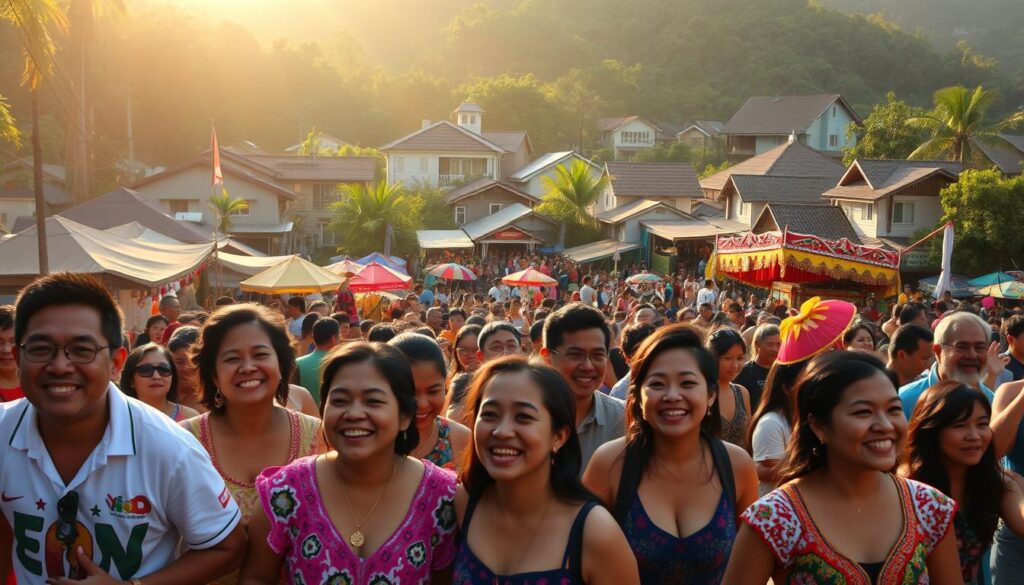
Rural landscapes reveal stone bridges crossing pristine rivers. Lush greenery surrounds communities where modern homes stand beside traditional elements. The experience feels like stepping into a living museum.
Spontaneous moments define this special time. Watch boys fly hand-made kites in open fields. Discover fruit varieties rarely seen in markets. The barrio becomes your classroom in Filipino heritage.
This trip provides deeper satisfaction than conventional attractions. Genuine connections form quickly between visitors and hosts. The memories created in these places often become travelers’ most cherished stories.
Savoring Authentic Filipino Cuisine and Hospitality
Hospitality takes center stage during these vibrant community gatherings centered around food. The entire barrio fiesta experience revolves around generous sharing and warm welcomes.
Traditional Dishes That Define the Fiesta Experience
Families prepare elaborate spreads featuring Spanish-influenced pork dishes. These include menudo, adobado, and estofado. Each home showcases their culinary pride.
Special dishes like tinola use native chicken from backyard farms. The preparation involves large kawas that can feed dozens of people. Lechon smoke signals the celebration’s start.
| Traditional Dish | Key Ingredients | Cooking Method | Cultural Significance |
|---|---|---|---|
| Lechon | Whole pig, herbs | Open-fire roasting | Symbol of prosperity |
| Tinola | Native chicken, ginger | Simmering in kawas | Homegrown authenticity |
| Menudo | Pork, potatoes, carrots | Slow stewing | Spanish heritage |
| Puso | Rice, palm leaves | Steaming in packets | Portable tradition |
The Warmth of Family and Community Gatherings
Visitors experience remarkable hospitality throughout the day. Families compete to offer the most generous spreads to friends and strangers alike.
“Food is the language of love in our culture. When we share our table, we share our hearts.”
The tradition of house-to-house eating creates lasting bonds. Each home becomes a special place for connection. Hosts even provide pasalubong gifts like fresh mangoes.
This extraordinary community spirit turns meals into meaningful celebrations. The shared food experience strengthens relationships among all people present.
Modern Twists and Timeless Traditions in the Fiesta
The evolution of these community gatherings shows how Filipino culture adapts while preserving its essence. Each barrio fiesta now features a fascinating mix of old and new elements that create unique celebrations every year.
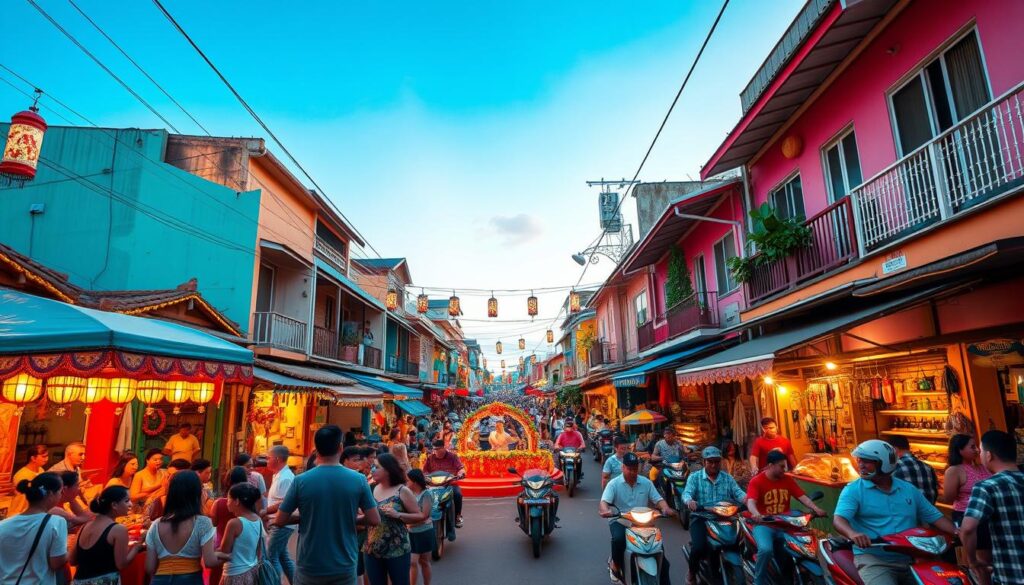
College students often film vlogs during the event, capturing moments alongside elders who request classic songs from decades past. High-powered tractors now work fields once plowed by carabaos, showing practical modernization.
Bridging Past and Present in Local Celebrations
Traditional activities continue to thrive year after year. Indigenous games like sungka tournaments and pabitin remain popular. The palo-sebo greased pole climbing contest still draws enthusiastic participants.
Evening dance activities on open ground bridge generations beautifully. Young people and seniors gather under the stars during balik-barangay night. They enjoy both contemporary music and nostalgic classics.
Modern additions include expanded beauty pageant categories celebrating all ages. These range from Baby Queen to Mother Queen. The inclusive approach honors every generation in the community.
Some diaspora communities have added practical services to their celebrations. Philippine Consulate outreach at events like the Baggak Festival offers passport renewals. This shows how the event adapts to current needs.
Despite these modern twists, the core purpose remains unchanged. Religious devotion, community bonding, and generous hospitality define each barrio fiesta. The fundamental structure ensures these gatherings stay meaningful year after year.
Conclusion
Imagine a travel experience where strangers become friends and every visitor is treated like honored family. The local barrio fiesta offers this genuine connection that transforms any trip into something truly special.
Whether it’s your first time visiting or you’re returning after years, these celebrations provide unforgettable memories. The delicious food, joyful dance activities, and warm hospitality create a complete cultural immersion.
Use this article as your guide to find upcoming festival dates in different places. The fun and connections you’ll make become stories to share for years to come.
Of course, the true treasure isn’t just the event itself. It’s becoming part of a community that welcomes you home. This day or night celebration will change your understanding of Filipino life forever.