Dinagyang Festival in Iloilo City: Complete Visitor Guide
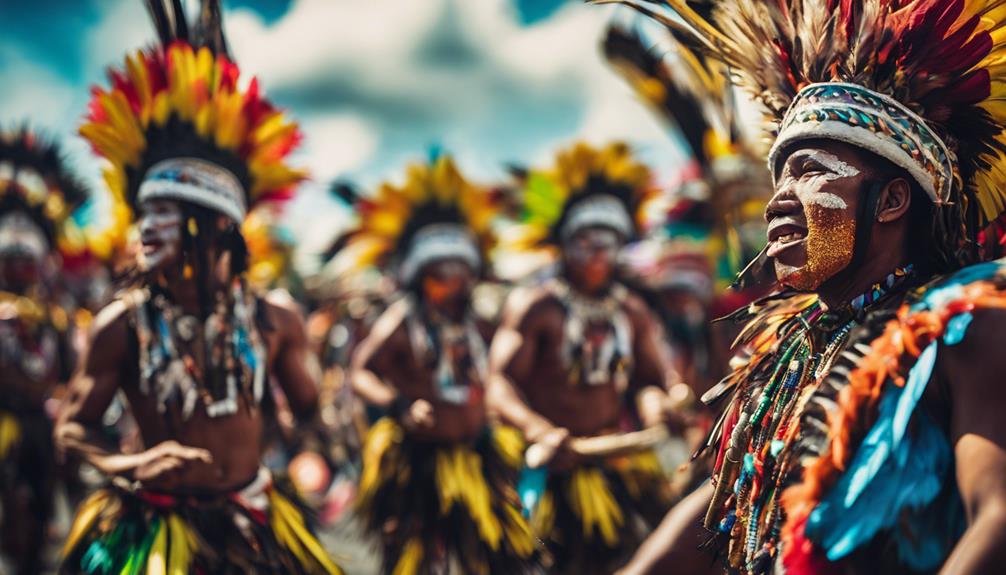
The Dinagyang Festival is Iloilo City’s most spectacular and culturally significant event, held every fourth weekend of January to honor Señor Santo Niño (the Holy Child Jesus).
Recognized as one of the Philippines’ most prestigious and well-organized festivals, Dinagyang combines deep religious devotion, vibrant cultural performances, and energetic street celebrations that draw hundreds of thousands of local and international visitors each year.
The festival, which started in 1968, captures the essence of ‘dágyang’ a term from the Ilonggo language meaning merrymaking. From the vibrant street dancing to the grand parade with its indigenous instruments, you’re plunged into a resonant historical tapestry of the Philippines. With each dance and costume, the festival not only commemorates, but actively preserves the rich cultural heritage of the region.
Discover what more this vibrant festival reveals about Filipino cultural identity and historical devotion.
Key Takeaways
- Dinagyang Festival is a vibrant celebration honoring Señor Sto. Niño de Cebu with elaborate costumes and tribal dances.
- The festival originated in 1968 as a religious tribute and has grown to include cultural performances from local tribes.
- Participants compete in street dancing and performances that highlight the cultural heritage of the Ati tribes.
- Kasadyahan Festival, part of Dinagyang, showcases the diverse cultural and culinary traditions of Western Visayas.
- The festival is famous for its grand parade, rhythmic beats, and a fireworks display that attract international tourists.
What is the Dinagyang Festival?
Dinagyang is a world-class festival known for its highly choreographed street dancing, elaborate tribal costumes, and powerful drum performances. Participants, known as tribus (tribes), compete in a grand showdown that depicts the story of the Ati people (the indigenous inhabitants of Panay) and their connection to the Santo Niño.
The festival is not only a display of artistic excellence but also a profound expression of faith and Ilonggo heritage.
Key Facts at a Glance
| Aspect | Details |
|---|---|
| Location | Iloilo City, Philippines |
| Date | 4th weekend of January (Friday–Sunday) |
| Origin | 1968, started by Rev. Fr. Ambrosio Galindez |
| Meaning of “Dinagyang” | From the Hiligaynon word “dágyang” – merrymaking, revelry |
| Religious Significance | Honors Señor Santo Niño de Cebu |
| Main Attractions | Ati Tribes Competition, Kasadyahan Festival, ILOmination, Religious Processions |
| UNESCO Recognition | Iloilo City is a UNESCO Creative City of Gastronomy (linked to Kasadyahan food events) |
| Tourist Volume | 200,000+ visitors annually |
Historical Background & Evolution
The festival traces its roots to 1968 when a replica of the Santo Niño de Cebu was brought to Iloilo City by Rev. Fr. Ambrosio Galindez. What began as a simple parish celebration evolved into a major cultural and religious event. By the 1970s, the festival incorporated Ati tribal themes to commemorate the story of the 13th-century Barter of Panay, where the Ati people welcomed Malay settlers. This historical narrative became the core of the modern street dancing competition.
In 1977, the festival was officially named “Dinagyang” to capture its joyful, celebratory spirit. Over the decades, it has grown into a multi-day extravaganza featuring not just dance competitions, but also food festivals, music events, and religious activities, earning accolades such as the Philippines’ Best Tourism Event and recognition from the Asian Tourism Association.
Dinagyang Festival Overview
Why does the Dinagyang Festival in Iloilo stand out as a premier cultural event in the Philippines? You’ll find that this festival isn’t just a celebration; it’s a vibrant showcase of the unique heritage and spirited community of Iloilo. Rooted deeply in the cultural bedrock of the Philippines, the Dinagyang Festival transcends the typical festivity norms with its intricate blend of religion, history, and local customs.
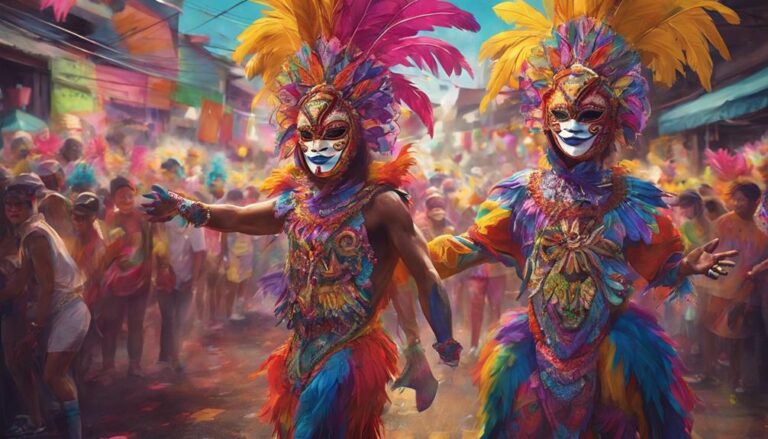
Celebrating the Señor Sto. Niño de Cebu, the festival transforms Iloilo into a pulsating canvas of elaborate costumes, rhythmic drumbeats, and dynamic tribal dances. These performances aren’t merely for show but are a fierce competition among local tribes, each vying to narrate their version of Iloilo’s historical and cultural saga through choreographed artistry and spirited storytelling. This competition is a highlight, emphasizing not only entertainment but also the preservation of Iloilo’s ancestral narratives.
What sets Dinagyang apart in a country with over 42,000 festivals is its ability to merge solemn religious observances with jubilant cultural expressions, creating a multifaceted celebration that appeals to both devout pilgrims and enthusiastic tourists.
Etymology of Dinagyang
As you explore the origins of the Dinagyang Festival, you’ll find the name itself steeped in the local language of the Ilonggo people. ‘Dinagyang,’ derived from ‘dágyang,’ encapsulates the essence of merrymaking and celebration, reflective of the festival’s lively and exuberant spirit.
Origin of “Dinagyang”
The term ‘Dinagyang,’ derived from the Hiligaynon word ‘dágyang’ meaning merrymaking, captures the essence of festive joy and celebration that the festival is renowned for. Originating from a vibrant, lively tradition, Dinagyang not only epitomizes the cultural spirit but also enhances the social fabric of Iloilo.
Consider these elements that vividly bring the festival to life:
- Colorful Costumes: Participants don vibrant, intricate outfits that shimmer under the sun.
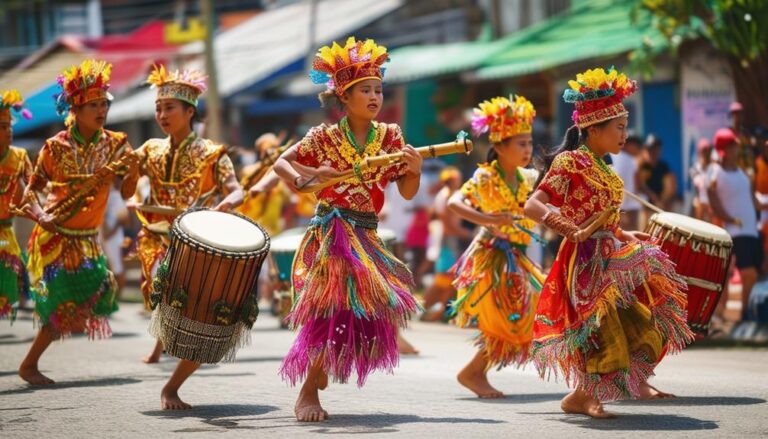
- Rhythmic Drumbeats: The air fills with pulsating sounds that beckon even the shyest to dance.
- Elaborate Dances: Each performance narrates stories of devotion and local history.
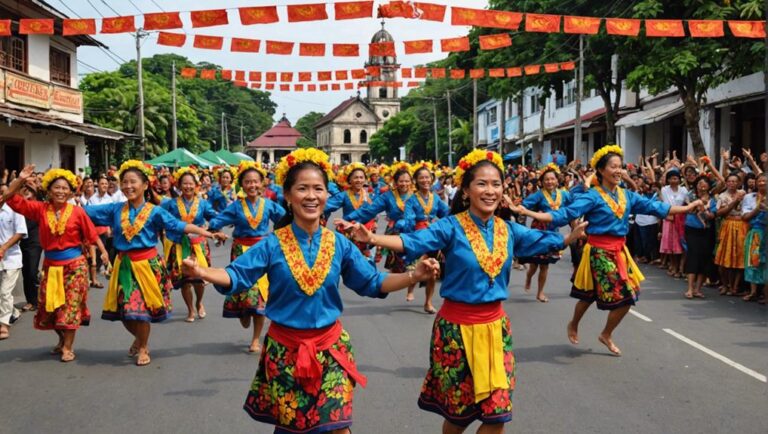
- Joyous Crowds: Streets brim with locals and tourists alike, all united in celebration.
Historical Background
Dinagyang Festival’s origins trace back to 1968 when Rev. Fr. Ambrosio Galindez introduced this vibrant celebration to Iloilo, inspired by a gifted replica of Santo Niño de Cebu. Initially a modest church event, it has burgeoned into a significant cultural festival. Here’s a glimpse of how it evolved:
- Introduction of Santo Niño: The festival in Iloilo City began as a religious tribute to the Santo Niño, reflecting the historical background of Spanish influence and the adoption of Christian icons in local festivals.
- Participation of Tribes: Various local tribes started participating, showcasing their diverse cultural heritage through elaborate costumes and choreographed dances.
- Expansion Beyond Religion: While it retains a spiritual core, the festival now celebrates the broader cultural spectrum of the city, integrating elements beyond mere religious homage.
- Attracting Global Attention: Dinagyang has transcended local boundaries, drawing international tourists fascinated by its vibrant display and the spirited atmosphere of Iloilo.
Dinagyang Winners, prizes & notable moments (2018–2025)
| Year | Grand Champion (Tribu) | Representing (school / district) | Prize (reported) | Notable moment |
|---|---|---|---|---|
| 2025 | Tribu Paghidaet | La Paz National High School (La Paz) | ~₱1.2M cash (reported), trophy; various special/technical awards. | Paghidaet reclaimed the crown (La Paz) and won multiple technical/special awards (Best in Costume, Best Performance); tickets reportedly sold out for the 2025 edition. turn1search4turn1search11 |
| 2024 | Tribu Pan-ay | Fort San Pedro National High School (Iloilo City Proper) | ₱1,000,000 cash + trophy; Iloilo City Government / partners awarded up to ₱25M worth of school projects. | Pan-ay’s win was called a surprise by some commentators — Pan-ay received a large package of cash + multi-million school projects (wide local coverage). |
| 2023 | Tribu Parianon | District of Molo | ₱1,000,000 cash + trophy (reported) | Parianon also performed strongly in special awards; Dinagyang 2023 winners widely reported across regional media. turn0search6 |
| 2022 | Tribu La Paz | District of La Paz | ~₱100,000 (Dinagyang Digital 2022 — different format) + trophy | 2022 was the “Dinagyang Digital” edition (pandemic era) — prize amounts and format differed from normal on-street editions. |
| 2021 | (No conventional/one-off champion) | — | — | Many live events were still affected by COVID restrictions; 2021 saw alternative/limited programming. |
| 2020 | Tribu Paghidaet | La Paz National High School | Reported package: trophy + ~₱5,000,000 (cash & school projects) / multiple reports cite ₱1M–₱5M packages depending on component; also took many minor awards. | Paghidaet swept several awards (Best Music, Best Choreography, Best Production Design) and made headlines for the sweep. |
| 2019 | Tribu Ilonganon | Jalandoni Memorial National High School (Lapuz) | Reported cash prize and trophy (local reports show ~₱300,000+ for champion) | New champion in 2019 — Ilonganon bested several favorites in a highly competitive year. |
| 2018 | Tribu Panayanon | Iloilo City National High School (Molo) | Reported cash prize + trophy (local reporting) | Panayanon’s performance won Best Choreography / Best Musicality in coverage and was celebrated as a standout year. |
Major Events & Highlights
1. Ati Tribes Competition
The centerpiece of Dinagyang, where competing tribus (often representing schools, communities, or organizations) perform highly synchronized dances depicting the Ati’s history, faith, and daily life. Key elements include:
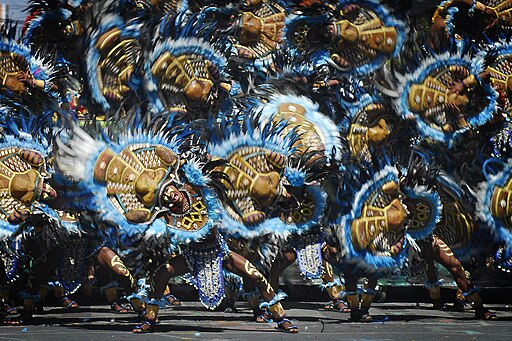
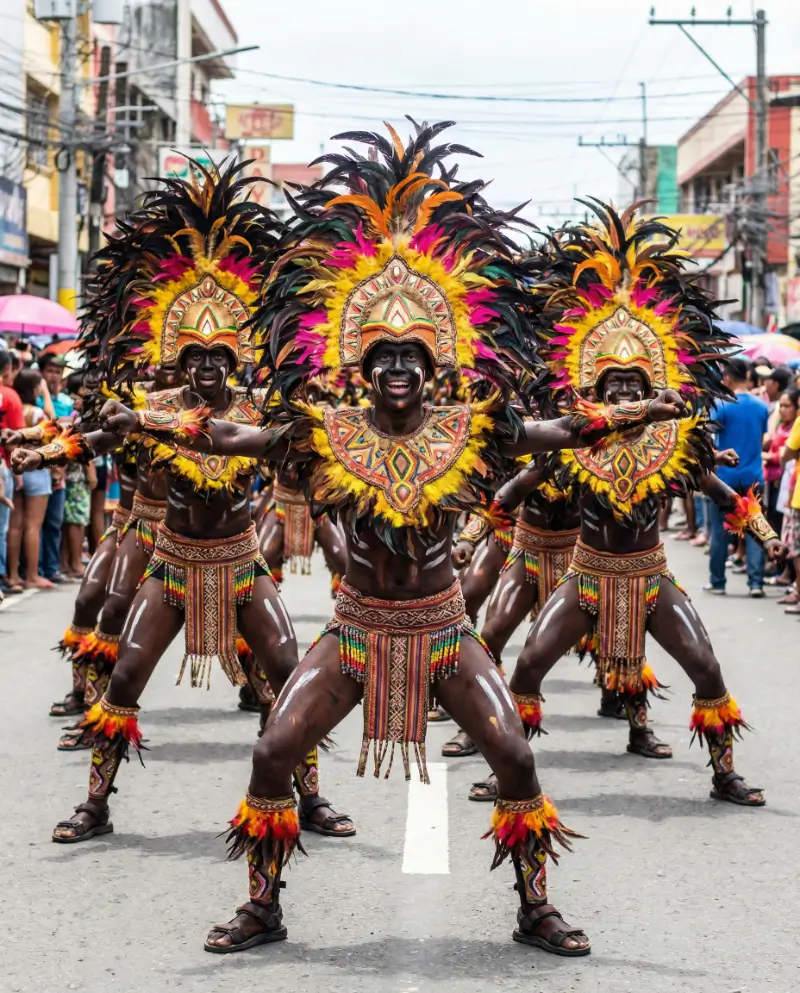
- Vibrant, indigenous-inspired costumes made from natural materials, feathers, and bold colors.
- Powerful, rhythmic drumbeats that drive the performance.
- Storytelling through dance – often showing the arrival of the Santo Niño, the Barter of Panay, or the Ati’s conversion to Christianity.
- Judging criteria: choreography, musicality, costume design, and overall impact.
2. Kasadyahan Festival
A cultural showcase held on the Saturday before the main competition, featuring performances from towns across Western Visayas. It highlights:
- Traditional dances, music, and rituals from different provinces.
- Colorful floats and street parades.
- A celebration of local gastronomy – with over 700 kiosks offering Ilonggo delicacies like La Paz Batchoy, Pancit Molo, and fresh seafood.
3. ILOmination and Parade of Lights
A mesmerizing nighttime event where participants wear LED-lit costumes and parade through the streets. Floats and dancers glow in the dark, creating a magical visual spectacle accompanied by music and fireworks.
4. Religious Activities
- Fluvial Procession: A river parade carrying the image of Santo Niño along the Iloilo River.
- Thanksgiving Masses and solemn processions at the San Jose de Placer Church.
- Pahilot: A traditional blessing ritual where devotees are touched with the Santo Niño image for healing.
5. Food Festival & Culinary Events
Iloilo, a UNESCO Creative City of Gastronomy, offers food fairs and pop-up markets during Dinagyang. Don’t miss:
- Street food galore: from inasal (grilled chicken) to kwek-kwek (battered quail eggs).
- Local specialties: Kansi (sour beef soup), Biscocho (toasted bread), and Baye-Baye (coconut rice cake).
Tips for Visitors
- Book Early: Accommodations fill up quickly. Consider staying in nearby towns if Iloilo City is fully booked.
- Wear Comfortable Clothing: Expect hot weather and crowded streets. Light clothing, hats, and comfortable shoes are essential.
- Respect Traditions: Remember that Dinagyang is both a cultural and religious event. Be respectful during religious processions and ceremonies.
- Try the Food: Explore beyond the festival grounds – Iloilo is a food lover’s paradise.
- Plan Your Viewing: Major competitions require tickets for grandstand seats. For free viewing, arrive early to secure a good spot along the parade route.
How Dinagyang Enhances Filipino Cultural Identity
It preserves indigenous Ati narratives while celebrating the fusion of pre-colonial, Spanish, and modern influences. Through its dynamic performances, the festival:
- Keeps local history alive for younger generations.
- Promotes regional pride and unity.
- Showcases Filipino artistry on an international stage.
- Strengthens the community through collective preparation and celebration.
How to get there
By air (fastest)
Fly into Iloilo International Airport (ILO),the nearest airport serving Iloilo City. The airport is about 20–22 km from Iloilo City Proper (Freedom Grandstand area) and is typically a 20–30 minute taxi or rideshare depending on traffic. Expect taxi/ride fares roughly ₱350–₱500 from the airport to the city centre. turn0search5
Common routing:
- From Manila or Cebu: frequent direct flights to ILO (flight time ~1–1.5 hours from Manila).
- On arrival take a metered taxi, Grab/Angkas (if available) or airport shuttle/UV Express to your hotel or the city.
By sea (cheaper, slower)
There are ferry services between Manila ⇄ Iloilo (and other ports). Ferry crossings take ~20–33 hours depending on the service/class and can be cheaper than flying, useful if you want to travel with a lot of baggage or prefer overnight travel. Book ferries in advance during festival season. turn0search18
By land (from other Panay locations)
If you’re already in Panay (e.g., Boracay, Kalibo), take a bus/van to Iloilo (times vary). From Cebu you can fly (fastest) or take mixed ferry routes.
Getting around Iloilo during the festival
- Taxis / rideshares (Grab): easiest and recommended when streets are crowded.
- UV Express & multicabs: cheaper, runs between terminals and districts; useful to reach neighborhoods like Jaro, La Paz, Arevalo.
- Walking: many festival areas are pedestrianized; bring good shoes.
- Traffic & road closures: expect major roads near the parade route and Freedom Grandstand to be closed on main event days, plan extra travel time and follow local advisories.
Best place to watch the Ati/tribes competition
The Freedom Grandstand (Muelle Loney / Calle Real area) is widely recommended as the best paid viewing point for the tribes competition and parade; general admission along the route is possible but you must arrive very early to secure a good free spot. Book grandstand seats early.
Where to stay (convenient neighborhoods)
Top neighborhoods for festival access:
- Iloilo City Proper (near Freedom Grandstand / Muelle Loney)closest to the parade route.
- La Paz: near many competing tribus; great for food (La Paz Batchoy).
- Jaro: good mid-range options and historic sites.
Book early, hotels sell out fast during Dinagyang. Popular hotels appear on listings and aggregators.
Quick tip: Reserve accommodation and grandstand tickets as soon as official dates are announced.
Packing & safety checklist
- Lightweight clothes, hat, sunscreen, refillable water bottle.
- Portable power bank + rain poncho (sudden showers possible).
- Small daypack, cash (some vendors are cash-only), ID, hotel card.
- Keep valuables secure; use hotel safe; avoid bringing large jewelry.
- Note emergency numbers and nearest medical facility.
Sample itinerary — 1-day (Main-day, ideal if you only have Sunday)
Who it’s for: Fly in early that day or stay in Iloilo the night before. Perfect if you want to watch the Ati Tribes competition and taste festival food.
- 05:30–07:00 — Arrival / Breakfast
Arrive early (or stay nearby). Grab a quick Ilonggo breakfast (pandesal, coffee) or try local kiosks. - 07:30–08:30 — Head to parade route / secure spot or grandstand
If you have grandstand tickets, arrive early to avoid queues. For free viewing, find a space along the parade route near the Freedom Grandstand. - 09:00–12:30 — Ati Tribes Competition (performances)
Watch competing tribus perform their choreographed routines, this is the day’s highlight. - 12:30–14:00 — Lunch & street food
Sample La Paz Batchoy or nearby festival kiosks / food stalls. - 14:00–16:00 — Explore nearby heritage sites
Quick walk to Calle Real, Muelle Loney, or visit J. Ledesma Mansion and heritage churches if time allows. - 16:00–18:00 — Wander Kasadyahan stalls / food fair
Enjoy cultural stalls, shopping for local crafts or festival souvenirs. - 18:30 onwards — Head back or catch evening flights
If you must leave, leave plenty of time for traffic; taxis/ride-hailing available but often in high demand after events.
Notes: If you’re flying out the same day, plan for at least 2–3 hours travel plus airport check-in time, consider staying overnight instead.
Sample itinerary — 2-day (Best for first-time visitors)
Who it’s for: Visitors who want a fuller Dinagyang experience: Kasadyahan, ILOmination, main Ati competition, and local food.
Day 1 — Saturday (Arrive & Kasadyahan + ILOmination)
- Morning: Arrive at ILO airport; transfer to hotel in La Paz or City Proper. Check in and rest.
- 11:00–14:00: Light lunch; explore La Paz market / try famous batchoy.
- 15:00–17:30 — Kasadyahan Festival (cultural showcase)
Watch cultural groups and floats — great for photos and learning regional dances. - 18:30–21:30 — ILOmination / Parade of Lights
Evening illuminated parade, LED costumes and floats; spectacular photo ops. - Late: Dinner at a recommended local restaurant; rest early for main day.
Day 2 — Sunday (Main Ati Tribes Competition: Grand Champion Day)
- 06:00–08:00 — Early breakfast & head to Freedom Grandstand
If you have grandstand seats, arrive early for the best views. If not, secure a free viewing spot along the route. - 09:00–13:00 — Ati Tribes Competition (performances & parade)
Spend the morning watching the major performances. - 13:00–15:00 — Champion announcement & celebratory lunch
Enjoy celebratory snacks; many food stalls remain open. - 15:00–17:00 — Quick city highlights
Visit Iloilo Esplanade or Jaro Cathedral (if time). - Evening — Depart or continue exploring Iloilo
If you’re leaving the next day, take a leisurely dinner and pack.
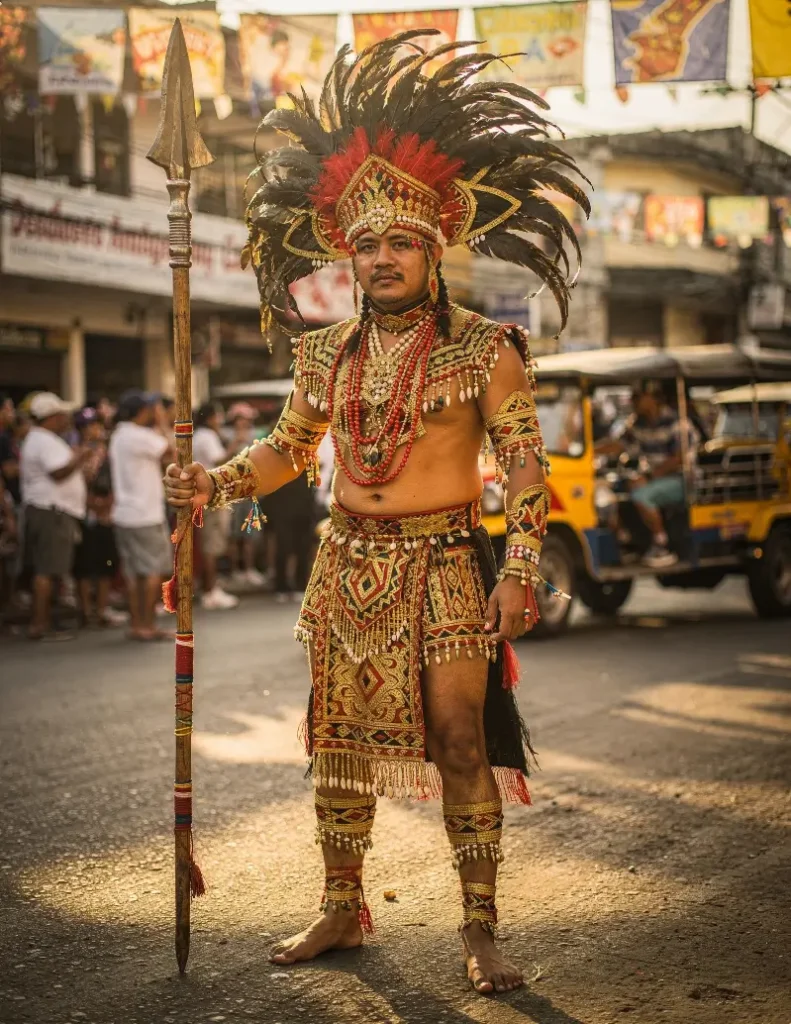
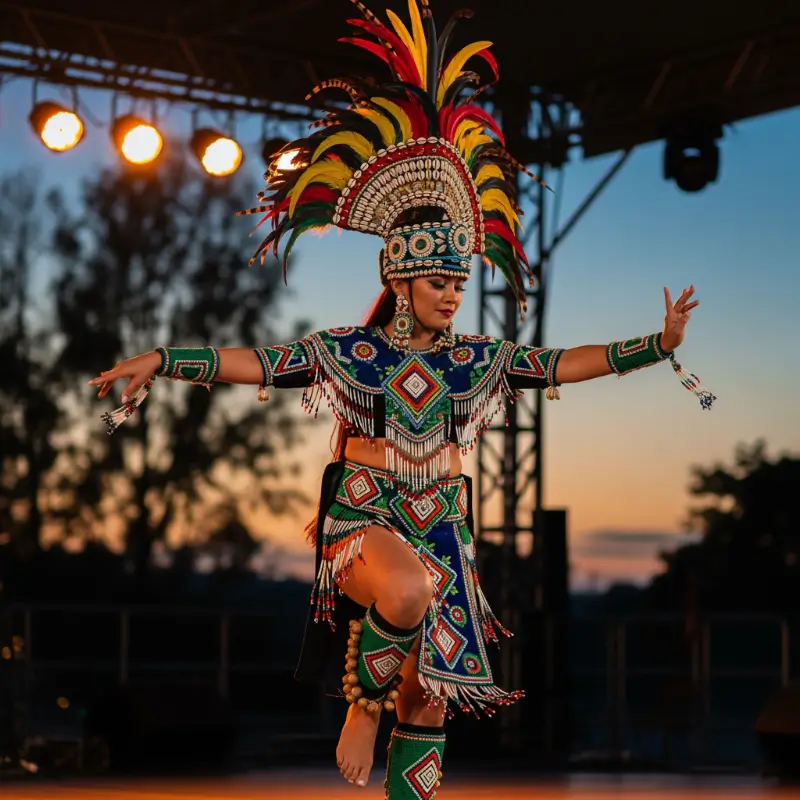
Dinagyang Festival Costume Ideas



Interesting Facts About The Dinagyang Festival
- 📝 The name Dinágyang was coined from the Hiligaynon word dagyang (meaning “merrymaking”) by broadcaster Pacifico Sudario in 1977 to distinguish Iloilo’s celebration from other Ati-Atihan festivities.
- 🕊️ The festival traces to a replica of the Santo Niño gifted to San Jose Parish in Iloilo in 1968, that small church event is what eventually ballooned into today’s citywide Dinagyang.
- 🛖 In 1977 organizers invited an actual Ati tribe from the Barotac Viejo mountains to perform, that early participation by Indigenous Ati people became a visible (but complex) part of the festival’s origin story.
- 🌙 Dinagyang isn’t only daytime noise: the event features ILOmination, a night parade where performers wear illuminated/LED tribal costumes, a modern spectacle not every Philippine festival has.
- 🎵 The shout “Hala Bira, Iloilo!” was popularized by the festival’s official anthem (composed in the early 2000s by Rommel Salvador N. Chiu with lyrics/vocals by Dante M. Beriong), it became one of the first widely adopted festival theme songs in the Philippines. turn1search3
- 🏆 Dinagyang is unusually decorated with awards, it’s among the most-awarded festivals in the country and has repeatedly won at Aliwan Fiesta and international festival award circuits.
- 🤝 Despite being inspired by Ati culture, many of the original Ati communities do not directly share the festival’s economic windfall and often participate non-competitively or are represented symbolically rather than as beneficiaries.
- 🪘 Dinagyang helped professionalize and popularize synchronized “tribal” choreography, staged blocks, and drum/chant scoring, performance techniques now copied by competing troupes across the Philippines.
- ✍️ The switch from the older name “Iloilo Ati-Atihan” to Dinagyang was a deliberate move (in the late 1970s) to create a distinct Iloilo brand and tourism identity rather than be seen as a copy of Kalibo’s Ati-Atihan.
- 🌏 Beyond pageantry, Dinagyang has been used as a platform for development and cultural diplomacy (it has been noted by organizations like the ADB/UN in program contexts), showing the festival’s role in local governance and tourism strategy, not just entertainment.
Frequently Asked Questions
What Date Is Dinagyang 2025?
the Dinagyang Festival in Iloilo City, Philippines will likely be held on the fourth Sunday of January in 2025. he main celebration day of the Dinagyang Festival is expected to fall on Sunday, January 26, 2025. However, the full festival events may span multiple weeks in January 2025, likely starting around January 10-12 and ending on January 26 or shortly after.
Who Won Dinagyang Festival 2024?
Tribu Pan-ay of Fort San Pedro National High School emerged as the grand champion in the Dinagyang Tribes Competition at the 2024 Dinagyang Festival in Iloilo City. Tribu Pan-ay received P25 million worth of school projects, a P1 million cash prize, and a trophy
Is the Road Closed in Iloilo Dinagyang 2025?
Yes, typical road closures occur to facilitate large-scale events, ensuring safety and smooth proceedings. Check local announcements for specific details and alternate routes.
What Is Iloilo Known For?
You’d find Iloilo renowned for its exceptional colonial architecture, UNESCO-labeled gastronomy, and warm, hospitable locals. It’s a city that epitomizes cultural richness and a deep sense of community pride in the Philippines.