Comparing Internet Speeds Across Philippine Islands

Welcome to your essential guide on digital connectivity in the Philippines. This beautiful country, made up of thousands of islands, offers a unique and varied experience for anyone going online.
Delivering consistent service across such a diverse landscape presents real challenges. The experience can change dramatically from bustling urban centers to tranquil coastal towns. Understanding these differences is crucial for daily life, work, or travel.
We will explore the latest data on fixed broadband and mobile performance. This guide helps you see where you can find the fastest and slowest connections. It is perfect for digital nomads, businesses, or tourists wanting to stay connected.
You will also learn how new technologies and investments are shaping the future of web access here. Get ready for a clear and helpful look at the digital landscape.
Key Takeaways
- The Philippines’ geography creates significant variations in web access quality.
- Connectivity can differ greatly between major cities and remote areas.
- Understanding speed differences is vital for residents, travelers, and businesses.
- Both fixed-line and mobile options show distinct performance patterns.
- Government and private sector initiatives are actively improving the national network.
- Emerging technologies like 5G are starting to influence service availability.
Overview of Internet Connectivity in the Philippines
Navigating the web access environment in this archipelagic country reveals a story of progress and persistent challenges. The nation has climbed to second place in Southeast Asia for digital infrastructure availability. This marks significant improvement over time.
Historical Context and Recent Improvements
Not long ago, the country trailed behind regional neighbors in digital development. Today, both public and private investments drive meaningful change. The economy’s rapid growth fuels demand for better services.
Recent data shows promising momentum in network expansion. Market readiness continues to improve across the population. Mobile solutions often bridge gaps where fixed options lag.
| Metric | Philippines | ASEAN Average |
|---|---|---|
| Households with Fixed Broadband | 33% | 41% |
| Annual Cost as % of GNI | 11% | 5.5% |
| Primary Access Method | Mobile | Mixed |
Key Infrastructure Challenges Across Islands
Geography presents the biggest hurdle for nationwide connectivity. Deploying fiber across 7,000 islands requires substantial investment. Remote communities often face limited options.
“The archipelagic nature demands innovative solutions beyond traditional infrastructure.”
Affordability remains another critical barrier. Fixed broadband costs represent double the regional average. This pricing puts reliable access out of reach for many families.
Despite these obstacles, foundation work continues expanding digital networks. The focus includes both urban centers and provincial areas. Each improvement brings the country closer to digital inclusion goals.
Comparing Fixed Broadband and Mobile Internet Performance
Digital life in the archipelago is shaped by a clear divide in network performance between home and on-the-go options. Each type of service offers distinct advantages depending on where you are.
Fixed Broadband: Regional Disparities and Upgrades
Fixed-line services provide the fastest download rates for homes and businesses. The median speed reached 94.42 mbps in mid-2024.
This shows steady improvement. However, this performance still lags behind regional leaders like Singapore and Thailand.
Access is not equal nationwide. The five fastest regions are all on Luzon island. Other areas experience much slower connections.
Mobile Internet: Coverage Trends and Tourist Experiences
For widespread access, mobile internet is the leading choice. It averages around 29.65 mbps for downloads.
This ranks the country fourth in Southeast Asia for mobile speeds. It is fast enough for streaming and video calls.
Carriers like Globe offer extensive coverage, reaching about 95% of the population. This makes it a reliable option for many people.
In major cities, 4G speeds can exceed 20 mbps. This provides great connectivity for urban residents and tourists.
| Service Type | Median Download Speed (2024) | Key Strength | Best For |
|---|---|---|---|
| Fixed Broadband | 94.42 Mbps | High Performance | Homes, Offices, Heavy Usage |
| Mobile Internet | 29.65 Mbps | Wide Coverage | Travel, Rural Areas, Everyday Use |
Detailed Comparison: Comparing Internet Speeds Across Philippine Islands
Recent data paints a vivid picture of connectivity disparities between different parts of the country. Your online experience will differ significantly based on location.
Analyzing Speed Differences Among Regions
Luzon Island hosts all five of the fastest regions for fixed broadband. Each achieves download and upload rates above 90 Mbps.
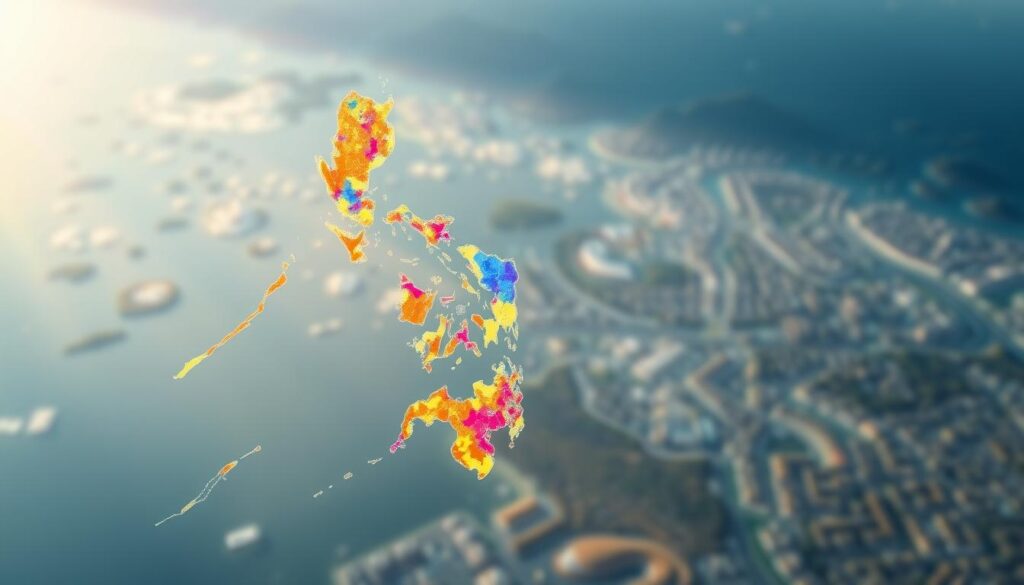
Calabarzon leads with an impressive median download speed of 99.55 Mbps. This region serves 16 million people with solid infrastructure.
Metro Manila shows the highest fixed broadband penetration at 26.4% of households. This reflects its economic importance and population density.
Eastern Visayas faces challenges with the slowest fixed median download speed of 38.43 Mbps. This is less than half of what top regions enjoy.
| Region | Median Download Speed | Household Penetration |
|---|---|---|
| Calabarzon | 99.55 Mbps | 23.4% |
| Metro Manila (NCR) | 94.42 Mbps | 26.4% |
| Eastern Visayas | 38.43 Mbps | Data Not Specified |
Nationwide improvement is encouraging. Fixed median download speed grew 51% from mid-2022 to mid-2024.
For mobile users, Manila leads with 34.36 Mbps. Quezon City and Cebu City follow with strong performance for travelers.
Impact of Fiber Deployment and Technological Shifts
A technological revolution is quietly reshaping how Filipinos access the internet across the archipelago. The shift from legacy DSL to modern fiber networks represents one of the most significant infrastructure upgrades happening today.
Back in 2022, DSL lines still accounted for 37% of total fixed broadband subscriptions. This percentage is rapidly declining as fiber deployment accelerates. By 2027, fiber is projected to constitute over 36% of all fixed lines.
Government Initiatives and the National Broadband Plan
The government’s National Broadband Plan aims to bridge the digital divide with a nationwide fiber broadband network. A key component is the National Fiber Backbone project.
Its first phase targets completion by 2026. This will enhance connectivity in Regions I, III, and the National Capital Region. Major providers are making massive investments to support this vision.
Rise of 5G and Fixed Wireless Access Innovations
The Philippines made history in 2019 when Globe launched Southeast Asia’s first commercial 5G Fixed Wireless Access service. Called Globe At Home AirFiber 5G, it offers speeds up to 100 Mbps.
This service provides an alternative where fiber isn’t available. At its peak, an estimated 4.3 million users accessed broadband through FWA. These innovations are gradually improving connectivity disparities across different areas.
Role of Satellite Broadband Options in Remote Areas
For residents in the most far-flung corners of the archipelago, a new type of connection is beaming down from the sky. Satellite broadband is a game-changer for islands where laying fiber cables is too costly or difficult.
Starlink Performance and Its Market Position
Starlink launched its service here in early 2023. Its growth has been explosive. Speedtest samples increased by 228.5% between mid-2023 and mid-2024.
Analysts project this country will become the largest satellite market in Southeast Asia. They forecast 909,000 subscriptions by 2028.
However, its current performance differs from traditional fixed broadband. Starlink’s median download speed was 48.14 mbps in Q2 2024. This is almost half the 94.42 mbps from fixed providers.
| Performance Metric | Starlink Satellite | Fixed Broadband Operators |
|---|---|---|
| Median Download Speed | 48.14 Mbps | 94.42 Mbps |
| Median Upload Speed | 12.63 Mbps | 94.13 Mbps |
| Multi-Server Latency | 50 ms | 25 ms |
The higher latency can affect real-time applications. But for basic web use, the service is a lifeline.
Despite the speed gap, Starlink fills a critical void. It offers reliable connections where only slow DSL or no access was available before. As technology improves, performance and pricing should get better for everyone.
Mobile Internet Options and Connectivity for Tourists
For travelers exploring this beautiful country, staying online is key to navigating, sharing experiences, and staying in touch. You have several great options to get a reliable internet connection.
Choosing the right solution depends on your budget and how you plan to use the web.
SIM Cards, eSIMs and Wireless Rental Services
A local SIM card is often the most budget-friendly plan. You can find packages offering 3-10GB of data for 14-30 days, with prices starting around $3.
For ultimate convenience, eSIMs are a fantastic modern alternative. You can activate them before you even land. Just scan a QR code. Make sure your phone supports this technology first.
Pocket WiFi devices are perfect for groups. You can share one connection with multiple people. Rental prices are typically $10-25 per day.
Comparison of Major Carriers: Globe, Smart, and DITO
Three main providers offer mobile internet service here. Each has unique strengths for different types of travelers.
Globe Telecom boasts the best overall coverage, making it a reliable choice for island hopping. Smart leads in 5G availability, ideal for data-heavy use. DITO provides very competitive prices, best utilized in major urban centers.
| Provider | Key Strength | Ideal Data Plan |
|---|---|---|
| Globe | Best Overall Coverage | GoSURF (Customizable) |
| Smart | Strongest 5G Network | Giga Promos (Time-based) |
| DITO | Most Competitive Prices | Data-Centric Packages |
Checking each carrier’s coverage map for your specific itinerary is a smart final step before you buy.
Regulatory and Market Influences on Internet Services
Understanding the interplay between regulation and competition is key to grasping why internet services vary so much in this Southeast Asian country. The regulatory environment and market dynamics significantly shape what connectivity options reach different communities.
The Philippines ranks 38th in Asia for market readiness, which measures how competitive the market is at delivering affordable prices. This ranking shows there’s room for improvement despite recent progress.
Investment Trends and Public-Private Partnerships
Public-private partnerships are increasingly important for expanding coverage. Major telecommunications companies work alongside government agencies to upgrade infrastructure for underserved communities.
The pandemic was a turning point for Southeast Asia. Broadband subscriptions surged substantially as people needed connectivity for remote work and education. An impressive 92% of all subscriptions in the region are mobile rather than fixed.
As the fastest-growing economy in Southeast Asia in 2023, the Philippines saw rising disposable incomes. This means more people can afford better connectivity solutions and demand higher-quality services.
Investment trends show continued commitment from both domestic and international players. They see the Philippine market’s potential despite challenges related to geography and regulatory complexity.
Conclusion
As we conclude our exploration of web access throughout the archipelago, clear patterns emerge. The digital landscape shows remarkable progress despite geographical hurdles.
Over the past year, significant improvements have transformed connectivity for many people. Fixed broadband performance saw impressive gains, while mobile services continue reaching remote communities.
Looking ahead, ongoing investments in fiber and new technologies promise even better connections. Whether you live here or plan to visit, understanding these services helps you make smart choices.
The future looks bright for digital access across this beautiful country. Better network infrastructure means more opportunities for everyone to stay connected.