First Mass in the Philippines: Limasawa, 1521 and the Historical Debate
The first Mass in the Philippines that history documents took place on Easter Sunday, March 31, 1521. Father Pedro de Valderrama, chaplain of Ferdinand Magellan’s fleet, celebrated it on an island that the chronicler Antonio Pigafetta called Mazaua. The Philippine government, through the National Historical Commission of the Philippines (NHCP), recognizes that island as Limasawa in Southern Leyte.
Some historians and local advocates argue for Masao in Butuan instead. This guide sets out what the sources say, what the NHCP decided, and where the disagreement still lives. It treats the official position as the official position, and the opposing view as a view that remains alive.
Quick Facts: First Mass in the Philippines
| Question | Short answer |
|---|---|
| Date | March 31, 1521, Easter Sunday |
| Celebrant | Father Pedro de Valderrama, the only priest in Magellan’s expedition |
| Name in the main eyewitness source | “Mazaua” (Pigafetta) |
| Official site | Limasawa Island, Southern Leyte |
| Main rival claim | Masao, Butuan, Agusan del Norte |
| Official term used by NHCP | “1521 Easter Sunday Mass” |
| Most recent NHCP review | Mojares Panel, formed in 2018; NHCP resolution dated July 15, 2020 |
What Happened Before the Mass
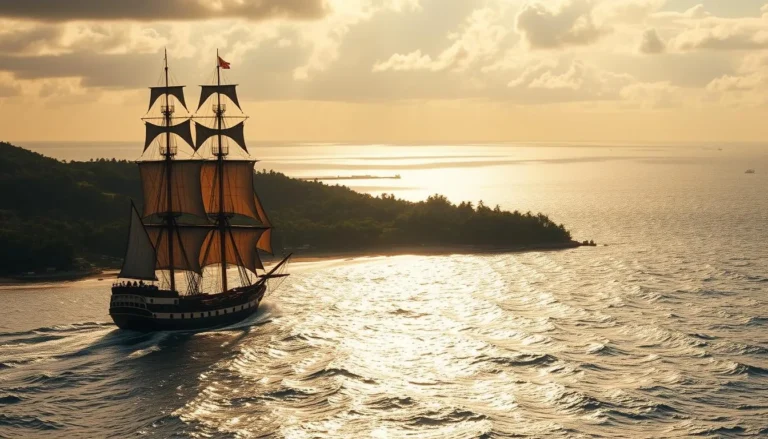
Magellan’s fleet reached the central Philippines in March 1521. According to Pigafetta’s diary, the ships sighted high land on March 16 and went ashore on an uninhabited island the next day. That island is identified as Homonhon, where the crew rested for about a week. Pigafetta recorded that they stayed eight days there.
From Homonhon the fleet sailed south along the Leyte coast. On March 28 they reached Mazaua. Pigafetta gave its position as 9 and 2/3 degrees north latitude. That figure is one of the most debated numbers in this whole controversy.
At Mazaua, Magellan met the local ruler, called Rajah Kolambu in the sources, and the ruler’s brother, Rajah Siagu. Accounts describe an exchange of gifts and a blood compact. Southern Leyte’s provincial history page calls this the first blood compact between a Filipino and a Spaniard, based on Pigafetta.
What Pigafetta Wrote About the Mass
Pigafetta is the only eyewitness who described the Mass in detail. The World Mission Magazine report on the NHCP decision, first published in the Inquirer Visayas, calls his account the most detailed and only surviving one. Other survivors, such as Francisco Albo, left logs and testimonies that help reconstruct the route.
The Limasawa Easter Sunday account runs like this:
- Magellan sent Father Valderrama ashore with some men to prepare for the Mass.
- The two rulers came to the makeshift altar with the sailors.
- Valderrama celebrated the Mass on Easter Sunday, March 31, 1521.
- That afternoon Magellan had a large cross planted on a hilltop overlooking the sea.
- The fleet left Mazaua on April 4 and entered Cebu harbor on April 7, per Pigafetta’s route as summarized in standard references.
Notice what the diary does not do. It does not call the event the “first Mass in the Philippines.” The name “Philippines” did not exist yet. It was applied later, after the 1543 Villalobos expedition. The phrase is a later label for a documented event.
Why Limasawa Is the Official Site
The government position rests on three kinds of evidence.
1. The route and the geography
Pigafetta’s route runs from Homonhon, down the Leyte coast, to Mazaua, then north and west toward Cebu. Francisco Albo’s log describes the cross being planted on a hilltop with islands visible to the west and southwest. Bernad’s 2002 re-examination argues that this fits the southern end of Limasawa and does not fit the Butuan coast. Treat that as a scholar’s argument, not a final proof.
2. The Pigafetta manuscripts
The Mojares Panel gathered the surviving Pigafetta manuscripts, including the Nancy Codex held at Yale and the Ambrosiana Codex in Milan. It also collected two French versions held in Paris. It had the passage on the Easter Sunday Mass transcribed and translated, according to the World Mission report.
3. The panels
The National Historical Institute (NHI), the NHCP’s predecessor, reviewed the question more than once. CBCP News reports that panels in 1980, 1995 and 2008 all concluded the site was Limasawa. The 2018 Mojares Panel was the fourth review.
The NHCP’s July 15, 2020 resolution adopted the Mojares Panel’s finding. In the panel’s words as reported by CBCP News, the Butuan arguments were “not sufficiently conclusive” to justify reversing the existing ruling. NHCP chair Rene Escalante said the panel agreed unanimously that the pro-Butuan evidence was not sufficient and convincing.
The Mojares Panel also endorsed a refinement from historian Rolando Borrinaga. The Mass site should be recognized in Barangay Triana rather than Barangay Magallanes. Saub Point in Triana should be recognized as the site of the cross.
Why Some Historians Say Butuan
The Butuan claim is not new. In fact, it was once the mainstream view.
How the Butuan tradition started
Bernad’s 2002 article, summarized in Wikipedia’s entry, traces the Butuan version to 17th-century writers such as Colin and Combes. They described Magellan’s route incorrectly. UP Diliman reported that the belief held until 1921, when a transcribed logbook of a pilot of the ship Victoria placed the cross on “Mazaua,” closer to Cebu. Historian Trinidad Pardo de Tavera then made the correction in the program for the 1921 Magellan quadricentennial exhibit.
The modern case for Butuan
Historian Sonia Zaide identified Masao (Mazaua) in Butuan as the Mass site, based on Pigafetta’s diary. In 1995, Representative Ching Plaza of Agusan del Norte filed a bill asserting Butuan as the site, and Congress referred the matter to the NHI. Later advocates, including historian Gabriel Atega, argued from longitude readings and from the Nancy Codex and its translation by R. A. Skelton.
How the Mojares Panel responded
The panel made two main points, as reported by World Mission Magazine:
- Longitude is unreliable. The panel called longitude measurements from the Age of Exploration “imprecise and unreliable.” It noted that the chronometer that made accurate longitude possible was invented only in the 1760s.
- The codices complement each other. The panel said Robertson and Skelton agree the codices complement each other and differ only slightly. It rejected the idea that Limasawa supporters relied on a single flawed text.
Wikipedia’s summary of the panel’s findings adds that the pro-Butuan side relied on non-eyewitness accounts written decades after the Mass. The pro-Limasawa side offered eyewitness coordinates, modern retracing of the Magellan-Elcano route, and copies of Pigafetta’s originals. Those are Wikipedia’s words about the panel’s review, so check the NHCP’s own report for the exact wording.
The dispute did not end quietly. Wikipedia reports that a Butuan advocate filed a complaint in March 2021 against panel members and Borrinaga. Treat that as a reported legal development and verify it from primary court or news records before relying on it.
Official Position vs. Rival Claims at a Glance
| Claim | Who holds it | Status |
|---|---|---|
| Limasawa, Southern Leyte | NHCP, NHI panels (1980, 1995, 2008, 2018), Catholic Bishops’ Conference of the Philippines participation in the 2018 panel | Official government position |
| Masao, Butuan | Some historians and local advocates, including Sonia Zaide and Gabriel Atega | Reviewed and not adopted by the NHCP; still argued by supporters |
| Homonhon | Position paper from the Diocese of Borongan, per Wikipedia | Described by the NHCP as an academic discussion; historians disagree on whether Masses were held there |
| Bolinao, Pangasinan (1324) | Local tradition tied to the friar Odoric of Pordenone | Scholars doubt Odoric ever reached the Philippines |
Why does Homonhon matter? Magellan’s men stayed there for days during Holy Week. A diocesan paper argued Masses could have been held there before Limasawa. The Mojares Panel’s answer was to name the Limasawa event the “First Easter Sunday Mass.” That wording separates it from other possible earlier Masses, including those said aboard ships.
“First Mass” or “First Easter Sunday Mass”?
The NHCP now uses “1521 Easter Sunday Mass.” The shift is deliberate. The old phrase “first Mass” invites claims about earlier celebrations on ships, at Homonhon, or in Bolinao. The new phrase describes a documented event on a documented date.
Most people still search for “first mass in the Philippines,” and the site of this event is Limasawa under the official ruling. The Philippine Congress also named a site in law. Republic Act No. 2733, known as the “Limasawa Law,” declared the site in Magallanes, Limasawa a national shrine in 1960, according to Wikipedia. Note the mismatch: the 2020 NHCP resolution endorses Triana, not Magallanes, as the Mass site. Visitors should expect some local signage and older sources to still say Magallanes.
Why the Debate Matters, and Why It Matters Less Than Some Think
For many Filipino Catholics, the Limasawa Mass marks the birth of Christianity in the country. The Vatican News report on the quincentennial describes it that way. It also notes that on April 14, 1521, Valderrama baptized the Cebu leader and about 800 Visayan natives. That event, and not the Mass, is where a Christian community began.
Fr. Antonio Francisco De Castro, S.J., a Mojares Panel member, made a sobering point at a UP Diliman lecture. He said the site matters little for effective evangelization, because no lasting Christian community was set up in 1521. He said it would take about four more decades for systematic evangelization.
That framing helps readers hold two ideas together. The site question is a serious historical problem with an official answer. The Mass itself was not the start of the country’s Christian communities.
Remembering the Mass Today
Limasawa marks March 31 each year with a program called Sinugdan, meaning “beginning,” according to Wikipedia. CBCP News reported that in August 2019 President Rodrigo Duterte declared March 31 a special holiday in Southern Leyte. Holiday rules can change by proclamation, so check the latest government notices before planning around it.
The Catholic Church marked the 500th anniversary with a year-long jubilee under the theme “Gifted to Give,” per Vatican News. That jubilee ran until April 22, 2022. A Mass was also celebrated at a giant cross on Homonhon during the anniversary, which shows how that island’s own claim remains part of local devotion.
If you plan to visit Limasawa, ask the Limasawa municipal government or the Southern Leyte provincial tourism office for current boat schedules, fees, and site access. I did not find verified, current figures for those, so no prices or times are listed here.
How to Read the Sources Yourself
If you want to test the claims, start with these:
- Primary: Pigafetta’s diary (the Robertson English translation is widely cited) and Francisco Albo’s log.
- Official: The NHCP’s published position on the 1521 Easter Sunday Mass and the Mojares Panel report digest from the National Quincentennial Committee.
- Scholarly: Miguel Bernad’s re-examination in BUDHI (2002), and William Henry Scott’s 1982 study, cited by the Southern Leyte provincial site.
- Context: The UP Diliman report on Dr. Antonio Sanchez de Mora’s lecture, which examined sources in Seville’s Archivo General de Indias.
Read them with one question in mind. Which statements come from an eyewitness, and which come from writers decades later?
FAQ: First Mass in the Philippines
Where was the first Mass in the Philippines held?
According to the National Historical Commission of the Philippines, the 1521 Easter Sunday Mass took place on Limasawa Island in Southern Leyte. The NHCP adopted this position in a resolution dated July 15, 2020. Some historians still argue for Masao in Butuan.
When was the first Mass in the Philippines?
It was held on March 31, 1521, which was Easter Sunday. Father Pedro de Valderrama celebrated it. Pigafetta’s account places it on the island of Mazaua.
Who celebrated the first Mass?
Father Pedro de Valderrama, an Andalusian priest and chaplain of Magellan’s fleet, celebrated it. Southern Leyte’s provincial history page and Vatican News both name him, and Wikipedia adds that he was the only priest in the expedition.
Is the Limasawa versus Butuan debate settled?
Officially, yes. The NHCP has sustained Limasawa after panels in 1980, 1995, 2008 and 2018. Publicly, the discussion continues, because advocates for Butuan have not accepted those findings. A fair summary is that the government position is settled and the opposing argument has not disappeared.
Why does the NHCP say “Easter Sunday Mass” instead of “first Mass”?
The label separates the March 31, 1521 event from other possible earlier Masses, such as those suggested for Homonhon, shipboard Masses, or the disputed 1324 account at Bolinao. Wikipedia reports that the Mojares Panel chose this wording to avoid that confusion.
What are the two main alternatives to Limasawa?
Masao in Butuan is the main rival claim and was the common belief into the 19th century and later. Homonhon is also argued for earlier Masses during the days before Limasawa. Scholars continue to disagree about Homonhon, and the NHCP has described it as an academic discussion.
Sources
- National Historical Commission of the Philippines, official position on the site of the 1521 Easter Sunday Mass (August 2020). Read the full text on the NHCP website.
- “NHCP affirms Limasawa Island as site of ‘First Easter Sunday Mass’.” CBCP News, 20 Aug. 2020, https://cbcpnews.net/cbcpnews/ncip-reaffirms-limasawa-island-as-site-of-first-easter-sunday-mass/
- Mayol, Ador Vincent, and Joey Gabieta. “Limasawa, Site of First Mass in PH.” World Mission, Dec. 2020, https://worldmissionmagazine.com/limasawa-site-of-first-mass-in-ph/
- “Limasawa vs. Butuan: the first Easter Mass.” University of the Philippines Diliman, 16 Apr. 2021, https://upd.edu.ph/limasawa-vs-butuan-the-first-easter-mass/
- Watkins, Devin. “500 years since first Mass in the Philippines.” Vatican News, 31 Mar. 2021, https://www.vaticannews.va/en/church/news/2021-03/philippines-500th-anniversary-first-mass-jubilee-celebrations.html
- “History of Limasawa.” Province of Southern Leyte, https://southernleyte.gov.ph/limasawa/limasawa-history/
- “First Mass in the Philippines.” Wikipedia, https://en.wikipedia.org/wiki/First_Mass_in_the_Philippines (used for secondary summaries of Bernad 2002, Republic Act No. 2733, and alternative claims; verify against primary references)
Time-sensitive details such as holidays, site access, fees and schedules should be confirmed with the NHCP, the Limasawa municipal government, or the Southern Leyte provincial office before you travel.