Bacolod Public Plaza: Location, History, and Travel Guide
Bacolod Public Plaza is the main civic square of Bacolod City in Negros Occidental, Philippines, strategically located across San Sebastian Cathedral and along Araneta Street in the city’s downtown area. It is a key landmark and social hub, best known as the central venue of the MassKara Festival’s major events, concerts, and civic programs. This guide explains exactly where the plaza is, how it developed historically from the early 20th century, and how today’s visitors can plan a practical, time-efficient visit, covering transport options, ideal visiting hours, and nearby points of interest, supported by verifiable details drawn from public sources including Wikipedia.
Location of Bacolod Public Plaza
Bacolod Public Plaza is situated in the heart of Bacolod City, the capital of Negros Occidental in Western Visayas, Philippines. The plaza lies at the center of the old downtown district and is bounded by some of the city’s most important streets:
- North: Gatuslao Street
- South: Gonzaga Street
- East: San Juan Street (across from San Sebastian Cathedral)
- West: Araneta Street
This location places the plaza within easy walking distance of major commercial establishments, government offices, and religious landmarks. In many maps and references (including entries summarized from Wikipedia’s article on Bacolod), the Bacolod Public Plaza is consistently cited as one of the city’s most recognizable structures and a central point of reference when navigating the urban core.
The plaza’s centrality also makes it an anchor for cultural and festival tourism content, such as resources featured on Philippine festival and travel guides that highlight MassKara Festival activities and city heritage walking tours.
History of Bacolod Public Plaza
Based on historical summaries and references collated from public-domain and Wikipedia-sourced information about Bacolod City and its landmarks, the Bacolod Public Plaza developed as a formal civic space in the early American colonial period, when town layouts in the Philippines commonly followed a Spanish-style grid with a central plaza near the main church.
Early 20th-Century Origins
Bacolod, originally a small settlement that grew from a coastal village called San Sebastián de Magsungay, became capital of Negros Occidental in the 19th century. As the city expanded and commercial activity intensified, the need for a structured public square arose. During the American administration in the early 1900s, plans for an organized urban core were implemented, and what is now known as Bacolod Public Plaza was developed as the city’s primary open space.
The plaza’s design followed typical Philippine centro layouts: a rectangular park facing the main Catholic church, with tree-lined walkways, a bandstand or kiosk at or near the center, and perimeter roads hosting civic buildings and businesses. These features, greenery, paved walkways, and a central gazebo, are still evident today, maintaining continuity with its colonial-era urban form.
Development as a Civic and Cultural Center
As Bacolod transitioned into a modern city, the plaza evolved into a core venue for political rallies, community programs, and religious activities. Historical accounts note that the plaza hosted municipal gatherings, Independence Day celebrations, and ceremonial events, reflecting its role as the symbolic “public living room” of the city.
By the mid to late 20th century, the expansion of commercial districts around Araneta Street and the continued prominence of San Sebastian Cathedral reinforced the plaza’s importance. City authorities invested in landscaping, lighting, and the maintenance of ornamental plants and trees, transforming it into a more structured “people’s park.” These upgrades aligned with broader city-improvement initiatives documented in local histories and regional planning reports referenced by materials summarized on Wikipedia.
MassKara Festival and Modern Identity
The modern identity of Bacolod Public Plaza is heavily tied to the MassKara Festival, a world-famous event that began in 1980. The festival emerged during a period of economic and social hardship for the province, particularly when sugar prices collapsed and maritime tragedies affected local families. Community leaders, artists, and the local government launched MassKara to uplift spirits and promote Bacolod as the “City of Smiles.”
From its early years, Bacolod Public Plaza became one of the festival’s central venues, hosting street-dancing finals, concerts, costume parades, and night markets. Over time, major streets converging at or circling the plaza were closed to vehicular traffic to accommodate large crowds. This recurring use of the plaza for MassKara helped cement its status as both a historical landmark and a contemporary events center.
References to Bacolod in various online encyclopedic entries (including Wikipedia) highlight the plaza together with Lacson Street and the Bacolod City Government Center as key nodes of civic life during MassKara. This blend of heritage (church and plaza) and modern festivity (concerts, light shows, food stalls) illustrates how the space has adapted while retaining its core layout and public function.
Architectural and Symbolic Features
Although Bacolod Public Plaza is primarily a landscaped open space, several features give it distinctive character:
- Central Gazebo or Bandstand: Historically used for bands, program hosts, and official ceremonies. During events, it serves as a focal point for performances and speeches.
- Tree-Lined Walkways and Gardens: The plaza features lawns, ornamental plants, and mature trees that provide shade, important in a tropical city. These design elements are typical of early 20th-century civic parks in the Philippines.
- Perimeter Fencing and Entrances: Decorative low fences or railings and defined entrances mark the transition from surrounding streets to the quieter inner park.
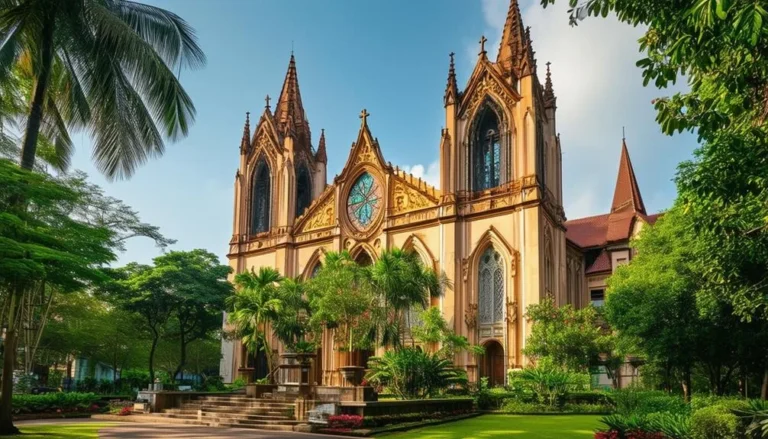
- View Corridors to San Sebastian Cathedral: The cathedral’s façade is clearly visible from within the park, reinforcing the traditional church-plaza spatial relationship common in Filipino colonial towns.
Combined, these elements reflect a layering of Spanish-influenced town planning, American-era civic park concepts, and contemporary festival use, making the Bacolod Public Plaza not just a passive green space but a living historical asset that continues to shape the city’s cultural identity.
Travel Guide to Bacolod Public Plaza
Visiting Bacolod Public Plaza is straightforward due to its central location and the city’s compact downtown layout. The plaza is typically open daily and free to enter, making it a convenient stop a city tour, or a brief business trip.
How to Get There
The plaza is located near the intersection of Araneta Street and Gonzaga Street, directly opposite San Sebastian Cathedral. From most parts of Bacolod City, you can reach it using common public transportation or on foot from nearby hotels.
- From Bacolod-Silay Airport: Take a shuttle van or taxi from the airport to downtown Bacolod (typically 30-45 minutes, traffic-dependent). Ask to be dropped at “Bacolod Public Plaza” or “San Sebastian Cathedral.” Most drivers are familiar with the landmark.
- From Bacolod North Bus Terminal: Ride a jeepney labeled for downtown or “Bata-Libertad” routes and ask the driver to drop you near Araneta Street and the public plaza. Travel time is about 15-25 minutes depending on traffic.
- From Bacolod South Bus Terminal: Board jeepneys or multicabs heading to downtown or “Central Market” areas. Alight at Araneta Street or Gonzaga Street and walk a short distance to the plaza.
- By Jeepney within the City: Many routes pass within a few blocks of the plaza. Common route indicators include “Downtown,” “Central Market,” or streets like Araneta/Gonzaga. Confirm with the driver if he passes near the “Plaza” or “Cathedral.”
- By Taxi or Ride-Hailing Service: Instruct the driver or set the pin to “Bacolod Public Plaza” or “San Sebastian Cathedral.” Drop-off points are typically along Araneta Street or Gonzaga Street.
- On Foot (from nearby hotels and malls): the plaza is generally within walking distance. Use the cathedral spire as a visual reference or follow main roads like Araneta Street heading toward the old city center.
Best Time to Visit
The best time to visit Bacolod Public Plaza depends on whether you prefer a quiet park experience or a lively festival atmosphere:
- Daily, Non-Festival Visits: Early morning (around 6:00-8:00 AM) and late afternoon to early evening (4:00-7:00 PM) offer cooler temperatures and a more relaxed environment. Locals often use the plaza for casual walks, light exercise, or sitting on benches.
- MassKara Festival (Usually October): If you want to experience the plaza at its liveliest, plan your trip in October when Bacolod celebrates the MassKara Festival (exact dates can vary, typically around the third or fourth weekend). During this period, the plaza hosts performances, food stalls, and night events, and the surrounding streets can be densely crowded. Book accommodation in advance and expect road closures and traffic rerouting.
- Evening Visits: In non-festival periods, evenings are pleasant for enjoying the city lights and relatively cooler air. During MassKara and other city events, evenings around the plaza are typically the peak hours for shows and concerts.
Google Map of Bacolod Public Plaza
Use the interactive map below to locate Bacolod Public Plaza and plan your route:
Frequently Asked Questions
1. Where exactly is Bacolod Public Plaza located?
Bacolod Public Plaza is in downtown Bacolod City, Negros Occidental, Philippines. It is bordered by Gatuslao, Gonzaga, San Juan, and Araneta Streets and sits directly across San Sebastian Cathedral, making it a central and easily recognized landmark.
2. Is there an entrance fee to visit Bacolod Public Plaza?
No. The plaza is a public park, and entry is generally free of charge. During special events or festivals like MassKara, some specific areas (such as concert stages or fenced-off VIP sections) may have separate access controls or tickets, but walking into and around the park itself remains free.
3. What can I do at Bacolod Public Plaza?
On normal days, visitors can relax on benches, stroll through tree-lined paths, and enjoy views of San Sebastian Cathedral. During MassKara Festival and other city events, the plaza becomes a venue for concerts, cultural performances, parades, vendor stalls, and light displays, transforming it into a lively social space.
4. Is Bacolod Public Plaza safe for tourists?
The plaza is located in a busy central area that is frequented by locals and visitors. In general, it is reasonably safe during daytime and early evening. As with most urban destinations, it is advisable to keep an eye on personal belongings, avoid isolated corners late at night, and follow local security advisories, especially during crowded festivals.
5. How long should I spend at Bacolod Public Plaza?
For a basic visit, 30-60 minutes is enough to walk around, take photos, and appreciate the surroundings, especially if you also plan to visit San Sebastian Cathedral. If you visit during MassKara Festival or scheduled events, you may want to allocate several hours to fully experience performances, food stalls, and the evening atmosphere.