Life Lessons from Working on Filipino Time
Have you ever arrived right on time for a family party, only to find you’re the first one there? This common experience introduces many to the concept of filipino time. It’s not about being late. It’s a different rhythm entirely.
For many people, schedules rule everything. Clocks and deadlines dictate our days. We often take this rigid view of time for granted, never questioning it.
But what if there’s another way? This cultural approach to time challenges our usual thinking. It suggests that relationships and flexibility might be more important than strict punctuality.
This exploration isn’t about labeling something good or bad. It’s about understanding a different perspective. We’ll look at the history and modern meaning of this thing. Our story aims to find the hidden value in this aspect of culture.
Key Takeaways
- Filipino time is a cultural concept, not simply a habit of being late.
- It challenges the Western idea that schedules must always be strict.
- This approach often prioritizes personal relationships over clock time.
- There is historical and social context behind this flexible view of time.
- Understanding it can offer new perspectives on productivity and connection.
Cultural Roots and Historical Insights
Behind the modern concept of Filipino time lies a fascinating story of colonial encounters and pre-colonial worldviews. This cultural phenomenon has deep historical layers that explain its current form.
The term “Filipino time” emerged during American colonization in the 1900s. Americans used this phrase to describe what they saw as habitual lateness. Many other countries have similar colonizer-given stereotypes about time.
Colonial Influences and Pre-Colonial Conceptions of Time
Spanish colonial rule introduced “fashionable tardiness” as a status symbol. Dr. Augusto De Viana’s research shows Spanish elites arrived late to validate their social worth. This practice made latecomers the center of attention.
Jose Rizal captured this mindset in “El Filibusterismo.” He described a lady arriving late to the theater with queenly airs. Rizal compared this to a mule race where the latest arrival “wins.”
Before colonization, Filipinos had a different relationship with time. The concept of “taon” represented nature-integrated time measurement. It connected to harvest cycles, lunar phases, and life rhythms.
Literary and Social Depictions in Filipino Culture
The root word “taon” appears in modern Tagalog words like “pagkakataon” (opportunity). This suggests an indigenous understanding of time as dynamic. Time was seen as filled with possibility rather than rigid.
Writer Jenny Odell explores this in her book “Saving Time.” She positions Filipino time as both a colonial label and potential resistance. It challenges Western time dominance when reappropriated positively.
| Time Concept | Origin Period | Key Characteristics | Social Function |
|---|---|---|---|
| Pre-colonial “taon” | Before 1500s | Nature-based, cyclical, relational | Harmony with environment |
| Spanish influence | 1500s-1800s | Fashionable tardiness, status display | Social hierarchy marker |
| American labeling | 1900s | Colonial stereotype, punctuality focus | Cultural criticism |
| Modern understanding | Present day | Cultural identity, flexibility value | Relationship prioritization |
Understanding these historical roots helps move beyond superficial criticisms. It reveals deeper cultural relationships with time that vary across societies.
Life Lessons from Working on Filipino Time
Many of us have internalized the idea that punctuality equals respect, but this perspective deserves questioning. When everyone operates with flexible timing, it becomes simply “time” rather than a problem.
Embracing Flexibility Over Rigid Punctuality
Jenny Odell observes that filipino time challenges capitalist notions of “time as money.” When synchronized within a community, flexible arrival times create organic flow.

This approach allows people to move with their day’s natural rhythm. Unexpected conversations and necessary rest become possible when schedules breathe.
Reevaluating Productivity and the Value of Time
Criticisms of flexible timing mirror those against daydreaming. Both are dismissed as productivity interruptions, yet both reveal desires for autonomy.
Being late might mean arriving when a social gathering peaks. It could involve taking a meaningful detour or honoring needed rest. These reasons deserve consideration beyond productivity pressures.
Frustration with lateness often stems from mismatched expectations. This reveals how deeply clock-time is embodied in many people.
Filipino time operates relationally rather than dysfunctionally. It treats scheduled times as guidelines, creating space for human flexibility in work and life.
Modern Manifestations and Network Effects of Filipino Time
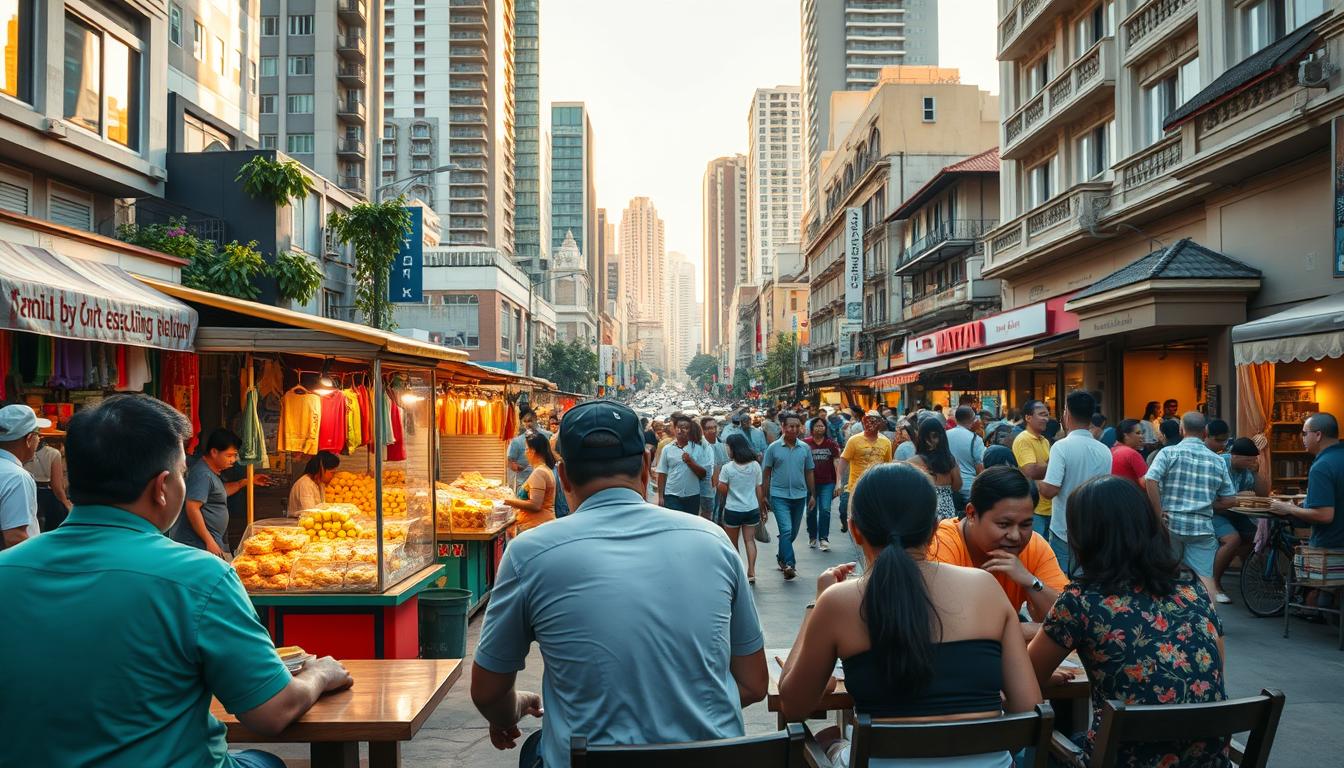
In Metro Manila, the daily commute is a masterclass in patience and unpredictability. The city’s notorious traffic makes precise arrival times nearly impossible for most people.
Public transportation adds another layer of uncertainty. Long lines for trains without fixed schedules mean travel duration remains a guessing game. This systemic reality shapes how filipino time operates in modern urban life.
Impact of Traffic and Public Transportation Dynamics
The aviation industry reflects these patterns on a larger scale. In January 2015, major airlines averaged 103 delayed flights per day. This shows how tardiness becomes institutionalized.
These transportation challenges create legitimate reasons for flexible timing. They’re not just excuses but real obstacles that affect everyone’s time management.
How Social Norms Shape Meeting Culture and Workplace Behavior
Filipino time demonstrates powerful network effects. When a leader consistently arrives late to meetings, members adapt their expectations accordingly.
This creates a self-reinforcing cycle similar to social media adoption. If everyone in your circle operates flexibly, joining that pattern becomes the practical choice. The 1950s incident with President Quirino arriving two hours late to a university ceremony illustrates how high-profile examples perpetuate this culture.
While this flexible approach has practical benefits in some contexts, it can create challenges in international business settings. The country‘s reputation becomes part of its global identity through these temporal patterns.
Conclusion
Rather than judging different approaches to punctuality, we might discover valuable alternatives. This article has shown that filipino time represents a complex cultural phenomenon, not simple tardiness.
The pre-colonial connection between “taon” and words like “pagkakataon” reveals an indigenous wisdom. It suggests time as dynamic space for opportunity rather than rigid measurement.
While respecting others’ time remains important, we shouldn’t assume Western clock-time is the only valid system. Different countries and cultures organize time differently based on their values.
This exploration invites people to examine their own relationship with schedules. The real lesson isn’t about right or wrong ways to tell time. It’s about recognizing that multiple temporal frameworks can coexist, each offering unique insights into human connection.