Tinikling Costume Guide: Barong, Balintawak and Modern Variations
A trailing patadyong skirt turns dangerous the instant bamboo poles start clapping at full speed, and that single detail sets a tinikling costume apart from ordinary Filipiniana wear. Every choice, from hemline to footwear, has to survive contact with two poles moving faster than a walking pace.
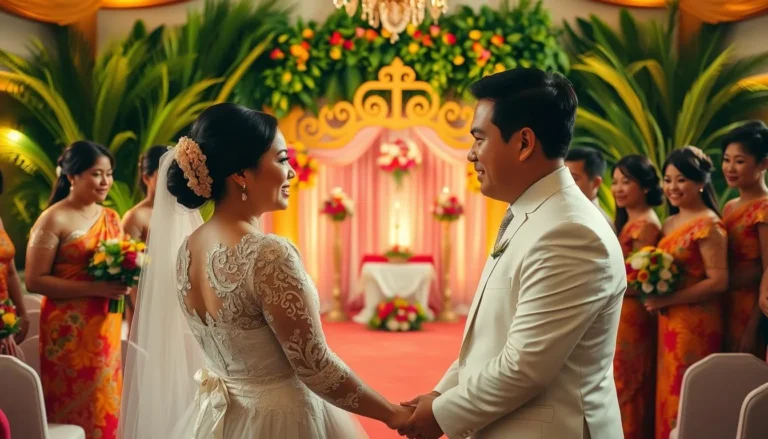
Male dancers wear a barong tagalog with red or dark trousers. Female dancers choose between a balintawak, with its wide butterfly sleeves, or a patadyong, a wraparound skirt from the Visayas. Both dance barefoot, a rule tied directly to how the poles move. This guide breaks down every piece, the fabric behind it, and where families and schools actually source one.
At a Glance
| Element | Detail |
|---|---|
| Garments | Barong tagalog and trousers (men); balintawak or patadyong (women) |
| Fabrics | Piña, jusi, handwoven cotton, polyester blends |
| Colors | White or cream barong; red or maroon trousers; bright multicolor dresses |
| Worn by | Male and female folk dance performers, school groups, cultural troupes |
| Footwear | None; danced barefoot |
| Regional variants | Visayan patadyong, Tagalog balintawak, formal Maria Clara for staged shows |
| Occasion | School programs, Buwan ng Wika, competitions, cultural showcases |
Key point
The single hard rule across this costume, in every version, is bare feet. Shoes reduce the grip dancers need to clear bamboo poles safely, so no formal variant includes footwear.
What Male Dancers Wear
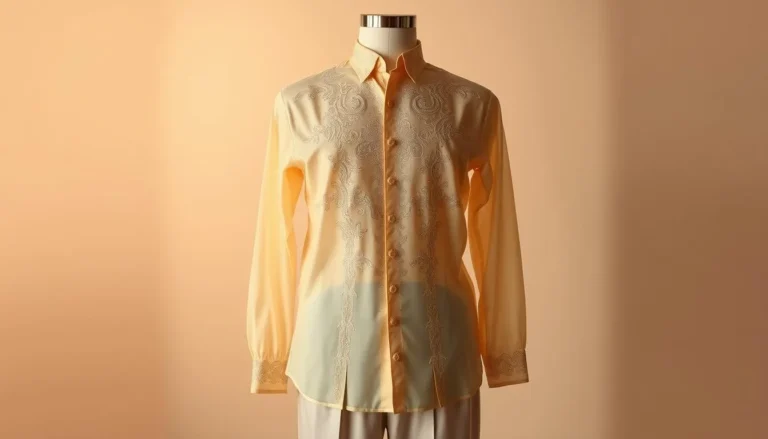
The male half of the outfit stays simple by design. A barong tagalog, the Philippines’ embroidered formal shirt, is worn untucked over trousers, usually in red, maroon, or black to contrast against the pale fabric.
The shirt is sheer enough to see through in good light, which is part of the point. It moves freely, holds no bulk near the waist, and never restricts a hop or a turn.
- Barong tagalog, worn untucked
- Trousers in red, maroon, or black
- No visible undershirt through the sheer fabric
- Bare feet, never shoes
Color choice usually depends on the occasion. A barrio fiesta troupe might stick with plain white and black for a low-budget look, while a competition team leans toward red trousers because they photograph well under stage lighting and match the balintawak dresses worn opposite them.
Some male dancers add a thin sash or a cummerbund at the waist for a formal contest, though it is optional and never required by any dance instructor’s rulebook. The barong itself carries the weight of the outfit, and everything else stays understated by comparison.
The Garment Breakdown: Fabric and Purpose
A tinikling costume breaks into a handful of pieces, and each one earns its place through function, not decoration. The table below matches every garment to its fabric and its job on stage.
| Garment | Fabric | Purpose |
|---|---|---|
| Barong tagalog | Piña, jusi, or polyester blend | Formal upper layer for the male dancer, sheer enough to move freely |
| Trousers | Cotton or polyester twill | Red or dark color contrasts with the barong and hides pole scuffs |
| Balintawak dress | Cotton, organza, or piña-seda blend | Wide butterfly sleeves that flare during turns without tangling |
| Patadyong | Handwoven cotton (hablon) | Fitted wrap skirt that will not catch on a moving pole |
| Camisa (blouse) | Piña or light cotton | Paired with the patadyong, keeps the upper body cool and simple |
| Panuelo or sash | Silk blend or organza | Optional shoulder covering added for formal or competition sets |
Note
Piña, woven from pineapple leaf fiber, and jusi, a silk blend, are the historic barong fabrics. Both wrinkle and cost more than polyester, which is why school and competition teams often switch to polyester blends that travel and wash better.
Piña comes from pineapple leaf fiber, hand-woven mainly in Aklan. In December 2023, UNESCO added Aklan piña handloom weaving to its Representative List of the Intangible Cultural Heritage of Humanity, recognizing a skill passed down for generations. Jusi began as a banana-fiber cloth and today is usually a silk-polyester blend that copies the same sheen for less money.
- Piña: pineapple leaf fiber, most formal, priciest, needs careful ironing
- Jusi: silk-polyester blend, smooth sheen, mid-range cost
- Polyester: cheapest, machine washable, standard for school sets
Polyester substitutes now dominate competition wardrobes. They resist wrinkles, survive machine washing, and cost a fraction of hand-woven piña, which matters when a school orders twenty barongs for one program.
Folklorist Francisca Reyes Aquino documented Tinikling alongside dozens of other regional dances in the 1930s, and her published notes on standard costuming still shape how most Philippine schools dress the dance today, according to an account of her life’s work.
Cost is the other reason polyester wins so often. A hand-woven piña barong can run several times the price of a polyester one, and most school budgets cannot absorb that difference across an entire class of performers.
Accessories and Finishing Touches
Fans, hair combs, and floral accents round out the female costume without adding weight or restricting movement. A folding fan sometimes appears in the opening pose, then gets set aside once the footwork starts.
Hair is usually pulled back into a low bun or braid, kept close to the head so it cannot swing into a dancer’s line of sight. Loose hair is one more thing that can distract a performer mid-hop.
- Folding fan, used only in the opening pose
- Hair pulled back, never left loose
- Simple earrings, nothing that swings or dangles
- Optional flower accent tucked into the hairline
Male dancers generally skip accessories altogether. A wristwatch or bracelet is discouraged for the same reason loose hair is discouraged: anything that swings or catches adds risk near the poles.
Balintawak, Patadyong and Maria Clara: The Female Dancer’s Options
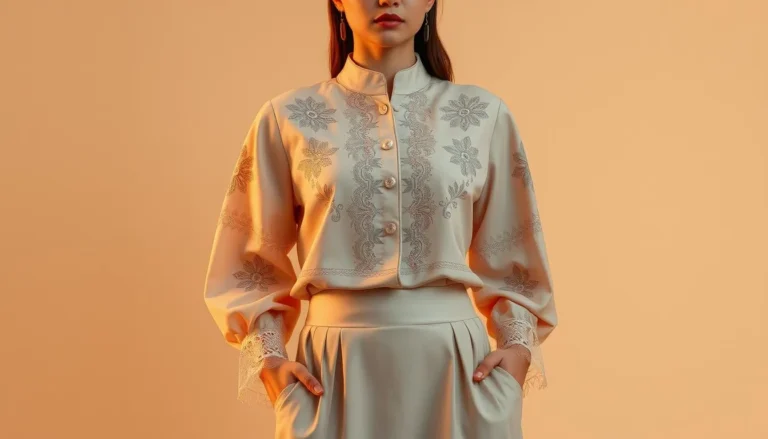
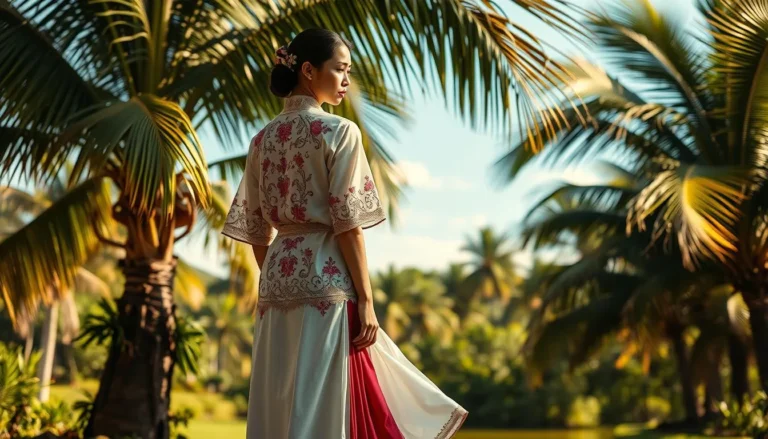
Female dancers usually choose between two silhouettes. The balintawak is a knee-length dress with wide butterfly sleeves that flare out during turns. The patadyong pairs a checkered wraparound skirt from the Visayas with a plain blouse called a camisa.
Patadyong weaving survives today partly through heritage tourism, documented at the National Museum’s Habol Panay textile gallery in Iloilo, which traces the fabric’s roots in Panay Island weaving towns.
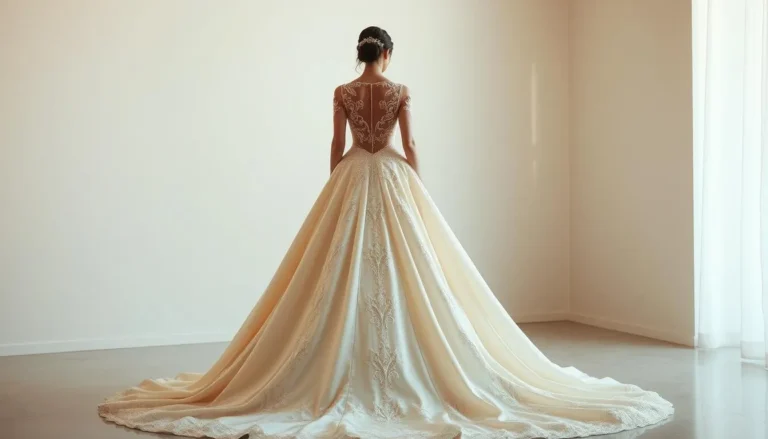
A tinikling costume for female dancers sometimes borrows the Maria Clara gown instead, especially for staged or pageant-style performances where the choreography slows down enough for a longer skirt.
| Style | Sleeves | Skirt Length | Best For |
|---|---|---|---|
| Balintawak | Wide butterfly sleeves | Knee-length | Fast footwork, competitions, most school shows |
| Patadyong | Fitted or capped sleeves | Ankle-length wrap | Regional Visayan programs, slower choreography |
| Maria Clara | Structured butterfly sleeves, longer train | Floor-length with train | Formal showcases, pageants, not fast pole work |
- Balintawak: the default choice for most school and competition tinikling, since the skirt stays short and out of the way.
- Patadyong: fitting for a specifically Visayan-themed program or slower, ceremonial staging.
- Maria Clara: reserved for showcase or pageant versions where dancers step rather than sprint between the poles.
Why Tinikling Is Danced Barefoot
That barefoot rule follows directly from how the steps and pole rhythm work: dancers need to feel the floor to time a hop that has only a fraction of a second before the poles close.
Bare feet also match the dance’s folk origins. Tinikling started in Leyte’s rice fields long before rubber-soled shoes reached rural barrios, and the costume kept that detail even as fabrics modernized.
- Better grip on the floor between hops
- Faster feedback when a foot lands wrong
- No sole thickness to misjudge the gap
- Consistent with the dance’s barefoot folk tradition
Shoes add a layer between the sole and the ground, and that layer is exactly what slows down a dancer’s reaction time. A missed beat means the poles catch an ankle, not just a lost point.
Modern indoor stages complicate the rule slightly. Polished tile or varnished wood can turn slick under stage lights, and some troupes wipe the floor with a rosin bag before a set rather than break with tradition and add shoes. Competition rules at most Philippine school and national folk dance meets still require bare feet outright, so the debate stays mostly theoretical.
The Bamboo Pole Problem: Why Long Skirts Are a Hazard
Here is the detail most costume guides skip entirely. Bamboo poles clap shut in a fraction of a second, faster as the tempo climbs, and any fabric trailing past the ankle can catch between them.
A floor-length Maria Clara train looks impressive standing still, but it turns into a tripping hazard once the poles start snapping shut. That is one reason the everyday tinikling costume favors a shorter, fitted silhouette over a dramatic one.
Key point
Trailing hemlines are the single biggest costume mistake in tinikling. Any skirt or sash long enough to graze the poles risks a snag mid-performance, which is why competition versions trim length before they add embellishment.
- Hemlines stay at or above the ankle
- Loose sashes get pinned or tucked before the music starts
- Butterfly sleeves stay short enough to clear a partner’s arms
- Trousers are fitted, not baggy, at the ankle
Choreographers who stage tinikling for a mixed program sometimes tack a hidden snap or a few stitches into a hemline that would otherwise flare too wide. It is a small, invisible fix, and it solves a problem that no fabric choice alone can prevent.
Costumes for School and Competition Performances
Buwan ng Wika, the national language month held every August, is when most Filipino students first need this costume. Families either sew a simple version at home or rent one from a local shop.
In Manila, budget shoppers head to fabric and costume stalls in Divisoria or Quiapo for checkered cloth and ready-made barongs, while families outside the capital rely on local dressmakers or a school’s own costume closet passed down between graduating classes. Rental typically runs cheaper than buying, especially for a costume worn once a year.
- Rent a full set from a costume shop or event stylist before recital season.
- Buy a ready-made barong and patadyong online and pin them to fit.
- Sew a simple patadyong from checkered cotton, using an existing skirt as a pattern.
- Reuse a Buwan ng Wika outfit if the school allows repeat costumes across events.
Overseas Filipino families face a different problem: sourcing checkered patadyong fabric or a proper balintawak sleeve pattern outside the Philippines. Online sellers on Etsy and dedicated Filipiniana shops ship pre-made sets, which is usually faster than trying to replicate the butterfly sleeve construction from scratch.
Families who need the male half often turn to a ready-made barong tagalog rather than a custom tailor, since a polyester version costs less and survives repeated wear. The same logic applies across the whole outfit: our guide to understanding piña, jusi, and other Filipiniana fabrics breaks down which material suits a one-time school show versus a costume meant to last for years.
Tip
Order or sew costumes at least two weeks before a recital. Fitted hems and pinned sleeves need a trial run under real dance conditions, not just a fitting-room mirror.
Modern Stage Variants
Competitive troupes increasingly favor polyester barongs and patadyong skirts dyed in a single group color, trading historical fabric for uniformity under stage lights.
Some schools add sequin trim or metallic thread to balintawak sleeves for extra shine on camera, a change earlier generations of dancers never had. Folk dance purists still insist on piña or jusi for competition, arguing synthetic fabric changes how the sleeves catch the air mid-turn.
Filipino cultural groups overseas sometimes stretch the costume further, pairing a shortened balintawak with leggings for modesty in colder climates, or swapping the barong for a fitted polo in casual community shows. International folk dance festivals that book Philippine troupes usually still expect the traditional silhouette, barefoot rule included, since organizers judge authenticity as closely as execution.
- Group-color polyester sets for uniform stage photos
- Sequin or metallic trim on butterfly sleeves
- Leggings under a shortened balintawak for cold climates
- A fitted polo replacing the barong in casual shows
None of these changes touch the two fixed rules: bare feet and a hemline the poles cannot catch. For the rest of the outfit, our Fashion category rounds up guides to piña, jusi, and every other Filipiniana fabric a dancer or a wedding guest might need.
Frequently Asked Questions
What is the costume of tinikling?
Male dancers wear a barong tagalog with red or dark trousers. Female dancers wear a balintawak, a dress with wide butterfly sleeves, or a patadyong, a checkered wraparound skirt from the Visayas. Both versions are always danced barefoot.
What is a simple costume for a school tinikling performance?
A plain button-down shirt with red or black pants works for boys, and a checkered wrap skirt with a light blouse works for girls. Neither piece needs hand-woven fabric, and both stay barefoot for the performance.
Can tinikling be danced in shoes?
No, not in the traditional or competition version. Bare feet give dancers the grip and floor feedback the fast footwork needs. Some casual classroom demonstrations allow thin socks, but formal performances stay barefoot.
What is the difference between balintawak and patadyong?
Balintawak is a knee-length dress with wide, structured butterfly sleeves, generally associated with Tagalog-region folk dance costuming. Patadyong is a fitted wraparound skirt woven in a checkered pattern, tied to Visayan weaving towns and usually paired with a plain blouse.
Works Cited
“Paris, France Hosts UNESCO Aklan Piña Handloom Weaving and SLT Exhibit Opening.” National Commission for Culture and the Arts, NCCA, 17 Oct. 2024, ncca.gov.ph/2024/10/17/paris-france-hosts-unesco-aklan-pina-handloom-weaving-and-slt-exhibit-opening/.
“How Francisca Reyes-Aquino Sought and Fought for Our Country’s Folk Dances.” Inquirer.net, Philippine Daily Inquirer, 9 Mar. 2019, lifestyle.inquirer.net/58676/francisca-reyes-aquino-abulan-20190309/.
“Habol Panay Gallery.” National Museum of the Philippines, n.d., www.nationalmuseum.gov.ph/exhibitions/nm-western-visayas-regional-museum/habol-panay-gallery/.