Babaylan Healers in Filipino History
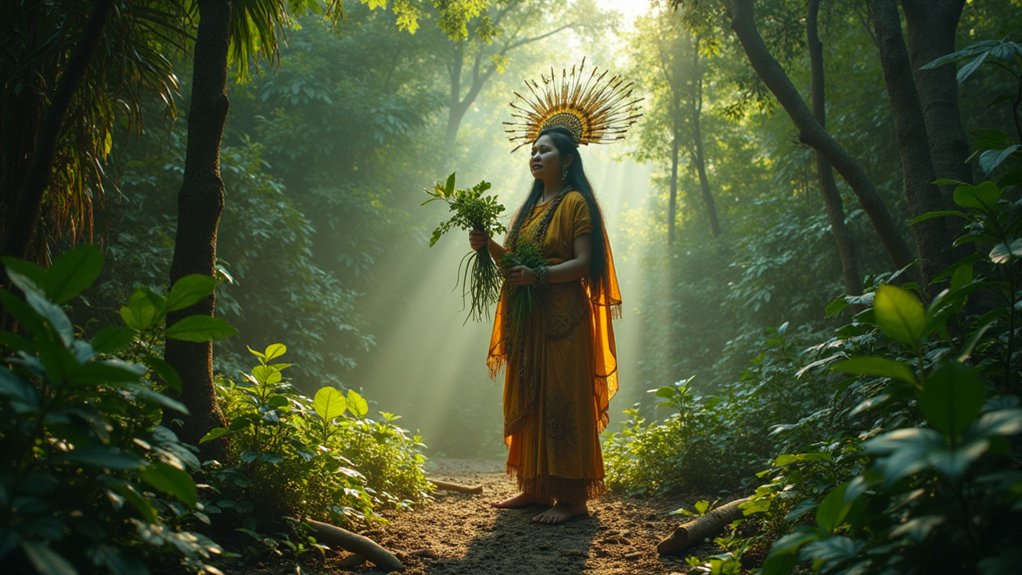
If you’re exploring Filipino history, you’ll find babaylan healers were central spiritual leaders and mediators before Spanish colonization. Mostly female or transgender, they combined healing, ritual, and political roles, shaping community health and social order. Colonization disrupted these traditions, labeling babaylan as witches and forcing adaptations. Today, their influence remains strong in holistic health and gender identity, blending ancient practices with modern medicine. Understanding their legacy reveals deeper insights into Filipino culture and tenacity.
Origins and Historical Background of the Babaylan
Although often overlooked in mainstream history, the babaylan played a central role as pre-colonial spiritual leaders across the Philippine archipelago. Understanding babaylan origins reveals their multifaceted function as shamans, priestesses, and spiritual mediators within indigenous animist belief systems. Largely female, these figures held significant authority in both religious and political spheres, advising local leaders (datu) on matters of spirituality, medicine, and environment. Their historical significance extends beyond ritual; babaylan were integral to the social fabric, embodying a matriarchal structure that affirmed gender inclusivity, including male and gender-diverse members. This socio-religious role underscores the complexity of pre-colonial Philippine societies, challenging colonial narratives that marginalized indigenous practices. Early Spanish chroniclers documented transgender women serving as babaylan, highlighting the gender diversity within this spiritual tradition. Recognizing babaylan origins and their influence provides a more nuanced understanding of Filipino cultural heritage and pre-colonial governance.
Spiritual and Healing Practices of the Babaylan
When exploring the spiritual and healing practices of the babaylan, you’ll find a complex system that integrates ritual, communication with spirits, and holistic medicine. Babaylan ceremonies employ fasting, chanting, and animal sacrifice to invoke divine presence, facilitating diagnosis through rituals like pagluluya. Healing addresses both physical illness (ginhawa) and spiritual afflictions (kalag), emphasizing restoration of spiritual balance. Acting as mediums, babaylan communicate with diwata and ancestral spirits, guided by spirit familiars (Abyan), enabling spirit travel and retrieval of lost souls. Their formation often involves mystical experiences or inheritance, which enhances their spiritual authority. Herbal remedies complement psychic healing, while protective rites counteract curses. Communal healing is central, with gatherings reinforcing social bonds and celebrating cures. This integrative approach reflects a cosmology where illness signals disharmony among humans, spirits, and ancestors, underscoring the babaylan’s role in maintaining holistic wellbeing. Many rural communities continue to honor these traditions, reflecting deep ties to their cultural heritage.
The Role of Babaylan in Pre-Colonial Filipino Society
The babaylan played a multifaceted role in pre-colonial Filipino society, combining spiritual authority with political influence and social leadership. You’d find babaylan leadership dynamics intricately linked to governance; they sometimes acted as interim leaders and were key advisers to datus, shaping decisions through ritual and consultation. Their community mediation roles extended beyond spirituality, they resolved disputes, maintained social order, and guided communities during crises with insights bridging the spiritual and material domains. This mediation reinforced their high status, supported by offerings reflecting wealth and respect. Their roles also included economic stewardship, warrior duties, and fostering social cohesion. Consequently, the babaylan functioned as pivotal figures whose influence permeated political, social, and spiritual spheres, underscoring their integral place in pre-colonial Filipino community structure. They also conducted ceremonies involving chants, sacrifices, and healing, which were essential for maintaining harmony and seeking guidance from spirits.
Impact of Spanish Colonization on Babaylan Traditions
Since Spanish colonization imposed rigid religious and social structures, babaylan traditions faced concerted efforts at suppression and transformation. Colonial suppression labeled babaylan as witches and persecuted them, especially targeting female spiritual leaders, eroding their societal status. Sacred objects and rituals were destroyed, and indigenous religious texts burned, resulting in significant cultural erasure. However, babaylan demonstrated spiritual adaptation by blending native rituals with Catholic elements, incorporating rosaries, crucifixes, and saint references to preserve their practices covertly. This syncretism allowed survival despite prohibitions against non-Christian rituals. You’d observe that babaylan shifted to underground practices in remote areas, resisting colonial control and maintaining spiritual leadership. Yet, imposed patriarchal norms marginalized their gender egalitarian roles, transforming social structures. Overall, Spanish colonization profoundly disrupted babaylan traditions through repression but also inadvertently fostered adaptive tenacity. The babaylan tradition, once submerged during the first century of Spanish conquest, re-emerged during the revolutionary war against Spain with local revolts, illustrating its resilience and continued cultural significance re-emergence during revolts.
The Babaylan’s Influence on Contemporary Filipino Culture
You can observe that despite centuries of colonial suppression, babaylan traditions persistently shape contemporary Filipino culture in multifaceted ways. Their role as custodians of indigenous identity fosters cultural adaptability by preserving oral traditions and emphasizing ancestral heritage, which strengthens national cultural consciousness. Additionally, babaylan practices influence holistic health approaches, integrating spiritual and physical wellbeing rooted in indigenous knowledge. Importantly, babaylan legacies challenge patriarchal norms by foregrounding female leadership and embracing non-binary identities, thereby informing current movements advocating gender inclusivity. This historical recognition of matriarchal influence inspires feminist discourse and efforts to recenter women’s roles in cultural and religious contexts. The babaylan served as spiritual leaders in pre-colonial Philippines, embodying the deep connection between indigenous culture and spirituality. Overall, babaylan traditions contribute greatly to contemporary Filipino society by reinforcing indigenous values and promoting inclusive frameworks for gender and spirituality.
Revival and Modern Interpretations of Babaylan Healing
You’ll notice that contemporary babaylan practices often blend traditional healing methods like hilot massage with spiritual rituals, reflecting both continuity and adaptation. This revival includes integrating these indigenous techniques alongside modern medicine, aiming to address physical and mental health holistically. Examining these developments helps clarify how babaylan healing remains relevant in today’s healthcare and cultural landscapes. This ongoing practice exemplifies the Babaylan’s role as Healer and Sage, maintaining health and wholeness through spiritual service.
Contemporary Babaylan Practices
Although rooted in ancient traditions, contemporary babaylan practices have experienced a notable revival, especially in provinces like Capiz, where community rituals involving fasting, prayer, chanting, and dance continue to align closely with precolonial healing methods. You’ll notice that modern babaylan rituals emphasize holistic healing and gender inclusivity, embracing diverse identities beyond colonial binaries. This revival supports cultural transmission through apprenticeship and community engagement, reinforcing indigenous cosmology. Additionally, many contemporary babaylan incorporate elements from the roles of traditional albularyo and manghihilot, blending herbal medicine with ritual healing to address both physical and spiritual ailments, reflecting a comprehensive approach to health drawn from historical folk healers.
| Aspect | Traditional Practice | Contemporary Adaptation |
|---|---|---|
| Healing Methods | Fasting, prayer, dance | Holistic integration with emotion and spirit |
| Gender Roles | Largely female | Inclusive of transgender, non-binary identities |
| Knowledge Transfer | Oral histories, family lineage | Structured apprenticeship and activism |
| Ritual Components | Animal offerings, chants | Community feasts, digital preservation |
| Social Impact | Spiritual guidance | Gender justice, cultural reclamation |
Integration With Modern Medicine
Contemporary babaylan practices have expanded beyond cultural revival to intersect with formal healthcare systems, reflecting broader efforts to integrate traditional healing within modern medicine. You’ll find that Republic Act No. 8423 actively supports Babaylan integration by promoting scientific research to evaluate safety and efficacy, ensuring evidence-based practice within modern healthcare frameworks. This legal backing fosters accreditation and collaboration between indigenous healers and licensed medical professionals, particularly in underserved areas. Traditional healing practices are rooted in culture, religion, and history, underscoring their significance in Filipino identity. By combining Western diagnostics with holistic Babaylan healing, patients gain access to culturally congruent care addressing both physical and spiritual needs. Such integration enhances public health accessibility, especially for rural communities where traditional medicine remains affordable and trusted. Overall, this synergy between Babaylan healing and modern healthcare exemplifies a pragmatic approach to preserving indigenous knowledge while ensuring patient safety and efficacy.
Frequently Asked Questions
What Materials Did Babaylan Use for Their Healing Rituals?
You’d find herbal remedies like ginger and medicinal leaves central to healing, alongside ritual offerings such as rice, eggs, and coins, which symbolized life, purity, and gratitude, all supporting spiritual and physical restoration effectively.
Were Babaylan Exclusively Women or Were There Male Practitioners?
You shouldn’t assume babaylan gender roles were exclusive to women; male practitioners existed, often embracing femininity or gender fluidity. This reflects a complex cultural acceptance of diverse identities within spiritual leadership, challenging rigid binary norms.
How Did Babaylan Communicate With Ancestral Spirits?
You’d recognize babaylan as spiritual mediums who establish ancestral connection through trance states, chanting, ritual language, and spirit possession. These techniques enable direct communication, channeling messages from spirits while selectively admitting and negotiating with them during ceremonies.
Did Babaylan Have Formal Training or Apprenticeships?
Yes, babaylan training involved formal apprenticeship practices where you’d learn rituals, chants, herbal medicine, and spiritual communication directly from senior babaylan. This mentorship guaranteed you mastered core beliefs and community roles through guided experience.
What Is the Significance of Babaylan Chants and Dances?
You’ll find babaylan chants and dances essential for spiritual expression and cultural identity, as they mediate communication with spirits, reinforce communal bonds, transmit oral traditions, and resist colonial suppression, ensuring cultural durability and social cohesion.