Cebu Delicacies: Famous Local Foods and Pasalubong to Try
Cebu delicacies are the dishes and snacks the island is known for: roast pig (lechon), hanging rice (puso), grilled street food, sweet native cakes, and take-home treats like dried mangoes, otap, rosquillos and chicharon. Most visitors eat the savory dishes in Cebu City and buy the packed snacks on the way out. Some of the best-known ones come from towns such as Carcar, Liloan, Argao and Bogo.
This guide is a food guide, not a restaurant directory. It explains what each dish is, how locals eat it, which town it is tied to, and which items travel well. It also covers Puso Village, the downtown food hall named after Cebu’s most recognizable side dish.
Quick Guide: What to Eat and What to Bring Home
| If you want | Try this |
|---|---|
| The most famous Cebu dish | Lechon |
| A street food experience | Pungko-pungko, ngohiong, barbecue, siomai sa Tisa |
| Something adventurous | Tuslob buwa, ginabot |
| A seafood meal | Sutukil |
| Sweet pasalubong | Dried mangoes, otap, rosquillos, masareal |
| Savory pasalubong | Chicharon, danggit, dried pusit |
| Native cakes (best eaten fresh) | Pintos, budbod kabog, bingka dawa, torta |
What Makes Cebuano Food Different?
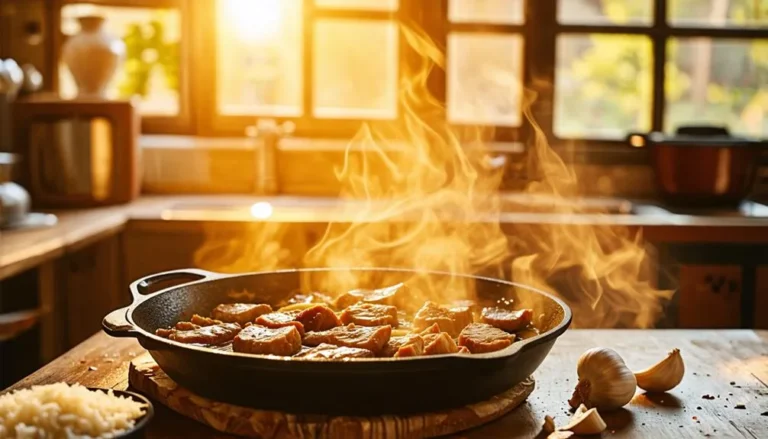
Cebuano food leans on grilling, frying, vinegar and rice. It also carries layers of Spanish, Chinese and Visayan influence, which you can taste in ngohiong (five-spice rolls), humba (sweet braised pork) and torta (a Spanish-style cake).
Rice is central, and in Cebu it often arrives in a woven pouch. That is why puso comes first in this guide. Almost every savory dish below is eaten with it.
Puso: The Hanging Rice Behind Every Cebu Meal
Puso is rice boiled inside a pouch woven from young coconut leaves. Cebuanos call it “hanging rice” because vendors hang the pouches from stalls. According to Wikipedia’s entry on pusô, the word means “heart” in Cebuano. It describes a way of cooking and serving rice, not a single recipe. The leaf pouch keeps the rice from spreading, so it cooks into a compact, cake-like block.
It is practical street food. You can eat it with your hands while standing, or cut it up and serve it on a plate in place of regular rice. It pairs with lechon, barbecue, siomai, ngohiong and tuslob buwa.
Puso also has a ritual past. A cultural article from the Kahibalo Foundation notes that pre-Hispanic Cebuanos used puso as a food offering to spirits. Different weaves carry different names, such as binaki (frog-like) and manan-aw (orchid-inspired).
The craft is still a livelihood. GMA Regional TV reported in December 2024 that weavers in Barangay Pasil and Barangay Subâ in Cebu City earn more during Christmas party season. Demand stays high into February because of Sinulog, Chinese New Year and Valentine’s Day.
Puso Village: Cebu City’s Food Hall Named After Hanging Rice
Puso Village is a covered food hall on M.L. Quezon Boulevard in Cebu City’s Carbon district, facing Senior Citizens’ Park near Cebu City Hall. It is the easiest place downtown to sample several Cebu dishes in one stop. If you searched “puso village cebu” before your trip, here is what the available sources say.
- Opening: Pusô Village had a soft opening in mid-July 2025, after years of delays.
- Size: Both sources describe more than 100 food and retail stalls.
- Layout: Sections are grouped by cooking style. Dalang Sinugba is for grilled food. Litson Avenue is for lechon, with Carcar and Talisay styles. Taugna Satangrubu covers local delicacies such as balbacua and paklay. Nagasa is for seafood and sutukil.
- Design: The entrance canopies are folded to resemble a puso pouch. A mezzanine deck looks toward the Mactan Channel.
- Payment: Bring cash, since some stalls do not take cards.
Check before you go: Hours were listed as 10 AM to 10 PM daily, but that listing ran through March 2026. A city review of the wider Carbon market joint venture began in April 2026. There is no report that Pusô Village itself is closing, and no operator notice dated 2026 was found. Check the Pusô Village Facebook page for current hours and stall lineups. Stalls change, and no reliable current price list was found, so walk the whole hall before you order.
For more to do nearby, see our things to do in Cebu City guide.
Savory Cebu Delicacies and Street Food
Cebu Lechon
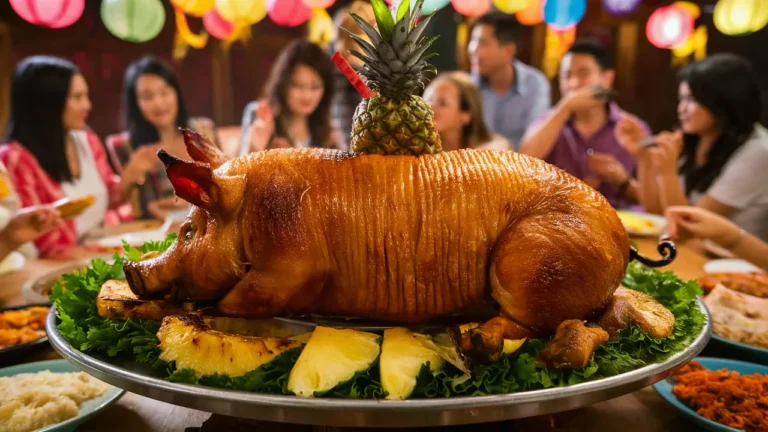
Lechon is a whole pig roasted over charcoal, and it is the dish most people mean when they say “Cebu food.” Cebu’s version is known for crisp skin and for a stuffing of lemongrass, garlic and green onions. It is often flavorful enough to eat without sauce. Locals serve it at fiestas, birthdays and reunions, usually with puso and atchara (pickled papaya).
Two towns anchor the style. Carcar in the south and Talisay near the city both have lechon sellers, and Puso Village keeps a stall row for each. For the history, ingredients and regional styles, read our lechon guide.
Pungko-Pungko
Pungko-pungko is more a way of eating than a dish. “Pungko” means to squat, and diners sit on low benches, pick fried items from a tray and eat with puso and spiced vinegar. A typical tray includes ginabot, ngohiong, fried chorizo and dried fish (buwad).
Ginabot
Ginabot is deep-fried pork intestine, crunchy and rich. It is similar to chicharon bulaklak, but Cebuano versions are often chunkier and chewier. Eat it hot, dipped in spiced vinegar to cut the richness.
Ngohiong
Ngohiong is Cebu’s five-spice roll. It looks like a fried spring roll, but the seasoning is distinct, and it is served with a thick sweet-spicy sauce. It has Chinese roots but is thoroughly Cebuano now, and it is a student favorite.
Siomai sa Tisa
Siomai is steamed pork dumpling, and Barangay Tisa in Cebu City is known for its stalls. The local style comes with chili-garlic sauce, soy sauce, calamansi and puso. Siomai itself is not originally from Cebu, but the Tisa way of eating it is part of the city’s food culture.
Chorizo de Cebu
Chorizo de Cebu is a small, sweet and garlicky fresh sausage. It caramelizes when pan-fried and tastes smokier when grilled. Locals eat it for breakfast with garlic rice and egg, or from barbecue stalls with puso.
Cebu Barbecue
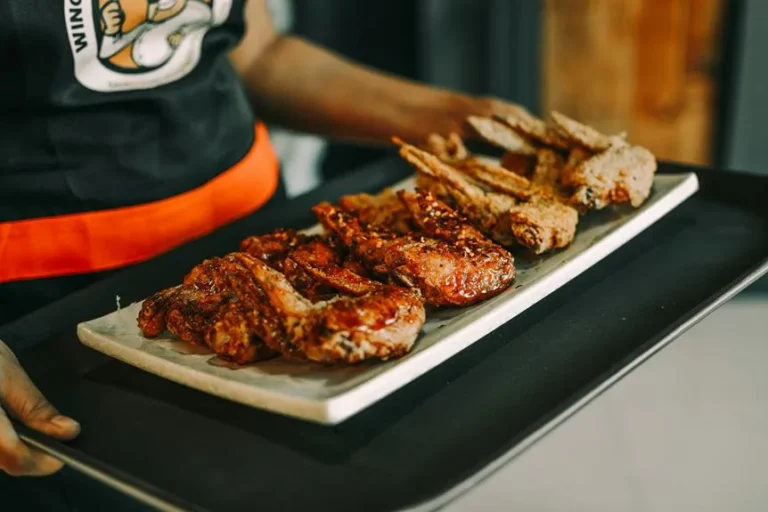
Skewers of pork, chicken, liver and chorizo are grilled over charcoal on streets across the city. The usual dip is soy sauce, vinegar, calamansi, chili and onion. Hanging rice is the standard side.
Tuslob Buwa
Tuslob buwa roughly means “dipping into bubbles.” Diners dip puso into a hot, bubbling pan of pork brain, liver, oil and seasonings. It is social and not for everyone. First-timers do best going with a local.
Sutukil
Sutukil combines three cooking styles in one meal: sugba (grilled), tuwa (soup) and kilaw (raw seafood marinated in vinegar). It is popular at seafood spots in Mactan and southern Cebu. Ask what is freshest that day before you order.
Balbacua and Humba
Balbacua is a slow-cooked beef stew made from collagen-rich cuts, thick with spices. Humba is pork belly braised until sweet, salty and tender. Humba looks like adobo, but it is richer and more caramelized. Both are good picks if skewers feel too light for a meal.
Sweet Cebu Delicacies and Native Cakes
Many of Cebu’s native sweets belong to specific towns, and several are best eaten fresh. Buy them at the source if you can.
| Delicacy | What it is | Associated with |
|---|---|---|
| Pintos / binaki | Steamed sweet corn cake wrapped in corn husks | Bogo City, northern Cebu |
| Budbod kabog | Millet-based rice cake wrapped in banana leaves | Northern Cebu, especially Catmon |
| Bingka dawa | Millet cake, sometimes cooked with charcoal and coconut husk | Asturias |
| Torta | Rich, spongy native cake, often made with tuba (coconut wine) | Argao |
| Masareal | Peanut and sugar sweet | Mandaue |
| Puto maya and sikwate | Sticky rice with thick hot chocolate | Common breakfast pairing |
Several of these towns celebrate their specialty with a festival. Cebu Finds notes Liloan’s Rosquillos Festival, Catmon’s Budbod Kabog Festival and Argao’s La Torta Festival. The Cebu provincial tourism office says the province has more than 55 celebrations, so a festival visit can double as a food trip. Dates change, so confirm them with the local government unit or the provincial tourism office. Our Sinulog guide covers the biggest one in Cebu City. Sinulog follows the third Sunday of January, which falls on 17 January 2027, but confirm the 2027 programme with the Sinulog Foundation before booking. For other regions, see our complete festivals guide.
Cebu Pasalubong: What to Bring Home
Pasalubong means a gift you bring back for family, friends and coworkers. The best Cebu pasalubong is sealed, dry and easy to share.
Sweet Pasalubong
- Dried mangoes: Chewy, sweet and sold at supermarkets, pasalubong centers and airport shops. They are the easiest gift to pack.
- Otap: A thin, oval puff pastry biscuit that is flaky, sweet and crisp. It breaks easily, so pack it carefully.
- Rosquillos: Ring-shaped, lightly sweet cookies tied to Liloan in northern Cebu. Boxed versions travel well.
- Masareal: A nostalgic peanut sweet that is sweet enough to need coffee or tea alongside.
- Hopia: A flaky pastry with fillings like ube, monggo and mango. Choose boxed hopia for travel.
- Ampao and bocarillo: Ampao is puffed rice with a sweet coating. Bocarillo is chewy young-coconut candy, often brightly colored. Both are common around Carcar.
Savory Pasalubong
- Chicharon: Crunchy pork rinds, strongly associated with Carcar and often eaten with vinegar.
- Danggit: Dried rabbitfish, fried crisp and served with rice, egg, tomato and vinegar.
- Dried pusit: Dried squid with a stronger flavor and smell than danggit.
Where to Buy
| Place | Best for |
|---|---|
| Taboan Public Market (Cebu City) | Danggit and dried pusit |
| Carcar (south) | Chicharon, ampao, lechon, torta, dried mangoes |
| Liloan (north) | Rosquillos |
| Pasalubong centers | Many items in one stop, such as Shamrock and Islands Souvenirs |
| Supermarkets and malls | Fixed prices and clean packaging |
| Airport shops | Last-minute buying, usually not the cheapest |
Taboan Public Market is known for dried seafood, and Cebu Finds advises wearing simple clothes there because the smell lingers. Carcar’s main food stop sits along its diversion road toward the city hospital, with restaurants and souvenir stalls side by side.
Packing Tips
- Buy dried fish near the end of your trip and ask the seller to seal it tightly.
- Wrap otap in a hard container so it does not get crushed.
- Buy native cakes like pintos and budbod kabog only if you will eat them soon.
- Check your airline’s baggage rules for food, since strong-smelling or oily items may need to go in checked luggage.
Prices vary by seller, season and pack size. We have not listed peso amounts because current figures could not be verified. Compare a few stalls before you buy.
A Simple Cebu Food Trip Plan
If you have one day downtown, this order covers most of the list:
- Late morning: Start at Taboan Public Market for danggit and dried pusit, or save it for your last day.
- Afternoon: Try ngohiong and siomai sa Tisa as snacks, with puso on the side.
- Dinner: Go to Puso Village for lechon, grilled skewers and seafood, after checking the current hours.
- If you have a car or tour: Add Carcar for chicharon and ampao, and Liloan for rosquillos.
Frequently Asked Questions
What is Cebu best known for food-wise?
Cebu is best known for lechon, the roast pig with crisp skin and a lemongrass-and-garlic stuffing. Puso (hanging rice), ngohiong, and pasalubong like dried mangoes, otap and chicharon round out the list. Cebuanos usually eat lechon with puso.
What is Puso Village in Cebu?
Puso Village is a covered food hall in Cebu City’s Carbon district, on M.L. Quezon Boulevard facing Senior Citizens’ Park. It opened to the public in July 2025 and is described as having more than 100 food and retail stalls. Sections are grouped by food type, such as lechon, grilled dishes and seafood. Check its Facebook page for current hours before you go.
What is puso, or hanging rice?
Puso is rice boiled in a pouch woven from young coconut leaves. The pouch holds the rice in a compact shape, which makes it easy to carry and eat by hand. In Cebu it is the standard side for lechon, barbecue, siomai and tuslob buwa.
What are the best Cebu pasalubong to bring home?
Dried mangoes, otap and rosquillos are the easiest sweet options because they pack well. Chicharon, danggit and dried pusit suit people who prefer savory snacks. Shop at pasalubong centers, supermarkets or Taboan Public Market, depending on what you want.
Where should I buy Cebu delicacies?
Taboan Public Market is the usual stop for dried seafood. Carcar is known for chicharon, ampao and lechon, and Liloan for rosquillos. Pasalubong centers and supermarkets are the easiest choice if you are short on time, and airport shops work as a backup.
Which Cebu delicacies should I eat fresh instead of taking home?
Eat pintos, budbod kabog, bingka dawa and torta fresh when you can. Local guides describe these native cakes as best enjoyed soon after they are made. Buy them in their home towns or at markets, and eat them within the same day or two.
Final Thoughts
Start with lechon and puso, add a few street snacks, then spend your last stop on pasalubong. Cebu’s food is tied to towns, markets and festivals, so a day trip to Carcar or Liloan can teach you more than any list. For prices, hours and festival dates, always confirm with the venue, the local government or official tourism channels before you travel.