Tapa: Waking Up to the Savory Aroma of Filipino Cured Beef
Tapa is Filipino cured beef, thin slices of meat marinated in a savoury-sweet mix and fried until caramelised, and one of the country’s best-loved breakfasts. Paired with garlic fried rice and a fried egg it becomes tapsilog, the iconic morning meal found in eateries across the Philippines. Simple, hearty, and deeply comforting, tapa is a delicious lesson in how Filipinos turn humble preserved meat into a national favourite.
This guide explains what tapa is, where its name really comes from, the story of tapsilog, how it is made, and its place in Filipino food culture.
Filipino cured/marinated beef
Austronesian tapa (“preserved meat”)
Tapa + fried rice + egg
1986, by Vivian Del Rosario
Everyday breakfast
Vinegar dip, atchara, tomatoes
What tapa is
Tapa is dried or cured meat, most often beef, though pork, mutton, venison, and even fish can be used. Traditionally, thin slices of meat were cured with salt and spices as a way to preserve them, then dried or smoked, much like jerky. These days the process is usually simplified: the meat is marinated to soak up flavour, then fried or sauteed until browned and slightly caramelised. The result is tender, savoury, faintly sweet, and irresistible with rice.
The name is not Spanish
Many assume “tapa” comes from Spanish, given Spain’s deep influence on Filipino food, but it does not. In the Philippine languages, tapa originally meant meat or fish preserved by smoking, and the word descends from an ancient Austronesian root. One theory even links it to the Sanskrit tapas, meaning “heat,” a nod to the pre-Hispanic practice of drying meat in the sun. The related word tinapa, meaning “prepared by smoking,” usually refers to smoked fish. These preservation methods predate Spanish arrival, documented in records as early as the 17th century.
What tapsilog means
When tapa is served with garlic fried rice and a fried egg, it becomes tapsilog, a portmanteau of tapa, sinangag (fried rice), and itlog (egg). This clever naming has spawned a whole family of “silog” breakfasts: longsilog with longganisa sausage, tocilog with sweet tocino, bangsilog with milkfish, and many more. Only the meat changes; the fried rice and egg stay constant, making “silog” the Filipino template for a hearty morning meal.
The story of tapsilog
While tapa is ancient, the dish “tapsilog” has a surprisingly recent and well-documented origin. In 1986, a woman named Vivian Del Rosario opened a small eatery in a busy corner of Quezon City and coined the name, combining tapa, sinangag, and itlog into a single catchy word. She designed it as an affordable, quick, filling meal for drivers and workers, and it caught on fast, growing into a national breakfast icon and popularising the entire “silog” format. The name fit the era’s love of playful word combinations that ran from the 1970s into the 1980s.
How tapa is made
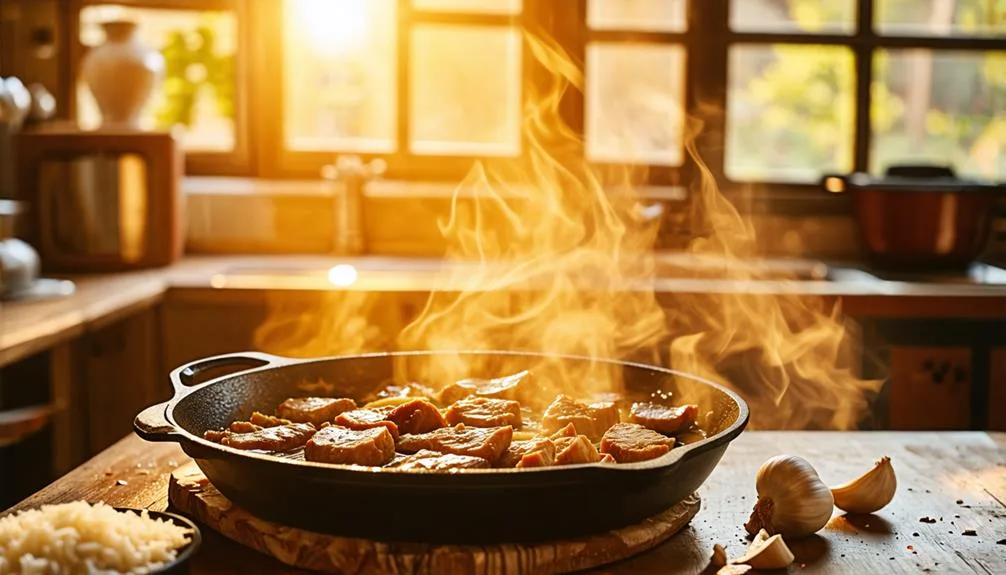
Modern tapa is mostly a matter of a good marinade. Thin slices of beef are steeped in a mix of soy sauce for saltiness, calamansi juice or vinegar for tang, sugar for sweetness, garlic for warmth, and black pepper, then left to marinate for several hours. The meat is drained and fried in a hot pan until the liquid cooks off and the edges caramelise. A few tricks help: slice the beef thinly and against the grain for tenderness, and avoid over-marinating, since too much acid can turn the texture mushy.
How tapsilog is served
Tapsilog is all about balance. The salty, garlicky tapa, the rich runny egg, and the fragrant garlic rice come together in every forkful, and the plate is often rounded out with atchara (pickled green papaya), sliced tomatoes, or cucumber to cut the richness. A dip of vinegar with garlic and chili, or sometimes ketchup, adds the final tangy note. It is a simple meal, but a deeply satisfying one, and endlessly customisable.
Cultural significance
Tapa is more than breakfast; it is a small emblem of Filipino resourcefulness and comfort. Born of the age-old need to preserve meat, it became an everyday staple that fills home kitchens and roadside carinderia alike. Tapsilog in particular powers a thriving small-business culture: the humble tapsihan or tapsilogan needs little capital to start yet provides steady income, feeding workers cheaply and reliably. In a plate of tapa sit thrift, comfort, and a very Filipino talent for turning the simple into the beloved.
The silog family
Tapsilog opened the door to a whole family of “silog” breakfasts, each built on the same base of garlic fried rice (sinangag) and a fried egg (itlog), with a different meat taking the lead. Once you know the formula, the names decode themselves.
| Name | Meat |
|---|---|
| Tapsilog | Tapa (cured beef) |
| Longsilog | Longganisa (sausage) |
| Tocilog | Tocino (sweet cured pork) |
| Bangsilog | Bangus (milkfish) |
| Cornsilog | Corned beef |
| Hotsilog | Hotdog |
The genius of the silog format is its flexibility. Whatever protein is on hand can be paired with rice and egg to make a complete, satisfying plate, which is exactly why the humble tapsihan eatery became such a fixture of Filipino life.
Regional and modern variations
Tapa is not made the same way everywhere. Different regions and cooks put their own spin on the cure and the cut, so no two versions taste quite alike.
- Sweet tapa, heavier on sugar, giving a sticky, caramelised finish popular in many eateries.
- Salty-sour tapa, leaning on soy and vinegar or calamansi for a sharper, savoury bite.
- Dried tapa (tapang usa or tapang baka), sun-dried closer to the old preservation style and chewier in texture.
- Spicy tapa, marinated with chili for those who like heat with their breakfast.
Beyond breakfast, leftover tapa finds its way into fried rice, turned into a quick tapa rice bowl, and some cooks even shred it into pandesal for a hearty sandwich. Like the best Filipino comfort food, it adapts to whatever the day calls for.
Tips for making tapa at home
Tapa is one of the easiest Filipino dishes to make at home, and a few simple habits make a real difference to the result.
- Slice thinly against the grain so the beef stays tender and cooks quickly.
- Balance the marinade, soy for salt, calamansi or vinegar for tang, and a touch of sugar to help it caramelise.
- Do not over-marinate; a few hours or overnight is plenty, as too much acid turns the meat mushy.
- Fry in a hot pan and let the liquid cook off so the edges brown instead of stewing.
- Serve with garlic rice, a runny egg, and a vinegar dip for the full tapsilog experience.
Tapa as everyday Filipino comfort
Few dishes capture the Filipino morning quite like tapa. It is the plate that greets jeepney drivers before dawn, the meal students grab between classes, and the comforting spread families share on lazy weekends. Its appeal lies in its balance: salty and sweet, rich and tangy, humble yet deeply satisfying. Because it keeps well and cooks fast, tapa has always suited busy lives, and because it can be made from an inexpensive cut turned flavourful through a simple marinade, it fits every budget. From roadside tapsihan to home kitchens across the country and the diaspora, tapa endures as proof that the best comfort food does not need to be complicated, only cooked with care and served hot with rice and a runny egg.
Frequently Asked Questions
What is tapa?
Tapa is Filipino cured or marinated meat, usually beef, sliced thin and fried until savoury and caramelised. It is a classic breakfast dish, especially as part of tapsilog.
What does tapsilog mean?
Tapsilog combines tapa, sinangag (garlic fried rice), and itlog (egg). It is one of many “silog” breakfast meals in the Philippines.
Is the word tapa Spanish?
No. Despite Spanish influence on Filipino food, “tapa” comes from an ancient Austronesian word for preserved meat, predating Spanish colonisation.
Who invented tapsilog?
The name and dish are credited to Vivian Del Rosario, who coined “tapsilog” at her Quezon City eatery in 1986, popularising the whole silog breakfast format.
Conclusion
Tapa proves that the simplest food can become the most beloved. From an ancient way of preserving meat to the breakfast plate that launched a whole family of silog meals, it is comfort, thrift, and Filipino ingenuity served hot with rice and a runny egg, the perfect start to any Filipino day.