Rizal’s Noli Me Tangere Ignites Revolutionary Spirit
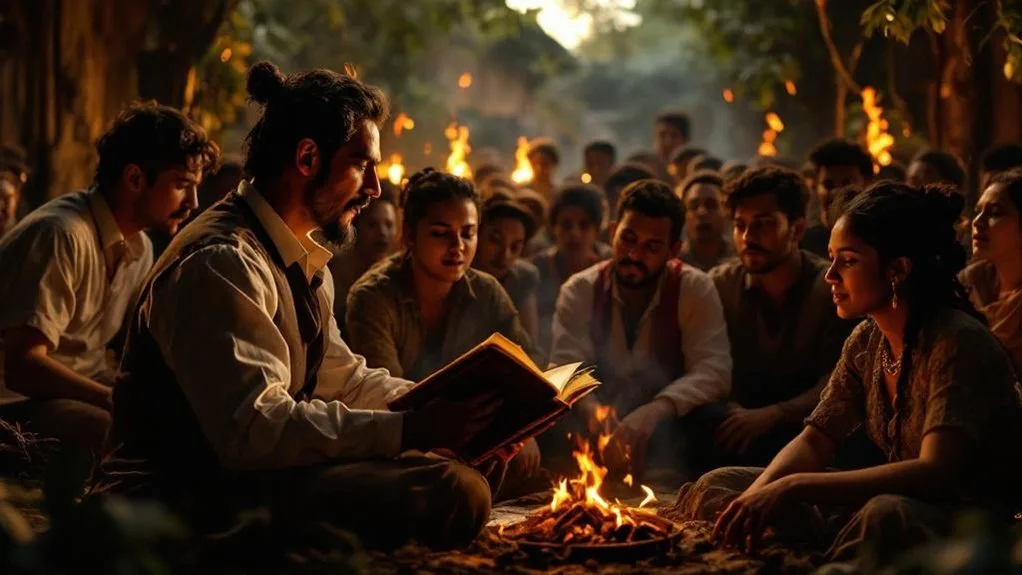
Noli Me Tangere is the novel that awakened a nation. Written by the Filipino national hero Jose Rizal and published in 1887, this searing portrait of life under Spanish colonial rule exposed the abuses of the friars and the injustices suffered by ordinary Filipinos, helping to spark the movement that would eventually win Philippine independence. More than a century later, it remains the most important work in Philippine literature.
This guide explains what Noli Me Tangere is, its story and characters, how and why Rizal wrote it, and the enormous impact it had on Philippine history.
Rizal’s first novel
Jose Rizal (aged 25)
1887, in Berlin
“Touch Me Not” (Latin)
Spanish
El Filibusterismo (1891)
What Noli Me Tangere is
Noli Me Tangere, often simply called the “Noli,” is a novel written in Spanish and first published in 1887 in Berlin, Germany, during the Spanish colonial period of the Philippines. Its title is Latin for “Touch Me Not,” taken from the words of Jesus after his resurrection, chosen by Rizal to symbolise his country’s wounded, untouchable condition and its longing for liberation. Widely regarded as the first Filipino novel, it offered a panoramic and often satirical view of Philippine society at every level.
The story
The novel follows Crisostomo Ibarra, an idealistic young Filipino who returns home after years of study in Europe, full of hope for reform and eager to build a school for his town. Instead he collides with the entrenched power of the Spanish friars and colonial officials, discovers the truth behind his father’s death, and sees his dreams and his love for Maria Clara destroyed by corruption and cruelty. Through Ibarra’s disillusionment, Rizal lays bare the injustices of colonial rule and the abuses committed in the name of religion.
Unforgettable characters
Part of the novel’s power lies in its vivid cast, characters who have become household names in the Philippines.
- Crisostomo Ibarra, the hopeful reformer whose ideals are crushed by the system.
- Maria Clara, his beloved, the very picture of demure Filipina virtue, whose tragic fate mirrors the nation’s.
- Padre Damaso, the arrogant friar who embodies the abuses of the clergy.
- Elias, the mysterious boatman who argues for more radical change.
- Sisa, the gentle mother driven mad by the loss of her sons, one of the novel’s most heartbreaking figures.
The inspiration behind it
Rizal drew direct inspiration from abroad. After reading Harriet Beecher Stowe’s Uncle Tom’s Cabin, which exposed the cruelty of slavery in America, he became convinced that a similar novel should reveal the suffering of Filipinos under the friars. In 1884 he proposed to his fellow Filipinos in Madrid that they write such a book together, but when the others lost interest, Rizal wrote it himself, pouring into it his observations of colonial injustice.
Writing and publishing in Berlin
Rizal finished the manuscript in Berlin, but poverty nearly kept it from ever being printed. He was saved by his close friend Maximo Viola, who lent him 300 pesos to cover the printing costs. With that help, around 2,000 copies of the first edition were produced in March 1887, and the two friends travelled through Europe distributing the novel. It was an act of faith that changed the course of Philippine history.
Rizal and the Propaganda Movement
Rizal wrote the Noli as a leading figure of the Propaganda Movement, a campaign of Filipino expatriates who used their newspaper, La Solidaridad, to push for peaceful reforms: representation in the Spanish parliament, equality before the law, and an end to friar abuses. For Rizal, the greatest obstacle to reform was not the civil government but the powerful religious orders, who acted as a state within a state. The Noli was his most powerful weapon in that struggle, a novel that argued for justice through the force of a story.
A book that awakened a nation
The impact of Noli Me Tangere was immense. By holding up a mirror to colonial society, it awakened a national consciousness among Filipinos, giving readers the words and the courage to recognise the injustice around them. Its unflinching portrait of Spanish rule became a catalyst for the growing movement toward independence, and it stirred a sense of shared identity in a people long taught to accept their oppression.
The Spanish backlash
The colonial authorities and the friars reacted with fury, banning the book and branding it subversive. But censorship only fuelled its fame, and the Noli circulated underground as a symbol of resistance, its ideas spreading from hand to hand. The backlash deepened nationalist feeling and helped set the stage for the Philippine Revolution. Rizal himself would pay the ultimate price: he was executed by the Spanish in 1896 for rebellion, a martyrdom that made him the nation’s foremost hero.
The sequel and lasting legacy
Rizal followed the Noli with a darker, angrier sequel, El Filibusterismo, in 1891. Together, Noli Me Tangere and El Filibusterismo are two of the most important novels in Philippine literature and have been adapted into operas, musicals, plays, and films. Republic Act No. 1425 requires schools, colleges, and universities to include courses on Rizal’s life and works, particularly these two novels; the law itself does not assign them to specific grade levels.
The meaning of “Touch Me Not”
Rizal chose his title with great care. “Noli Me Tangere” comes from the Latin words spoken by the risen Christ, “touch me not,” and Rizal used them to describe a social cancer so painful that society dared not touch it. In his dedication he compared his country to a sick person whose illness had been ignored for too long, and offered his novel as a way to finally expose the wound to the light. The title itself is both a diagnosis and a challenge.
Themes that still resonate
More than a century on, the Noli’s themes feel strikingly current: the abuse of power, the gap between the wealthy and the poor, the misuse of religion, and the courage it takes to speak truth to authority. Its portrait of a society paralysed by injustice, and of individuals who must choose between comfort and conscience, continues to speak to readers far beyond the Philippines. This universality is a large part of why the novel endures.
The Noli in Filipino schools
For generations of Filipinos, the Noli is not just history but a shared rite of passage. Under the Rizal Law, schools include Rizal’s life and works in their curricula, with particular emphasis on Noli Me Tangere and El Filibusterismo. This ensures that Rizal’s ideas about justice, dignity, and nationhood are passed down to each new generation, keeping the conversation he began alive. To have read the Noli is, in a real sense, part of what it means to grow up Filipino.
Frequently Asked Questions
What is Noli Me Tangere about?
It follows Crisostomo Ibarra, a young Filipino who returns home hoping to reform his town, only to face the corruption and cruelty of the Spanish friars and colonial system. It exposes the injustices of colonial rule.
Who wrote Noli Me Tangere and when?
Jose Rizal wrote it and published it in 1887 in Berlin, when he was 25 years old. It was written in Spanish.
What does the title mean?
“Noli Me Tangere” is Latin for “Touch Me Not,” drawn from the words of Jesus after his resurrection, symbolising the nation’s wounded condition.
Why is Noli Me Tangere important?
It awakened Filipino national consciousness and helped inspire the movement for independence. It is considered the first Filipino novel and is required reading in Philippine schools.
Conclusion
Noli Me Tangere is far more than a novel; it is a cornerstone of the Filipino nation. Written by a young patriot who would die for his country, it gave Filipinos a language for their suffering and a vision of their dignity. To read it is to understand where the Filipino sense of nationhood was born.