Albularyo: Filipino Traditional Healers
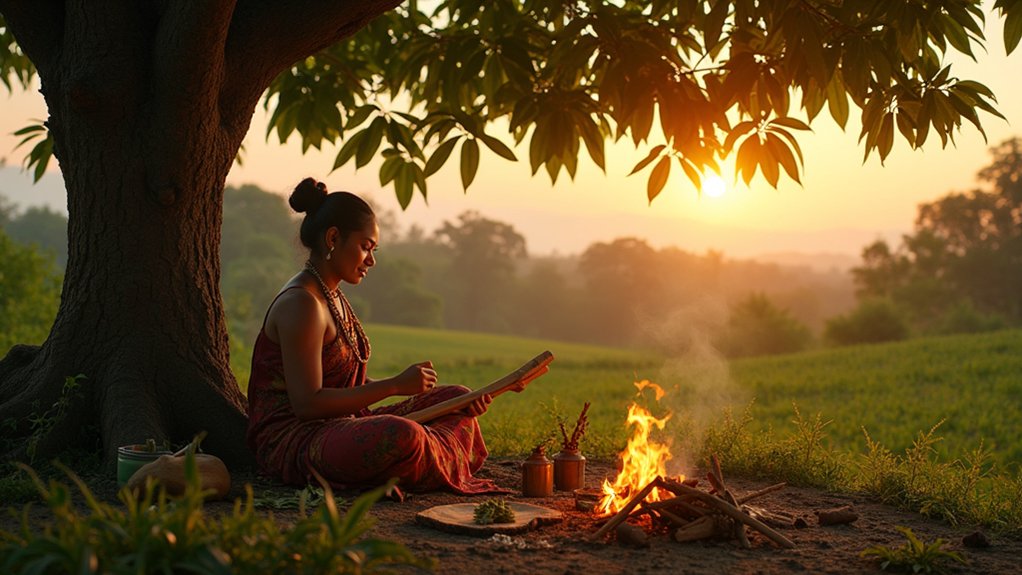
Albularyos blend herbal remedies with spiritual rituals to treat both physical and spiritual ailments, especially in rural areas lacking modern healthcare. Their practices, rooted in precolonial and colonial history, use native plants and prayers to provide accessible, culturally relevant care. While skepticism and legal challenges affect their role today, these healers still hold community trust. Understanding their evolving practices offers insight into the intersection of indigenous knowledge and modern health systems.
Historical Origins of the Albularyo
While the albularyo is widely recognized today as a traditional Filipino healer, its origins trace back to precolonial spiritual leaders known as babaylans and catalonans, who played a pivotal role in health and community wellbeing. These figures combined healing with spirituality, using indigenous knowledge of plants and rituals to address physical and supernatural ailments. Their precolonial practices formed the foundation of Filipino healing systems long before foreign medical influences arrived. During Spanish colonization, colonial adaptations transformed this role: the albularyo emerged from the suppression of babaylans, integrating Catholic prayers and new herbs into existing methods. This fusion created a hybrid healing tradition that preserved indigenous elements while adapting to colonial religious frameworks, maintaining the sociocultural significance of healing in rural Filipino communities. Today, albularyos continue to blend herbal remedies and spiritual practices in their healing methods, reflecting this long history of adaptation and integration. Community efforts such as oral transmission ensure these ancestral techniques are preserved and passed down through generations.
Common Healing Practices and Rituals
Because the albularyo’s role intertwines health and spirituality, their healing practices combine physical remedies with ritualistic elements deeply rooted in Filipino cultural and religious beliefs. You’ll notice that healing symbols and ritual music play key roles in these ceremonies, enhancing the spiritual atmosphere. Common practices include:
- Diagnostic rituals like tawas, interpreting candle wax shapes to reveal illness causes. These rituals often reflect the Filipino culture and superstitions that have persisted despite modernization.
- Physical and spiritual cleansing through pagpapahid (oil application) and spiritual bathing.
- Use of ritual paraphernalia such as lana (special oil), kandilâ (candles), and religious icons.
- Invocation of saints and ancestral spirits, often accompanied by orasyon (prayers) and indigenous chants.
These practices emphasize patient faith and are adapted contextually, blending Catholic and indigenous traditions to address both physical and spiritual ailments.
Herbal Medicines Used by Albularyos
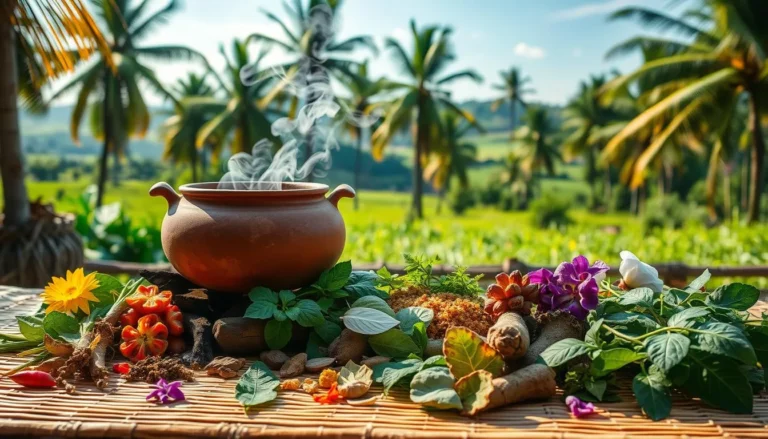
If you look closely at the healing practices of albularyos, you’ll find that herbal medicines are central to their approach. They rely on native plants like lagundi, sambong, and malunggay, whose herbal efficacy has been validated by scientific studies and government programs. The medicinal preparation varies, decoctions extract potent compounds by boiling, infusions steep leaves for milder effects, while poultices and powders are applied topically. These methods optimize the therapeutic properties depending on the ailment. You’ll notice albularyos use various plant parts sourced from community gardens or local environments, reflecting deep indigenous knowledge. Additionally, they often incorporate traditional rituals and prayers alongside herbal treatments to enhance healing. This reliance on herbal medicine underscores their role in providing accessible healthcare where conventional services may be limited, demonstrating a pragmatic integration of tradition and evidence-based efficacy.
Spiritual and Faith-Based Healing Methods
Though herbal remedies form a crucial part of an albularyo’s practice, their healing methods extend deeply into spiritual and faith-based domains. These approaches blend Catholic prayers with animist beliefs, emphasizing the spiritual efficacy of rituals and their cultural ritual significance. You’ll notice how faith amplifies healing outcomes, highlighting the patient’s role in the process. Key practices include:
- Tawas: Wax readings serve both diagnostic and spiritual functions and are used to identify spirits believed to cause illness, connecting physical symptoms with spiritual causes.
- Pagpapahid and Pagbababad: Use of oils and herbal baths for spiritual cleansing.
- Invocation and Prayer: Rituals incorporate prayers to God, saints, and nature spirits.
- Use of Sacred Objects: Candles, herbs, and icons enhance spiritual efficacy.
These methods reflect centuries-old traditions, linking ancestral knowledge with contemporary faith, shaping holistic Filipino healing paradigms. They also foster emotional well-being by creating a supportive narrative around the patient’s condition.
The Role of Albularyos in Rural Communities
While modern healthcare options remain limited in many rural Philippine communities, albularyos continue to play an essential role by providing accessible primary care. You’ll find that they address common illnesses and chronic conditions where licensed doctors are scarce, offering low-cost treatments that blend herbal remedies, massage, and prayer. Their holistic health approach targets both physical and spiritual ailments, customized to each patient’s sociocultural context. Community trust is fundamental to their role; albularyos are not just healers but custodians of indigenous knowledge and social mediators who maintain harmony. By integrating traditional practices with local beliefs, they guarantee health services remain affordable, culturally relevant, and widely accepted. This makes albularyos indispensable for sustaining health and social cohesion in rural settings.
Challenges Faced by Traditional Healers Today
You’re likely aware that traditional healers face growing competition from modern medical services, which challenges their relevance in many communities. Shifts in cultural perceptions often cast albularyos in a doubtful light, impacting public trust and social acceptance. Additionally, the lack of formal legal recognition complicates their practice, leaving them vulnerable within current healthcare frameworks.
Modern Medicine Competition
As modern healthcare systems expand their reach and capabilities, traditional albularyos face significant challenges in maintaining their roles within Filipino communities. The rise of modern medicine often sidelines traditional healing, limiting opportunities for healthcare collaboration. You’ll notice that:
- Diagnostic technologies and synthetic drugs offer faster symptom relief, reducing reliance on herbal remedies.
- Legal restrictions and lack of certification hinder albularyos’ institutional recognition and practice legitimacy.
- Media skepticism and demand for scientific validation undermine the credibility of folk therapies.
- Younger generations prefer Western medical care, shrinking the client base for traditional healers.
- Despite these challenges, the holistic approach of albularyos, which addresses emotional, mental, social, and spiritual healing, remains a unique aspect that modern medicine often overlooks.
These factors create a competitive environment where albularyos must navigate evolving public health policies and patient expectations to sustain their cultural and therapeutic relevance.
Cultural Perception Shifts
Modern medicine’s growing influence doesn’t just challenge albularyos through competition; it also reshapes how communities perceive traditional healing itself. You’ll notice that cultural stigma has increased, especially in urban and younger populations, where belief in supernatural illness causes declines. This skepticism often leads to labeling albularyo practices as unscientific or backward. Research indicates that folk medicine is perceived as effective, influenced by prior experiences and distrust in the healthcare system health-seeking behavior. Generational shifts further complicate matters, as younger Filipinos show less interest in learning these traditions, reducing apprenticeship opportunities. While rural areas maintain some respect for albularyos, the prestige of traditional healing diminishes overall. Some albularyos adapt by integrating scientific herbal knowledge or modern hygiene standards to remain relevant. Still, the evolving cultural landscape threatens continuity, as oral knowledge transmission faces disruption and community trust increasingly aligns with contemporary medical perspectives.
Legal and Regulatory Issues
While traditional healing remains an integral part of Filipino culture, legal and regulatory frameworks governing practitioners like albularyos are still evolving and often inadequate. You’ll find that regulatory challenges persist due to incomplete legislation and unclear accreditation standards. Republic Act 8423 provides a foundation, but proposed Senate Bills aim to formalize practitioner registration and enhance consumer protection. Yet, practitioner accreditation remains limited, with only a fraction formally registered.
Key issues include:
- Lack of standardized criteria for accrediting traditional healers
- Informal knowledge transmission complicating regulation
- Limited registration outreach in rural communities
- Risk of unregulated practitioners causing consumer safety concerns
Moreover, the bills specifically categorize Hilot under Alternative Health Care Modalities, highlighting the need for clear distinctions among traditional and alternative practices. Understanding these intricacies helps you grasp why regulatory reforms are essential for legitimizing and safeguarding traditional healing practices.
The Future of Albularyo Traditions in Modern Healthcare
Although traditional albularyo practices face challenges from urbanization and modernization, their potential role in contemporary healthcare remains significant. Future integration of albularyo knowledge with modern health systems depends heavily on preservation strategies, including documentation and policy reforms. You’ll find that collaboration between traditional healers and medical professionals could enhance holistic patient care, especially in culturally diverse communities.
| Aspect | Implication |
|---|---|
| Preservation | Systematic documentation prevents loss |
| Integration | Herbal and diagnostic synergies possible |
| Challenges | Urbanization disrupts oral transmission |
| Opportunities | Policy reform can legitimize folk healing |
Frequently Asked Questions
How Does One Become an Albularyo?
To become an albularyo, you’d undergo traditional apprenticeship, learning herbal medicine and rituals from elders. Your skills grow through experience and community trust, often initiated by a spiritual calling, blending practical and cultural knowledge deeply.
Are Albularyos Legally Recognized in the Philippines?
You’ll find that albularyos lack formal legal status in the Philippines, despite their deep cultural significance. Current laws recognize traditional healing but don’t mandate licensure, leaving their practice legally unregulated yet culturally respected.
What Tools Do Albularyos Commonly Use During Healing?
You’ll commonly find herbal remedies like lagundi and sambong used alongside healing rituals involving candles and prayer books. These tools combine natural and spiritual elements, facilitating diagnosis, cleansing, and physical therapy during traditional healing sessions.
Can Albularyos Diagnose Illnesses Without Modern Equipment?
Yes, you can rely on intuitive diagnosis and traditional methods without modern equipment. These approaches use pulse checking, ritual tools, and spiritual insight, effectively identifying illnesses within cultural and community contexts despite lacking scientific instruments.
Do Albularyos Charge for Their Healing Services?
You won’t find fixed healing fees; instead, service donations are voluntary and based on gratitude. This approach preserves spiritual integrity, ensuring healing isn’t commercialized but remains a community-centered, trust-driven practice reflecting cultural values.
1. What kind of ailments can Albularyos treat?
Albularyos can treat a wide range of ailments, including common colds, fevers, infections, stomach problems, and spiritual afflictions such as curses or hexes.
2. How do Albularyos diagnose their patients?
Albularyos use various methods including physical examination, spiritual rituals, and consultation with spirits or ancestors to diagnose ailments.
3. Are the treatments from an Albularyo scientifically backed?
While some herbal treatments used by Albularyos have been found to be effective and are used in modern medicine, many of their practices are based on traditional beliefs and have not been scientifically validated.
4. How can one become an Albularyo?
Traditionally, becoming an Albularyo involves an apprenticeship with a practicing healer and learning the knowledge of medicinal plants and spiritual practices, often passed down through family lines.
5. Is it common for people to still consult Albularyos today?
Yes, especially in rural areas or among those who prefer traditional healing methods. Many people seek the services of Albularyos alongside modern medical treatments.