Traditional Filipino Health Practices for Modern Living

Long before modern medicine, ancient cultures developed holistic systems to care for the body and spirit. In the Philippines, these methods blended indigenous wisdom with influences from centuries of cultural exchange. Scholars like Virgil Mayor Apostol have documented their roots in pre-colonial rituals led by community healers called babaylans, who addressed physical ailments alongside emotional and spiritual needs.
These time-tested approaches focus on balance, harmonizing energy flow through touch, herbal remedies, and mindfulness. One example is hilot, often misunderstood as simple massage. In reality, it corrects skeletal alignment and clears energy blockages through techniques passed down generations. This reflects a worldview where wellness connects deeply to cultural identity and nature’s rhythms.
Today, these traditions remain culturally meaningful and may support reflection, comfort, or community connection. They should not be presented as treatments for stress, chronic pain, or emotional conditions without appropriate evidence, and they should not replace licensed medical or mental-health care.
Key Takeaways
- Ancient Filipino methods emphasize balance across physical, emotional, and spiritual health.
- Practices like hilot combine therapeutic touch with cultural storytelling and energy work.
- Herbal remedies and mindfulness rituals remain practical for modern stress management.
- Historical records trace these traditions to pre-colonial healers and Spanish-era documentation.
- Integrating these approaches can enhance personal wellness while preserving cultural legacy.
The Rich History of Filipino Healing Traditions
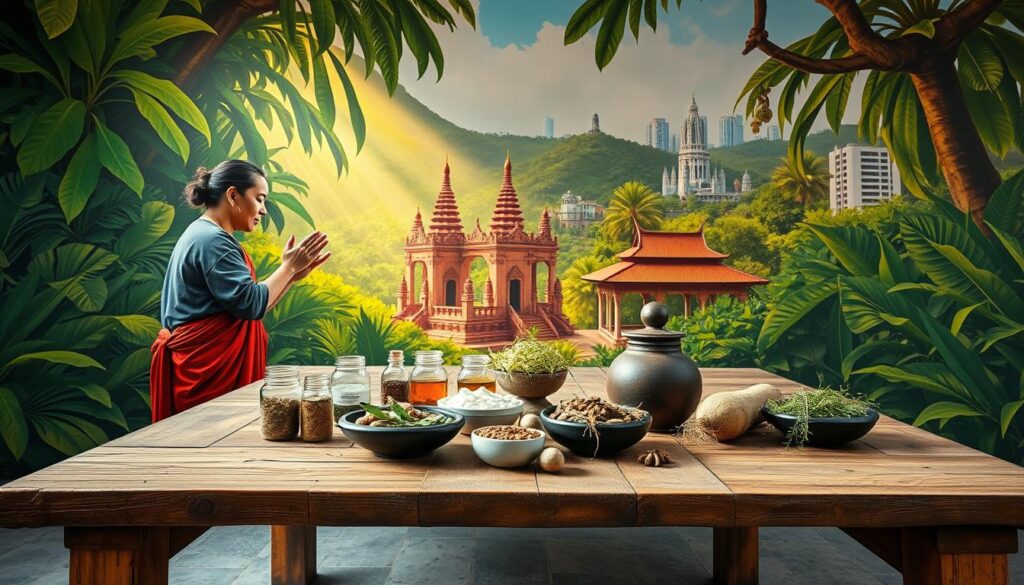
Centuries before globalization reshaped healthcare, island communities developed intricate systems blending physical care with spiritual awareness. At the heart of these methods stood babaylans – revered healers who combined herbal knowledge with rituals to maintain community wellness.
Origins and Pre-colonial Practices
Early healing sessions often began with oràsyon – sacred chants believed to activate the body’s energy flow. Babaylans used touch therapy alongside prayers, addressing both visible injuries and unseen imbalances. Historical texts describe their use of:
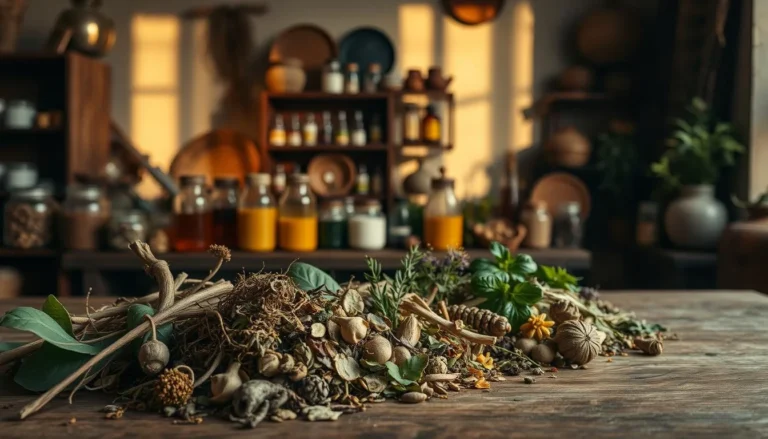
- Medicinal plants like lagundi for respiratory care
- Bamboo tools for muscle relief
- Smoke rituals to cleanse spaces
Evolution Through Colonial Influences
Spanish colonizers introduced hospitals but failed to erase ancestral methods. While Western medicine gained urban footholds, rural areas preserved energy-based therapies through oral traditions. This dual system created unique fusions:
| Pre-colonial Elements | Colonial Additions | Modern Legacy |
|---|---|---|
| Herbal compress therapy | Church-influenced prayers | Integrated wellness retreats |
| Bone-setting massage | Clinical diagnostics | Sports therapy hybrids |
| Spiritual cleansing | Pharmaceutical herbs | Mind-body workshops |
Some rural communities continue to consult local healers, but a current national percentage requires a directly applicable survey. Preservation efforts should distinguish cultural documentation from claims of medical safety or effectiveness.
Traditional Filipino Health Practices for Modern Living
Across the islands, hands-on healing methods have shaped wellness for generations. Two standout approaches – hilot and ablon – combine precise touch with cultural wisdom to address modern aches and stresses.
Exploring Hilot, Ablon, and Other Techniques
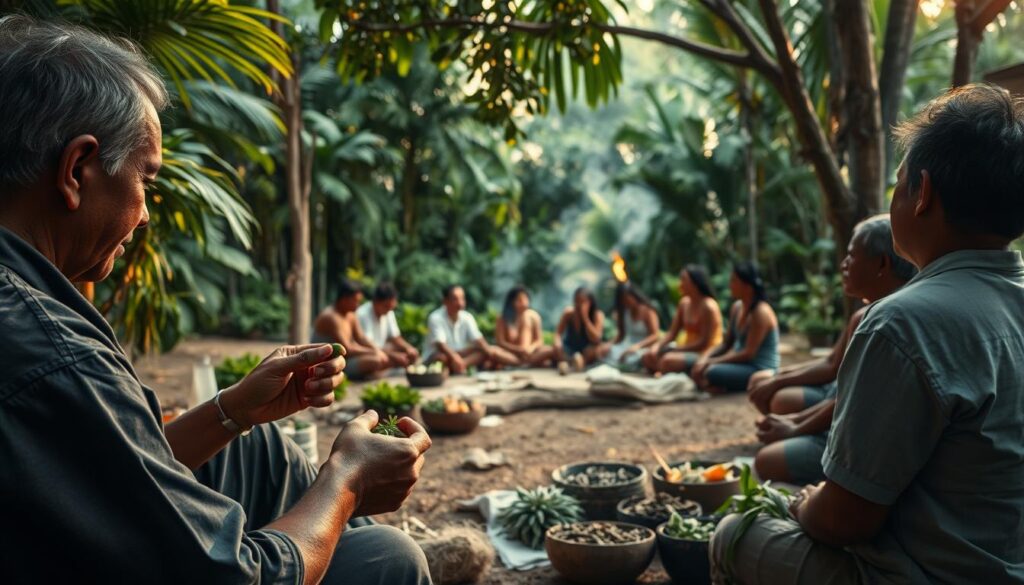
Hilot goes deeper than typical massage. Practitioners assess muscle tension and joint alignment using palm pressure and stretching. Virgil Mayor Apostol’s manuals detail how it resets the body’s energy pathways, similar to acupressure but rooted in local anatomy knowledge.
Ablon focuses on skeletal adjustments. One sub-technique, pekkel, uses rapid hand movements to release trapped nerves. Another method addresses upper-body strain through seated postures – a favorite among office workers in the country’s cities.
Integration of Prayers, Rituals, and Energy Medicine
These methods blend physical care with spiritual elements. Healers often whisper bulong prayers while applying herbal oils. “The hands guide, but the spirit completes the work,” notes a Manila-based practitioner.
- Herbal compresses warmed over coals for deep muscle relief
- Smudging rituals to clear negative energy before sessions
- Modern hybrids like laser-guided alignment checks
Some wellness providers combine traditional practices with modern services. A combination should not be described as meeting global safety standards without evidence, and regulated therapies should be delivered by appropriately qualified practitioners.
Holistic Modalities: Herbalism, Rituals, and Bodywork
Philippine biodiversity supports extensive traditional knowledge about plants. The number of medicinally used species and the evidence for each use vary by source, so cultural use should not be treated as proof that a plant safely treats an illness.
The Role of Medicinal Plants and Albularyos
Albularyos are local healers whose practices may combine plants, prayer, and cultural explanations of illness. This description documents a tradition; it does not establish lagundi or sambong preparations as appropriate treatment for a particular person.
Research evaluates particular plants and preparations, but there is no single blanket validation of “120 plants.” The PITAHC herbs directory lists selected documented uses and advises consulting a healthcare professional; supplement marketing should not be confused with clinical proof.
Techniques in Cupping, Tuob, and Rorof-Rorof
Bodywork therapies address modern stress through ancient techniques:
- Cupping (ventosa): a suction practice that can cause bruising, burns, or skin injury and should not be presented as proven treatment
- Tuob steam sessions: a cultural practice involving vapor, with burn risk and no assumption that it opens airways or treats illness
- Rorof-rorof massage: Rhythmic kneading improves circulation using coconut oil blends
Cultural explanations of fatigue differ from medical diagnosis. Persistent fatigue can have many causes and should be assessed appropriately; adding heat, prayer, acupuncture, or ultrasound does not establish that a combined approach is safe or effective.
Claims that integrated treatments improve sleep require a specific study, population, and intervention. Cultural practices should be described without an invented testimonial or an unsupported percentage, and persistent sleep problems merit professional assessment.
Bringing Ancient Practices into Contemporary Wellness
Urban wellness centers now blend ancestral knowledge with clinical research, creating bridges between old and new. This fusion offers practical solutions for today’s stressors while honoring cultural roots. From Los Angeles to New York, these methods gain traction as people seek holistic relief beyond conventional treatments.
Modern Adaptations and Integration with Western Medicine
Practitioners like Lyn Pacificar update ancestral methods for modern needs. Her clinics combine hilot techniques with physical therapy tools, addressing muscle strain in office workers and athletes. “We use coconut oil infused with menthol for deeper skin absorption,” she explains. “It’s science meeting tradition.”
Spas may combine cupping, heat, massage, or other services, but fixed improvement claims require directly applicable evidence. US FDA standards do not certify a spa treatment as effective; users should consider contraindications and seek qualified medical advice for persistent back pain.
Community Engagement and Maintaining Cultural Heritage
Community workshops can pass on knowledge about hilot, plants, and cultural practice. Training totals and quotations should be reported only when supported by a current institutional source; participation does not by itself confer a medical license.
Filipino communities may practice tuob as a cultural or household ritual, including in the diaspora. Do not claim respiratory or skin benefits without evidence; steam can burn skin and airways and should not replace medical care.
Conclusion
In today’s fast-paced world, ancestral healing wisdom offers pathways to balance. For generations, methods like hilot have addressed physical tension through precise technique, while herbal oils and mindful meditation nurture emotional resilience. These approaches remain vital for individuals seeking relief from modern stressors.
Some practitioners combine cultural wellness practices with modern services, but this does not prove a medical outcome. Any combined intervention should be evaluated for the exact technique, practitioner qualifications, risks, and evidence.
Their legacy continues through community workshops and cross-generational learning. Cultural preservation can be valuable, while health and quality-of-life claims still require appropriate evidence and qualified care.
These traditions can be explored as cultural practices or personal wellness preferences. Choose qualified practitioners, disclose health conditions and medicines, and do not treat cultural longevity as proof that a practice heals symptoms or disease.