T’nalak Festival South Cotabato: Dreamweavers and July Guide
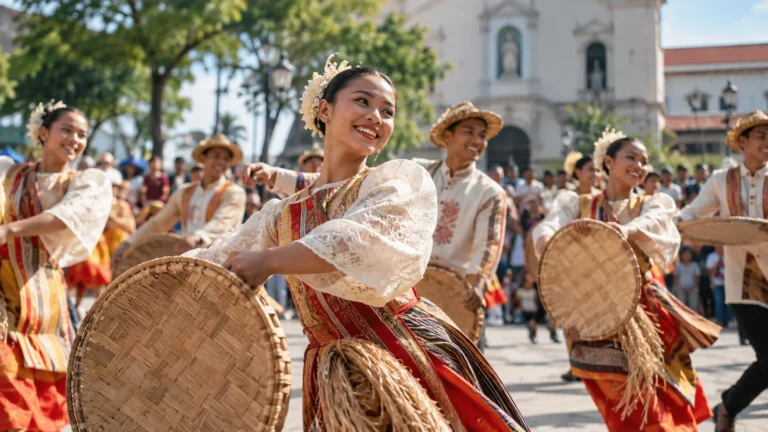
The T’nalak Festival is South Cotabato’s provincial founding-anniversary celebration, centred in Koronadal City and named for T’nalak, the handwoven abaca cloth of T’boli women often called dreamweavers. It is a civic and cultural programme.
It is not the same thing as the living weaving tradition itself. The cloth exists outside festival season, and the festival programme is approved anew for each edition.
As of 12 September 2026, the 27th T’nalak Festival and 60th Foundation Anniversary programme (1 to 18 July 2026) has already ended. The provincial calendar used the theme “Our Culture, Our Strength, Our Pride.” Street dancing and the grand showdown culminated on 18 July 2026.
The next edition’s dates are not published here. Confirm with the Provincial Government of South Cotabato.
Key facts
| Item | What to use |
|---|---|
| Place | Koronadal City and other sites in South Cotabato, Mindanao |
| Reason | Provincial founding anniversary and cultural identity |
| Legal anniversary anchor | 18 July, marking Republic Act No. 4849 (1966) |
| Name source | T’nalak, handwoven abaca cloth associated with T’boli communities of Lake Sebu |
| Organiser | Provincial Government of South Cotabato and festival committees |
| 2026 edition | 27th T’nalak Festival and 60th Foundation Anniversary; main calendar 1 to 18 July 2026 (completed) |
| Documented dance framework | Madal Be’lan; Kadsagayan a Lalan; Kasadyahan sa Kapatagan |
| What it is not | A permanent day-by-day template, or a costume party that owns T’boli weaving |
What the festival celebrates
South Cotabato marks its legal creation under Republic Act No. 4849, approved 18 July 1966. July is therefore the festival’s usual civic anchor.
Public activities may mix foundation ceremonies, weaving exhibits, dance competitions, farm events, trade displays, awards, food spaces, and government services. A concert or job fair belongs to one year’s programme. T’boli weaving has a much older cultural life.
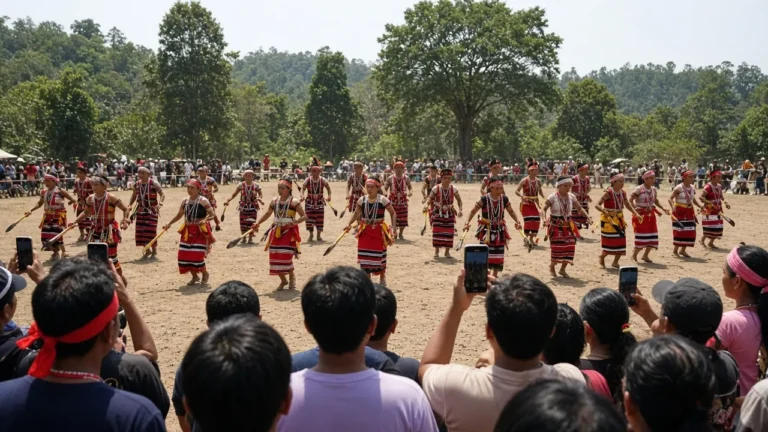
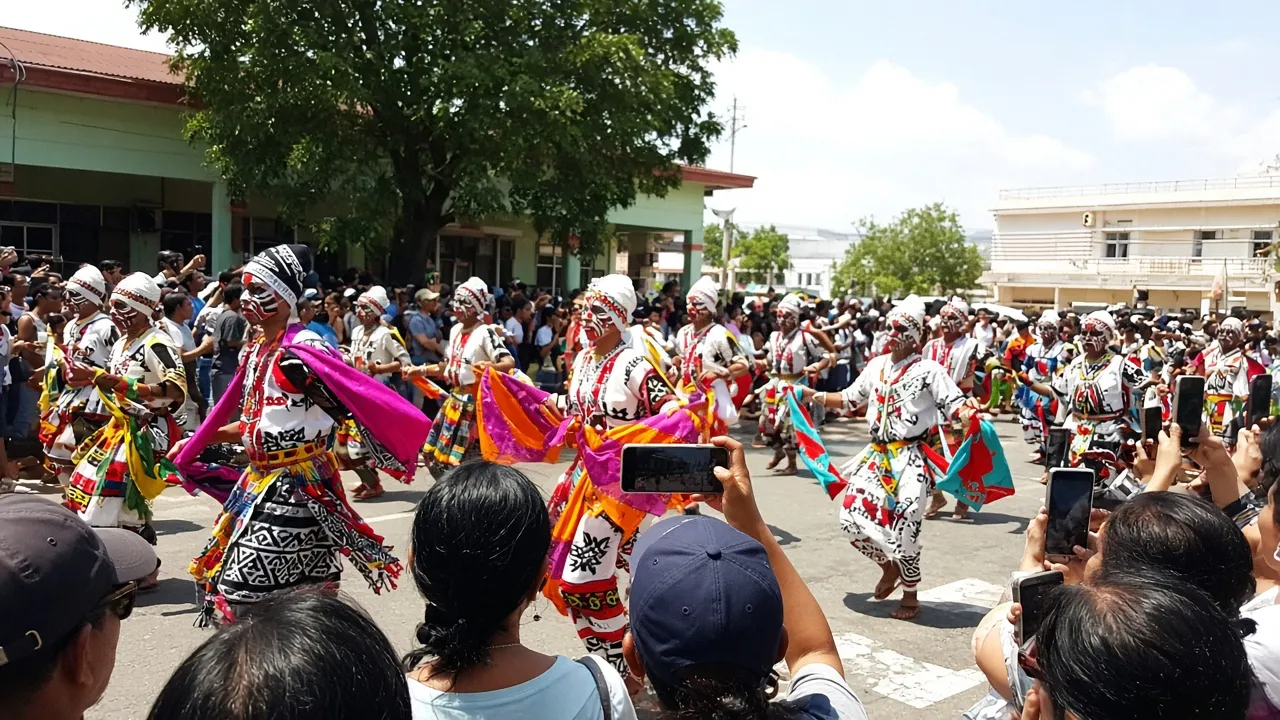
The province’s street-dance framework recognises Indigenous, Muslim, and Christian or lowland-settler communities.
In the 2026 results published by the province, champions were named by category: Madal Be’lan (Polomolok / Landan National High School), Kasadyahan sa Kapatagan (Norala National High School), and Kadsagayan a Lalan (Bacongco National High School for Koronadal’s winning line in that category report).
Those results belong to 2026 only.
In one line: T’nalak Festival is South Cotabato’s July founding-anniversary celebration named for T’boli abaca cloth, with programmes that change by edition and a 2026 main window of 1 to 18 July already completed.
Why the name T’nalak matters
T’nalak is woven abaca cloth made by T’boli women, especially associated with Lake Sebu. Designs are commonly described as coming through dreams and ancestral knowledge, which is why makers are called dreamweavers.
IPOPHL materials on T’nalak Tau Sebu describe collective protection for community weaving groups, including a collective mark (2017) and later geographical-indication recognition celebrated during the 2026 festival season. The festival can introduce visitors to that heritage.
It does not own or redefine it.
Lang Dulay was declared a Manlilikha ng Bayan (National Living Treasure) for abaca-ikat weaving excellence. That national recognition honours mastery and preservation. It should not be rewritten as “founder of the provincial festival” without a source that says so.
Planning table: Koronadal vs Lake Sebu
| If you want | Where to focus | Practical note |
|---|---|---|
| Civic programme and street dance | Koronadal City venues named in the current provincial calendar | 2026 used sites such as the gymnasium, sports complex, and Gensan Drive for parade activity. Next year may differ. |
| Foundation anniversary day | Around 18 July | Legal anniversary anchor. Confirm which rites and shows fall on that day each year. |
| Weaving and living arts | Lake Sebu cultural visits, with community consent | Plan as a respectful separate trip, not as an extension of the parade route. |
| Buying cloth | Documented community groups or authorised cultural centres | Ask maker and origin. Do not treat sacred or community patterns as free commercial costume. |
| Next trip after 2026 | Wait for the new provincial calendar | Do not reuse 1 to 18 July 2026 as a permanent ticket. |
Etiquette around cloth and performance
- Ask before photographing a weaver, loom, pattern, or private work area.
- Prefer documented Lake Sebu community groups and authorised centres when buying cloth.
- Do not bargain as if the textile were factory fabric.
- Do not copy a pattern for commercial branding or costumes without community consent.
- Read stage choreography as an edition-specific performance, not as permission to reproduce restricted material.
Calendar context: complete festivals guide. Fiesta basics: what are fiestas. Festival types overview: festivals in the Philippines. For another major Mindanao civic thanksgiving in August, see the Kadayawan Festival guide.
How to get to Koronadal and Lake Sebu
T’nalak programming centers on Koronadal City and other South Cotabato sites, with Lake Sebu as the cultural reference for T’boli cloth. Fly into General Santos when that route fits, then continue by land to Koronadal. Confirm airline and bus or van operators for your dates. Do not treat a single blog transfer hour as fixed.
| Leg | Pattern | Confirm |
|---|---|---|
| Air | General Santos (or other published Mindanao gateways) then land transfer | Live airline inventory |
| Koronadal city events | Provincial capital venues named each year | Provincial tourism programme |
| Lake Sebu side trips | Separate cultural visit when cloth and lake communities are your focus | Local guides and community rules; not a parade substitute |
Where to stay during T’nalak week
Stay in Koronadal if the anniversary street and civic programme is your priority. Stay nearer Lake Sebu only when your confirmed plan is community and craft time, not the main city stage.
- Koronadal city lodging: Shorter hops to provincial venues and evening programmes.
- Lake Sebu lodging: Better for woven-cloth learning visits when invited and scheduled. Still a land transfer from Koronadal.
- Book early: Anniversary week fills rooms. This page does not publish rates.
Related: Kadayawan for another Mindanao cultural calendar, and the complete festivals guide.
Confirm it here
- South Cotabato, T’nalak 2026 schedule of activities: https://southcotabato.gov.ph/tnalak-2026-festival-schedule-of-activities/
- South Cotabato, 2026 street dancing championship report: https://southcotabato.gov.ph/polomolok-norala-and-koronadal-win-the-tnalak-street-dancing-championship/
- Calendar hub: https://festivepinoy.com/festivals-in-the-philippines-complete-guide/
- Fiesta manners: https://festivepinoy.com/what-are-fiestas/
Quick summary
The T’nalak Festival is South Cotabato’s provincial founding-anniversary celebration, named for T’boli handwoven abaca cloth and centred in Koronadal City. The legal anniversary anchor is 18 July (Republic Act No. 4849, 1966).
The 2026 edition was the 27th T’nalak Festival and 60th Foundation Anniversary, with a main provincial calendar from 1 to 18 July 2026 and street-dancing finals on 18 July.
T’nalak weaving is a living Lake Sebu tradition protected through community standards and intellectual-property tools; the civic festival does not replace that culture. Confirm the next programme with the Provincial Government of South Cotabato. Reviewed 12 September 2026.
FAQ
What does T’nalak mean?
T’nalak is the handwoven abaca cloth made by T’boli women, especially associated with Lake Sebu. The provincial festival takes its name from this living textile tradition.
When is the T’nalak Festival held?
It is associated with South Cotabato’s 18 July founding anniversary. Full duration and venues change by edition. The 2026 main calendar ran 1 to 18 July. Use the current provincial calendar for the next trip.
Where is the T’nalak Festival celebrated?
Main civic events are centred in Koronadal City, the provincial capital. Lake Sebu is the cultural area most closely associated with T’boli T’nalak weaving and needs a separate local plan.
Is the T’nalak Festival a religious festival?
It is primarily a provincial civic and cultural celebration. A given programme may include an interfaith thanksgiving activity, but that does not make every festival event a fixed religious rite.
How can visitors support authentic T’nalak weaving?
Buy from documented Lake Sebu community groups or authorised cultural centres, ask about the maker and provenance, respect photography limits, and avoid copying patterns for commercial use without community consent.
Last reviewed against South Cotabato provincial pages for the 2026 calendar and street-dancing results as of 12 September 2026. Always confirm with the host province.
—