Santacruzan Procession Philippines: Religious Festival
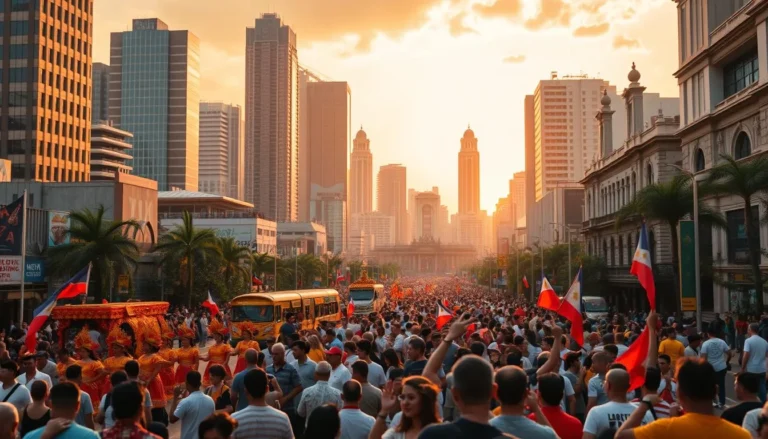
Every May, Philippine parishes fill with the scent of sampaguita and the sound of nightly rosaries. This is the flores de mayo festival, a month-long devotion to the Virgin Mary that closes with one evening procession called the Santacruzan. Many sites, and even some Filipinos, use the two names as if they were interchangeable, but they are not the same event.
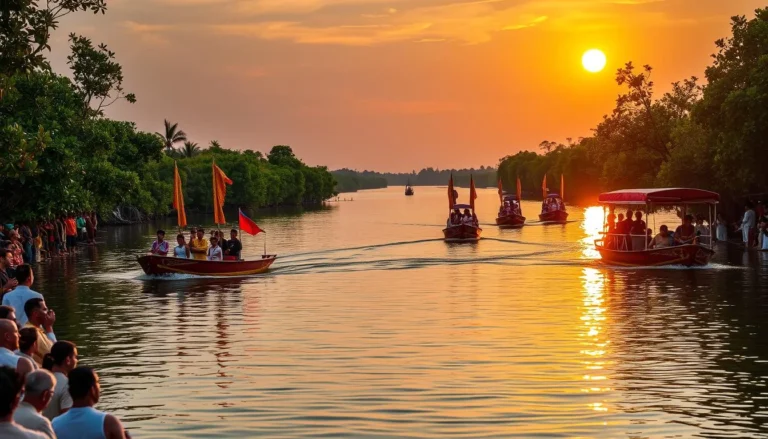
Flores de Mayo is the daily ritual of flower offerings and prayer that runs for most of May. The Santacruzan is the pageant that ends it, a reenactment of Saint Helena’s search for the True Cross alongside her son, Emperor Constantine. This guide separates the two traditions, traces where each began, and walks through every sagala, or maiden performer, who appears in the closing parade.
At a Glance
| Aspect | Detail |
|---|---|
| What it is | Flores de Mayo: a month-long Marian devotion; Santacruzan: the closing procession |
| When | Flores de Mayo runs all May; Santacruzan falls on Tapusan, the closing day |
| Where it began | Catholic Europe, brought to the islands by Spanish missionaries |
| Local roots | Tagalog booklet “Flores de Maria,” translated by Fr. Mariano Sevilla around 1867 |
| Manila’s version | A separate tradition that began in 1979 |
| Central legend | Saint Helena (Reyna Elena) searching for the True Cross |
| Grand finale | Reyna Elena, escorted by a boy playing Emperor Constantine |
| Daily activity | Children pray the rosary and offer flowers before Mary’s image |
Flores de Mayo Festival vs. Santacruzan: What Sets Them Apart
The confusion is common enough that Philippine news outlets publish explainers on it every year. Flores de Mayo is Marian. It centers on the Virgin Mary, runs through most of the month, and involves daily prayer and flower offerings led mostly by children and teenagers in local chapels.
The National Commission for Culture and the Arts describes it as a “whole month, Catholic-wide event” that highlights a procession honoring the Virgin Mary. Santacruzan is historical. It commemorates Saint Helena’s fourth-century search for the cross on which Jesus was crucified, and it served early on as a tool for teaching Catholic doctrine to local converts.
Key point
Flores de Mayo is the whole month of devotion. Santacruzan is one night near the end of it, the single procession that closes the season.
The practical difference is simple. During Flores de Mayo, children gather daily to pray the rosary and lay flowers before an image of Mary, no costumes required.
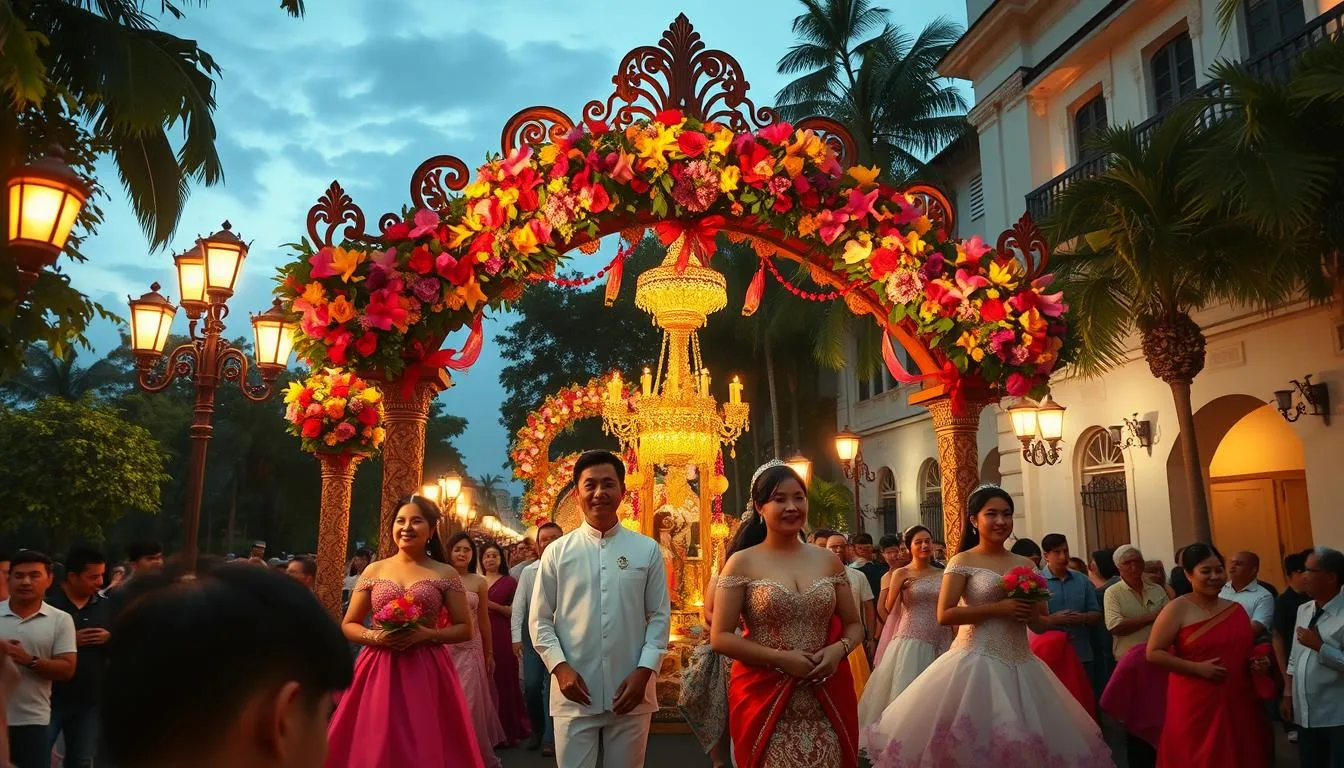
During the Santacruzan, every reyna, or queen, wears a specific costume and stands for a virtue, a Bible story, or a title of Mary. If you have only seen photos of young women in gowns walking under flower arches, you have seen the Santacruzan, not the full month that leads up to it.
Where the Devotion Began
Searches for the flores de mayo festival place of origin usually point to Europe, not the Philippines. The custom of setting May aside for the Virgin Mary began among Catholic communities in Europe, tied to the season when spring flowers first bloomed there. Spanish missionaries carried that custom across the Pacific and introduced it in the islands during the Spanish colonial era, adapting a European calendar tradition for a new audience.
In the Philippines, the priest Mariano Sevilla translated a Tagalog devotional booklet called Flores de Maria around 1867, and that publication helped spread the practice through Bulacan and neighboring provinces. Manila’s own Flores de Mayo tradition began in 1979, decades after the custom had already taken root in rural parishes. Filipinos did not simply import a foreign calendar either.
Note
May in the islands is also when the first rains break the dry season, so offering flowers matched a local rhythm as well as a European one.
The Santacruzan: Closing the Month of Devotion
The Santacruzan takes its name from the Spanish santa cruz, meaning holy cross. According to Catholic tradition, Saint Helena, mother of the Roman Emperor Constantine, traveled to Jerusalem and found the cross on which Jesus died. Filipino Catholics call her Reyna Elena, and her search is the backbone of the entire procession. Spanish colonizers introduced the Santacruzan in the 1800s, building the procession around that legend to reinforce it among new converts.
Unlike most Philippine religious processions, the Santacruzan does not carry an image of a patron saint through the streets. Instead, it parades a series of young women, each representing a virtue, a biblical figure, or one of Mary’s titles from the Litany of Loreto. The event also functions as catechesis. Youth who take part are often trained as prayer leaders, called magdadasal, through their involvement in the month’s activities.
In smaller towns such as Bugasong in Antique province, communities raise funds throughout May through door-to-door collections to pay for the closing festivities, and the night often ends with a coronation ceremony and dancing that runs past midnight.
The Full Roster of Sagalas and What They Symbolize
A sagala is any young woman who takes part in the procession. Reyna, the Spanish word for queen, is the specific title given to a sagala who represents a virtue, a biblical queen, or a Marian title.
Small barangay, or neighborhood, celebrations might field ten sagalas. Large town processions can field thirty or more. The order builds from the least prominent roles toward the most honored, ending with Reyna Elena herself. The table below follows that same order.
| Sagala | What She Represents | How She’s Identified |
|---|---|---|
| Matusalem | Methuselah, a reminder that worldly things pass away | An actor playing a bent, bearded old man |
| Reyna Banderada | The arrival of Christianity in the islands | Long red gown, yellow triangular flag |
| Aeta group | The Philippines’ pre-colonial, indigenous past | Placed early in the procession |
| Reyna ng Saba | The Queen of Sheba | Carries a jewelry box |
| Ruth and Naomi | Ancestresses of King David | Walk together as a pair |
| Reyna Judit | The widow Judith, who saved her city from an invading army | Costume varies by town |
| Ave Maria Angels | The angelic greeting to Mary, spelled letter by letter | Eight girls in white with wings, each holding one letter |
| Reyna Fe | Faith, one of the three theological virtues | Carries a cross |
| Reyna Esperanza | Hope, one of the three theological virtues | Carries an anchor |
| Reyna Caridad | Charity, one of the three theological virtues | Carries a red heart |
| Reyna Justicia | Mary as the Mirror of Justice | Carries a scale and sword |
| Reyna del Cielo | Queen of Heaven | Carries a flower; flanked by two child angels |
| Reyna de las Estrellas | Queen of the Stars, a guide for troubled minds | Carries a wand topped with a star |
| Reyna de las Propetas | Queen of Prophets, the fulfillment of prophecy | Carries an hourglass |
| Reyna de los Angeles | Queen of Angels | Walks escorted by angels |
| Reyna de las Flores | Queen of Flowers | Carries a cluster of blooms |
| Reyna Abogada | Mary as advocate and defender of the poor | Graduation gown, mortarboard cap, large book |
| Reyna Elena | Saint Helena, finder of the True Cross | Most elaborate gown; carries a cross; escorted by a boy playing Constantine |
Some towns add extra figures depending on local tradition and how many sagalas the community can field that year:
- Reyna Mora
- Reyna Ester
- Cleopatra
- Santa Veronica
Reyna Fe, Reyna Esperanza, and Reyna Caridad give the Santacruzan a teaching function beyond spectacle, making the three theological virtues from First Corinthians 13 visible for a crowd that might never open a catechism. The Ave Maria Angels usually walk just ahead of the Marian title queens, bridging the historical figures and the virtues that follow.
The procession closes with its most honored role: Reyna Elena and her escort mark the climax the Santacruzan has been building toward since Matusalem opened the parade.
Escorts and Arches: The Procession’s Supporting Roles
Each sagala’s turn through the street draws on more than her own costume. Several supporting roles fill out the procession:
- Eskorte: a male escort in formal barong, or a costume matching the sagala’s role
- Arko bearers: men who carry a bamboo or wire arch wrapped in real or paper flowers above each sagala
- Brass band: called musicos in older accounts, usually leading the procession
- Ati-atihan group: some towns add drummers ahead of the sagalas to draw a crowd before the queens appear
The arches and escorts are not decoration alone. They frame each sagala the way a stage frames an actor, marking her turn as the procession’s center of attention for the length of one street block.
Santacruzan and Flores de Mayo Costumes
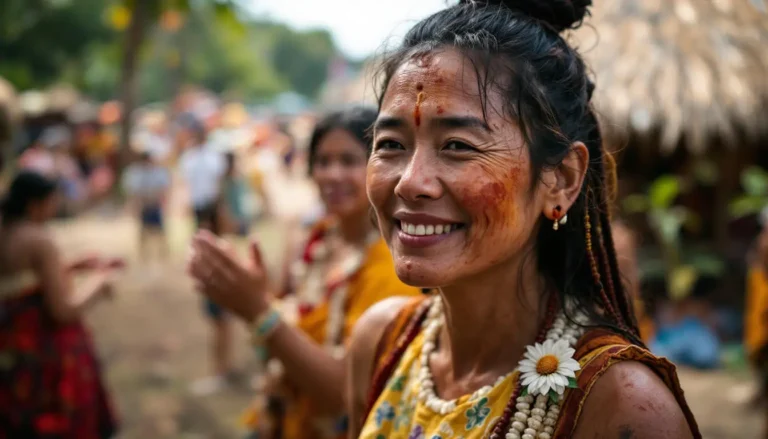
Flores de mayo festival costume traditions are modest by comparison to the Santacruzan. Daily devotees wear ordinary clothes, sometimes plain white for the children who lead prayers, since the focus stays on the rosary and the flower basket rather than on appearance.
The Santacruzan is where the sewing and beadwork happen. Sagalas typically wear a terno, the Filipino formal gown with structured butterfly sleeves, or a costume built specifically around their assigned role, from Reyna Abogada’s graduation gown to Reyna Elena’s jeweled cape.
Tip
Families often start planning a sagala’s gown weeks ahead, since a well-made costume gets reused or referenced by younger relatives in future years.
The costumes turn a religious procession into a showcase of local dressmaking, the same competitive spirit that drives the fruit and produce displays of the Pahiyas Festival a province away in Quezon, and one reason the Santacruzan draws spectators who never attend the month’s nightly rosaries.
How Filipino Towns Organize the May Schedule
The flores de mayo festival Philippines-wide follows a loose but consistent calendar. Parishes and barangay councils assign a schedule at the start of May, often rotating responsibility for hosting the nightly rosary among different streets or family groups.
Children and teenagers gather each evening to pray, sing hymns to Mary, and lay flowers before her image, a routine that continues for nearly the entire month. Communities often collect small contributions door to door throughout May to cover the cost of the closing procession, from sagala costumes to the brass band.
The month builds toward one evening:
- Tapusan, the closing day, includes a special Mass followed by the Santacruzan that night
- Larger towns and cities schedule their grand Santacruzan for a Saturday near the end of May so out-of-town relatives can attend
- Parish priests generally select the Reyna Elena and the senior queens based on years of participation, rather than pageant-style competition
In Tagalog-speaking provinces such as Bulacan, where Mariano Sevilla’s devotional booklet first took hold, some barangays still follow the exact structure his translation set out more than a century ago.
The Santacruzan has no patron saint image at its center, so it is not what a fiesta actually is in the strict sense, but it borrows the same barangay-wide organizing that runs a typical town fiesta.
Flores de Mayo Today
The devotion has not stayed static. Some processions now include local celebrities or beauty pageant candidates alongside parish regulars, and towns compete informally over costume design and float decoration. Overseas Filipino communities in the United States, the Middle East, and elsewhere hold their own Santacruzan each May, adapting the sagala roster and schedule to whatever venue their parish or cultural association can book.
What has not changed is the underlying structure: a month of quiet devotion, capped by one night of pageantry that still opens with an old man toasting sand and closes with a queen carrying a cross.
The devotion endures because it gives every generation a role to grow into, from carrying an Ave Maria letter as a child to walking as Reyna Elena years later. For more on how celebrations like this one fit into the wider Philippine festival calendar, our guide to Philippine festivals covers events held in every region and month of the year, and our category on Philippine festivals tracks new ones as they are added.
Frequently Asked Questions
Is Flores de Mayo the same as Santacruzan?
No. Flores de Mayo is the month-long devotion of daily flower offerings and prayers to the Virgin Mary throughout May. Santacruzan is the single procession that closes it, reenacting Queen Helena’s search for the True Cross. Santacruzan is one event inside the larger Flores de Mayo season.
Why is it called Flores de Mayo?
Flores de Mayo is Spanish for flowers of May. Spanish missionaries brought the devotion to the Philippines in the 1800s, and the name refers to the daily practice of offering flowers to an image of the Virgin Mary throughout the month.
Who is Reyna Elena in the Santacruzan?
Reyna Elena represents Saint Helena, mother of the Roman Emperor Constantine. Catholic tradition holds that she traveled to Jerusalem and found the cross on which Jesus was crucified. She walks last in the procession, wearing the most elaborate gown, escorted by a boy playing Constantine.
What do sagalas wear in the Santacruzan?
Sagalas typically wear a terno, a Filipino formal gown with butterfly sleeves, or a costume built around their specific role. Each carries an object tied to her title, such as a cross, an hourglass, a jewelry box, or a heart, and walks beneath a flower-covered arch.
What is the difference between a sagala and a reyna?
Sagala is the general term for any young woman who takes part in the procession. Reyna, meaning queen, is the specific title given to sagalas who represent a virtue, a biblical queen, or a title of the Virgin Mary, such as Reyna Fe or Reyna Elena.
Works Cited
Afinidad-Bernardo, Deni Rose M. “Explainer: Santacruzan, Flores de Mayo: What’s the Difference?” Philstar.com, PhilStar Daily, 22 May 2024, www.philstar.com/lifestyle/arts-and-culture/2024/05/22/2357072/explainer-santacruzan-flores-de-mayo-whats-difference.
Baguia, Jason A. “Santacruzan Explained: What Are the Reynas and Sagalas?” Cebu Daily News, Inquirer.net, 25 May 2026, cebudailynews.inquirer.net/731343/santacruzan-explained-what-are-the-reynas-and-sagalas.
Fortunado, Arnulfo Valderama. “Flores de Mayo and Santacruzan Engage Filipino Youth in Marian Devotion.” Catholics and Cultures, College of the Holy Cross, 6 Oct. 2023, www.catholicsandcultures.org/philippines/flores-de-mayo-and-santacruzan.
GMA News. “When Did Flores de Mayo Begin, and Why Is It Important to Filipino Culture?” GMA Network, 10 May 2026, www.gmanetwork.com/news/lifestyle/artandculture/987099/flores-de-mayo-celebration-philippines/story/.
National Commission for Culture and the Arts. “Festivals in the Philippines.” NCCA, n.d., ncca.gov.ph/festivals-in-the-philippines/5/.
“Santacruzan: A Filipino Tradition of Pageantry and Faith.” Asian Journal, Asian Journal Media Center, 29 May 2025, asianjournal.com/life-style/arts-culture/santacruzan-a-filipino-tradition-of-pageantry-and-faith/.