Sinukwan Festival Pampanga: San Fernando Dates and Guide
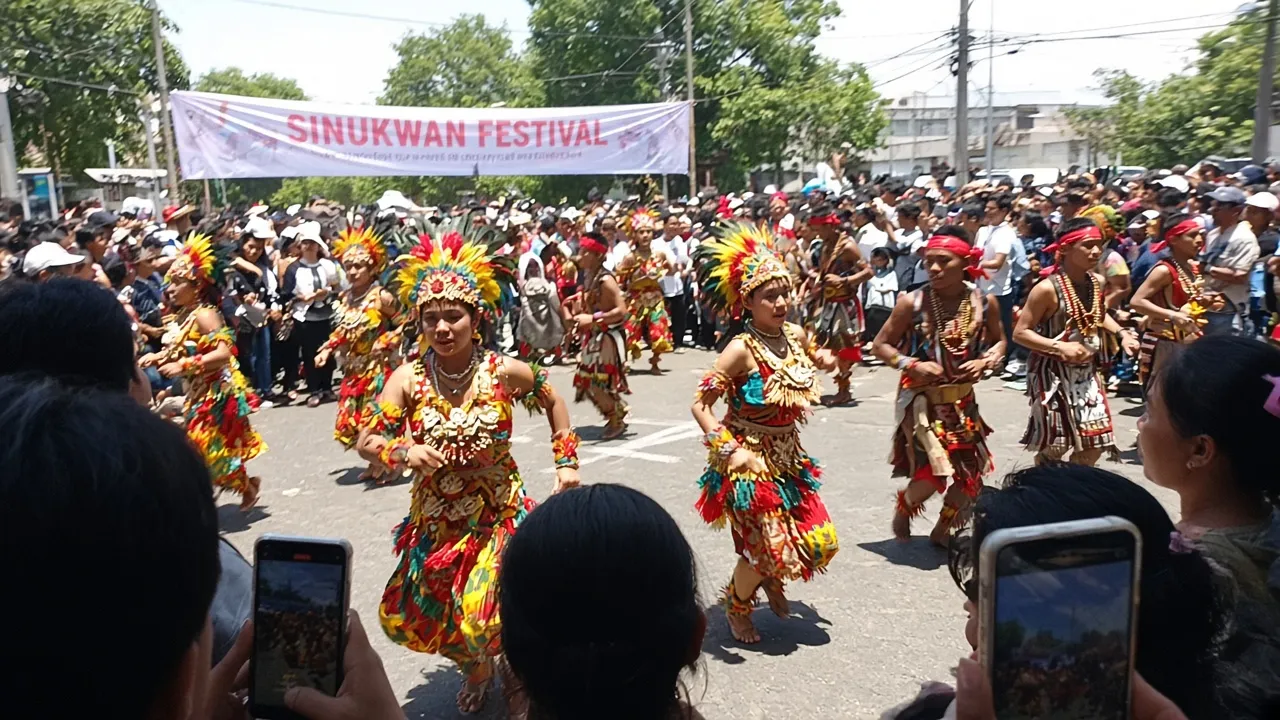
The Sinukwan Festival is a Kapampangan cultural week in the City of San Fernando, Pampanga. It honours Aring Sinukwan, the culture-hero figure the festival links with Mount Arayat. Street dance, pageants, food, craft, and school contests sit at the centre.
It is not a church feast with one fixed novena day. It is also not the same event as the Giant Lantern Festival in the same city.
As of 12 September 2026, this page has no city or FLKI proclamation for a 2026 Sinukwan week. The last run we can cite is the 28th edition, 23 to 30 November 2025, at venues such as Robinsons Starmills, City Front, and Megaworld Capital Town.
A provincial tourism page still lists 1 to 7 December. Treat that as an old standing note, not as a ticket. Confirm the live year with the Foundation for Lingap Kapampangan Inc. (FLKI) or the City of San Fernando before you lock a hotel.
Key facts
| Item | What to use |
|---|---|
| Place | City of San Fernando, Pampanga, Central Luzon |
| What it is | A Kapampangan cultural festival of dance, pageants, food, craft, and youth contests |
| Name source | Aring Sinukwan, a pre-colonial Kapampangan figure linked with Mount Arayat. Treat this as the festival’s own framing. |
| Usual window | Mid-November to early December. The week moves. |
| Latest cited run | 23 to 30 November 2025, billed as the 28th year |
| Prior cited run | 17 to 30 November 2024, billed as the 27th year |
| 2026 date | Not published here. Confirm with FLKI or the city. |
| Organiser pattern | FLKI, with city and mall partners in recent editions |
| What it is not | Ligligan Parul, the Giant Lantern contest, or a costume lookbook |
What Sinukwan is, and what it is not
Sinukwan is a harvest-and-identity festival. Schools, barangays, and community groups register for street dance, interpretative dance, pageants, and food or craft showcases. Feathered headdresses appear in the parade. They are part of the performance, not the whole history.
Searchers who only want a costume page miss the date problem and the Kapampangan purpose.
The name comes from Aring Sinukwan. Festival materials present him as a sun or culture figure tied to Mount Arayat. Use that as the festival’s story. Do not treat it as a proven origin of the mountain. Mount Arayat is not a parade stop you can walk onto from downtown San Fernando.
In one line: Sinukwan is San Fernando’s moving November or early-December Kapampangan culture week, not the Giant Lantern night, and not a fixed 1 to 7 December booking.
History, without the costume myth
FLKI, working with the Save Pampanga Movement, started the festival in the late 1990s after the 1991 Mount Pinatubo eruptions. The aim was a cultural rally when many Kapampangans had been displaced by lahar. The edition launched on 12 November 2024 was billed as the 27th year.
DepEd Region III later invited schools to the 28th Sinukwan Festival in 2025. That count fits a late-1990s start.
SunStar reported the 2024 theme as “Kulturang Amana, Sukat Ipamana,” which translators render as inherited culture, worth passing on. CLTV36 covered a 18 November 2025 culinary kick-off, the Kurang-Kurangan lumpia challenge, before the 23 to 30 November week. Those are last-edition facts. They are not the 2026 poster.
Dates: why 1 to 7 December is not a ticket
Public records do not agree on one permanent week. The provincial tourism listing still shows 1 to 7 December in the City of San Fernando. Documented recent runs moved earlier. A 2023 photo account placed the 26th edition around early December.
The 27th and 28th editions used late November. The honest reading is that a sponsor launch and local approval set the year.
| Edition | Published window | How to read it |
|---|---|---|
| Provincial listing (standing note) | 1 to 7 December | Old calendar line. Not proof of the next year. |
| 26th, 2023 | Early December (reports used 2 to 8 December / 8 December parade coverage) | Past edition only. |
| 27th, 2024 | 17 to 30 November 2024 (SunStar launch report) | Past edition only. |
| 28th, 2025 | 23 to 30 November 2025 (CLTV36 and mall listings) | Latest cited run. Already completed. |
| 2026 | Not published on this page | Ask FLKI or city tourism before you travel. |
How a visit usually works
Recent editions mixed a launch, exhibits, drum and lyre, spoken-word or song contests, pageants such as Lakan at Lakambini Ning Sinukwan, food fairs, and a street-dance finale. Venues have included Robinsons Starmills and other city sites. The city centre is the practical base.
Expect heat or late-year rain, slow traffic on parade days, and a programme announced in pieces.
| If you want | What to plan | Confirm first |
|---|---|---|
| Street dance and finale | Usually the last day of that year’s window | Parade route, start time, and viewing line |
| Food and craft | Fair days inside the week | Venue hours. Mall events are not the whole festival. |
| Pageants | Mid-week nights in recent programmes | Ticket or gate rules for that night |
| Lanterns | A different December contest in the same city | Use the Giant Lantern guide, not this page |
Pair this page with the Pampanga festivals hub and the Giant Lantern Festival if you are building a late-year trip. For fiesta manners, see what are fiestas. For month planning, use the complete festivals guide. Sasmuan’s January devotion is a different event: Kuraldal Festival.
Etiquette
- Ask before close photos of performers, especially children in pageants.
- Do not book a hotel for 1 December only because an old provincial listing says so.
- Mount Arayat and Aring Sinukwan are cultural references, not a photo hike from the parade.
- Food-fair prices and mall nights are local events. They do not replace the street-dance day.
How to get to San Fernando and where to stay
Sinukwan is a City of San Fernando, Pampanga cultural festival. Most visitors ride north from Metro Manila by bus or car into San Fernando, then use short city hops to published venues. The mid-November to early-December window moves. Confirm the live week with the city before you book.
| Base idea | Better if you want | Watch-outs |
|---|---|---|
| San Fernando city center | Walk or short hop to dance, food, and civic blocks | Evening programmes can stack; check the day’s grid |
| Near SM / transport nodes | Easy bus arrival and departure | Still budget time for venue-to-venue moves |
| Combine with lantern season | Giant Lantern calendar when it overlaps your dates | They are related Pampanga stories, not one ticket |
Regional context: festivals in Pampanga and Giant Lantern Festival. National map: complete festivals guide.
Confirm it here
- City of San Fernando tourism and FLKI notices for the live year
- Provincial listing (still shows 1 to 7 December): https://pampanga.gov.ph/index.php/tourist-attractions-menu/festivals/96-sinukwan-festival.html
- 2024 dates, SunStar Pampanga: https://www.sunstar.com.ph/pampanga/27th-sinukwan-festival-launched
- 2025 culinary kick-off and 23 to 30 November window, CLTV36: https://cltv36.tv/kapampangans-elevate-culinary-heritage-at-sinukwan-festival-2025-kick-off/
- Pampanga hub: https://festivepinoy.com/festivals-in-pampanga/
Quick summary
The Sinukwan Festival is an annual Kapampangan cultural celebration in the City of San Fernando, Pampanga. It honours Aring Sinukwan and usually runs one to two weeks in November or early December. The 28th edition ran from 23 to 30 November 2025.
As of 12 September 2026, the 2026 week is not published on this page. A provincial listing of 1 to 7 December is not a booking date. Confirm the theme, parade day, and venues with FLKI or city tourism. Sinukwan is not the Giant Lantern Festival. Reviewed 12 September 2026.
FAQ
When is the Sinukwan Festival in Pampanga?
There is no single fixed week. Recent editions used late November. The 2025 run was 23 to 30 November. A provincial page lists 1 to 7 December. Confirm 2026 with FLKI or the City of San Fernando.
What is the Sinukwan Festival?
It is a Kapampangan cultural festival in San Fernando with street dance, pageants, food, and craft events. It is named for Aring Sinukwan, a culture-hero figure linked with Mount Arayat.
Where is it held?
In the City of San Fernando, Pampanga. Recent venues included Robinsons Starmills and other city sites. Do not assume last year’s map.
Is Sinukwan the same as the Giant Lantern Festival?
No. Sinukwan is a cultural week of dance and heritage events. Ligligan Parul is a separate December lantern contest in the same city.
Can I book November 2026 from the 2025 dates?
Not as a ticket. The late-year pattern is real. The exact opening and parade day are set each edition. Ask the host first.
Last reviewed against SunStar 2024 launch coverage, CLTV36 2025 kick-off reporting, the provincial standing listing, and FLKI edition counts as of 12 September 2026. Always confirm with FLKI and the City of San Fernando.
—