Banaue Rice Terraces Philippines
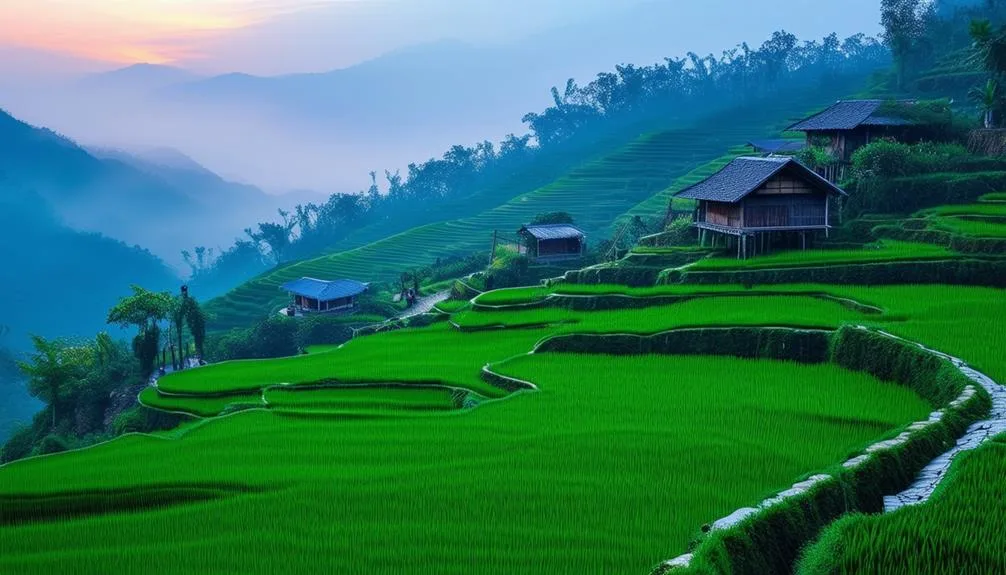
The Banaue Rice Terraces are among the most breathtaking sights in the Philippines: vast staircases of paddies carved into the mountainsides of Ifugao, sculpted by hand more than two thousand years ago and still farmed today. Often called the “Eighth Wonder of the World,” these emerald terraces are a living monument to the ingenuity of the Ifugao people and one of the country’s proudest cultural treasures. This guide explains what the terraces are, their history, how they work, and how to visit them.
Banaue, Ifugao, Cordillera (Luzon)
Over 2,000 years old
The Ifugao people
Steep mountain slopes
Ancient forest-fed irrigation
“Eighth Wonder of the World”
What the Banaue Rice Terraces are
The Banaue Rice Terraces are enormous fields of rice paddies cut in steps into the steep slopes of the Cordillera mountains in Ifugao province, northern Luzon. Built without modern machinery, using only hand tools and an extraordinary understanding of the land, they follow the natural contours of the mountains and rise thousands of feet up the slopes. Local lore says that if the steps were laid end to end they would stretch halfway around the world. More than scenery, they are working farms that have fed the Ifugao for countless generations.
A 2,000-year-old achievement
The terraces are believed to be over two thousand years old, carved by the ancestors of today’s Ifugao with remarkable patience and skill. Knowledge of how to build and maintain them, from stone walls to water channels, has been handed down through the generations as part of Ifugao identity. This makes the terraces not just an engineering marvel but a cultural inheritance, a physical record of a people’s relationship with their mountains stretching back to a time long before the Spanish ever reached the islands.
How the terraces work
The genius of the terraces lies in their ingenious use of water and land. The system is a masterpiece of sustainable farming.
- Forest at the top. The Ifugao protect the rainforests, or muyong, above the terraces, which act as a natural sponge holding rainwater.
- Gravity-fed irrigation. Water flows down from the forest through a careful network of channels, feeding each paddy in turn from top to bottom.
- Stone and mud walls. Retaining walls hold the soil in place on the steep slopes and keep each level flooded for the rice.
- Communal upkeep. Whole communities work together to repair walls and clear channels, a tradition of cooperation much like bayanihan.
The Ifugao and their heritage
The terraces are inseparable from the Ifugao, one of the indigenous peoples of the Cordillera. For them the rice fields are sacred as well as practical, tied to rituals, chants, and a calendar of planting and harvest that orders community life. Rice is not merely food but a symbol of life and status, and the knowledge of terrace farming is passed down as a treasured skill. To understand the terraces is to understand the Ifugao themselves, a people who shaped an entire landscape without ever conquering it.
Where to see the terraces
Banaue is the gateway to the terraces, and several viewpoints and nearby villages offer spectacular vistas.
| Spot | What to expect |
|---|---|
| Banaue Viewpoint | The classic panorama seen on postcards and old banknotes |
| Batad | A stunning amphitheatre of terraces, reached by a hike |
| Bangaan | A picture-perfect village nestled among the paddies |
| Hapao and Hungduan | Sweeping terraces with hot springs nearby |
Several of the finest clusters, including Batad and Bangaan, are recognised as a UNESCO World Heritage Site for their outstanding beauty and cultural value, protected as the Rice Terraces of the Philippine Cordilleras. The famous Banaue viewpoint is not itself one of the five inscribed clusters. Those clusters are Nagacadan in Kiangan, Hungduan, Mayoyao, and Bangaan and Batad in the municipality of Banaue.
Tips for visiting Banaue
- Go in the growing season (around February to June) to see the terraces at their greenest, or near harvest for golden hues.
- Hire a local guide, especially for the hike to Batad, both for safety and for the stories they share.
- Dress for the mountains, as the Cordillera is cool and can be misty or wet.
- Respect the culture, asking before photographing people and supporting local crafts and homestays.
Legends of the terraces
Like many wonders, the Banaue Rice Terraces are wrapped in folklore. The Ifugao tell stories of ancestors and deities who taught the people to carve the mountains and bless the harvest. Rice itself is treated as sacred, watched over by the bulul, carved wooden granary figures believed to guard the grain and ensure abundance. Rituals and chants accompany each stage of the farming year, from planting to harvest, binding the community to the land and to their forebears. These beliefs are not relics of the past but living traditions that still shape life in the highlands today.
Challenges facing the terraces
For all their grandeur, the terraces are fragile and face real threats. Keeping them alive is a growing challenge in the modern world.
- An ageing farming population, as younger Ifugao move to cities for study and work.
- Abandonment, since unfarmed terraces quickly erode and collapse without constant care.
- Climate pressures, with changing rainfall affecting the delicate irrigation balance.
- Balancing tourism, which brings income but must be managed so it does not harm the landscape.
Efforts to protect the terraces focus on supporting the farmers who maintain them, reviving traditional knowledge, and encouraging responsible tourism. When visitors buy local crafts, stay in community homestays, and treat the sites with respect, they help keep this heritage alive for future generations.
A symbol of the Filipino spirit
The Banaue Rice Terraces are more than fields; they are a symbol of what the Filipino people can achieve through patience, cooperation, and harmony with nature. Built entirely by hand, sustained for two thousand years, and still feeding communities today, they embody values at the very heart of Filipino culture: respect for the land, the strength of working together, and a deep sense of heritage. For travellers from the Philippines and around the world, standing before the terraces is a humbling reminder of human ingenuity at its most beautiful.
Beyond the terraces: exploring Ifugao
While the terraces are the main draw, the wider Ifugao region offers much more for the curious traveller. The mountain air is cool and bracing, the villages are rich in tradition, and the trails between them pass some of the most beautiful scenery in the country. Visitors can watch skilled artisans carve wooden bulul figures and weave brightly patterned cloth, sample highland-grown rice and coffee, and learn about age-old customs still practised today. Nearby hot springs offer a soothing reward after a day of hiking, while homestays give a genuine taste of Ifugao life. Taking time to explore beyond the famous viewpoints turns a quick photo stop into a deeper, more memorable encounter with one of the Philippines’ proudest cultures.
For Filipinos living abroad in the United States, Canada, the United Kingdom, and Australia, the terraces are a powerful emblem of home and heritage, a reminder of the ingenuity and perseverance carried in their roots. A visit to Banaue is not only a journey into the mountains but a journey into the soul of the nation itself.
Frequently Asked Questions
Where are the Banaue Rice Terraces?
They are in Banaue, Ifugao province, in the Cordillera mountains of northern Luzon.
How old are the terraces?
They are believed to be more than 2,000 years old, carved by hand by the ancestors of the Ifugao people.
Are the Banaue Rice Terraces a UNESCO site?
Several terrace clusters in the region, including Batad and Bangaan near Banaue, are inscribed as the UNESCO World Heritage Rice Terraces of the Philippine Cordilleras.
Why are they called the Eighth Wonder of the World?
Because of their staggering scale and the fact that they were built entirely by hand over two millennia ago, an achievement often compared to the great wonders of antiquity.
Conclusion
The Banaue Rice Terraces are more than a scenic wonder; they are a living testament to Filipino ingenuity, patience, and harmony with nature. Carved by the Ifugao over countless generations and still green with rice today, they stand as one of the Philippines’ greatest gifts to the world and a must-see for anyone drawn to the country’s heritage.