Emilio Aguinaldo: Revolutionary Leader and First Philippine President
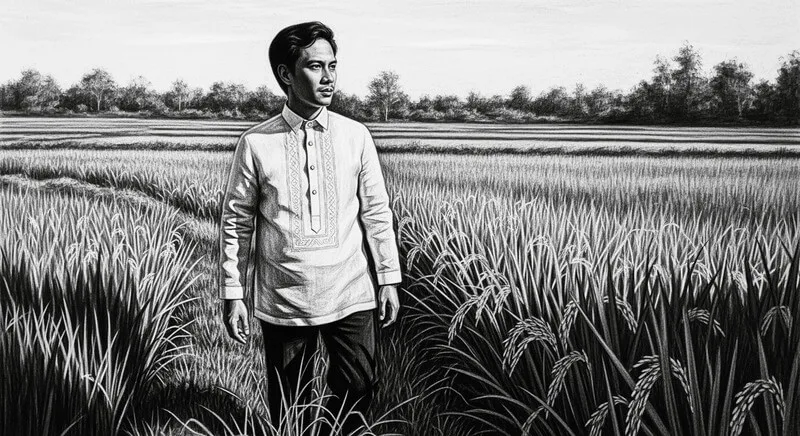
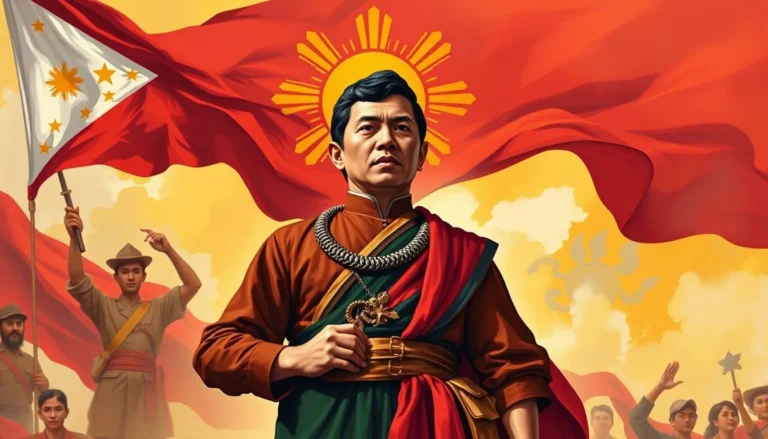
Emilio Aguinaldo was the first president of the Philippines and a central figure in the country’s fight for freedom. A young revolutionary from Cavite, he led Filipino forces against Spain, proclaimed Philippine independence in 1898, and then fought the United States in a long and bloody war. Heroic yet controversial, Aguinaldo remains one of the most important and most debated figures in Philippine history.
This guide covers Aguinaldo’s early life, his role in the revolution, his presidency, the war with America, and his complicated legacy.
First President of the Philippines
1869 to 1964
Kawit, Cavite
June 12, 1898
Spain, then the United States
March 23, 1901
Who Emilio Aguinaldo was
Emilio Aguinaldo y Famy (1869 to 1964) was a Filipino revolutionary, statesman, and military leader who became the first president of the Philippines, serving from 1899 to 1901, and the first president of a constitutional republic in Asia. He led Filipino forces first against Spain in the Philippine Revolution, then briefly alongside the United States in the Spanish-American War, and finally against the Americans in the Philippine-American War.
Early life
Aguinaldo was born on March 22, 1869, in Kawit, Cavite, into a locally prominent family of Chinese and Tagalog descent. Nicknamed “Miong,” he was one of eight children, and his father served as the town’s mayor, a post the young Emilio himself would later hold. He studied at San Juan de Letran College in Manila but left early to help run the family farm, gaining the practical, grounded outlook that would mark his leadership.
The revolution against Spain
In 1895 Aguinaldo joined the Katipunan, the secret nationalist brotherhood founded by Andres Bonifacio. When revolution broke out against Spain in 1896, he proved a capable commander, winning notable victories in Cavite province. His military success, however, came alongside a bitter power struggle. When Bonifacio tried to reassert his leadership in 1897, Aguinaldo had him arrested and executed, a decision that would shadow his reputation ever after.
Exile and return
Late in 1897, Aguinaldo negotiated the Pact of Biak-na-Bato with the Spanish, agreeing to go into voluntary exile in Hong Kong in exchange for money and a promise of reforms. But the truce did not last. When war erupted between Spain and the United States in 1898, Aguinaldo made arrangements with American officials and returned from exile to resume the fight for freedom, sensing that the moment for independence had come.
Declaring independence
On June 12, 1898, from the balcony of his home in Kawit, Aguinaldo proclaimed Philippine independence, ending, at least in spirit, more than three centuries of Spanish colonial rule. The following year, on January 23, 1899, the Malolos Constitution was proclaimed, establishing the First Philippine Republic, and Aguinaldo, who had led the provisional government, was elected its president. It was a landmark moment: the birth of the first republic in Asia.
The war with the United States
Independence proved short-lived. Under the Treaty of Paris, Spain ceded the Philippines to the United States, which refused to recognise Aguinaldo’s republic. Tensions boiled over on February 4, 1899, when an American sentry shot a Filipino soldier at the San Juan Bridge, igniting the Philippine-American War. Aguinaldo’s forces, outgunned, turned to guerrilla warfare in a long and devastating conflict. He was finally captured on March 23, 1901, in a daring ruse by American soldiers who posed as prisoners, after which he swore allegiance to the United States and called for peace.
Later life
Aguinaldo lived a long life after the war. In 1935 he ran for president of the Philippine Commonwealth but lost to Manuel Quezon. He later served on an advisory Council of State and, in his final years, chaired a board that provided pensions to aging veterans of the revolution. He lived to see his lifelong dream fulfilled when the Philippines gained full independence on July 4, 1946, and he died in Manila in 1964, at the age of 94.
A complicated legacy
Aguinaldo’s place in history is genuinely debated. He is honoured as a national hero, the leader of the revolution and the first president of the first republic, who declared independence and fought two colonial powers for his country’s freedom. Yet he is also criticised for ordering the execution of Andres Bonifacio, for his suspected role in the death of General Antonio Luna, and for accepting exile and payment from Spain. Even so, many historians rank him among the greatest of Filipino leaders for his central role in winning the revolution against Spain and defending the young nation’s independence.
The rivalry with Bonifacio
One of the darkest and most debated chapters of Aguinaldo’s career was his rivalry with Andres Bonifacio, the founder of the Katipunan. As the revolution spread, the two men and their factions clashed over leadership. After a contested convention, Aguinaldo’s faction had Bonifacio arrested, tried, and executed in 1897. To his critics, this was a betrayal of the revolution’s true father; to his defenders, a harsh necessity in a time of war. Either way, it left a permanent shadow over Aguinaldo’s name.
The First Philippine Republic
Aguinaldo’s presidency was the heart of a bold experiment in nationhood. The Malolos Congress drafted a constitution and, in January 1899, proclaimed the First Philippine Republic, with Aguinaldo as president. Though short-lived, it was the first constitutional republic in Asia, complete with a functioning government, a congress, and ambitions for schools, an army, and diplomacy. It stands as proof that Filipinos were ready and able to govern themselves, a powerful rebuttal to colonial claims otherwise.
His home and monuments
Aguinaldo’s ancestral house in Kawit, Cavite, where he declared independence in 1898, still stands today as the Aguinaldo Shrine, a national landmark visited by students and tourists alike. Its balcony, from which he first waved the Philippine flag, is one of the most iconic sites in the country’s history. Streets, schools, a province, and countless monuments across the Philippines bear his name, keeping his memory firmly woven into national life.
Independence Day
Perhaps Aguinaldo’s most enduring gift to the nation is the date itself. For decades, Philippine independence was celebrated on July 4, the day the United States granted it in 1946. In 1962, however, the government moved the celebration to June 12, honouring the day Aguinaldo proclaimed independence from Spain in 1898. Every year, the whole country now marks that date, a lasting tribute to the moment he declared the Filipino nation free.
How Aguinaldo is remembered
Aguinaldo remains a figure of vigorous debate, admired and criticised in equal measure. Historians continue to weigh his undeniable achievements against his controversial choices, and Filipinos are taught to see him not as a flawless idol but as a complex human being who shaped their nation’s birth. That honest reckoning, celebrating his triumphs while acknowledging his failings, is perhaps the most fitting way to remember the first president of the Philippines.
Whatever the debates that surround him, Emilio Aguinaldo’s central place in the Filipino story is secure. He gave the nation its declaration of independence and its first taste of self-rule, and every June 12, the whole country still honours the moment he stepped onto that balcony in Kawit and dared to call the Philippines free.
Frequently Asked Questions
Who was Emilio Aguinaldo?
He was a Filipino revolutionary leader and the first president of the Philippines, who declared independence from Spain in 1898 and led the fight against both Spain and the United States.
When did Aguinaldo declare Philippine independence?
On June 12, 1898, from his home in Kawit, Cavite. This date is now celebrated as Philippine Independence Day.
Why is Aguinaldo controversial?
Mainly for ordering the execution of Andres Bonifacio and his suspected role in the death of Antonio Luna, as well as for accepting exile and payment from Spain.
How did Aguinaldo’s presidency end?
He was captured by American forces in 1901 during the Philippine-American War, after which he pledged allegiance to the United States and retired from active leadership.
Conclusion
Emilio Aguinaldo’s life mirrors the birth pangs of a nation: brave, flawed, triumphant, and tragic. As the man who declared Philippine independence and led the first Asian republic, he holds an unshakeable place in history, a hero whose complexities only make the story of the Filipino struggle for freedom more human and more real.