Manila’s Parián: Chinese Merchants in PH’s Golden Age
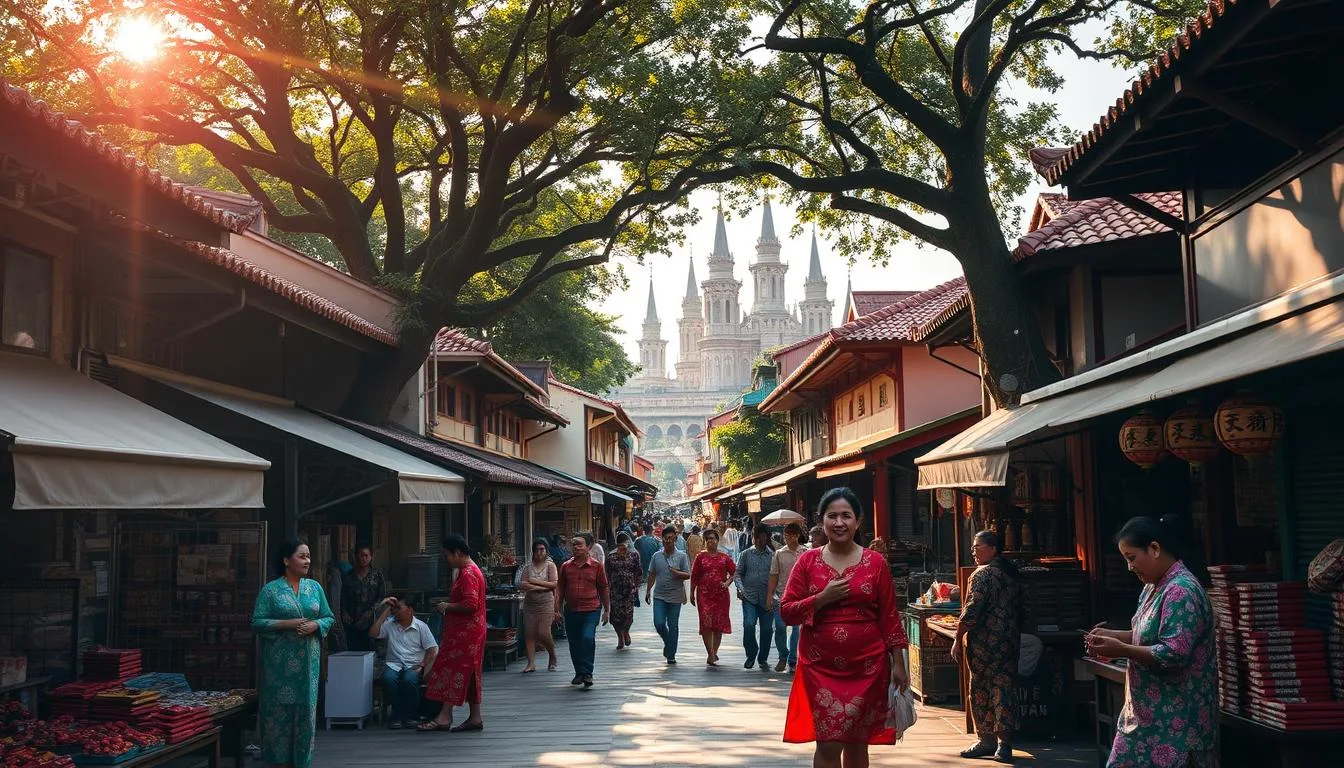
Manila’s Parian was the bustling Chinese quarter of Spanish colonial Manila, a crowded market district just outside the walls of Intramuros where Chinese traders, artisans, and shopkeepers built the commercial heart of the city. For nearly three centuries it was the engine of Manila’s economy, the source of the silks and porcelain that filled the galleons bound for Mexico, and the birthplace of the Chinese-Filipino heritage that still shapes the nation today. This is the story of the Parian, its golden age, and the legacy it left behind.
The Chinese quarter of old Manila
Around 1581, Spanish era
Just outside Intramuros walls
Silk, porcelain, goods, crafts
The Sangley Chinese community
Binondo, mestizo culture, cuisine
What the Parian was
The Parian was a designated district in Spanish Manila set aside for the Chinese, known to the Spanish as Sangleys. Established in the early 1580s, only a decade after the Spanish founded Manila, it sat just outside the stone walls of Intramuros, close enough for trade but kept deliberately apart from the Spanish colonial city. Within its crowded streets stood shops, workshops, warehouses, and homes, a self-contained world of commerce and craft. It functioned as the great marketplace of the colony, where almost anything could be bought and where the goods that made Manila rich changed hands.
The name “Parian” came to mean a Chinese market district, and similar quarters appeared in other towns across the islands. But it was Manila’s Parian that was by far the largest and most important, a place whose energy and enterprise powered the entire Spanish colonial economy in the Philippines.
Why the Spanish created it
The Spanish needed the Chinese, but they also feared them. Chinese traders had been visiting the islands for centuries before the Spanish arrived, exchanging silk, porcelain, and iron for local products. When the Spanish established Manila in 1571, they quickly came to depend on these merchants for nearly everything, from food and building materials to the luxury goods that fed the galleon trade. Yet the small Spanish population was wary of the fast-growing, economically powerful Chinese community living among them.
The solution was the Parian: a place where the Chinese could live and work and where their vital trade could flourish, but which sat outside the walls and could be watched and controlled. It was a compromise born of both need and suspicion, and that uneasy balance would define the district’s history for generations.
The commercial heart of the colony
In its golden age, the Parian was one of the busiest and most cosmopolitan marketplaces in all of Asia. Its workshops and stalls supplied the colony with an astonishing range of goods and services.
- Silk and textiles, the prized Chinese fabrics that were the mainstay of the galleon trade.
- Porcelain and ceramics, shipped across the Pacific to Mexico and on to Europe.
- Skilled crafts, from tailoring and shoemaking to carpentry, metalwork, and even bookbinding.
- Everyday goods and food, supplying the daily needs of Manila’s residents.
- Services of every kind, as Chinese artisans became the colony’s shopkeepers, cooks, and tradesmen.
So central was the Parian that Manila’s whole economy revolved around it. The silver that arrived from the Americas aboard the galleons flowed into the Parian in exchange for Chinese silk and porcelain, which then sailed back across the Pacific. In this way the humble market district became a crucial link in the first truly global trade network, connecting Asia, the Americas, and Europe.
Life in the Parian
The Parian was a dense, vibrant, and overwhelmingly male community of merchants and craftsmen, many of whom came from the coastal province of Fujian in southern China. They arrived to seek their fortune, often intending to return home, though many stayed. Life in the district blended Chinese customs with the realities of colonial Manila. The Spanish encouraged conversion to Catholicism, and Chinese who were baptised gained privileges, including the right to marry local women and settle more permanently. From these unions grew a new and influential community, the Chinese mestizos, who would come to play a leading role in Philippine society, commerce, and eventually the movement for national identity.
Times of tragedy
The uneasy relationship between the Spanish and the Chinese repeatedly turned violent. The Spanish authorities lived in constant fear of the far larger Chinese population, and that fear, combined with tensions over taxes, trade, and religion, erupted into a series of bloody uprisings and massacres over the seventeenth and eighteenth centuries. Thousands of Chinese residents lost their lives in these upheavals. The NHCP records that the Parián was destroyed and rebuilt several times after the 1604 and 1639 uprisings, moved to La Estacada in Binondo in 1644, and was eventually dispersed in 1860.
Yet each time, the community endured. The Spanish always found that they simply could not manage without Chinese trade and labour, and so the Parian, or a successor district, would rise again. This cycle of dependence and distrust is one of the most striking and sobering threads in the history of colonial Manila.
From the Parian to Binondo
Over time, the centre of Chinese life in Manila shifted. The nearby district of Binondo, founded in 1594 as a settlement for Catholic Chinese and mestizos, gradually grew into the enduring heart of the community. As the old Parian eventually faded and was cleared in the nineteenth century, Binondo carried its commercial spirit forward. Today Binondo is celebrated as the oldest Chinatown in the world, a living monument to the centuries of Chinese presence that began with the Parian. Its temples, restaurants, and trading houses are the direct descendants of that first great market outside the walls.
The lasting legacy of the Parian
Though the Parian itself is long gone, its influence runs deep through Filipino life. The Chinese-Filipino community it seeded has shaped the nation in countless ways.
- Cuisine, as Chinese cooking gave rise to Filipino favourites like pancit and lumpia.
- Commerce, with Chinese-Filipino families long central to Philippine business and trade.
- Language and words, many everyday Filipino terms borrowed from Chinese dialects.
- The mestizo heritage, which produced leaders, reformers, and national heroes.
- Binondo, the beloved Chinatown that remains a vibrant part of Manila today.
To understand the Parian is to understand how deeply intertwined the Filipino and Chinese stories have always been, a relationship of trade, culture, and family that reaches back to the very founding of Manila.
Visiting the story of the Parian today
Though the original Parian is gone, travellers can still walk in the footsteps of its history. A short distance from where the market once stood, the district of Binondo carries its legacy forward as the world’s oldest Chinatown, a vibrant maze of temples, family-run shops, and legendary eateries. Nearby, the walled city of Intramuros preserves the Spanish colonial world the Parian served, from Fort Santiago to grand old churches. Together, Binondo and Intramuros let visitors trace the entwined Spanish, Chinese, and Filipino strands that met in old Manila. A food tour through Binondo is an especially delicious way to taste the enduring influence of the Chinese merchants who once made the Parian the beating commercial heart of the colony.
Frequently Asked Questions
What was Manila’s Parian?
It was the Chinese quarter and market district of Spanish colonial Manila, located just outside the walls of Intramuros, where Chinese traders and artisans drove the city’s economy.
Who lived in the Parian?
Mainly Chinese merchants and craftsmen, known to the Spanish as Sangleys, many from Fujian province. Their unions with local women gave rise to the Chinese mestizo community.
Why was the Parian important?
It supplied the silk and porcelain that powered the galleon trade and served as the commercial heart of the colony, linking Asia, the Americas, and Europe.
What happened to the Parian?
After repeated destruction and relocation, the NHCP records that the Parián was dispersed in 1860; Binondo became the enduring centre of Chinese Manila.
Conclusion
Manila’s Parian was where the Philippines met the world. Through its crowded streets flowed the silk and silver of a global trade, and from its community grew a Chinese-Filipino heritage woven into the nation’s food, commerce, and identity. Though the market is long gone, its legacy lives on in Binondo and in the enduring bond between the Filipino and Chinese peoples.