What is Lumpia
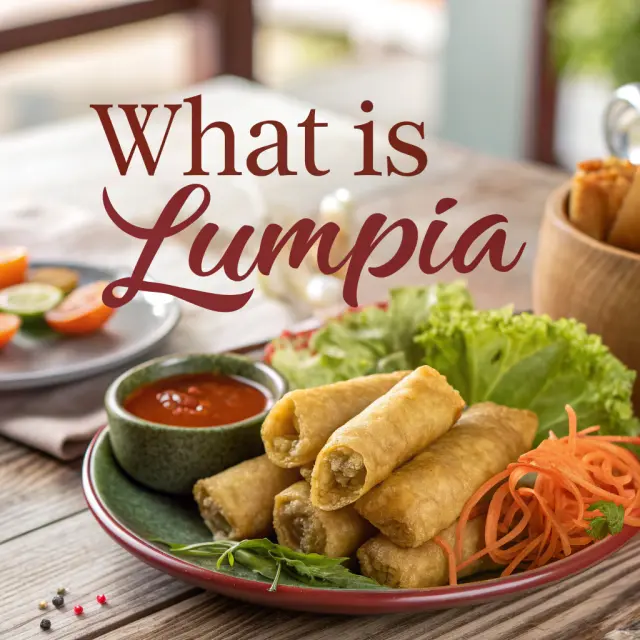
Lumpia is the Filipino spring roll: a thin wrapper folded around a savoury filling of meat, vegetables, or both, then either fried until shatteringly crisp or served soft and fresh. It is not a single recipe but a whole family of rolls, and it is one of the most reliable stars of any Filipino party table.
This guide explains what lumpia is, where it came from, the main types you will meet, and how it became such a fixture of Filipino celebrations.
Filipino spring roll
Hokkien lun (soft) + pia (pastry)
Chinese Hokkien immigrants
Lumpiang Shanghai (fried, pork)
Lumpiang sariwa (unfried)
Nearly every Filipino party
What lumpia is
Lumpia is the Filipino term for spring rolls, thin crepe-like wrappers rolled around a seasoned filling. The wrapper stays constant while the filling changes endlessly, which is why lumpia is best understood as a category rather than one dish. Some are deep-fried until golden and crunchy, others are served fresh and soft with a sweet-savoury sauce poured over the top.
The name itself points to the dish’s heritage. It comes from two Hokkien words, lun, meaning soft or moist, and pia, meaning cake or pastry. Put together, they describe exactly what the earliest versions were: a soft little pastry wrapped around a filling.
The Chinese roots of a Filipino favourite
Lumpia came to the Philippines through centuries of Chinese contact. Hokkien immigrants from southern China began settling in the islands as early as the 9th century, with migration continuing heavily through the Spanish colonial period. They brought their food traditions with them, including the spring roll, a dish already popular across China where thin pancakes were eaten to mark the start of a new year.
Over generations, Filipinos made the roll their own, adjusting the fillings, wrappers, and sauces to local tastes and ingredients. The result is a broad family of lumpia that stretches from the crisp, meat-packed Lumpiang Shanghai to the cool, unfried Lumpiang Sariwa. Like pancit, another Chinese-rooted staple, lumpia is now considered thoroughly Filipino.
Lumpiang Shanghai: the crispy classic
Despite its name, Lumpiang Shanghai does not come from Shanghai. It was developed by Chinese-Filipino cooks, most likely in Manila’s historic Binondo district, the oldest Chinatown in the world. One theory says the “Shanghai” label was simply marketing, a way to suggest a refined, city-style version of ordinary lumpia.
Whatever the origin of the name, the roll itself is unmistakable. It is smaller and thinner than most spring rolls, tightly wrapped in a thin, circular wrapper and filled with seasoned ground pork, minced onion, and carrots, sometimes bound with egg. Fried until deep golden and cut into bite-sized lengths, it is crunchy, juicy, and almost impossible to stop eating. It is usually served with a sweet-and-sour agre dulce sauce, banana ketchup, or a garlicky vinegar dip.
Lumpiang Sariwa: the fresh one
At the other end of the family sits Lumpiang Sariwa, the “fresh” spring roll, which is never fried. It wraps a soft filling of cooked vegetables, often with meat or seafood and shredded singkamas (jicama) as an extender, inside a delicate egg crepe, sometimes doubled with a leaf of lettuce. Instead of being crisp, it is soft and light, and it is finished with a thick, sweet peanut-garlic sauce and a scattering of crushed peanuts. Where Shanghai is a crunchy party snack, sariwa is a fresher, more delicate affair.
Other varieties worth knowing
- Lumpiang ubod: filled with julienned heart of coconut palm, fresh or fried. It is closely tied to Silay in Negros Occidental.
- Lumpiang gulay and togue: vegetable rolls, often filled with mung bean sprouts (togue), fried until crisp and popular as an everyday snack.
- Ngohiong: a Cebu variety seasoned with five-spice powder, descended from the Hokkien dish ngo hiang.
- Lumpiang dinamita: a long green chili stuffed with pork and cheese, then wrapped and fried, a crispy Filipino take on the jalapeno popper.
- Turon: the sweet member of the family, made with saba banana and often jackfruit, dusted in brown sugar and fried until caramelised.
Lumpia at the heart of Filipino celebrations
No Filipino party feels complete without a platter of lumpia, usually sitting right beside the pancit. Making it is often a family event in itself. Because rolling dozens, sometimes hundreds, of thin spring rolls by hand is slow work, relatives gather around the kitchen table before a big occasion to wrap them together, chatting as they go. In that sense lumpia is not just food but a shared ritual, a way of preparing for a celebration together.
It also tells a bigger story. The journey of lumpia, from a Chinese new-year pastry to a beloved Filipino party staple, is a small, delicious example of how Filipino cuisine absorbs outside influences and turns them into something entirely its own.
How to wrap and fry lumpia
Rolling lumpia is a skill that comes quickly with practice. Place a spoonful of filling near one edge of the wrapper, fold the two sides inward, then roll tightly away from you, sealing the final edge with a dab of water or beaten egg. The tighter the roll, the crisper the result and the less oil it soaks up. For frying, keep the oil at a steady medium-high heat: too cool and the rolls turn greasy, too hot and they brown before the filling is cooked through. Fry in small batches, turning for even colour, and drain on a wire rack rather than paper so the bottoms stay crunchy.
Make-ahead and storing tips
One of lumpia’s great virtues is that it freezes beautifully, which is exactly why families roll it in bulk. Uncooked rolls can be frozen in a single layer, then bagged and fried straight from frozen, adding just a minute or two to the cooking time. This make-ahead quality is a big reason lumpia is such a reliable party dish: the slow work of wrapping is done days in advance, and the rolls are fried fresh and hot only as guests arrive. Fresh lumpia, by contrast, is best assembled and eaten the same day, since its soft wrapper and sauce do not keep.
Lumpia beyond the Philippines
Wherever Filipinos have settled, lumpia has traveled with them. In Filipino communities across the United States, Canada, the Middle East, and Europe, it is often the first dish introduced to non-Filipino friends and neighbours, a crunchy, universally loved ambassador for the whole cuisine. It appears at potlucks, fundraisers, and fiestas abroad, and many second-generation Filipinos say the smell of frying lumpia is the smell of home itself. Few foods carry Filipino warmth and hospitality across borders quite so effectively, one crisp, golden roll at a time.
A note on dipping sauces
Half the fun of fried lumpia is the dip. The most common partners are sweet-and-sour sauce and Filipino banana ketchup, but garlicky spiced vinegar with a few crushed labuyo chilies is a favourite among those who like a sharper bite. Sweet chili sauce and garlic mayonnaise have their fans too. Fresh lumpia keeps its own built-in sauce, the thick sweet peanut-garlic mixture poured over each roll. Whichever you choose, the dip is not an afterthought: it is what turns a good lumpia into one you keep reaching back for.
Frequently Asked Questions
What is lumpia?
Lumpia is the Filipino spring roll, a thin wrapper folded around a filling of meat and/or vegetables, served either deep-fried and crispy or soft and fresh.
What is Lumpiang Shanghai?
It is the most popular fried version, a thin, tightly rolled spring roll filled with seasoned ground pork and vegetables. Despite the name, it was created by Chinese-Filipino cooks, not in Shanghai.
What is the difference between fried and fresh lumpia?
Fried lumpia, like Lumpiang Shanghai, is crisp and golden. Fresh lumpia, Lumpiang Sariwa, is soft, unfried, and served with a sweet peanut-garlic sauce.
Is turon a kind of lumpia?
Yes. Turon, also called lumpiang saging, is the sweet version, made with banana and jackfruit wrapped in a lumpia wrapper, dusted with brown sugar, and fried.
Conclusion
From crispy Shanghai to fresh sariwa to sweet turon, lumpia proves how much variety can be wrapped inside one simple idea. Rolled by hand and shared at every party, it is comfort, celebration, and centuries of cultural fusion, all in a single golden bite.