What is Pancit
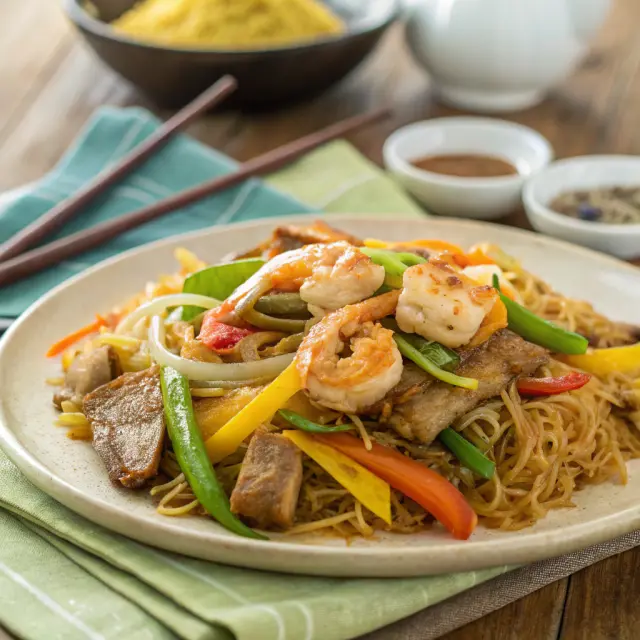
Pancit is the Filipino word for noodles, and the name of a whole family of noodle dishes that appear at nearly every Filipino gathering. More than a favourite meal, pancit carries a wish: the long strands are believed to symbolise long life, which is why a plate of it is almost mandatory at birthdays.
This guide explains what pancit is, where it came from, why it means long life, and the many regional types you can explore.
Filipino noodle dishes (general term)
Hokkien pian e sit, “conveniently cooked food”
Long noodles = long life
Never cut the noodles
Bihon, canton, malabon, palabok
Chinese, later Filipinized
What pancit is
In everyday Filipino speech, pancit simply means noodles. As a dish, it refers to countless stir-fried noodle preparations, usually named after the type of noodle used, the way it is cooked, where it comes from, or who supposedly invented it. Most versions share the same basic shape: noodles tossed with meat or seafood, vegetables, and a savoury sauce, then brightened with a squeeze of calamansi at the table.
The name reveals its origins. It comes from the Hokkien pian e sit, which loosely translates to “something conveniently cooked,” essentially, fast food. That practicality is a big part of why pancit spread so widely: it is quick to make and easy to cook in large quantities for a crowd.
Chinese roots, Filipino soul
Noodles came to the Philippines with Chinese traders and immigrants. Fujianese settlers brought noodle-making traditions through centuries of trade, and the dish took firm hold after the world’s oldest Chinatown was established in Manila in the 16th century. Unlike many Chinese-origin dishes that were heavily transformed, pancit kept its basic structure, stir-fried noodles with protein and vegetables, while being thoroughly Filipinized in flavour: patis (fish sauce) took over from soy as the main seasoning, calamansi became the finishing note, and local vegetables replaced Chinese ones.
Spanish colonisation added another layer, introducing garlic and onions that became foundations of the dish. That blended heritage is captured in a single word: the Filipino term for a noodle shop, panciteria, joins the Chinese “pancit” with the Spanish “-eria,” a small linguistic snapshot of Philippine history.
Why pancit means long life
The most beloved belief about pancit is that its long noodles symbolise a long life. Rooted in Chinese longevity-noodle customs, this idea makes pancit a fixture of birthday celebrations, where it is sometimes listed on menus simply as “birthday noodles.”
There is an important rule that comes with it: you do not cut the noodles. Slicing them short, whether while cooking or eating, is considered bad luck, as if you were cutting a life short. So the strands are kept long and slurped whole, carrying their wish for health and long years to the person being celebrated. Beyond birthdays, pancit appears at weddings, baptisms, graduations, and fiestas, always bringing that same quiet blessing to the table.
The many types of pancit
Few Filipino dishes are as regionally diverse as pancit, with well over twenty distinct varieties across the islands. A few of the most popular include:
- Pancit Bihon: thin rice vermicelli stir-fried with chicken, pork, and vegetables in a soy-based sauce. The everyday classic and the most common party version.
- Pancit Canton: thick wheat egg noodles in a richer sauce, often combined with bihon for contrast. Despite the name, it has no real link to Canton in China.
- Pancit Malabon: thick rice noodles in a bright orange sauce built from smoked fish and shrimp fat, loaded with seafood and chicharron.
- Pancit Sotanghon: translucent glass (mung bean) noodles in a savoury sauce, once reserved for special occasions because the noodles were imported and costly.
- Pancit Palabok / Luglug: thick rice noodles topped with a rich shrimp sauce, boiled egg, chicharron, and smoked fish. “Luglug” refers to dunking the noodles in hot water to soften them.
How pancit is cooked
Most pancit is cooked guisado style, sauteed. Garlic and onions are fried first, then meat or seafood, then vegetables like carrots, green beans, cabbage, and bell peppers, before the noodles and sauce go in to absorb all the flavour. Shrimp, fish balls, squid, and chicken are common additions. It is nearly always served with calamansi on the side, so each diner can add a citrusy lift to their plate. Because it can be stretched to feed many people cheaply, pancit is a natural choice for gatherings, festivals, and community events, often served straight from a huge shared platter beside a plate of lumpia.
How to cook pancit at home
Cooking pancit at home is quick once everything is prepped. Start by softening the noodles: thin rice noodles like bihon are soaked briefly in water, while thicker canton noodles are added straight to the pan. Saute garlic and onion, brown your meat, and add a splash of stock seasoned with soy sauce and patis. Toss in the vegetables so they keep a little crunch, then fold in the softened noodles and let them drink up the sauce, tossing constantly so nothing clumps or sticks. The goal is noodles that are tender but not mushy, evenly coated and glossy. Finish with spring onions and serve with calamansi halves for squeezing.
Famous regional pancit
Part of the joy of pancit is how strongly it belongs to particular places. Pancit Malabon hails from the coastal city of Malabon and tastes of the sea, thick with shrimp, squid, and smoked fish. Pancit Habhab is the street-food pride of Lucban, Quezon, eaten straight off a piece of banana leaf with no fork or spoon. Pancit Batil Patung is a hearty Cagayan specialty topped with a fried egg, and Pampanga is known for its own luglug. Many towns have a beloved old panciteria that has been serving the same recipe for generations, and tracing pancit across the map is a delicious way to travel the country.
Tips for better pancit
A few small habits make a big difference. Do not oversoak rice noodles, or they will fall apart in the pan. Keep your heat high and your hands moving so the noodles fry rather than steam. Taste as you go, since the balance of soy, fish sauce, and stock is what separates a bland pancit from a memorable one. And do not drown it in sauce: good pancit is moist and savoury, never soupy. Leftovers reheat well the next day, when the flavours have settled even deeper into the noodles.
Pancit and Filipino identity
Beyond its flavour, pancit has become a symbol of Filipino togetherness. It is the dish that says a celebration is happening, cooked in a giant wok or pan precisely because it is meant to be shared with as many people as possible. Filipino families abroad keep the tradition alive, serving pancit at birthdays far from home so that children raised overseas grow up with the same wish for long life on their plates. In one humble platter of noodles sits centuries of history and a whole culture’s love of gathering around good food.
Frequently Asked Questions
What is pancit?
Pancit is the Filipino word for noodles and the name for a large family of stir-fried noodle dishes usually made with meat or seafood, vegetables, and a savoury sauce.
Why is pancit served on birthdays?
The long noodles are believed to symbolise long life, a tradition rooted in Chinese longevity-noodle customs. That is why pancit is a birthday staple.
Why should you not cut pancit noodles?
Cutting the noodles is thought to “cut life short” and bring bad luck, so the strands are kept long to preserve the wish for a long life.
What is the most common type of pancit?
Pancit Bihon, made with thin rice noodles, is the most common everyday and party version, though Pancit Canton and Palabok are also hugely popular.
Conclusion
Pancit is comfort, convenience, and good wishes on one plate. Born of Chinese noodles and shaped by Filipino and Spanish flavours, it feeds crowds at every milestone while quietly carrying a hope for long life. Just remember, at a Filipino birthday, never cut the noodles.