What is Halo-Halo
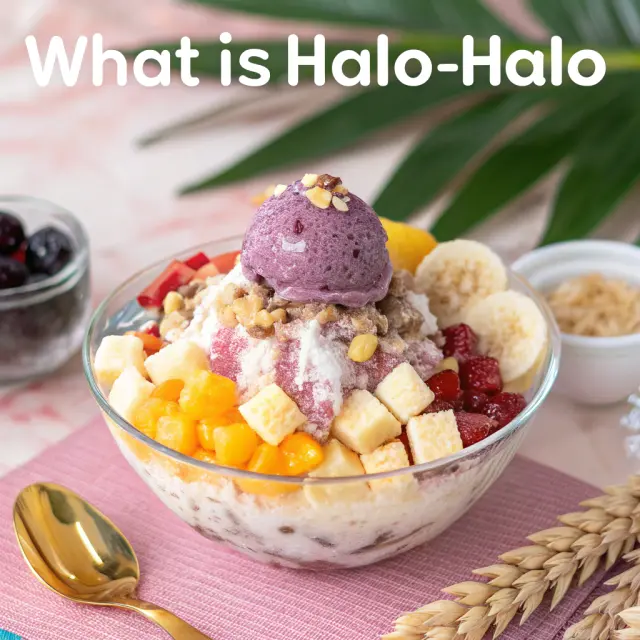
Halo-halo is the Philippines’ beloved shaved-ice dessert and its unofficial national sweet: a tall glass layered with sweetened fruits and beans, crushed ice, and evaporated milk, crowned with leche flan, purple yam, and ice cream. Its name means “mix-mix,” and that is exactly the point, you stir everything together into one cool, colourful spoonful, perfect for the tropical heat.
This guide explains what halo-halo is, what goes in it, how it is built, and the surprisingly international history behind this most Filipino of treats.
Shaved-ice dessert with mixed toppings
“Mix-mix” in Filipino
Unofficial national dessert
Leche flan, ube halaya, ice cream
Japanese, Chinese, Spanish & American
Beating the tropical heat
What halo-halo is, and what the name means
Halo-halo is a cold dessert built on a base of sweet ingredients and shaved ice, finished with milk and rich toppings. The word itself is not the name of a specific recipe but an instruction: halo means “mix,” so halo-halo means “mix-mix.” Before you eat it, you stir the layers together until the ice, milk, fruits, and sweets blend into one creamy, colourful slush.
There is no single official version, which is part of its charm. Every home cook, snack bar, and restaurant has its own combination, and half the fun is discovering what each one piles into the glass.
What goes in it
A generous halo-halo can hold a dozen or more components. Common ingredients include:
- Sweetened fruits and beans: sugar palm fruit (kaong), coconut sport (macapuno), plantains in syrup (minatamis na saging), jackfruit (langka), sweet potato, and various beans cooked in syrup.
- Jellies and pearls: agar cubes (gulaman), nata de coco, and tapioca pearls.
- Crunch: pounded toasted young rice (pinipig) for a nutty, chewy bite.
- The crown: shaved ice, evaporated or coconut milk, and toppings of leche flan, ube halaya (mashed purple yam), and a scoop of ice cream.
How it is built
The order matters. The sweet fruits, beans, and jellies go at the bottom of a tall, clear glass. Shaved ice is heaped on top, then drenched in evaporated milk, and finally decorated with leche flan, ube halaya, or ice cream, sometimes all three. It is served with a long spoon so you can reach the bottom, and the first thing every Filipino does is stir it thoroughly before the first bite. That clear glass is deliberate: half the appeal of halo-halo is watching the layered colours before you mix them into one.
A dessert of many cultures
Though thoroughly Filipino today, halo-halo grew from many roots. Its direct ancestor is the Japanese kakigori, a shaved-ice dessert. Japanese immigrants in the pre-war Philippines adapted it using local ingredients, most importantly mung beans simmered in sugar and topped with milk. This early treat, related to the Spanish-influenced mongo con hielo, was known as mong-ya and is considered the true precursor of halo-halo.
Ice was the missing ingredient that let the dessert spread. During the American colonial period, the opening of the Insular Ice Plant in 1902 made ice widely available across the country, and shaved-ice treats took off. As the Japanese community in the Philippines faded after the war, Filipinos kept adapting the dessert, adding more and more local fruits, beans, and sweets. The growing jumble of ingredients is exactly what earned it the name halo-halo. One telltale difference from its Japanese ancestor: in halo-halo the goodies sit mostly beneath the ice rather than on top.
Regional variations
Different provinces put their own spin on the glass. Laguna is known for a wintermelon-rich version with red and white beans, purple yam, and coconut, while Batangas favours a pared-down buko halo-halo of just coconut strips, toasted pinipig, and leche flan. Elsewhere you will find additions like sweetened wintermelon, durian, or strawberry ice cream. There is even a warm cousin: the Visayan binignit, called ginataang halo-halo in Tagalog, which uses many of the same ingredients but is simmered in coconut milk and served hot.
Cultural significance
Halo-halo is often described as the Philippines in a glass. Its blend of Japanese, Chinese, Spanish, American, and native elements mirrors the country’s own layered history, which is why it is seen as a symbol of Filipino multicultural identity. It has fans well beyond the islands, and it drew wider attention when the late Anthony Bourdain sampled it and called it “oddly beautiful.” More than a sweet, halo-halo is a small, delicious lesson in how many influences can be stirred into something wholly Filipino.
Where to find the best halo-halo
Halo-halo is sold almost everywhere in the Philippines during the hot months, from humble roadside stalls to famous specialist shops. Some establishments have built their whole reputation on a single carefully made version, prized for silky shaved ice and generous toppings, while fast-food chains have made the dessert available year round to millions. Part of the joy is that no two glasses are identical: a neighbourhood carinderia, a beach-town stall, and a big-city restaurant will each hand you a different take on the same beloved idea. Wherever you order it, look for finely shaved ice, which melts into a smoother, creamier mix than coarse cubes.
How to make halo-halo at home
Making halo-halo at home is more assembly than cooking. Gather your sweetened fruits, beans, and jellies, most of which can be bought ready in jars, then layer them in the bottom of a tall glass. Pile shaved or finely crushed ice on top, pour over evaporated milk, and finish with whatever toppings you love, whether leche flan, a scoop of ube, or plain ice cream. Serve it at once with a long spoon, and remember the golden rule: stir everything together before the first bite so each spoonful carries a little of everything.
When Filipinos eat it
Halo-halo is above all a hot-weather treat, at its most popular during the sweltering summer months from March to May. It is a classic merienda, the Filipino afternoon snack, and a favourite way to cool down after a day in the sun or a heavy meal. For many, a glass of halo-halo is tied to childhood memories of summer, which is part of why this mix of foreign influences feels so deeply and warmly Filipino.
The rise of ube and halo-halo abroad
In recent years halo-halo has found new fame far from home. The bright purple ube that often crowns it has become a global food trend, appearing in cafes and bakeries around the world, and with it has come fresh curiosity about the dessert it decorates. Filipino restaurants overseas now serve halo-halo to adventurous diners as a colourful introduction to the country’s sweets, and social media has made its layered, jewel-toned glass instantly recognisable. Yet however far it travels, and however many new toppings it gains, halo-halo remains, at heart, a taste of a Filipino summer.
Frequently Asked Questions
What is halo-halo?
Halo-halo is a Filipino shaved-ice dessert layered with sweetened fruits, beans, and jellies, topped with milk, leche flan, purple yam, and ice cream, then mixed together before eating.
What does halo-halo mean?
It means “mix-mix” in Filipino, describing how you stir all the ingredients together into one dessert.
What are the main ingredients?
Typically sweetened beans and fruits like kaong, macapuno, jackfruit, and plantain, plus gulaman, nata de coco, pinipig, shaved ice, evaporated milk, and toppings of leche flan, ube halaya, and ice cream.
Where did halo-halo come from?
It evolved from the Japanese shaved-ice dessert kakigori, adapted in the pre-war Philippines with local ingredients and made possible on a wide scale once ice became available in the early 1900s.
Conclusion
Halo-halo is more than a way to beat the heat. In one tall, colourful glass it holds centuries of Filipino history and a whole philosophy of mixing the best of many worlds into something new. Stir it well, take a spoonful, and you are tasting the Philippines itself.