Manggahan Festival: Guimaras and the Sweetest Mango on Earth
On May 22, 1993, Guimaras marked its first year as an independent province with a street party built around its most famous crop. That party became the Manggahan Festival, now Guimaras’ largest annual event and the reason mango season and provincehood are celebrated together every May in Jordan, the provincial capital.
The word manggahan comes from mangga, the Filipino word for mango, and roughly translates to “mango place” or “mango season.” Guimaras grows mangoes recognized both in the Philippines and abroad for sweetness, and it protects that reputation with quarantine rules found nowhere else in the country.
At a Glance
| Detail | Information |
|---|---|
| Location | Jordan, Guimaras, Western Visayas, across the strait from Iloilo City |
| Dates | Held every May; the 2026 edition ran May 15 to 24, peaking May 22 to 24 |
| What it celebrates | Guimaras’ 1992 founding as an independent province and its mango harvest |
| Main events | Mango Eat-All-You-Can, street dancing, agri-trade fair, anniversary parade |
| Who attends | Local residents, day-trippers from Iloilo City, and overseas visitors |
| How to get there | Pump boat or RORO ferry from Ortiz Wharf, Iloilo City, to Jordan Wharf |
Key point
Guimaras mango earned official geographical indication status from the Intellectual Property Office of the Philippines in 2023, a formal government recognition tying the “sweetest mango” claim to fruit grown specifically on this island.
Why Jordan Celebrates a Provincehood in Mango Season
Guimaras separated from Iloilo province in 1992 under the Local Government Code, becoming its own province governed from Jordan. Then-governor Emily Relucio-Lopez organized the first Manggahan Festival on May 22, 1993, timed to the exact date of the plebiscite anniversary that created the new province.
Before that, Guimaras was a sub-province of Iloilo, administratively tied to the mainland despite sitting across a narrow strait from it. The new festival gave the island a public reason to mark both its independence and the crop that already defined its economy and export trade.
Guimaras is one of the smallest provinces in the Philippines. Its five municipalities are:
- Jordan, the provincial capital and main festival venue
- Buenavista, home to several mango orchards near the port
- Nueva Valencia, known for Alubihod Beach and inland farms
- San Lorenzo, on the island’s southern coast
- Sibunag, the smallest and southernmost municipality
Guimaras has kept close to that founding formula since. Each May, wreath-laying ceremonies and a thanksgiving mass for the provincehood anniversary sit alongside street dancing, a beauty pageant and days of mango-themed festivities, a pattern similar to how Philippine fiestas work in towns across the country.
The 2026 Festival Schedule
The 34th Manggahan Festival ran from May 15 to 24, 2026, with the busiest days falling on May 22 through 24 to align with the provincehood anniversary. Mangoes were the headline draw again: organizers set aside 18 metric tons of fruit for public eating, up from far smaller allotments in earlier years.
A typical festival week includes:
- Wreath-laying ceremony and thanksgiving mass opening the anniversary events on May 22
- Anniversary parade and street dancing competition through Jordan’s streets
- Cultural competition on May 24 showcasing all five Guimaras municipalities: Jordan, Buenavista, Nueva Valencia, San Lorenzo and Sibunag
- Mr. Guimaras and Mutya ng Guimaras beauty pageants
- A music festival that organizers say draws the largest single crowd of the week
- Agri-fishery fair, government services fair and Farmers and Fisherfolk Day
A recent celebration generated more than 311 million pesos in economic activity, with tourism spending, the music festival and local accommodations each contributing tens of millions of pesos. Numbers like that explain why the eating contest window keeps growing, from four days in 2023 to twelve days by 2024.
The Guimaras Carabao Mango: What “Sweetest” Actually Means
Guimaras grows the carabao mango, also called the Manila Super Mango, a variety that carried a sweetness reputation long before the festival existed. In 1995, Guinness World Records credited the Philippine carabao mango as the world’s sweetest fruit. That specific record is usually traced to fruit grown in Zambales rather than Guimaras, and Zambales runs its own rival mango festival, Dinamulag.
Guimaras built its own case with local research rather than a borrowed headline. Agriculturists at the island’s mango research center measure sweetness in degrees Brix, a scale for dissolved sugar content in juice. The station’s flagship strain, Guimaras Super, known locally as Galila after the Nueva Valencia farmer who owned its mother tree, tested at roughly 22 degrees Brix in trials, ahead of several rival varieties.
| Mango or Standard | Source | Sweetness (Brix) |
|---|---|---|
| Guimaras Super (Galila) | Nueva Valencia, Guimaras | 22.3° |
| Sweet Elena | Zambales | 18.98° |
| Guimaras GI minimum standard | IPOPHL geographical indication, 2023 | 16° and up |
| Export-grade carabao mango | Various Philippine provinces | 18° to 24° |
In 2023, the Intellectual Property Office of the Philippines granted Guimaras mango a geographical indication, a protection similar to those covering Champagne or Darjeeling tea. The certificate ties the sweetest mango claim to a minimum sweetness of 16 degrees Brix and a texture locals call marabo, a Guimarasnon word for the fruit’s blend of crunch, sweetness and light tartness.
Note
The “world’s sweetest mango” claim traces back to a 1995 Guinness listing widely linked to Zambales fruit, not Guimaras. Guimaras’ 2023 geographical indication registration is the island’s own, separately documented claim to the title.
Inside the Quarantine Wall: Guimaras’ Mango Pest Barrier
Guimaras protects its mango reputation with a barrier most festival visitors never notice. In 1993, President Fidel Ramos signed Proclamation No. 314, declaring the island a Special Quarantine Zone free of the mango pulp weevil and mango seed weevil, two pests already infesting orchards elsewhere in the Philippines.
The Bureau of Plant Industry enforces that status through a Plant Quarantine Security System. Officers at the island’s ports inspect incoming cargo and are authorized to destroy or return any mango fruit, seed or plant material carried in from outside, at the owner’s expense. The rule exists because a single infested mango could undo decades of pest-free status.
How the barrier works in practice:
- Bureau of Plant Industry officers check cargo at every port of entry to the island
- Mango fruit, seeds or plant material arriving from outside Guimaras are confiscated on sight
- Confiscated material is destroyed or returned at the owner’s expense, not the government’s
- The system has run without interruption since Proclamation No. 314 took effect in 1993
That barrier paid off commercially. It took 14 years of advocacy before the United States certified Guimaras as free of the mango pulp weevil in 2001, the only place in the Philippines to hold that certification at the time. American authorities later recognized additional pest-free areas in Luzon, Visayas and Mindanao, but Guimaras still holds the clearance that lets its mangoes skip the fumigation required of fruit from most other provinces.
Local rules add a second layer. Under Provincial Ordinance 2017-003, farmers cannot harvest a mango earlier than 110 days after flower induction, the treatment growers use to force trees to bloom on schedule. Harvesting early produces sour, under-ripe fruit and undercuts the quality standard the island depends on for both the festival and its export contracts.
Mango Eat-All-You-Can: The Festival’s Signature Contest
Visitors pay a small entrance fee, commonly around 100 pesos, for thirty minutes of unlimited ripe mango. Organizers weigh out tons of fruit ahead of the event, and the 2024 edition stretched the contest across twelve days to handle demand, up from four days the year before.
One frequently cited record belongs to a visitor from Louisville, Kentucky, who reportedly outlasted around 9,500 other participants by finishing 25 mangoes in the allotted time. Most attendees treat the event less as a competition and more as an unlimited mango buffet, since the point is fresh fruit rather than speed.
The mangoes come straight from local growers rather than a central warehouse. Farmers across the island’s five municipalities supply the fruit under coordination from the provincial agriculture office, which is also why the tonnage set aside for the contest has climbed each year alongside visitor numbers.
Tip
Arrive at the eating area early during the peak May 22 to 24 dates. Lines form fast once the day’s mango supply is announced, and the best-ripened fruit tends to go first.
Street Dancing and the Agri-Trade Fair
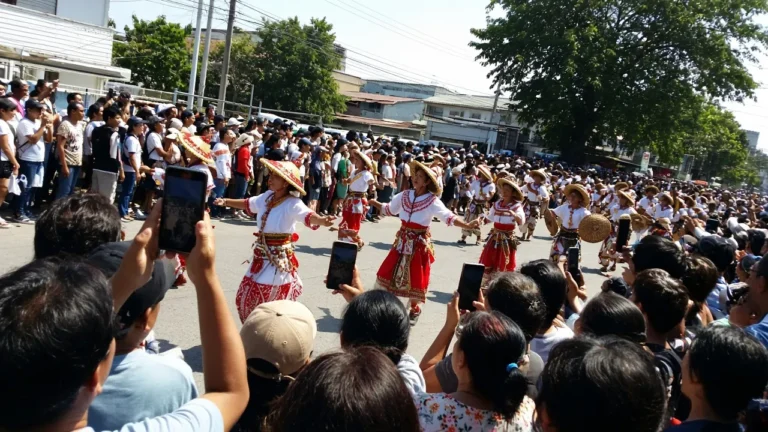
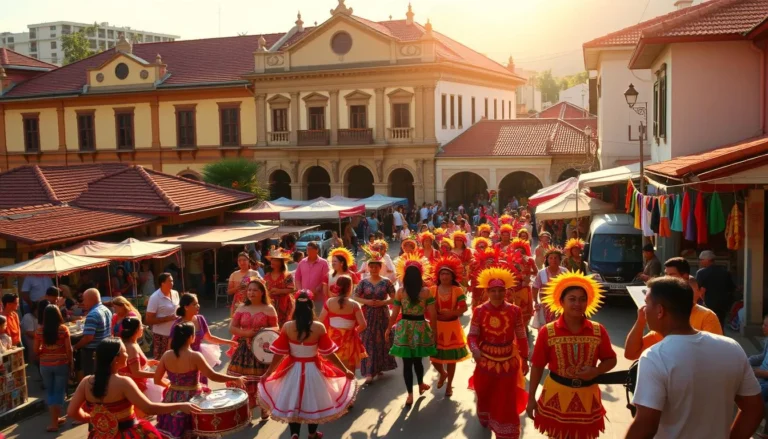
Manggahan sa Guimaras, the festival’s street dance and float competition, sends contingents from all five municipalities down Jordan’s streets in mango-inspired costume. Dancers wear headdresses and skirts built from mango-colored fabric and carry props shaped like the fruit, moving through choreography that reenacts harvesting, trading and local folklore.
Judges typically score each municipal contingent on costume craftsmanship, choreography and how clearly the routine tells a mango-related story, similar to the scoring format used at bigger street-dance festivals elsewhere in the Visayas. Winning contingents earn cash prizes plus bragging rights heading into the next year’s competition.
The agri-trade fair runs alongside the street dance. Farmers and small manufacturers sell fresh mangoes plus processed products such as mango pizza, mango ketchup, mango tart and dried mango, often at prices below what the same goods cost in Iloilo City markets. It is the easiest stop at the festival for stocking up on mangoes and mango-based goods to bring home, a fixture of most guides to Philippine festivals built around a single harvest crop.
Mango Plantation Tours
Several farms around Guimaras open to visitors during festival season, pairing an orchard walk with a short explanation of flower induction, grafting and the harvest cycle from bloom to picking. Farms near Buenavista and Jordan are the most accessible, usually a short tricycle ride from the port.
Many tours route through or near the National Mango Research and Development Center in Guimaras, the Bureau of Plant Industry station that developed the Galila strain and several other registered carabao mango varieties. Staff there can explain how a strain earns official registration before it ever reaches a farmer’s field.
A typical tour covers:
- How growers time flower induction so trees bloom together for a synchronized harvest
- How pickers judge ripeness using a handheld Brix meter rather than guesswork
- How the island’s quarantine rules shape what leaves the farm and what stays behind
Getting to Guimaras for the Festival
Guimaras has no airport of its own, so every visitor arrives by boat from Iloilo City, a short crossing across the Iloilo Strait. Pump boats and larger RORO ferries leave from Ortiz Wharf in Iloilo City for Jordan Wharf on the Guimaras side, and departures during festival week run close to continuously.
Three main options cover the crossing:
- Pump boats from Ortiz Wharf: depart roughly every 15 to 30 minutes, 5:30 a.m. to 7:30 p.m., fare around 13 to 35 pesos
- Montenegro Shipping RORO ferries: about 20 minutes, fare around 50 pesos, better for travelers bringing a vehicle
- FF Cruz Shipping ferries: about 30 minutes, fare around 35 pesos
Ortiz Wharf sits a short jeepney or tricycle ride from Iloilo International Airport and Iloilo City proper, home to its own list of things to do in Iloilo City for travelers stretching the trip into a longer stay.
Where to Stay in Guimaras
Jordan has the most lodging within walking distance of the port and the main festival grounds, useful for anyone attending events without a rental vehicle. Beach-focused travelers usually base themselves near Alubihod Beach in Nueva Valencia instead, about an hour’s drive from Jordan.
- Jordan: budget inns and guesthouses close to the Provincial Capitol Grounds and festival venues
- Alubihod Beach, Nueva Valencia: beachfront resorts such as Raymen Beach Resort and California Coral Beach Resort, roughly 2,800 pesos a night for two guests
- Manggadiwa Resort and Spa: a mid-range option combining rooms with spa services
Planning a Mango Season Trip
Timing a visit around May 22 gets travelers the anniversary parade, the street dancing finals and the widest mango selection at the agri-trade fair within one stretch of days. Arriving earlier in the month means thinner crowds and still-fresh fruit, since the eating contest now runs across nearly two weeks rather than a single weekend.
This mango and provincehood celebration is one of many town festivals built around a single local harvest, and our guide to Philippine festivals maps other events worth planning a trip around.
Frequently Asked Questions
What is the Manggahan Festival?
It is Guimaras province’s annual May celebration that combines its 1992 founding as an independent province with its mango harvest. Events center on Jordan, the provincial capital, and include a mango eating contest, street dancing and an agri-trade fair.
When is Manggahan celebrated each year?
The festival runs every May, with the main celebration built around May 22, the anniversary of Guimaras becoming an independent province. The 2026 edition ran from May 15 to 24, with the busiest days from May 22 to 24.
What does the word manggahan mean?
Manggahan comes from mangga, the Filipino word for mango. It roughly translates to mango place or mango season, referring to both the festival and the harvest period it celebrates.
Why are Guimaras mangoes considered the sweetest?
Guimaras mangoes, particularly the Guimaras Super or Galila strain, test at around 22 degrees Brix, a measure of sugar content. The island also holds a 2023 geographical indication tying the sweetest mango claim to a minimum of 16 degrees Brix, though a widely cited 1995 Guinness sweetest fruit record is usually linked to Zambales, not Guimaras.
How do I get to Guimaras for the festival?
Guimaras has no airport, so visitors arrive by boat from Iloilo City. Pump boats and RORO ferries leave from Ortiz Wharf for Jordan Wharf roughly every 15 to 30 minutes, with a crossing time of 15 to 30 minutes depending on the vessel.
Works Cited
“Special Da Quarantine Order No. 1.” Supreme Court E-Library, Bureau of Plant Industry, elibrary.judiciary.gov.ph/thebookshelf/showdocs/10/48393.
Ramos, Fidel V. “Proclamation No. 314, S. 1993.” LawPhil Project, 27 Apr. 1993, lawphil.net/executive/proc/proc1993/pdf/proc_314_1993.pdf.
“Expansion of Areas in the Philippines Considered Free of Mango Seed Weevil and Mango Pulp Weevil.” Federal Register, US Department of Agriculture, 1 Oct. 2014, federalregister.gov/documents/2014/10/01/2014-23406/expansion-of-areas-in-the-philippines-considered-free-of-mango-seed-weevil-and-mango-pulp-weevil-and.
“Guimaras Mangoes’ Reputation as ‘Sweetest’ Now Protected.” Philippine News Agency, 17 Nov. 2023, pna.gov.ph/articles/1202209.
“‘Manggahan Season’: Guimaras Prepares 20 Tons of Mangoes for Eat-All-You-Can Feast.” Philippine Information Agency, pia.gov.ph/news/manggahan-season-guimaras-prepares-20-tons-of-mangoes-for-eat-all-you-can-feast/.
“34th Manggahan Festival Kicks Off; 18 Tons of Mangoes Offered for Consumption.” Manila Bulletin, 16 May 2026, mb.com.ph/2026/05/16/34th-manggahan-festival-kicks-off-18-tons-of-mangoes-offered-for-consumption.
“Guimaras Super Galila, the Sweetest Carabao Mango.” Philstar.com, 2 Jan. 2016, philstar.com/business/agriculture/2016/01/02/1538636/guimaras-super-galila-sweetest-carabao-mango.
“The Science and Tradition Behind the World’s Sweetest Mangoes.” Agriculture Monthly, 15 July 2025, agriculture.com.ph/2025/07/15/guimaras-mangoes-2025/.
“2026 Iloilo to Jordan, Guimaras and Vice Versa: Montenegro Shipping Schedule & Fares.” Pamasahe.com, pamasahe.com/routes/iloilo-jordan-montenegro-shipping-schedule-fares.