What is Balut
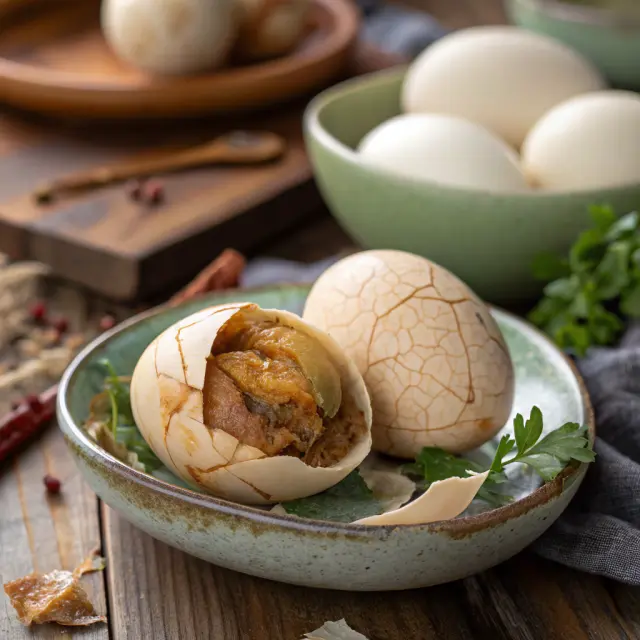
Balut is the Philippines’ most famous, and most misunderstood, street food: a fertilised duck egg, incubated until a small embryo has formed, then boiled and eaten warm straight from the shell. Sold from baskets on street corners after dark and slurped down with a pinch of salt, it is beloved by Filipinos as a cheap, protein-rich snack and a genuine test of who counts as a local.
This guide explains what balut is, how it is eaten, where it came from, and the place it holds in Filipino life.
Boiled fertilised duck egg
Usually about 17 days
“Wrapped” in Filipino
Pateros, Metro Manila
Salt, vinegar, or chili
Street snack and beer pulutan
What balut is
A balut is a duck egg that has been fertilised and then incubated for roughly two to three weeks, so that a partly formed embryo develops inside. The egg is then boiled and eaten warm, contents and all, directly from the shell. Its name comes from a Filipino word meaning “wrapped,” a nod to the way the eggs were traditionally bundled during incubation.
Fans care a great deal about timing. The embryo’s stage of development changes the texture completely: some prefer a younger egg where the inside is still mostly soft, while others like a more mature one, around seventeen days, where the duckling has more form and a firmer bite. The mallard, often called the Pateros duck, is the classic source.
How to eat balut
There is a right way to eat balut, and part of the pleasure is in the ritual.
- Crack a small hole at the top. Tap the wider end of the warm egg and peel back a coin-sized opening.
- Sip the broth first. Season with a little salt, then slurp the warm, savoury liquid inside. For many, this first sip is the best part.
- Peel and season. Remove the rest of the shell and eat the yolk and embryo, dipping them in vinegar, chili, or a squeeze of calamansi to taste.
- Skip the white if you like. The firm egg white, or bato, is chewy and often set aside.
Balut is always eaten hot. Vendors typically keep the cooked eggs warm in baskets lined with cloth or sand, moving through neighbourhoods in the evening with a distinctive call of “Balut!”
History and origins
Balut’s roots reach back to China, where preserving duck eggs, including techniques that produced the famous century egg, was a way to extend their shelf life before refrigeration existed. As trade routes linked China to Southeast Asia, Chinese merchants carried these egg practices with them, and the custom of eating incubated duck eggs took hold in the Philippines, where local tastes reshaped it into balut.
Historians point to the area around Laguna de Bay, the country’s largest lake, as the cradle of the industry. Chinese traders settled along its banks, and the surrounding wetlands were ideal for raising the hardy native itik, or mallard duck. From there, the town of Pateros, near the lake in what is now Metro Manila, became the recognised balut capital of the Philippines, at one point raising hundreds of thousands of ducks. Food shortages during World War II only deepened balut’s appeal as a cheap, filling, ready-to-eat meal.
Balut in Filipino culture
Balut is far more than a curiosity. As an affordable, nutritious, ready-to-eat snack, it became a fixture of Filipino street life, so much so that it is often tied to identity itself, with the half-joking idea that anyone who cannot eat a balut is not truly Filipino.
It also carries a lively reputation. Many treat balut as an energy food and an alleged aphrodisiac, and it is a classic pulutan, the savoury snack that accompanies beer during late-night drinking sessions. Night-shift workers rely on it for a quick, warm boost. In these ways balut is woven into the ordinary rhythms of Filipino evenings.
Penoy and related eggs
Not every incubated egg becomes balut. Duck eggs that do not develop an embryo are sold as penoy, which look, smell, and taste much like an ordinary hard-boiled egg and are sometimes beaten and fried with a vinegar dip. Balut is also eaten well beyond the Philippines, appearing under different names across Southeast Asia, including hot vit lon in Vietnam.
A global reputation
To outsiders, balut is often introduced as a dare. Television shows in the early 2000s presented it as an “extreme” food challenge, a reputation that says more about unfamiliarity than about the food itself. For Filipinos, there is nothing extreme about it. It is simply a warm, nourishing snack tied to home, community, and the sound of a vendor’s call drifting down the street at night.
Is balut good for you?
DOST-FNRI’s current Philippine Food Composition Tables list boiled fertilized duck egg (balut) at 172 kcal, 12.8 grams of protein, and 12.4 grams of total fat per 100 grams of edible portion. Nutrient values vary with serving size, so readers managing a medical diet should rely on professional guidance rather than treating balut as a health remedy. For generations of Filipinos, though, its appeal has been as much about warmth and energy as about nutrition, a hot, filling snack that keeps night-shift workers going and revives tired revellers at the end of a long evening.
Where to try balut
The classic way to try balut is from a street vendor after dark, when sellers move through neighbourhoods and gather near markets, bus stops, and drinking spots with their warm baskets. The town of Pateros, the historic heart of the industry, remains the most famous place to find it, but balut is sold across the country, from Manila sidewalks to provincial night markets. First-timers are often advised to start with a younger egg, sip the broth, add plenty of salt or a splash of spiced vinegar, and simply enjoy it the way locals do, without overthinking what is inside. However you approach it, balut is best understood not as a dare but as a shared ritual, one that turns a simple egg into a small act of belonging.
Balut and its street-food cousins
Balut rarely travels alone. It shares the Filipino street-food night with a whole family of egg snacks, from penoy to kwek-kwek, the hard-boiled quail eggs coated in bright orange batter and deep-fried. Together they form the backbone of the country’s after-dark eating culture, sold from the same carts and enjoyed with the same tangy vinegar dips. This world of cheap, sociable, on-the-go food is one of the most vibrant parts of Filipino life, and balut sits proudly at its centre, the boldest and most storied item on the cart, the one that first-time visitors are always dared to try.
Frequently Asked Questions
What exactly is balut?
Balut is a fertilised duck egg incubated for about two to three weeks so a small embryo forms, then boiled and eaten warm from the shell, usually with salt or vinegar.
How is balut eaten?
Make a small hole at the top, sip the warm broth first with a little salt, then peel the shell and eat the yolk and embryo, often dipped in vinegar or chili. It is always eaten hot.
Where did balut come from?
The practice came from Chinese egg-preservation methods and took root around Laguna de Bay. The town of Pateros became the country’s balut capital.
What is the difference between balut and penoy?
Balut contains a partly developed embryo, while penoy is a duck egg that did not develop one, so it resembles a normal hard-boiled egg.
Conclusion
Balut may unsettle first-time visitors, but to Filipinos it is comfort, nutrition, and nostalgia in a single shell. Cheap, warm, and shared among friends over drinks or bought from a passing vendor, it remains one of the most enduring and telling foods in the Filipino street-food story.