What Are Fiestas? Philippine Meaning, Etiquette, and How to Attend
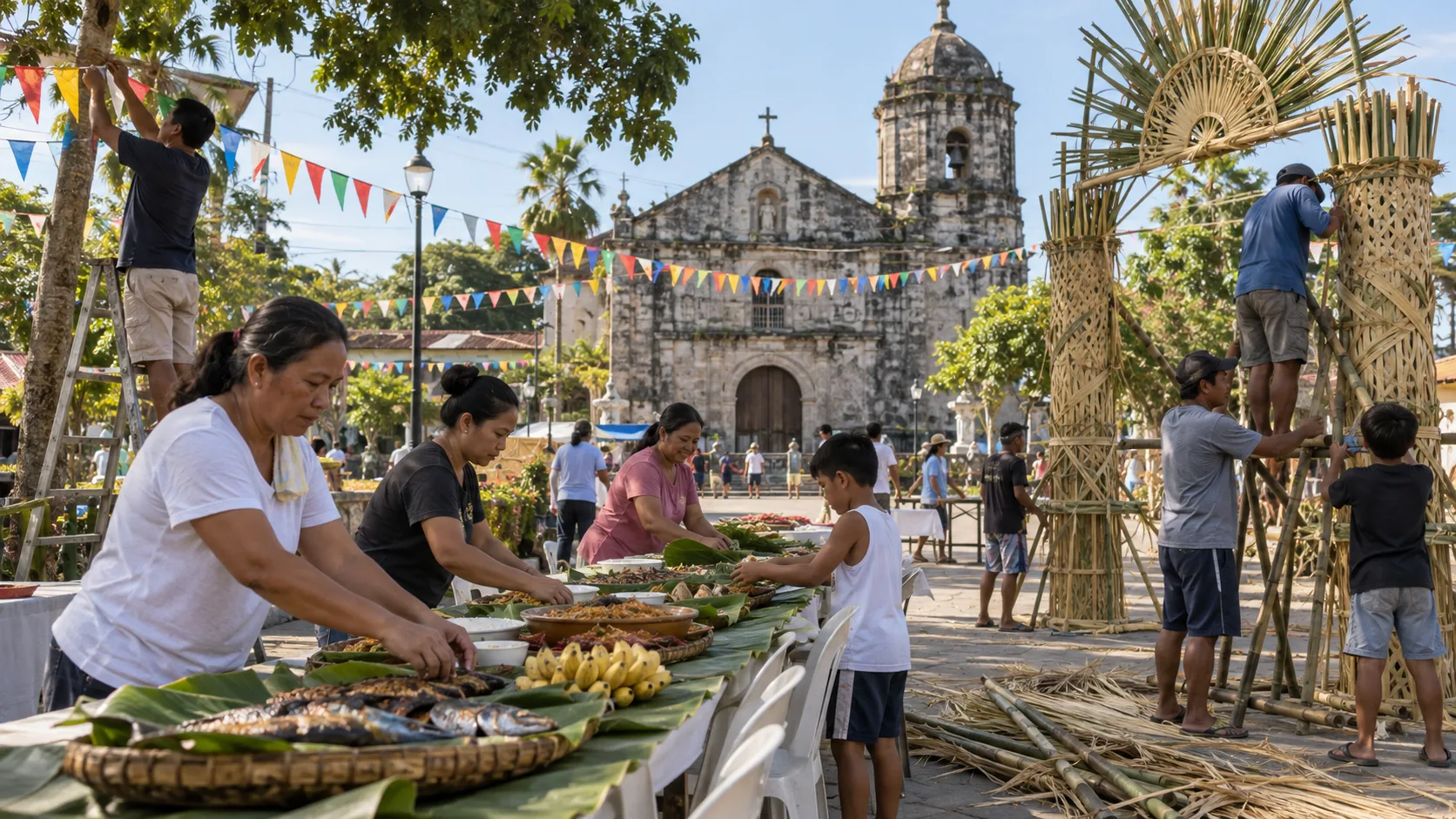
A Philippine fiesta is a community celebration organised around a patron, feast, thanksgiving, local identity, or important civic occasion.
Many fiestas have a Catholic religious centre, while others combine worship with municipal programmes, food, craft, performance, and public service. The host community decides what the occasion means and which activities belong to it.
Visitors understand a fiesta best when they identify the purpose, the organisers, and the rules for the year they attend.
“Fiesta” does not name one fixed event format. It can describe a parish feast, a town celebration, or the wider programme that surrounds both. This page explains meaning, etiquette, and respectful attendance. For month-by-month festival dating, use the complete festivals guide. For festival types and travel intent, use the festivals overview.
Key facts
| Question | Reliable answer |
|---|---|
| What is a fiesta? | A town or community celebration for a patron or another locally important occasion |
| Is every fiesta religious? | No. Many are patronal, but civic, agricultural, and cultural purposes may also shape the programme |
| Who organises it? | Roles may be divided among a parish or shrine, local government, fiesta committee, barangays, and community groups |
| What usually happens? | Possible elements include novenas, Masses, processions, meals, decorations, trade displays, and performances |
| Are programmes permanent? | No. Routes, venues, access rules, costs, and public activities require a current official notice |
| How should visitors behave? | Follow the purpose of each activity, protect worship space, respect private property, and obey safety instructions |
What the word fiesta means in the Philippines
The Komisyon sa Wikang Filipino dictionary records pista as a noun from the Spanish fiesta. Its first definition is an annual town celebration for a patron or important person recognised there. Its second definition covers another comparable large celebration.
Related speech also uses piyesta. Ordinary usage is broader than a church service alone: people may mean the patron’s day, the public celebration around it, or the season of preparation.
The Spanish source of the word is clear. The history of each Philippine fiesta is more specific. It is not accurate to assign every present custom to one colonial origin. Older local practices, Catholic devotion, family hospitality, municipal government, modern tourism, and cultural programmes can meet in one celebration. Each layer needs its own evidence.
Fiesta, feast day, and festival
A feast day is a religious observance on the church calendar. A fiesta can mean the community celebration associated with that observance. A festival is the broadest English label and can describe religious, civic, agricultural, artistic, or historical events. Local usage overlaps, so the organiser’s language should guide your description.
- Religious authority: a parish, shrine, basilica, diocese, or religious order leads liturgy and devotional rites.
- Civic authority: a city, municipality, province, or barangay manages public venues, traffic, permits, and government activities.
- Festival body: a foundation or committee may coordinate competitions, performers, sponsors, and publicity.
- Community participation: households, schools, associations, artisans, and volunteers prepare food, decorations, music, and local presentations.
Useful distinction: A tourism office can announce a road closure, but it does not define the spiritual meaning of a procession. A parish can publish a novena schedule, but a city may control barriers outside the church. Check both.
How patronal fiestas developed
Patronal fiestas grew around a church, sacred image, patron saint, or title of Christ or Mary connected with a locality. There is no single national timeline.
Cebu’s Basilica Minore del Santo Niño records that the feast of the Santo Niño was first associated with 28 April, the date linked to the image’s finding in 1565, and later observed on January’s third Sunday.
Naga’s Peñafrancia devotion has its own documented milestones, including chapel and shrine history and the Traslacion tradition. These facts belong to those communities. They are not a template for every town.
Modern civic events held during a patronal season do not automatically become ancient religious rites. A careful visitor separates enduring feast observance from this year’s concert, pageant, or trade fair. Examples across Festive Pinoy include the Sinulog and Fiesta Señor guide and the Peñafrancia Festival guide.
What happens before fiesta day
Preparation can matter as much as the main day. For a patronal fiesta, the religious cycle often includes a novena: nine days of prayer or Masses. Community preparation happens in parallel. Fiesta committees assign tasks. Households plan meals and receive relatives.
Streets or church approaches may be decorated. Schools and performance groups rehearse. Vendors and emergency teams prepare for denser movement.
Traditional craft can carry part of this preparation. Bamboo arches, banderitas, crop displays, and household decorations show local skill. Lucban’s Pahiyas is a well-known case where thanksgiving to San Isidro Labrador meets house façades decorated with produce and kiping. Those houses remain private homes even when they become a public visual route.
Food, hospitality, and the limits of invitation
Food expresses thanksgiving, reunion, and welcome in many fiestas. Families may cook more than an ordinary meal because relatives return home. Public stalls and official food fairs can also present local dishes. There is no single national “fiesta food.” Regional tables differ, as explored further in Festive Pinoy food guides linked from festival pages.
- Enter a private home only when a host clearly invites you.
- An open gate or a table visible from the road is not automatic permission.
- Ask before photographing a family meal, kitchen, or religious object indoors.
- At public fairs, confirm whether a tasting is free, ticketed, or sold by portion.
- Ask about ingredients if you have allergies; busy vendors may not guarantee separation.
Comparison: how to attend different fiesta moments
| Moment | What it is | Visitor do | Visitor don’t |
|---|---|---|---|
| Mass or novena | Worship | Dress modestly, silence phones, follow ushers | Block aisles for photos; treat the altar as a backdrop |
| Procession | Devotional movement | Stay outside the route; keep emergency lanes open | Touch images, ropes, or bearers |
| Civic parade or contest | Public performance | Use marked viewing areas; clap for local groups | Step into the lane for selfies |
| House displays | Private property on a public route | View from the street; accept invitations only | Touch decorations or enter uninvited |
| Family meal | Hospitality | Say thank you; follow the host’s lead | Assume every house feeds strangers |
Etiquette during Mass, prayer, and processions
Enter a church as a worship space. Follow posted clothing, seating, and photography guidance. Do not walk in front of an altar for a better image. During Communion, visitors who are not participating can remain respectfully in place.
A procession is movement with religious purpose, not an ordinary parade. Stay outside the route unless an organiser directs otherwise. Dense crowds can separate groups quickly, so choose a meeting point before the procession begins.
Distinguish observation from participation. Some practices welcome broad involvement. Others assign roles to confraternities, clergy, bearers, or registered volunteers. Watch how local participants behave and follow the responsible authority’s guidance.
January travelers comparing Santo Niño destinations can apply the same rules inside the January festivals guide.
Photography, dress, and cultural representation
- Ask before a close portrait, especially of children, older people, prayer, or food preparation.
- Do not block a doorway, climb on decorations, or move offerings.
- Avoid wearing religious, Indigenous, or occupational imagery as costume unless the host community invites that participation.
- Do not darken skin or imitate a living community.
- Caption photos with the actual event name; avoid unsupported claims about ancient ritual or miraculous meaning.
How fiesta dates are determined
Some patronal feasts use a recurring calendar date, such as Pahiyas connected with 15 May. Others are linked to a Sunday or another part of the liturgical calendar, such as Fiesta Señor on January’s third Sunday.
Civic programmes may begin days or weeks earlier and can shift while the church retains its feast observance. Always confirm the edition you plan to attend with the parish for rites and the LGU for roads and public venues.
A practical method for planning a fiesta visit
- Identify the occasion: patronal feast, harvest thanksgiving, founding anniversary, or combined programme.
- Identify the authorities for rites and for public events.
- Confirm the year on every schedule or advisory.
- Map each venue: church, plaza, sports complex, and parade route may be far apart.
- Check tickets, bag rules, mobility access, and road closures.
- Choose priorities so prayer, processions, and performances each have enough time.
- Prepare for heat, rain, and crowds while following venue restrictions.
Quick summary
What is a fiesta in the Philippines? It is a community celebration for a patron, feast, thanksgiving, local identity, or important civic occasion, often combining religious observance with a separate public programme. Are all Philippine fiestas religious? No.
Many town fiestas are patronal Catholic celebrations, but some programmes centre on harvest, founding anniversaries, industry, history, or cultural practice. How should visitors attend respectfully?
Follow church and marshal instructions, keep procession lanes clear, enter homes only when invited, ask before close photographs, and confirm current schedules with the host city or parish.
Fiesta table food (common dishes, not a national menu)
There is no single Philippine “fiesta menu.” Families cook what their region and budget allow. Public stalls and official food fairs may sell other dishes on the same weekend. Use these links for dish reading. Confirm whether a tasting is free, ticketed, or sold by portion at the event you attend.
| Often on a fiesta table | Why it appears | Festive Pinoy dish page |
|---|---|---|
| Lechon | Celebration roast for large gatherings in many regions | Lechon guide |
| Pancit | Noodles served for long life wishes and easy sharing | What is pancit |
| Lumpia | Finger food for guests coming and going | What is lumpia |
| Adobo | Reliable ulam that holds well for returning relatives | What is adobo |
| Kare-kare | Peanut stew for special family tables in some homes | Kare-kare guide |
| Inasal (Bacolod and nearby) | Regional grilled chicken common around Negros visits and MassKara season | Inasal guide |
Kakanin, fruit, and local breads also appear by town. Ask about ingredients if you have allergies. Busy hosts and vendors may not guarantee separate utensils.
Town fiesta vs tourist street festival: how to attend
Both can be warm and crowded. The social contract is different.
| Town / barangay fiesta | Large tourist-facing festival | |
|---|---|---|
| Centre of gravity | Parish feast, family homes, plaza | Published parade, arena, or foundation programme |
| Food | Private hospitality first; stalls second | Public food streets, ticketed fairs, restaurants |
| Your role | Guest if invited; quiet observer if not | Spectator in marked public space |
| Photos | Ask before portraits inside homes or during prayer | Still ask for close portraits; never block a lane |
| Best prep | Know the patron day; bring a small gift only if a host relationship exists | Confirm year, venue, tickets, and closures with the LGU or foundation |
January travelers comparing Santo Niño destinations can apply the same split inside the January festivals guide. Month dating lives on the complete festivals guide.
Pabalot and invitation norms
Pabalot is the common practice of sending food home with a guest: a wrapped plate or bag of leftovers after a meal. It is hospitality, not a free buffet for strangers.
- Enter a private home only when a host clearly invites you. An open gate is not automatic permission.
- If you are invited to eat, follow the host’s seating and prayer customs.
- If the host offers pabalot, accept politely or decline politely. Do not open other people’s packed food without asking.
- Do not expect every house along a processional street to feed visitors. That is not what fiesta openness means.
- At a public food fair, pay the posted price or join only if a free tasting is clearly announced.
- Say thank you. Offer to help clear plates only if the host welcomes it.
FAQ
What is a fiesta in the Philippines?
A Philippine fiesta is a community celebration for a patron, feast, thanksgiving, local identity, or important civic occasion. Many combine a religious observance with a separate public programme.
Are all Philippine fiestas religious?
No. Many town fiestas are patronal Catholic celebrations, but some programmes centre on a harvest, founding anniversary, industry, history, or cultural practice. Others combine several purposes.
What usually happens during a town fiesta?
Possible activities include novenas, Masses, processions, family meals, decorations, trade displays, and performances. No single list applies everywhere, and each current programme must be verified.
Can visitors enter homes and eat during a fiesta?
Only when a host clearly invites them. Fiesta hospitality does not make a private house or family meal public. Ask before entering or photographing people and food preparation.
Where should I check fiesta dates and schedules?
Use the parish, shrine, or basilica for religious observances and the city or municipal government for civic events, roads, and public venues. Make sure every notice names the edition you plan to attend.
—