Panagbenga Festival Philippines: Baguio Flower Festival Dates and Guide
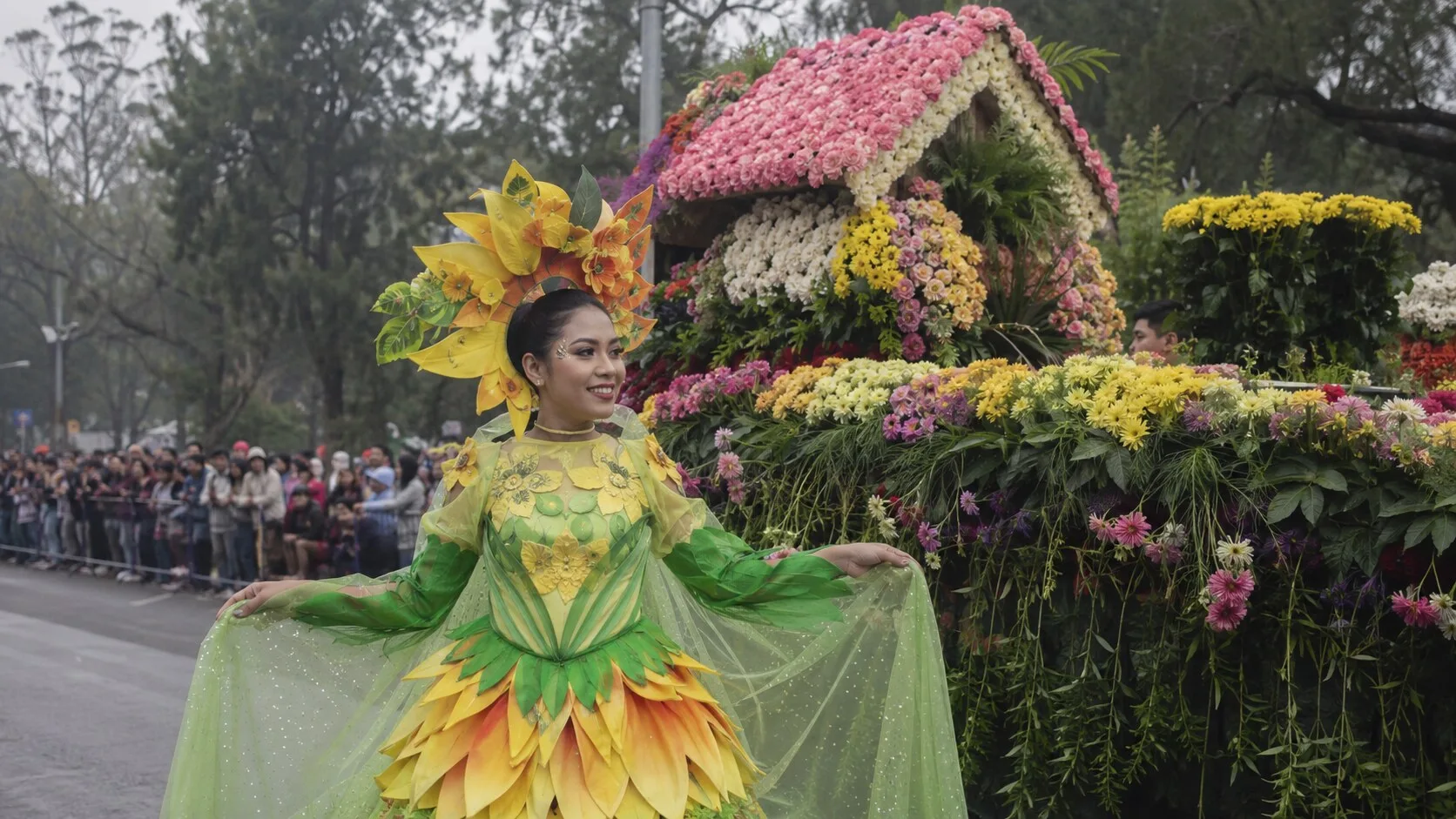
Panagbenga is Baguio City’s flower festival. It is a city cultural event, not a parish fiesta. Visitors travel for the grand street-dance parade and the grand floral float parade, which are often on different days.
The name is a Kankanaey word associated with a season of blooming. As of 12 September 2026, the 30th edition in 2026 has closed. Do not reuse those dates as a 2027 ticket.
This guide states only what the Baguio Flower Festival Foundation and Philippine Information Agency materials support for 2026. Exact 2027 parade Sundays are not published on this review date. Check panagbengaflowerfestival.com and the city before you book Baguio in February.
For other February events, use the February festivals hub. For the national map, use the complete festivals guide.
Key facts
| Item | What to use |
|---|---|
| Place | Baguio City |
| What it is | Baguio Flower Festival (Panagbenga), a civic flower celebration |
| Usual window | February into the first days of March; exact parade Sundays move |
| 2026 window | 1 February to 8 March 2026 (PIA reporting of the city and BFFFI launch) |
| 2026 grand opening parade | 1 February 2026 |
| 2026 grand street dance | 28 February 2026 |
| 2026 grand floral float parade | 1 March 2026 |
| 2026 close | Session Road in Bloom, 2 to 8 March 2026 |
| 2026 theme | Blooming Without End (30th staging) |
| 2027 dates | Not a booking plan until BFFFI publishes them |
What Panagbenga is
Panagbenga is organised with the Baguio Flower Festival Foundation, Inc. (BFFFI) and the city. Schools, growers, and fabricators build the floral floats and dance contingents. The floats and the street dance are the public days most travelers mean.
Market Encounter and landscape exhibitions often run across the same season. A generic “February in Baguio” listing is not a plan.
The festival’s own history links the modern flower festival to Baguio’s recovery after the 1990 earthquake. That origin story belongs to the Foundation’s telling. It is not a reason to invent attendance figures or to treat every February weekend as parade day.
In one line: Panagbenga is Baguio’s civic flower festival, highlighted by separate street-dance and floral-float parade days inside a February-to-early-March window you must confirm each year.
Verified 2026 programme points
The city and BFFFI launched the 30th Panagbenga on 12 January 2026.
Philippine Information Agency reporting described a five-week run from 1 February to 8 March with the theme “Blooming Without End.” The same PIA materials place the grand street dance on 28 February and the grand floral float parade on 1 March, with Session Road in Bloom closing the festival from 2 to 8 March.
Market Encounter and the landscape exhibition ran across the season.
| 2026 public day | Date from PIA / BFFFI reporting | Visitor note |
|---|---|---|
| Grand opening parade | 1 February 2026 | Opening day, not the main float parade |
| Grand street dance parade | 28 February 2026 | Different day from the float parade |
| Grand floral float parade | 1 March 2026 | The flower-float day most visitors photograph |
| Session Road in Bloom | 2 to 8 March 2026 | Shopping and food close, not the parade |
After 2026: how to treat 2027
The festival usually occupies February and the first days of March. The exact parade Sundays move. As of 12 September 2026, this page has no published 2027 calendar from BFFFI that we will treat as a ticket.
If you hope to attend in 2027, watch the official festival site and city notices, then book refundable lodging until the street-dance and float days are named.
If you go next time
- The float parade and the street dance are different days. In 2026 they were 1 March and 28 February.
- Session Road in Bloom is a shopping and food close, not the parade.
- Baguio is cold at dawn and crowded on parade day. The procession route becomes a no-drive zone once it starts.
- Do not pick flowers off a float. The displays are the work of growers and schools.
- Arrive early if you want a clear view of a float face, not only the back of a crowd.
Planning table
| Traveler goal | Better timing | Notes |
|---|---|---|
| See the street dance | The day BFFFI names for the grand street dance | Not the same day as the float parade in 2026 |
| See floral floats | The day BFFFI names for the grand floral float parade | Confirm route and viewing rules for that year |
| Shop Market Encounter | Across the published festival window | Hours change; ask on site |
| Combine with other February feasts | Check the February hub first | February festivals hub |
| First visit, flexible dates | Wait for BFFFI’s calendar, then add buffer days | Highland weather can shift plans |
Confirm it here
- Official festival site: https://www.panagbengaflowerfestival.com/
- PIA on the 2026 dates: https://pia.gov.ph/news/baguio-city-bfffi-all-set-for-30th-staging-of-panagbenga-festival/
- February hub: https://festivepinoy.com/must-visit-festivals-in-the-philippines-in-february/
- Calendar hub: https://festivepinoy.com/festivals-in-the-philippines-complete-guide/
How to get to Baguio from Manila
Baguio has no commercial passenger airport that most festival visitors use. Plan a land trip from Metro Manila or from Clark, not a direct commercial flight into the city. Typical road time from Manila is often in the four to six hour range when traffic is light. On Panagbenga parade weekends, that window stretches. Confirm operator schedules for the dates you travel. Do not treat an old blog transfer time as a promise.
- Bus corridors: Long-distance buses leave Metro Manila terminals (commonly Cubao, Pasay, and PITX corridors) for Baguio. Several operators run this route. Check the terminal board and the operator app or counter for the day you leave. Do not invent a fixed fare or a fixed hourly timetable from this page.
- Private car: Expressway links north of Manila toward the Cordillera approaches are the usual pattern. Follow current road advisories for Kennon, Marcos Highway, and any temporary closures. Parade days close streets inside Baguio once the route starts.
- Clark option: Some travelers fly into Clark, then continue by land to Baguio. That still needs a bus, van, or car segment. It is not a city-center airport drop-off for Session Road.
Arrive the day before a named parade if you can. Same-day arrivals from Manila often miss the best viewing spots once the lanes fill.
Where to stay: Session Road and Burnham corridor
For festival walking, a base near Session Road, Burnham Park, and the central business triangle usually beats a cheap room far down the valley. Hills and cold mornings make long daily jeepney hops tiring when you also want parade sightlines.
| Zone idea | Better if you want | Watch-outs |
|---|---|---|
| Session Road / Upper Session | Walk to float displays, Session Road in Bloom, cafes | Noise and crowd density on peak nights; book early |
| Burnham Park edge | Park events, landscape shows when staged there, easy morning walks | Parade closures can still cut car access |
| Near SM Baguio / central terminals | Short walk from many bus arrivals | Still confirm walking access once the traffic advisory is out |
| Camp John Hay / quieter edges | Calmer nights | Longer ride or walk to Session Road on parade morning |
Ask your hotel how guests walk to the published route once BFFFI and the city post that year’s traffic advisory. A balcony facing Session Road is not a guarantee of a clear float face.
Market Encounter and other season entities
Panagbenga is more than two parade Sundays. In the 2026 programme materials reported by SPOT.ph and local calendar listings, Market Encounter ran as a multi-day market window early in the season (listed 1 to 8 February 2026 alongside landscape exhibition days). Session Road in Bloom closed that edition after the float parade. Treat those as 2026 entities only. Hours, venues, and stall rules change.
- Market Encounter is a shopping and produce encounter inside the festival window, not a substitute for the floral float parade.
- Landscape / “Panagbengascapes” style exhibitions appear when BFFFI schedules them. Confirm the live year on panagbengaflowerfestival.com.
- Session Road in Bloom is a walking fair around parked floats and stalls after the float day in recent editions. It is still not the parade itself.
Cold-weather packing for Baguio crowds
Baguio mornings and evenings are cool to cold for many lowland visitors, even when midday sun feels bright. Festival crowds mean slow walking, standing, and sudden rain.
- Layer a light jacket or fleece you can remove by noon.
- Wear closed shoes with grip. Sidewalks get wet and crowded.
- Bring a compact rain layer. Mountain weather turns fast.
- Carry water and a small snack. Queues at popular stalls grow on parade weekends.
- Pack a power bank. Crowds drain phones and mobile data.
For other February trips beyond Panagbenga, use the February festivals hub. For the national map, use the complete festivals guide.
Confirm with BFFFI / LGU: Parade Sundays, Market Encounter hours, and road closures for the next edition are not tickets until the Baguio Flower Festival Foundation and the city publish them. A 2026 calendar is history, not a 2027 booking.
Quick summary
Panagbenga is Baguio City’s flower festival, usually held in February into early March.
The 30th edition in 2026 ran from 1 February to 8 March, with the grand street dance on 28 February and the grand floral float parade on 1 March, according to Philippine Information Agency reporting of the city and Baguio Flower Festival Foundation programme.
Session Road in Bloom closed that edition from 2 to 8 March. As of 12 September 2026, 2027 dates are not a booking plan until BFFFI publishes them. Confirm parade days on panagbengaflowerfestival.com before you travel.
FAQ
What is the Panagbenga Festival?
It is Baguio’s flower festival, highlighted by a street-dance parade and a parade of floral floats. It is a city event, not a church feast.
When was Panagbenga 2026?
From 1 February to 8 March 2026. The grand street dance was 28 February and the grand floral float parade was 1 March, according to the Philippine Information Agency.
When is the next Panagbenga?
The festival is usually in February into early March. The 2027 dates are not a booking plan until the Baguio Flower Festival Foundation publishes them.
Where is Panagbenga held?
In Baguio City. Parade routes and Session Road closures are set for the year. Use the official festival site, not a previous year’s map.
Are the street dance and the float parade the same day?
Not in 2026. The street dance was 28 February and the floral float parade was 1 March. Check the next published calendar before you assume the same split.
Last reviewed against BFFFI and PIA-linked sources as of 12 September 2026. Always confirm with the host.
—