Filipino Folk Dance Costumes: The Complete Visual Guide
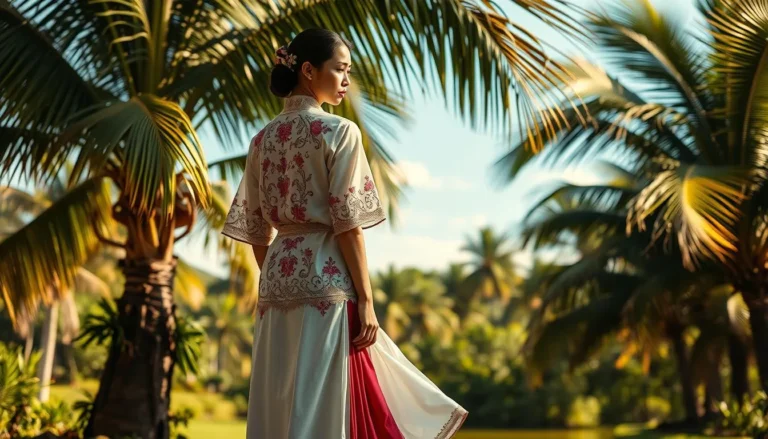
UNESCO added Aklan’s piña handloom weaving to its Representative List of the Intangible Cultural Heritage of Humanity in December 2023. That translucent, ivory toned fabric, woven by hand from pineapple leaf fiber, is the same cloth Filipino tailors have used for generations to sew the Barong Tagalog and Baro’t Saya, the two garments at the root of most folk dance costume traditions in the country.
From the Ilocos coast to the Sulu Sea, what a dancer wears changes with the region, the fabric on hand, and the story a dance tells.
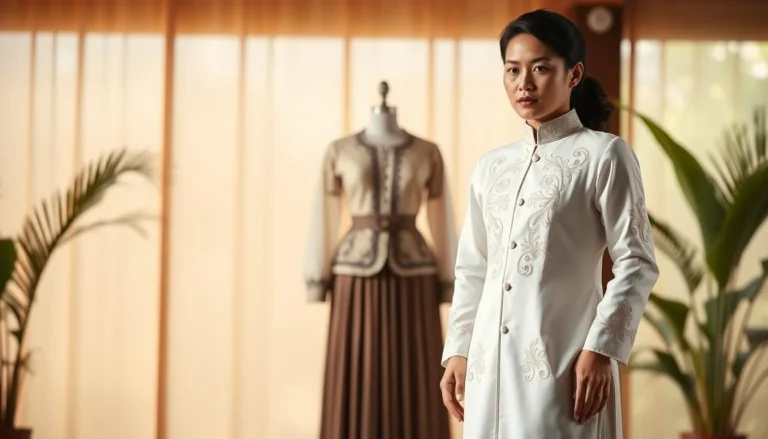
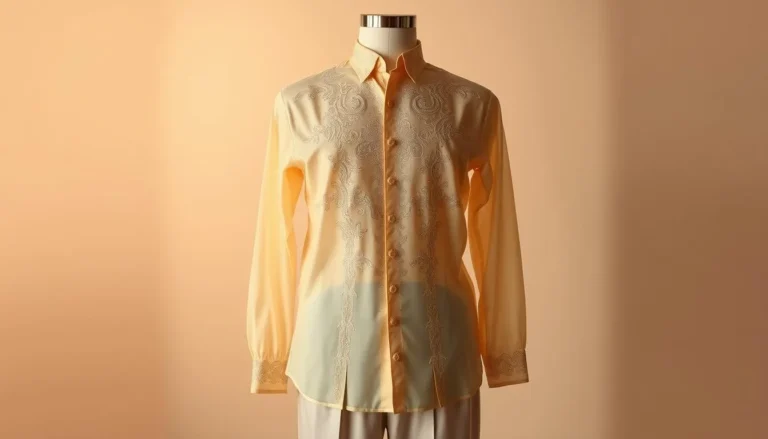
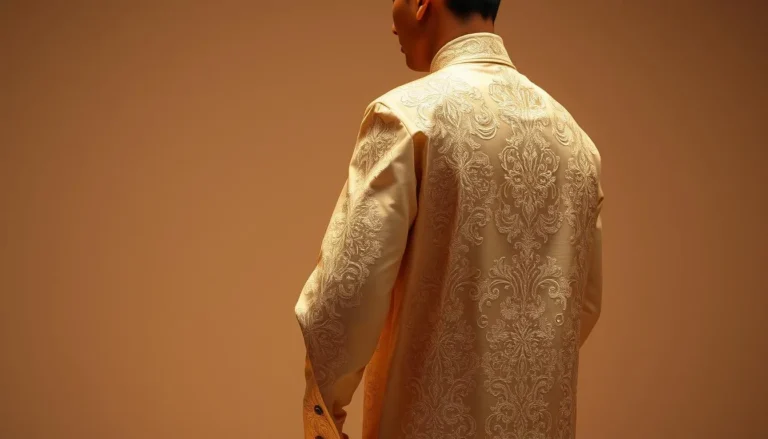
Barong Tagalog is the sheer, embroidered shirt Filipino men wear untucked, traditionally cut from piña or jusi over a plain undershirt called a camiseta. Baro’t saya, literally blouse and skirt, names the general category of women’s traditional dress, including the balintawak, the patadyong kimona, and the formal terno. This guide walks through what dancers wear region by region, what each fabric is called, and where the differences come from.
At a Glance
| Aspect | Details |
|---|---|
| Garments | Barong Tagalog, Baro’t Saya (balintawak, patadyong kimona, terno), bahag, tapis, malong |
| Fabrics | Piña, jusi, abaca, cotton, silk and metallic brocade |
| Colours | Pastel and white in lowland dress; saturated red, black and yellow in highland and Mindanao dress |
| Worn by | Men in barong tagalog or bahag; women in baro’t saya, tapis or malong |
| Props | Fans, oil lamps, bamboo poles, coconut shells, kalasag shield |
| Variants | Balintawak, patadyong, terno, bahag, tapis, malong |
What These Costumes Are Made Of
Three fibers dominate the costumes’ fabric choices:
- Piña comes from the leaves of a red pineapple variety grown mostly in Aklan province; weavers strip the leaf by hand, then loom the fiber into the sheer cloth prized for formal wear.
- Jusi looks similar but is woven from silk or a silk blend, cheaper and more common for stage costumes.
- Abaca, pulled from the stem of a banana relative, makes coarser cloth used across the Cordillera and in the inabel weaves of Ilocos.
- Cotton and plain gauze fill the budget end of the range, common for school recitals and barangay fiestas.
A full breakdown of these Filipiniana fabrics covers how to tell piña from jusi by touch.
Color follows a rough pattern. Lowland dress leans toward pastel or white, a habit that traces back to the Spanish era. UNESCO’s Aklan piña listing has the full craft history behind the fabric, including how the fiber is measured using an old coin based system still practiced by weaving families today.
Note
Highland and Mindanao dress uses saturated red, black, and yellow, tied to weaving traditions older than Spanish contact.
Competitive dance troupes increasingly line their costumes with polyester or cotton blends underneath the visible piña or jusi panels. Synthetic fabric survives repeated washing, folding, and travel between competitions better than natural fiber does, and it costs far less to replace when a hem tears mid rehearsal.
Costumes for Lowland Dances: Baro’t Saya, Balintawak and Patadyong
Most dances taught in Philippine schools come from Tagalog and Visayan towns, and their wardrobe shares one family tree.
Tinikling: Bamboo, Balintawak, and Barong
Dancers step between clapping bamboo poles in Tinikling, so their outfit has to survive quick footwork. Both dancers perform barefoot. Our Tinikling guide covers the dance’s steps and origin story in full, since the costume is only part of what makes it recognizable.
Cariñosa: From Maria Clara to Patadyong Kimona
Cariñosa began as a courtship dance performed in the Maria Clara gown, the four piece formal dress named after the heroine of José Rizal’s 1887 novel Noli Me Tángere. Folk dance researcher Francisca Reyes Aquino later documented dancers wearing simpler everyday attire instead.
A fan or handkerchief is required, since much of the choreography plays out as a flirtation through the prop. Read more in our Cariñosa explainer, which covers the dance’s steps and courtship symbolism.
Subli, Alitaptap, and Bulaklakan: Smaller Dances, Distinct Dress
Not every lowland dance uses the same silhouette:
- Subli, a religious dance from Batangas performed for the Mahal na Poon, involves kneeling steps, and a subli folk dance costume rarely uses heavy embroidery, matching the dance’s devotional tone.
- Alitaptap, meaning firefly, is a shorter Visayan dance, and its dress mirrors Cariñosa’s patadyong kimona, sometimes traded for small lantern props instead of a fan.
- Bulaklakan, or flower dance, dresses performers in floral prints and gives them wreaths or garlands to carry, a nod to the dance’s harvest theme.
A bulaklakan costume and an alitaptap costume differ mainly in prop, not cut.
What Male Dancers Wear
A folk dance costume for male dancers in the Philippines rarely needs more than two shirt choices: barong tagalog for formal or courtship numbers, and camisa de chino, a plain collarless shirt, for work or comic dances. Trousers stay black, white, or a solid color matched to the women’s skirt trim. Footwear stays minimal; most lowland dances go barefoot, while Cordillera and Mindanao numbers often swap shoes for anklets or bells.
Headwear marks status more than gender does. A salakot, a wide brimmed hat woven from rattan or nito vine, appears in rural work dances like Maglalatik. That dance skips the shirt for its male performers, who strike coconut shells together in a mock battle rhythm instead.
It is the exception that proves the rule: dress follows the story a dance tells, not a fixed uniform.
Costumes of the Cordillera Highlands
Cordillera dances, performed by Igorot communities across Benguet, Ifugao, Kalinga, and Mountain Province, use handwoven cloth instead of piña or jusi. The men’s bahag, a long loincloth, carries different tribal names: wakes among the Bontoc, ka-in among the Kalinga, ba-ag among the Abra tribes.
These textiles carry weight beyond the stage.
Key point
Local officials in Baguio have publicly corrected productions that dressed women in bahag instead of tapis, since the loincloth is specifically men’s wear and the mix up misrepresents Cordilleran culture.
Anyone staging a Cordillera number should check with a cultural group first rather than guess from a costume rental catalog.
Costumes of Muslim Mindanao: Singkil and the Malong
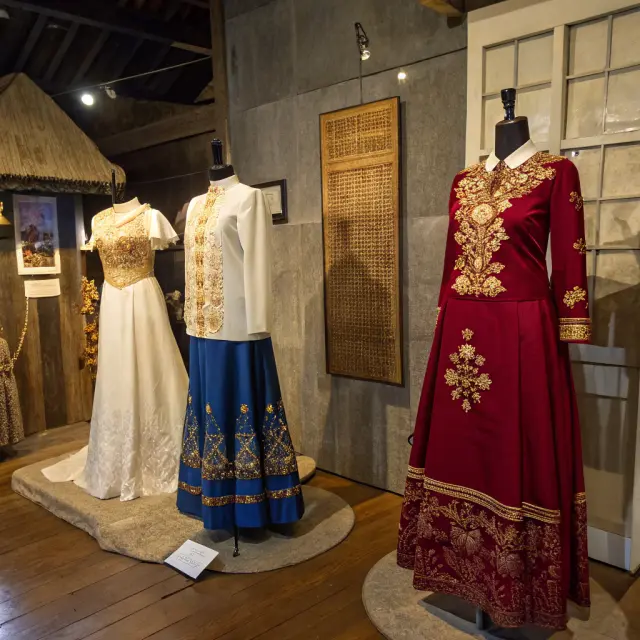
Singkil, the best known Mindanao folk dance, tells a story drawn from the Darangen, the sung epic of the Maranao people of Lake Lanao. Its lead female dancer plays a princess, wearing one of the most elaborate costumes in the Philippine repertoire.
The malong itself is not costume specific. It is everyday Maranao dress, worn as a skirt, a shawl, a sling, or even a sleeping cover, and its patterns, often called landap or langkit, identify a weaver’s family or town.
Many staged versions of Singkil also add a sarimanok headdress, a stylized bird drawn from Maranao art, though cultural advisers note a princess character would not traditionally wear one. Sulu and Basilan’s Yakan people practice a related but distinct Yakan weaving tradition, used in the sinalu’an skirts worn for their own local dances.
Costume by Dance: Who Wears What
| Dance | Woman Wears | Man Wears | Fabric |
|---|---|---|---|
| Tinikling | Balintawak (butterfly sleeves) or patadyong with kimona | Barong tagalog, dark trousers | Piña or jusi |
| Cariñosa | Balintawak or patadyong kimona | Barong tagalog, colored trousers | Piña or jusi |
| Subli | Plain baro’t saya | Rolled up trousers | Plain, lightly embroidered |
| Maglalatik | Not danced by women | Shorts, no shirt, coconut shells strapped on | Coconut shell, cord |
| Cordillera | Tapis with woven jacket or beaded collar | Bahag (loincloth) | Handwoven abaca or cotton |
| Singkil | Fitted blouse, malong, beaded or brass headpiece | Long silk shirt, matching pants, rounded cap | Silk or metallic brocade |
Garment Glossary
| Garment | What It Is |
|---|---|
| Barong Tagalog | Sheer, embroidered men’s shirt worn untucked over a camiseta undershirt |
| Baro’t Saya | General term for a woman’s traditional blouse and skirt dress |
| Balintawak | Three piece baro’t saya variant with wide butterfly sleeves |
| Patadyong | Wraparound skirt paired with a thin blouse called a kimona |
| Tapis | Rectangular woven cloth wrapped as a skirt, paired with a jacket or beaded collar |
| Bahag | Long loincloth wrapped and tucked at the waist |
| Malong | Wide tube of cloth sewn at both ends, worn as a skirt, shawl, sling or sleeping cover |
| Camisa de Chino | Plain, collarless men’s shirt |
Props and Accessories That Complete the Look
A costume rarely stands alone. Pandanggo sa Ilaw, the dance of lights, pairs a plain balintawak with three small oil lamps, one balanced on the head and one on each palm, and the whole performance depends on the dancer keeping her flames level. Cariñosa needs its handheld fan, called an abaniko, snapped open and shut on cue. Tinikling needs nothing extra beyond bare feet and quick reflexes, since the bamboo poles themselves are the prop.
Jewelry follows the same regional split as fabric. Lowland dancers wear simple gold or pearl accents, sometimes nothing at all, to keep attention on footwork. Maranao dancers performing Singkil wear stacked brass rings, woven belts, and a malong folded to allow fast, controlled steps between the clashing bamboo poles.
Cordillera dancers add woven backpacks called bay-yong or beaded chest pieces, both functional items repurposed for performance rather than made for it. None of these extras are optional once a specific dance is being staged correctly. Leave out the lamps in Pandanggo sa Ilaw, or the fan in Cariñosa, and the dance loses the detail that names it.
Parade Costume Is Not the Same as Dance Costume
Not every colorful outfit seen on a Philippine stage counts as a folk dance costume in the technical sense. Street festivals like Ati-Atihan in Kalibo and Kadayawan in Davao City use costume too, but the intent differs. This kind of costume reconstructs how people actually dressed, following steps a choreographer can trace to a specific town or era. Festival costume, by contrast, is designed to be seen from a distance and often mixes real tradition with theatrical invention.
Ati-Atihan costumes lean on soot black body paint, feathers, shells, and tiger grass, a tribute to the Ati people the festival honors. Kadayawan costumes, worn during the Indak Indak sa Kadalanan street dance, draw on real textile traditions from Davao’s eleven ethnic groups: the Maguindanaon wear inaul, a handwoven cloth valued enough to have its own annual festival, while Iranun dancers use the curling okir pattern seen on shields and boats.
Building a Simple or DIY Costume
Not every performance needs museum grade piña. A simple version for a school program or barangay contest can use cotton, satin, or repurposed curtains, as long as the silhouette and color read correctly from the back row.
Building a DIY costume starts with the base garment. A basic balintawak blouse needs only a rectangle of fabric gathered at the neckline, with short puffed sleeves sewn on separately; no princess seams required. A patadyong skirt is just a tube of cloth, often plaid, sewn at the side seam and wrapped around the waist. For boys, a camisa de chino pattern is a plain collarless shirt, far easier to sew than a full barong tagalog.
Female dancers in the Philippines need a few extras beyond the dress itself: a fan or handkerchief for courtship numbers like Cariñosa, soft slippers or bare feet for Tinikling, and hair pinned back so it will not come loose during fast turns.
Tip
What a competition team wears and what a family sews for a home fiesta differ mostly in fabric quality, not design. Judges score technique first, wardrobe second.
What These Costumes Say About Regional Identity
Line up a barong tagalog, a Cordillera bahag, and a Maranao malong side by side and the differences map the Philippines’ history. Lowland dress carries three centuries of Spanish colonial influence in its cut and fabric choice. Highland dress kept its pre colonial weaving techniques largely intact, since Spanish rule never fully reached the Cordillera interior. Mindanao dress reflects a separate history again, shaped by trade with Muslim sultanates centuries before Spanish ships arrived.
None of these traditions sit still. Designers restage the terno for red carpets, Cordillera weavers sell inabel runners to interior designers, and Maranao families still commission malong for weddings, not only for Singkil performances. A costume built for the stage still answers to the same community that wore the original.
A folk dance costume is never just decoration. Every fold of a malong, every panel of piña, and every borrowed feather on an Ati-Atihan headdress carries a decision someone made generations ago about how to represent home. The Cariñosa’s patadyong kimona and Tinikling’s balintawak carry enough regional detail for dedicated guides of their own. Our Fashion category collects everything from barong tagalog etiquette to modern filipiniana styling for readers who want to go further.
Frequently Asked Questions
What is the difference between a folk dance costume and a festival costume?
This kind of costume reconstructs how people in a specific town or era actually dressed, following steps a choreographer can trace to a documented dance. A festival costume, like those worn at Ati-Atihan or Kadayawan, is built to read from a distance during a street parade and often blends real tradition with theatrical invention, feathers, glitter and body paint included.
What fabric is traditionally used for Filipino dance costumes?
Piña, woven from pineapple leaf fiber, and jusi, a silk blend, are the traditional choices for barong tagalog and formal baro’t saya. Cordillera costumes use handwoven cotton and abaca instead. Competition teams today often switch to polyester blends because they travel and wash better than piña.
Who documented the standard costumes for Philippine folk dances?
Folk dance researcher Francisca Reyes Aquino, often called the mother of Philippine folk dance, catalogued and standardized dozens of regional dances in the mid twentieth century, including notes on costume. Philippine schools still teach her documented versions today.
Can foreigners or tourists wear these Filipino costumes?
Lowland costumes like barong tagalog and baro’t saya are widely worn and shared. Cordillera and Mindanao attire carries more specific cultural weight, since garments like the bahag and tapis have provoked public criticism when misused in performances, so it is worth checking with a cultural group before wearing them on stage.
What do dancers wear on their feet in Philippine folk dance?
Most lowland dances, including Tinikling and Cariñosa, are performed barefoot. Cordillera and Mindanao dances often replace footwear with ankle bells or beaded anklets instead, which add sound and movement to the choreography.
Works Cited
National Commission for Culture and the Arts. “Paris, France Hosts UNESCO Aklan Piña Handloom Weaving and SLT Exhibit Opening.” National Commission for Culture and the Arts, 17 Oct. 2024, ncca.gov.ph/2024/10/17/paris-france-hosts-unesco-aklan-pina-handloom-weaving-and-slt-exhibit-opening/.
“Aklan Piña Handloom Weaving.” Intangible Cultural Heritage, UNESCO, ich.unesco.org/en/RL/aklan-pina-handloom-weaving-01564.
“Fashion of the Tribes.” SunStar Davao, SunStar Philippines, 16 Aug. 2025, www.sunstar.com.ph/davao/fashion-of-the-tribes.