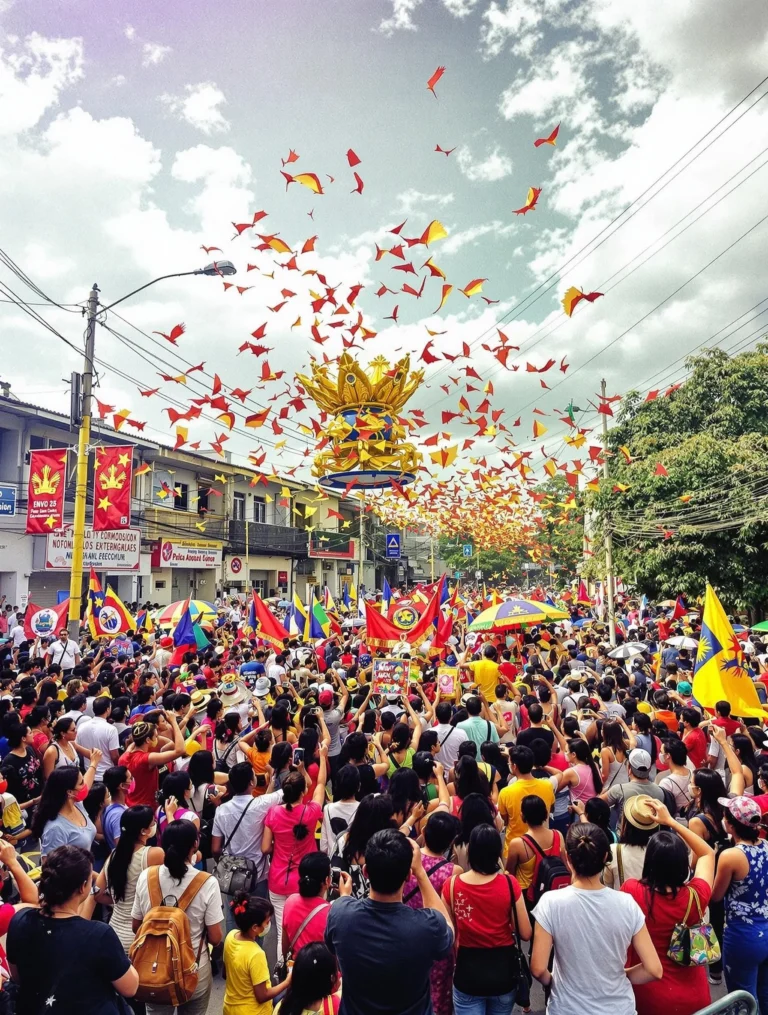
Pili Festival: Celebrating Heritage and Community
Sorsogon City opens its Pili Festival each year with pagtilad, a ritual in which the mayor cracks open a pili nut on a wooden board with a single strike of a bolo, splitting the shell without crushing the kernel inside. That small, precise act sets the tone for a celebration built around one tree: the pili, a native Philippine crop that Sorsogon has turned into both a livelihood and a civic identity.
The festival runs alongside Sorsogon City’s Catholic patronal feast, honoring Sts. Peter and Paul with a nine-day novena from June 20 through June 28, followed by a pontifical mass on June 29. Around that religious core, the city builds two weeks of street dancing, trade fairs, and competitions tied to the pili harvest.
At a Glance: Pili Festival
| What to know | Details |
|---|---|
| Location | Sorsogon City, Sorsogon province, Philippines |
| Timing | Novena June 20-28, pontifical mass June 29 |
| Founded | Conceptualized 1999, inaugurated 2000 |
| Patron feast | Sts. Peter and Paul |
| Signature ritual | Pagtilad, ceremonial pili nut cracking |
| Street event | Tiriladan sa Dalan, draws up to 25,000 visitors |
| Economic tie | Bicol region’s largest pili-growing area |
Key point
Pili Festival is not purely secular. It shares its calendar with Sorsogon City’s patronal feast for Sts. Peter and Paul, which is why the festival’s most solemn events happen inside the Sts. Peter and Paul Cathedral rather than on the street.
From Local Fruit to Festival
Irma Alindogan-Jacobs, then the provincial information officer for the Philippine Information Agency, conceptualized the festival in 1999. Sorsogon had no official festival of its own at the time, despite pili trees shaping daily life for generations of residents who picked, dried, and cracked the nuts as children.
The city inaugurated Pili Festival in 2000 under then-Mayor Sally Lee. Lee went on to serve as governor of Sorsogon from 2007 to 2010, and when she returned to the mayor’s office, she led a formal re-launch of the festival in 2014, describing it as synonymous with the city since 2000.
Why Pili Matters to Sorsogon
Pili trees can grow over 20 meters tall, and their seeds and pulp support a real local economy rather than a purely ceremonial one. Sorsogon holds the 1,373 hectares planted with pili that make it the Bicol region’s largest producer, ahead of Albay, Masbate, Camarines Sur, Camarines Norte, and Catanduanes.
Within Sorsogon City itself, roughly 245 hectares and nearly 30,000 trees feed a processing industry built around one crop. Across the wider Bicol region, Sorsogon leads every other pili-growing province by cultivated area.
| Rank | Province | Position in Bicol |
|---|---|---|
| 1 | Sorsogon | Largest pili-growing area |
| 2 | Albay | Second largest |
| 3 | Masbate | Third |
| 4 | Camarines Sur | Fourth |
| 5 | Camarines Norte and Catanduanes | Smaller producers |
That ranking is part of why Sorsogon, rather than any other Bicol province, built a festival specifically around this crop. No other provincial capital in the region has the tree density to make a pili-centered celebration this credible, which is also why the festival draws visitors from neighboring provinces each year.
- Pili nuts roasted, candied, or turned into conserva, a local delicacy
- Pili pulp used in cooking oil and traditional dishes
- Pili wood and shells used in small-scale crafts
- Pili-based products sold through the festival’s trade fairs
Note
In 2018, twenty local women attempted a record-setting batch of conserva, a pili candy delicacy, reflecting how far the crop has moved beyond raw harvest sales into branded, city-identified food products.
The Religious Core
Pagtilad opens the festivities, but the spiritual center of Pili Festival sits at the Sts. Peter and Paul Cathedral, elevated to diocesan seat status in 1951. The nine-day novena leading up to June 29 draws worshippers daily, culminating in a concelebrated pontifical mass on the feast day itself.
That religious framework is why Pili Festival reads differently from a purely commercial harvest fair. Trade and tourism goals sit openly alongside genuine Catholic devotion, and the city treats both as central rather than treating one as a backdrop for the other.
What the Pili Nut Actually Is
Pili, scientific name Canarium ovatum, is a tree fruit native to the Philippines, with Bicol as its main growing region. The seed inside is the part most people know, roasted and sold as a snack nut or candied into conserva, but the surrounding pulp also has culinary uses in traditional Bicolano cooking.
Harvesting still depends heavily on manual labor. Workers climb or use long poles to knock ripe fruit from trees that can reach 20 meters, then separate pulp from shell and crack each nut individually, often by hand rather than machine. That labor intensity is part of why pili commands higher prices than more mechanized crops, and why festivals built around it double as advocacy for fairer farmgate pricing.
Tip
Look for conserva and other pili products at the festival’s trade fairs rather than at general souvenir stalls. Vendors selling directly during Pili Festival typically offer fresher stock and better prices than off-season retail.
Street Events and Competitions
Secular programming fills out the rest of June, giving residents and visitors far more to do than attend mass or watch the nut-cracking ceremony alone.
- Tiriladan sa Dalan, the street-level pagtilad competition, held June 28
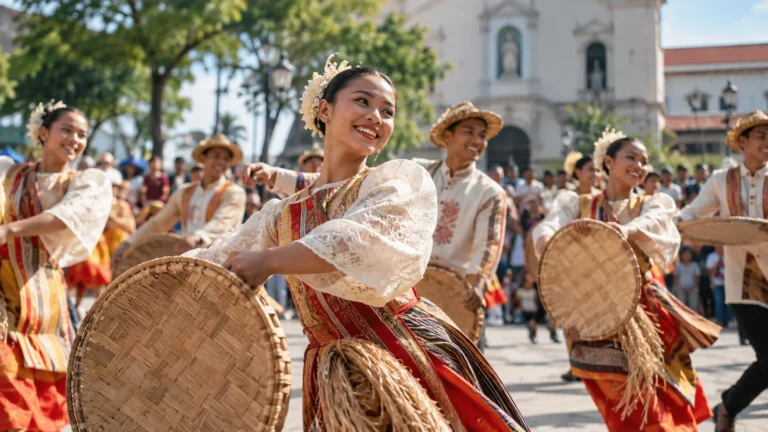
- Street dancing and cultural parades celebrating regional identity
- Trade fairs promoting pili-based food products and crafts
- Sports competitions and talent shows drawing local participation
- Cook fests highlighting pili in traditional Bicolano dishes
Tip
Time a visit around June 28 if the pagtilad ritual and its street version interest you most. That single day combines the festival’s biggest religious lead-up moment with its most crowded public spectacle.
Planning a Visit
Sorsogon City sits at the southern tip of Luzon, reachable by bus or a combination of flight and land travel from Manila. June falls within the Philippines’ wet season, so pack for rain even during otherwise sunny festival days, and keep a light jacket handy for evening events.
Accommodation in Sorsogon City is modest compared to bigger festival destinations, and options fill up around the peak festival dates. Booking ahead matters more than showing up and expecting availability, particularly for the days around the June 29 mass.
A Festival Built on One Family’s Push
Sally Lee’s connection to Pili Festival runs deeper than a single term in office. Her tenure as mayor spanned two separate periods, 2001 to 2007 and again starting in 2013, with a term as provincial governor in between. That continuity gave the festival something many local celebrations lack: a consistent political sponsor across more than a decade.
The 2014 re-launch under Lee mattered because festivals in smaller Philippine cities can lapse without sustained funding and promotion. Sorsogon’s decision to formally revive Pili Festival, rather than let it fade after its initial run, reflects how closely the city had tied its public identity to the crop by that point.
Local government support since then has extended beyond ceremonial appearances. Trade fair infrastructure, marketing for pili-based products, and coordination with the Diocese of Sorsogon for the religious calendar all require year-round planning that outlasts any single administration’s term.
Note
The novena schedule set by the Diocese of Sorsogon does not shift for tourism convenience. Trade fair organizers build their own calendar around it, a division of labor that keeps neither side of the celebration overshadowing the other.
That planning shows up most clearly in how smoothly the religious and commercial halves of the festival run side by side each year, a coordination that took more than a decade of consistent local leadership to establish.
Frequently Asked Questions
What is the Pili Festival?
Pili Festival is Sorsogon City’s annual celebration of the pili tree and nut, held every June alongside the Catholic feast of Sts. Peter and Paul. It combines a nine-day novena with street dancing, trade fairs, and a ceremonial nut-cracking ritual called pagtilad.
When is the Pili Festival held?
The traditional pattern runs a novena from June 20 to 28, with a pontifical mass on June 29, the feast of Sts. Peter and Paul. Secular events like trade fairs and street dancing extend across most of June.
What is pagtilad?
Pagtilad is the ceremonial cracking open of a pili nut, done by placing it on a wooden board and striking the shell with a bolo to preserve the kernel inside. The city mayor performs pagtilad to open the festival, and a related street contest, Tiriladan sa Dalan, draws large crowds.
Who started the Pili Festival?
Irma Alindogan-Jacobs conceptualized the festival in 1999 to help turn pili into a recognized high-value crop for Sorsogon. It was inaugurated in 2000 under then-Mayor Sally Lee, who also led its 2014 re-launch.
Why is pili important to Sorsogon’s economy?
Sorsogon has the largest area planted with pili in the Bicol region, supporting thousands of trees and a local processing industry that turns the nut and pulp into candies, pastries, and cooking oil.
Pili is one piece of Bicol’s food identity worth exploring alongside the region’s better-known dishes, including Bicol Express. Browse Food or Philippine festivals for more regional coverage.