What is Jeepney
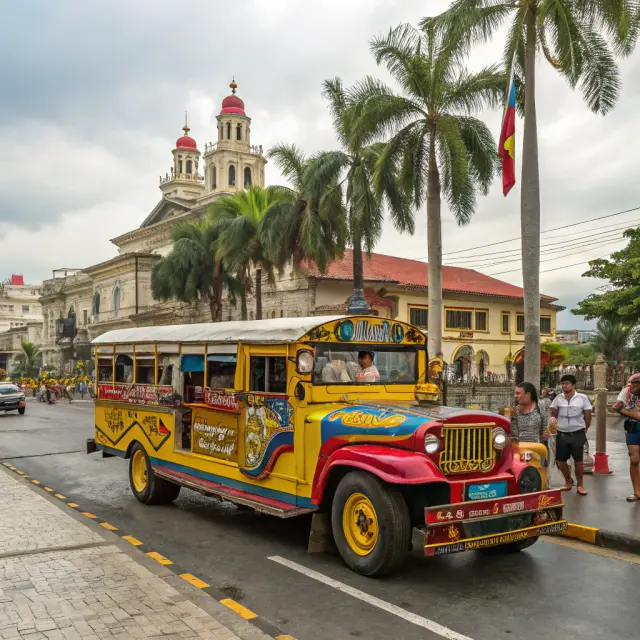
The jeepney is the undisputed King of the Road in the Philippines: a long, open-sided passenger vehicle, painted in every colour imaginable, that carries millions of commuters each day. More than transport, it is one of the country’s most recognisable cultural symbols, born from the wreckage of war and reinvented by Filipino hands.
This guide covers what a jeepney is, how it grew out of World War II surplus jeeps, where its name comes from, and why it means so much to Filipinos.
Colourful shared passenger vehicle
Post-WWII US surplus jeeps
“jeep” + “jitney”
King of the Road
Hand-painted, flamboyant decoration
1964 New York World’s Fair
What a jeepney is
A jeepney is a shared public vehicle with two long benches in the back where passengers sit facing one another. Riders climb in from the rear, pass their fare forward, often hand to hand, to the driver, and call out para when they want to get off. Fares are cheap and routes are fixed, which has made the jeepney the workhorse of Filipino commuting for generations.
What sets it apart from any other bus is its look. No two jeepneys are quite alike, each one a rolling canvas of chrome, mirrors, and hand-painted art chosen by its owner.
From war surplus to the road
The jeepney’s story begins with the end of World War II. The fighting left the Philippines devastated and its pre-war transport in ruins. Before the war, Manila had relied partly on shared taxis called auto calesas, or “AC” for short, motorised cousins of the horse-drawn kalesa. Most of these were destroyed in the conflict.
As American troops withdrew, they left behind, sold, or gave away hundreds of surplus Willys and Ford military jeeps. With the country desperate for transport, resourceful Filipinos saw opportunity in the sturdy little vehicles. They stripped them down, stretched the bodies to fit more passengers, added metal roofs for shade against sun and rain, and finished them in bright paint and gleaming chrome. From that improvised solution the modern jeepney was born.
Local manufacturers soon turned the craft into an industry, with names like Sarao Motors becoming legendary for building jeepneys from the ground up rather than merely converting old jeeps.
Where the name comes from
The word jeepney is a blend of two older transport terms. “Jeep” comes from the American military vehicles that formed the first bodies, while “jitney” was old slang for a small vehicle that carried passengers for a small fare. Fused together, the two words captured exactly what the vehicle was: a jeep turned into cheap public transport.
Art on wheels
Decoration is where the jeepney truly becomes Filipino. Owners cover their vehicles in a personal mix of images and slogans: religious icons and Bible verses, favourite basketball players, movie stars, family names, and pop-culture heroes, all framed by chrome horses, antennae, and rows of tiny mirrors. Each jeepney becomes a portrait of its owner’s faith, humour, and pride.
That artistry is why the jeepney is often called a mobile expression of Filipino ingenuity and identity, a piece of folk art that also happens to get you to work.
The King of the Road: cultural significance
Over the decades the jeepney grew from a stopgap into a national emblem. It was displayed as a symbol of the Philippines at the 1964 New York World’s Fair, where a Sarao jeepney stood in the country’s pavilion. To Filipinos it represents resilience, adaptability, and the knack for turning what others discard into something useful and beautiful. The story of the jeepney, a war relic reborn as a colourful icon, is often told as the story of the Filipino spirit itself.
An uncertain future
The traditional jeepney now faces change. The government’s Public Utility Vehicle Modernization Program, launched in 2017, aims to replace old, smoke-belching units with cleaner, safer, modern minibuses. The plan promises better emissions and comfort, but it has also sparked heartfelt debate, since many drivers and operators fear losing their livelihoods and Filipinos worry about losing a cultural treasure. How the country balances progress with heritage will shape whether the classic jeepney survives on the road or moves into the museum.
Riding a jeepney: how it works
Riding a jeepney is an experience in itself, and it runs on a gentle, unwritten etiquette. You flag one down from the roadside or wait at a terminal, then climb in through the open back and take a seat on one of the two long benches. To pay, you hand your fare toward the driver, often passing it along through the other passengers with a polite “bayad po,” and any change makes the same journey back. When you reach your stop, a knock on the roof or a called-out “para” tells the driver to pull over. Strangers routinely help one another pass fares and squeeze in one more rider, and that everyday cooperation is part of the jeepney’s charm.
The jeepney in everyday language and art
The jeepney is woven into Filipino life far beyond the road. Filipinos affectionately call it the “dyip,” and its routes map the way ordinary people move through their cities. It appears constantly in films, television, songs, paintings, and advertising as instant shorthand for the Philippines, and miniature jeepneys are among the most popular souvenirs a visitor can bring home. For many artists the jeepney is a favourite subject precisely because it is folk art in motion, a shared canvas that reflects the humour, faith, and pride of the people who ride it.
Modern and electric jeepneys
The next chapter of the jeepney is already taking shape. Newer models arriving under the modernization program run on cleaner or electric engines, with forward-facing seats, automated fare systems, and safer, sturdier bodies. Supporters see them as a necessary step toward less pollution and safer travel, while critics worry that a mass-produced minibus can never carry the personality of a hand-built, hand-painted original. The hope of many Filipinos is that modernisation can improve the ride without erasing the artistry that made the jeepney a national icon in the first place, so that the King of the Road keeps both its crown and its colour.
The jeepney as a livelihood
Behind every jeepney is a family that depends on it. For hundreds of thousands of drivers and operators, the vehicle is not a symbol but a living, earned one fare at a time along the same route, day after day. Small workshops build and repair them, artists paint them, and vendors cluster around their terminals, so a single jeepney quietly supports a whole web of ordinary livelihoods. That human weight is a big reason debates about the jeepney’s future run so hot: the vehicle carries not only passengers but the hopes of the people who keep it moving.
Frequently Asked Questions
What is a jeepney?
A jeepney is a shared public passenger vehicle in the Philippines, known for its long side benches, low fares, fixed routes, and elaborate hand-painted decoration.
How did the jeepney originate?
It grew out of surplus US military jeeps left in the Philippines after World War II. Filipinos rebuilt them into longer passenger vehicles to replace the transport destroyed during the war.
Why is it called a jeepney?
The name combines “jeep,” from the American military vehicles, and “jitney,” an old term for a low-cost passenger vehicle.
Why is the jeepney important to Filipino culture?
It symbolises Filipino resourcefulness and resilience, turning war leftovers into a colourful, enduring icon. Its custom artwork also makes each one a piece of everyday folk art.
Conclusion
The jeepney began as scrap and became a symbol. For more than seventy years it has carried Filipinos to school, work, and market, all while wearing its owner’s heart in paint and chrome. Whatever the road ahead holds, the King of the Road has already earned its place as one of the truest expressions of Filipino creativity and grit.