Pahiyas Festival Philippines: Lucban 15 May Guide
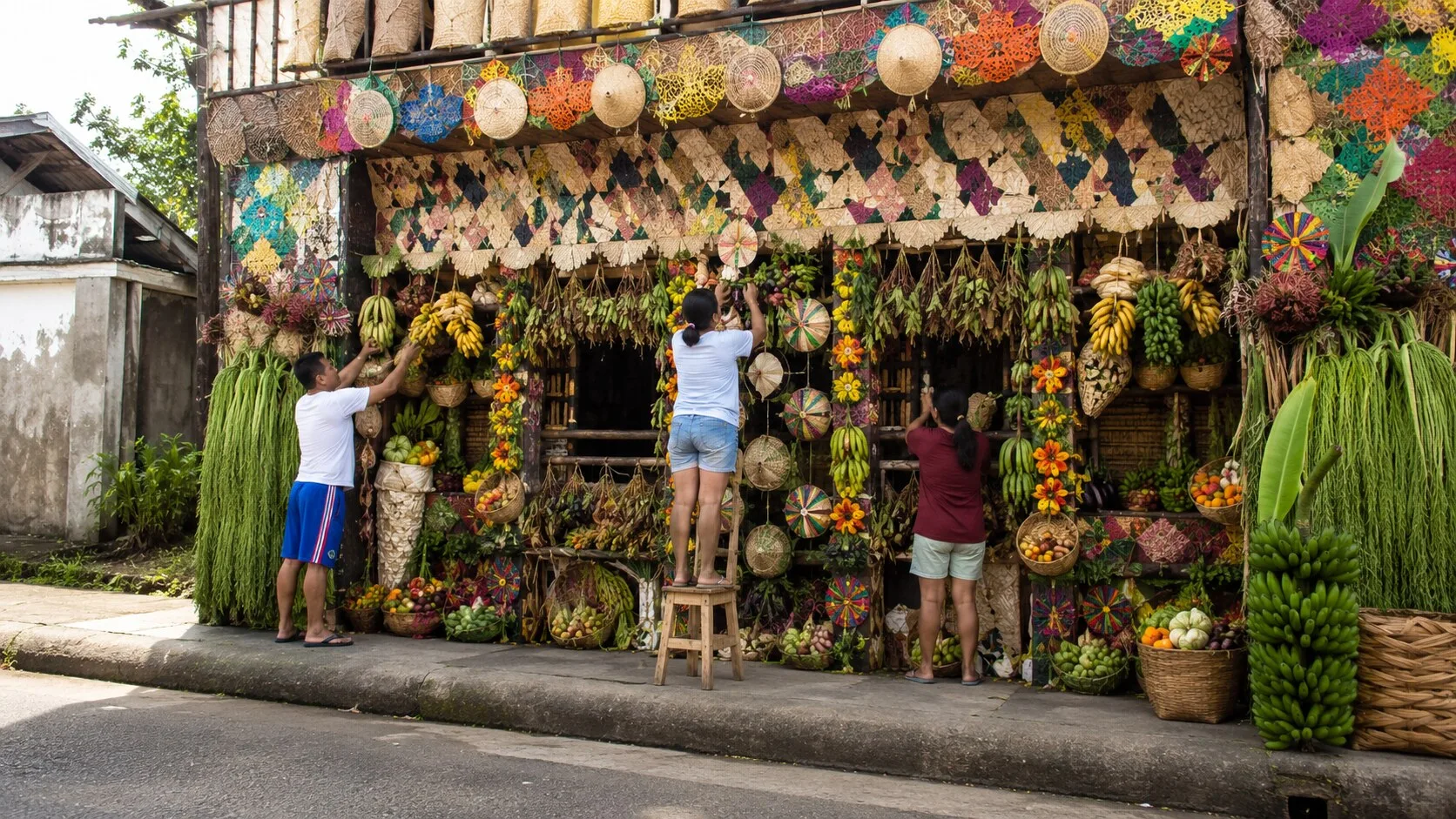
Pahiyas is Lucban, Quezon’s harvest thanksgiving on the feast of San Isidro Labrador. The usual feast day is 15 May. Households on the procession route decorate façades with kiping (leaf-shaped rice wafers), fruit, vegetables, and other harvest displays.
The visitor experience is walking the decorated streets, not sitting in one grandstand for a tribes contest. The 2026 feast day has passed. Treat 15 May 2027 as the next usual feast date, and still confirm streets and house rules with Lucban.
This page separates the fixed religious feast date from any civic week of side events. Town programmes, pageants, races, and fairs can fill days around 15 May, but those schedules are announced by the municipality and change by year.
Do not book a dawn bus from a national calendar that only says “May.” For national context, use the complete festivals guide. For how fiestas work, use what are fiestas.
Key facts
| Item | What to use |
|---|---|
| Place | Lucban, Quezon |
| Usual feast date | 15 May, feast of San Isidro Labrador |
| 2026 | 15 May 2026 has passed (local/PIA-linked coverage of the feast day) |
| Next usual date | 15 May 2027. Confirm decoration streets and visitor rules with Lucban. |
| What it is | A harvest thanksgiving. Houses are dressed in kiping and produce. |
| What it is not | A parade you watch from one fixed grandstand only |
| Civic programme | Separate from the feast date. Confirm with the municipality each year. |
| Best light for walking | Early morning, before heat and peak crowds |
What Pahiyas is
Pahiyas is a town fiesta rooted in thanks for a good harvest. The religious centre is San Isidro Labrador, patron of farmers. Families on the procession route turn house fronts into offerings of colour and food craft. Judges may recognise outstanding displays in a given year.
Treat prize stories as that year’s local report, not as a permanent ranking you can cite forever.
Kiping is a leaf-shaped rice wafer used as a hanging decoration. It is part of the offering. It can be eaten when prepared as food, but it is not a free souvenir to pull from someone’s wall. Fruits, vegetables, rice, and handicrafts often fill the same façades.
In one line: Pahiyas is Lucban’s 15 May house-decoration feast for San Isidro Labrador; walk the dressed streets, ask before you touch anything, and confirm civic side events with the town separately.
Dates: fixed feast vs civic week
The feast is 15 May. That is a fixed calendar date, unlike Sinulog’s moving Sunday. Local coverage and PIA Calabarzon-linked reporting describe Pahiyas 2026 as celebrated in Lucban on Friday, 15 May 2026, with house decorations of kiping and produce for San Isidro Labrador.
Some visitor guides describe a broader activity window in the days around the feast. Those side events are civic. Confirm them with Lucban for the year you attend. A blog that lists races or pageants without a town source is not enough for a non-refundable stay.
| Layer | What is stable | What you must confirm |
|---|---|---|
| Religious feast | 15 May for San Isidro Labrador | Mass times and procession hours with the parish |
| House displays | Route households dress façades for the feast | Which streets are on the current procession route |
| Civic programme | Often fills nearby days | Exact side-event calendar from the municipality |
| Crowd and traffic controls | The town fills on feast morning | Road closures and parking rules for that year |
How to behave on the street
- The displays are on private houses. Ask before you step into a yard or touch kiping.
- The best light is early. By late morning the town is full and the wafers are fragile in the heat.
- Do not pull a decoration for a souvenir. Kiping is food-craft, and it is someone else’s offering.
- The procession route is the reason only some streets are fully dressed. If you arrive without the current map, ask at the town hall or church, not a random corner.
- Carry water, wear comfortable shoes, and expect slow walking once the lanes fill.
Planning table for visitors
| Traveler goal | Better timing | Notes |
|---|---|---|
| See house façades clearly | Early on 15 May | Arrive before peak mid-morning crowds |
| Attend Mass / procession | Parish schedule on feast day | Confirm times locally; this is worship first |
| Catch civic side events | Only after Lucban publishes that year’s list | Only use sourced facts a multi-day schedule from memory |
| Day trip from Metro Manila | Leave before dawn on 15 May | Traffic into Lucban is heavy; plan return buffer |
| Overnight stay | Book near Lucban only after confirming your goal day | 15 May is the feast anchor; civic extras are optional |
Related reading: must-visit festivals for American visitors for long-haul planning, and Sinukwan if you are comparing other harvest-season cultural festivals in Luzon.
Confirm it here
- Calendar hub: https://festivepinoy.com/festivals-in-the-philippines-complete-guide/
- Fiesta etiquette: https://festivepinoy.com/what-are-fiestas/
- Local feast-day coverage (2026): https://quezonchronos.com/2026/05/18/pahiyas-festival-2026-ipinagdiwang-sa-bayan-ng-lucban/
- Ask the Municipality of Lucban and the parish for the current street map and Mass times before you travel.
How to get to Lucban from Manila
Lucban sits in Quezon province, inland from Lucena, at the foot of Mount Banahaw. Most Manila day-trippers use a bus to Lucena, then a jeepney or van into Lucban. Private cars use South Luzon Expressway corridors toward Calamba and then inland roads. Exact travel time depends on feast-day traffic. On 15 May, leave before dawn if you want early light on the façades.
- Bus then jeepney or van: Ride a Lucena-bound bus from a Metro Manila terminal corridor (Cubao, Buendia, or PITX patterns are common in traveler guides). At Lucena, transfer to a Lucban jeepney or van. Ask to be dropped near the church or plaza. Confirm the operator and fare at the terminal for your travel day. Do not treat an old blog peso figure as today’s price.
- Private car: SLEX toward Calamba, then inland routes toward Lucena and Lucban, is the usual pattern. Streets near the procession route fill early. Follow town parking and closure rules for that year.
- Day trip vs overnight: A same-day return is possible if you leave very early and accept a late return. Overnight lodging in or near Lucban is calmer if you want Mass, the procession, and a full street walk without racing the last bus.
Carry cash for the last jeepney leg. Signal and maps can fail once the lanes fill. For national month context, use the complete festivals guide.
Parish feast and municipal programme
Pahiyas sits on two related layers. Keep them separate when you plan.
| Layer | Who stewards it | What visitors confirm |
|---|---|---|
| Religious feast of San Isidro Labrador | The Lucban parish (Saint Louis Bishop Parish / Diocesan Shrine of San Isidro Labrador framing in church references) | Mass times, procession hours, dress rules inside church |
| House decorations on the route | Households along the procession streets | Which streets are dressed this year; ask before entering yards |
| Civic week (races, pageants, fairs) | Municipality of Lucban and partners | Side-event calendar, road controls, parking |
The feast date of 15 May is the stable anchor. Civic extras around that date are not automatic every year until the town posts them. Parish Mass and procession hours belong to the church desk, not to a tourism listicle.
Local food: pancit habhab and Lucban longganisa
Lucban is widely known for two everyday specialties that visitors often seek on feast day. They are town foods, not a fixed “festival menu” invented for tourists.
- Pancit habhab: A Lucban noodle dish traditionally eaten from a banana leaf without utensils, often with a splash of vinegar. Look for carinderia and stall service near the plaza and market streets. Follow the cook’s serving style.
- Lucban longganisa: A garlicky local sausage sold in town eateries and stalls. It is a Quezon specialty associated with Lucban, not a free takeaway from a decorated house.
- Kiping as food craft: Leaf-shaped rice wafers decorate façades. Some makers prepare kiping as an edible craft, but decorations on a private house are not free souvenirs. Ask the household. Do not pull wafers from a wall.
Eat before peak mid-morning if you can. Queues grow once tour groups fill the lanes. Keep the street etiquette already on this page: ask before you touch a display, and treat the procession route as worship space first.
Confirm with parish / LGU: Mass and procession hours, decorated streets, and any civic side programme for the next 15 May belong to Lucban’s parish and municipality. Confirm before you buy a non-refundable stay.
Quick summary
The Pahiyas Festival is Lucban, Quezon’s harvest thanksgiving held on 15 May for San Isidro Labrador. Households on the procession route decorate houses with kiping and produce. The 2026 feast was observed on 15 May 2026.
The next usual date is 15 May 2027, which visitors should still confirm with the town for decorated streets and any civic side programme. Pahiyas is a walking feast of private house displays, not a single grandstand show. Ask before touching decorations.
Reviewed 12 September 2026.
FAQ
When is the Pahiyas Festival?
It is held in Lucban, Quezon, on 15 May, the feast of San Isidro Labrador. The 2026 date has passed. Confirm 15 May 2027 and the decorated streets with the town.
What is Pahiyas?
It is a harvest thanksgiving. Households on the procession route decorate their houses with kiping and produce for San Isidro Labrador.
What is kiping?
Kiping is a leaf-shaped rice wafer used as a hanging decoration. It is part of the offering. It is not a free souvenir.
Where is Pahiyas held?
In Lucban, Quezon. Not every street is decorated. The procession route decides which houses are dressed.
Are the civic side events on the same day?
Not always. The feast date is 15 May. Races, pageants, and fairs around that date belong to the civic programme. Confirm them with Lucban separately.
Should I book 15 May 2027 now?
The feast date is stable. The street plan and crowd controls are not. Confirm with Lucban before you buy a non-refundable stay.
Last reviewed against local feast-day reporting and Festive Pinoy calendar materials as of 12 September 2026. Always confirm with the host.
—