Pintados Festival Philippines
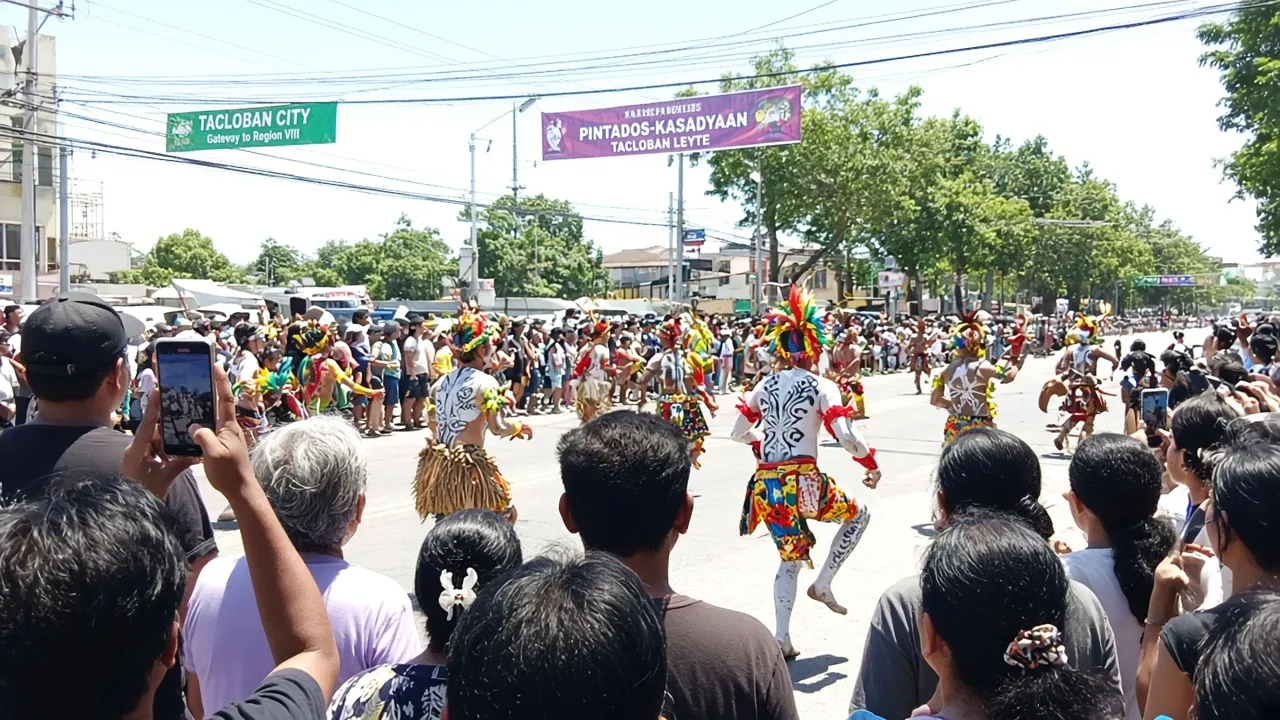
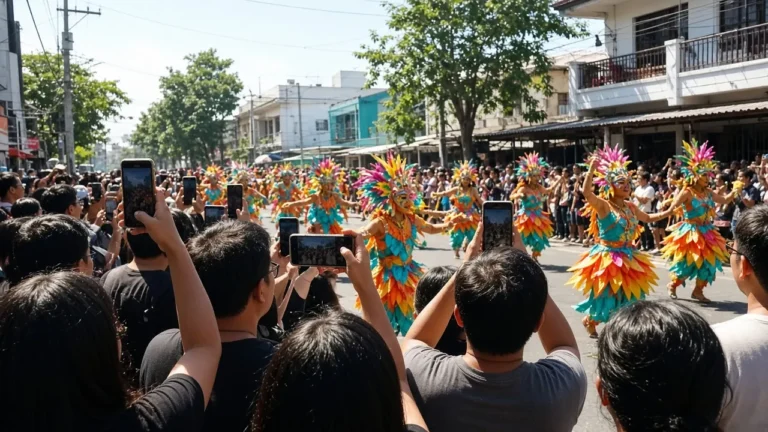
Every June 29, dancers with bodies painted in black and red patterns fill the streets of Tacloban City to mark the feast of the Señor Santo Niño de Leyte. This is the Pintados Kasadyaan Festival, a single celebration built from two Leyte traditions: the Pintados Festival, founded in 1986, and the Kasadyaan Festival, introduced a decade later.
Together they honor the region’s pre-colonial tattooed warriors and its long devotion to the Christ Child, through a day of street dancing, ritual performance, and civic pride.
At a Glance
| Category | Details |
|---|---|
| Location | Tacloban City, Leyte, Philippines |
| When | June 29 each year, with festivities often running June 27 to 29 |
| Celebrates | The Señor Santo Niño de Leyte and pre-colonial tattooed Visayan warriors |
| Key events | Pagrayhak Grand Parade and Ritual Dance Presentation |
| Who attends | Barangay and municipal contingents, students, and visiting tourists |
| Getting there | Fly into Daniel Z. Romualdez Airport from Manila or Cebu |
What Is the Pintados Kasadyaan Festival?
It is Tacloban City’s annual cultural and religious event, held every June 29 to honor the Señor Santo Niño de Leyte and the region’s pre-Spanish tattoo tradition.
Key point
The Pintados Kasadyaan Festival folds what were once two separate programs, the Pintados Festival and the Kasadyaan Festival, into one day of street dancing, ritual presentations, and a grand parade through Tacloban City.
The word “pintados” means “painted people,” the label Spanish chroniclers gave to Visayan warriors covered in tattoos. “Kasadyaan” is a Waray word for merriment or festivity, added to the name when Leyte’s provincial government joined its own festival to Tacloban’s older one. Locals sometimes shorten the full name to just “Pintados,” but the description on event posters and city tourism materials almost always reads Pintados-Kasadyaan.
Quick Facts
| Category | Details |
|---|---|
| Official name | Pintados-Kasadyaan Festival of Leyte |
| Location | Tacloban City, Leyte, Philippines |
| Date | June 29 each year, Feast of the Señor Santo Niño de Leyte; the parade often runs from June 27 to 29 |
| Pintados founded | 1986, by the Pintados Foundation, Inc. |
| Kasadyaan introduced | 1996, by the Leyte provincial government |
| Related event | Sangyaw Festival, or Parade of Lights, held separately by the city government |
| Core events | Pagrayhak Grand Parade, Ritual Dance Presentation, Kasadyaan Festival of Festivals |
| Historical root | Pre-colonial tattooed Visayan warriors, the pintados |
| Modern body art | Painted designs, not permanent tattoos |
From Two Festivals to One: The 1996 Merger
Tacloban businessmen and civic leaders formed the Pintados Foundation, Inc. in 1986. Their goal was straightforward: give the city fiesta a religious and cultural centerpiece honoring the Señor Santo Niño while reviving the pre-Spanish tattoo culture that gave the region its name. The first Pintados Festival ran on June 29, 1987, the same date the city already marked as the feast day.
Leyte’s provincial government ran a separate event, the Kasadyaan Festival, which invited towns across the province to send their own contingents. Each performed a routine built around a local legend or harvest tradition rather than the tattoo theme. Because the two events shared an audience and a calendar date, organizers eventually combined them into the single program Tacloban now runs each June 29.
The distinction still matters for anyone researching the festival’s history: Pintados is privately organized by a Tacloban civic group, while Kasadyaan is a provincial government initiative. Reporter Reyan Arinto, covering the event for SunStar, described the merged celebration as a time for reconciliation between Tacloban’s competing festival organizers, a phrase that points to a third layer of the story.
Sangyaw Festival and the Santo Niño de Leyte Devotion
That third layer is the Sangyaw Festival. Then First Lady Imelda Marcos introduced Sangyaw in the late 1970s or early 1980s as a highlight of Tacloban’s fiesta season. The event stopped after the 1986 EDSA People Power Revolution ended the Marcos government, and it stayed dormant for more than twenty years.
Tacloban’s city government revived Sangyaw in 2008 under then Mayor Alfred Romualdez. For roughly two years, Sangyaw organizers and Pintados-Kasadyaan organizers competed for the same June date and the same crowds, until the two calendars settled into today’s separate schedule.
All three threads, Pintados, Kasadyaan, and Sangyaw, trace back to the same devotion: gratitude to the Santo Niño de Leyte, the Child Jesus image Tacloban has venerated since Spanish rule. The feast day gives Leyte’s biggest cultural event its fixed date, even as the festival lineup around it has shifted more than once.
| Festival | What It Is | Started | Relation to the Others |
|---|---|---|---|
| Pintados | Reenacts pre-colonial tattooed-warrior traditions | 1986, by the Pintados Foundation, Inc. | Merged with Kasadyaan in 1996; the foundation still leads this segment |
| Kasadyaan | Town-by-town street-dance competition from across Leyte | 1996, by the Leyte provincial government | Combined with Pintados the same year it launched |
| Sangyaw | City-run street-dance competition, the Parade of Lights | Late 1970s or early 1980s, revived 2008 | Runs as a separate event, usually weeks apart from Pintados-Kasadyaan |
The Tattooed Warriors Behind the Name
The word pintados comes from 16th-century Spanish chroniclers who encountered Visayan men and women covered head to foot in tattoos and simply called them “painted people.” The name stuck so firmly that Miguel López de Legazpi used it for the islands themselves before the name Visayas took hold.
The tattoos were not paint. According to the National Museum of the Philippines, the markings involved puncturing the dermis and inserting pigment with heated iron or brass points, a permanent process closer to modern tattooing than to body paint. A 1590 manuscript later called the Boxer Codex illustrated the practice in detail, describing designs across the chest, stomach, arms, legs, and hands.
Specific patterns carried specific meanings. According to the Aswang Project, the labid ran in inch-wide bands from leg to waist, styled after a snake or crocodile’s scales. Other named designs included:
- Bangut: a facial tattoo shaped like a crocodile’s open jaw, reserved for the fiercest warriors
- Ablay: marked the shoulder
- Dubdub: covered the chest
Historian William Henry Scott, in Barangay: Sixteenth-Century Philippine Culture, wrote that a warrior earned each tattoo through battle rather than receiving it all at once. Chest markings came first. A warrior who survived enough raids eventually carried tattoos across his back as well, so the pattern read almost like a service record. Scott also noted a second purpose behind the ink: intimidation. A body covered in tattoos was meant to unsettle an enemy before a blade was drawn.
The tradition reached beyond the battlefield. The National Museum cites a 17th-century Spanish friar who recorded that almost all Visayans had tattoos except children, which suggests the designs marked everyday status and beauty as much as war record.
Spanish colonization and the spread of Christianity pushed the practice into steep decline within a few generations. By the time Tacloban’s civic leaders founded the Pintados Festival in 1986, tattooing of this kind had all but disappeared from the region, kept alive mainly through old manuscripts and museum collections.
Body Paint, Not Tattoos: How Modern Dancers Recreate the Look
Street dancers in the Ritual Dance Presentation cover their arms, chests, and legs with body paint mixed to resemble the labid, bangut, and other historic patterns. Painters reapply the designs before every performance.
Note
Festival performers do not get permanently tattooed for the occasion. The body paint washes off after each performance, so participation leaves no lasting mark.
This choice keeps the celebration open to anyone willing to join, since students, office workers, and visiting performers can take part in a single day’s parade without a lasting mark on their skin. Choreographers and costume teams research old sketches and museum references so the painted patterns stay close to the documented Visayan designs rather than generic tribal-style artwork.
The result lets Tacloban stage a convincing recreation of the pintados’ appearance while treating the original body art, which took real skill and real pain to earn, as something worth studying rather than casually reproducing.
Main Events: Pagrayhak Grand Parade and Ritual Dance Presentation
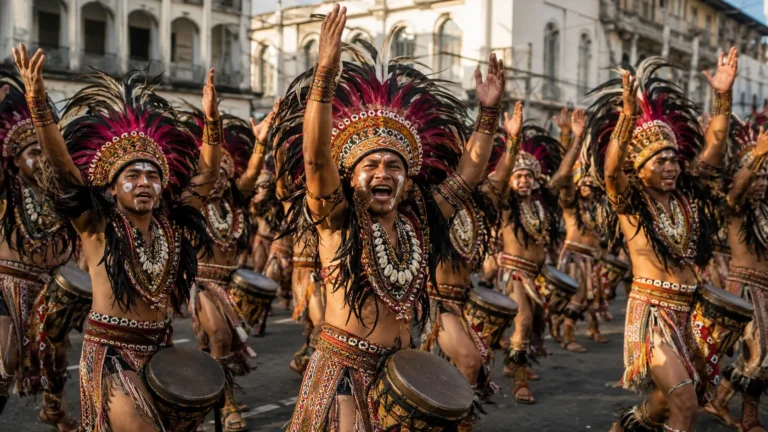
Two events anchor the festival calendar. The Ritual Dance Presentation is a choreographed sequence that reenacts the ancient warriors’ battle stances and religious rites. Performers move to the beat of native drums and gongs, their painted bodies echoing the tattoo designs recorded centuries ago. The routines are judged on how closely they connect movement, costume, and music to actual pre-colonial practice rather than on spectacle alone.
The Pagrayhak Grand Parade is the festival’s biggest public draw. Contingents from Tacloban’s barangays and from municipalities across Leyte, including towns such as Isabel and Hilongos, march through the city center in sequence. Each Kasadyaan contingent performs a routine tied to its own town’s history or harvest tradition, so the parade doubles as a tour of Leyte’s local festivals in miniature.
Floats, marching bands, and street food stalls fill the route, and the event typically draws crowds that stretch several blocks deep along the main procession streets.
Costume and Materials
Costume design for the festival draws directly from what little is known about pre-colonial Visayan dress. Dancers wear minimal woven fabric in red and black, chosen so the painted tattoo patterns stay visible across the torso and limbs. Headdresses built from rattan, bamboo, and feathers stand in for the ornaments described in early Spanish accounts, while shell and bead accessories add texture without covering the body paint.
Warrior-themed contingents carry wooden shields and spears as props, reinforcing the battle-ready image the tattoos once projected. Materials come largely from local sources: abaca fiber for cloth trim, coconut shell for jewelry, and bamboo for the framework behind larger headpieces. Costume teams treat accuracy as a point of pride, since a well-researched pattern signals respect for the history the festival is built to honor.
Food and Crafts of the Festival
Food stalls along the parade route serve a mix of savory and sweet local specialties:
- Lechon: whole roasted pig with crackling skin
- Bibingka: rice cake traditionally baked in clay pots lined with banana leaves
- Sagmani: sticky rice dessert with grated coconut
- Binagol: taro pudding steamed inside coconut shells
- Moron: chocolate rice roll wrapped in banana leaf
Local artisans set up alongside the food vendors. Handwoven fabrics dyed with natural colors reference the same folklore the dancers portray, while beadwork accessories echo the ornaments worn in the parade. Wood carvers and basket weavers using bamboo and rattan round out the craft stalls, giving visitors a way to bring home a piece of Leyte’s material culture beyond photographs of the parade itself.
Visiting Tacloban for the Festival
Tacloban’s Daniel Z. Romualdez Airport handles daily flights from Manila and Cebu, each under two hours in the air.
Beyond the festival itself, Tacloban’s Sto. Niño Church anchors the same devotion the parade celebrates, and the Leyte Landing Memorial Park adds a different, more somber layer of history tied to the Second World War. Visitors who arrive a day early can also catch smaller cultural shows and rehearsals, since many contingents practice their routines publicly in the days leading up to the main event.
Tacloban’s festival calendar rewards travelers who plan around more than one date. The Sinulog Festival in Cebu and the Dinagyang Festival in Iloilo share the same Santo Niño devotion, both held in January rather than June, so a visitor who cannot make the Leyte date has other chances to see the tradition performed elsewhere in the Visayas.
Tip
Book a hotel near the downtown plaza or the Leyte Sports Development Center. Both put you within walking distance of the Pagrayhak Grand Parade route, which matters once the streets fill up by mid-morning on June 29.
Tacloban’s Pintados Kasadyaan Festival turns a centuries-old tattoo tradition into a living civic event, one that a business group, a provincial government, and a city government have each shaped over the past four decades. What started as a single foundation’s fiesta project now anchors Leyte’s cultural calendar and keeps the story of the painted warriors visible to a new generation.
Anyone planning a Visayas itinerary around Santo Niño festivals can compare notes with our guide to festivals across the Philippines, or browse our festivals category for more towns that build their whole year around one big parade.
Frequently Asked Questions
What is the Pintados Kasadyaan Festival?
It is Tacloban City’s annual cultural and religious celebration held every June 29 in honor of the Señor Santo Niño de Leyte. It merges the original Pintados Festival, which reenacts the tattoo traditions of pre-colonial Visayan warriors, with the Kasadyaan Festival of Festivals, in which towns across Leyte perform their own local street-dance numbers.
Is the Tacloban Pintados Festival the same as the Pintados de Pasi Festival in Iloilo?
No. Passi City in Iloilo holds its own Pintados de Pasi Festival in the third week of March, honoring the same historical tattoo tradition but as a separate provincial event with its own organizers and schedule. Tacloban’s festival is a Leyte celebration tied to the June 29 feast of the Santo Niño de Leyte.
Do festival performers get real tattoos?
No. Dancers wear body paint mixed to copy historic tattoo patterns such as the labid and bangut designs. The paint is reapplied before each performance and washes off afterward, which lets students, office workers, and visiting performers join without a permanent mark.
How is the Pintados Kasadyaan Festival different from the Sangyaw Festival?
Pintados Kasadyaan is organized jointly by the Pintados Foundation and the Leyte provincial government and centers on tattoo-warrior reenactment and town-by-town performances. Sangyaw, revived by Tacloban’s city government in 2008 as the Parade of Lights, is a separate street-dancing competition. Both honor the Santo Niño but run as distinct events, usually weeks apart.
How do I get to Tacloban for the festival?
Tacloban’s Daniel Z. Romualdez Airport receives daily flights from Manila and Cebu, roughly an hour and a half in the air. The Pagrayhak Grand Parade route runs through the city center, so hotels near the Leyte Sports Development Center or the downtown plaza put visitors within walking distance of the main events.
Works Cited
“Pintados Festival.” National Museum of the Philippines, National Museum of the Philippines, 29 June 2022, www.nationalmuseum.gov.ph/2022/06/29/pintados-festival/.
De Guzman, Daniel. “The Beautiful History and Symbolism of Philippine Tattoo Culture.” The Aswang Project, 4 May 2017, www.aswangproject.com/beautiful-history-symbolism-philippine-tattoo-culture/.
Arinto, Reyan L. “Pintados, Kasadyaan, Sangyaw: A Triple Treat.” SunStar, 28 May 2013, www.sunstar.com.ph/more-articles/pintados-kasadyaan-sangyaw-a-triple-treat.