Puera Usog: Filipino Infant Protection Traditions
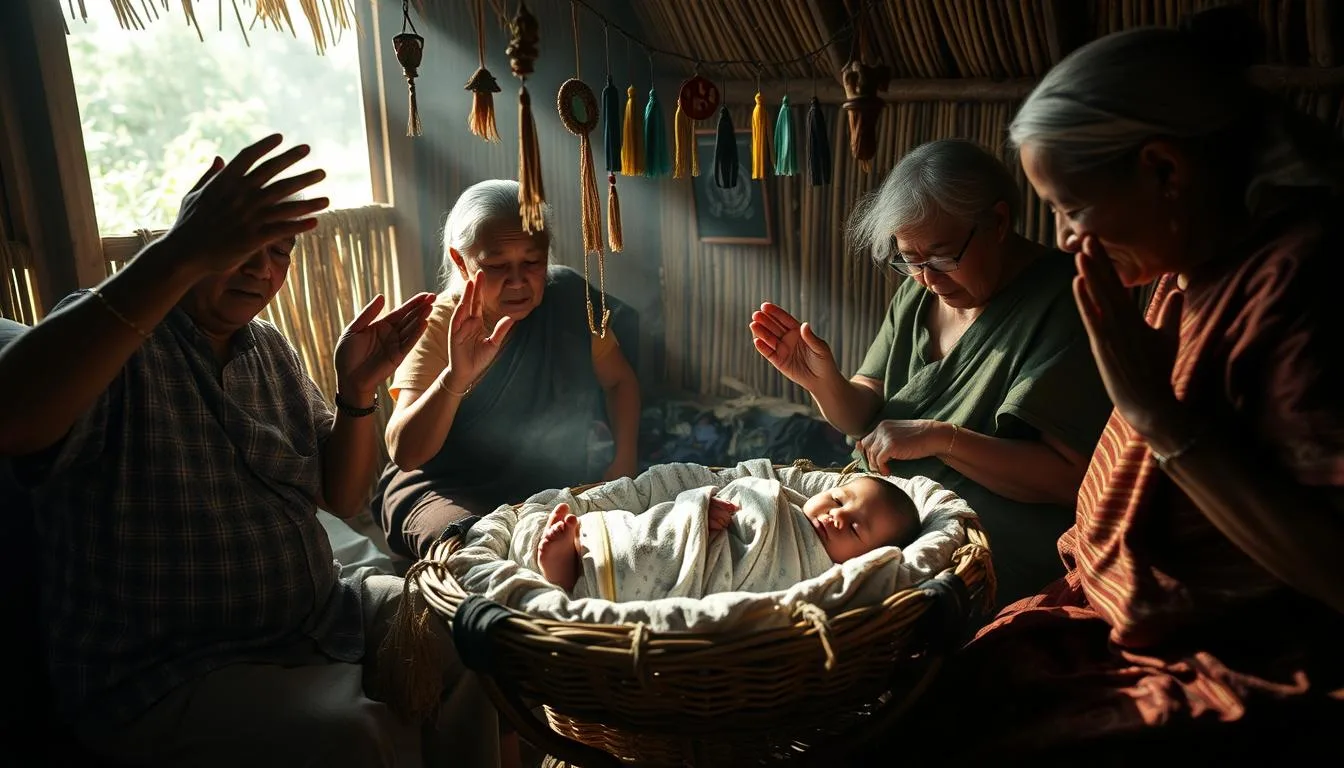
A 2023 nursing study of Aeta families in Nabuclod, Pampanga described usog as a mystical force that passes from a stranger’s greeting into an infant, still guiding how many Filipino households handle visitors today. The words puera usog work like a spoken shield against that force. Families say them the instant someone coos over a baby, a habit passed down for generations and still heard from Manila nurseries to living rooms overseas.
This guide covers what usog is supposed to do, what the phrase actually means, the saliva ritual that goes with it, and what doctors and folklorists make of the custom now. It also looks at where the belief sits among the wider set of protective habits Filipino families keep around newborns.
Puera Usog at a Glance
| Detail | Description |
|---|---|
| Phrase | Puera usog, also spelled pwera usog |
| Literal meaning | “Away with usog,” from Spanish fuera plus usog |
| What it wards off | Usog, a folk illness blamed on a stranger’s greeting or gaze |
| Who it protects | Mainly infants and young children |
| Symptoms blamed on usog | Fussiness, sudden fever, colic, bloating |
| Main ritual | Saying the phrase, then dabbing saliva on the child (lawayan) |
| Regional names | Bati (Tagalog), buyag (Cebuano) |
| Status today | Living folk custom, not a recognized medical diagnosis |
Key point
Usog is not believed to require ill intent. Even a loving grandmother’s compliment can supposedly trigger it, which is why the antidote is said by the very person who admired the child, not by the family.
What Usog Means and Where the Belief Comes From
Usog describes a Filipino folk illness in which a stranger, or anyone with strong personal energy, is thought to unintentionally unsettle a baby through a greeting, a compliment, or a lingering look. The child is then said to grow fussy, feverish, or bloated soon after. Tagalog speakers sometimes call the condition bati, while Cebuano speakers use buyag, though usog is the term heard most widely across the country.
The belief predates Spanish rule and grew out of older animist ideas about unseen forces passing between people. Centuries of contact with Spain layered new vocabulary onto those older ideas.
An Esquire Philippines feature on Filipino folk phrases traces the phrase to the Spanish word fuera, meaning “out” or “away,” fused with the older Filipino word usog. Scholars also point to Spain’s own mal de ojo, or evil eye, belief as a likely influence on how usog came to be described in later generations.
The Ritual: Words and a Touch of Saliva
Warding off usog rarely stops at the phrase itself. Most families pair it with a small physical gesture, done quickly and without ceremony, right at the moment of greeting.
- Say the phrase out loud. The person who just greeted or admired the baby says “puera usog” right away, often with a smile.
- Wet a thumb with saliva. This step is called lawayan in Tagalog and pwera buyag in parts of the Visayas.
- Touch the child. The saliva goes lightly on the baby’s forehead, tummy, or the sole of a foot.
- A parent may prompt it. If a visitor forgets, a parent or elder often reminds them before they leave, treating it as ordinary manners rather than a favor.
Tip
If a baby becomes fussy after a visit and usog is suspected, some elders rub the child with a cloth carrying the visitor’s scent, a folk remedy believed to settle the discomfort. It has no medical backing, but it costs nothing to try.
Symptoms Blamed on Usog and What Usually Causes Them
Folk belief and pediatric medicine disagree on the cause, though they often describe the same symptoms. Laying both explanations side by side shows why the custom persists even as parents also see a doctor.
| Symptom blamed on usog | Folk explanation | Common medical explanation |
|---|---|---|
| Sudden fussiness | Stranger’s energy unsettled the child | Overstimulation, hunger, or tiredness |
| Fever | Unneutralized greeting triggered illness | Viral infection or teething |
| Bloating or colic | Usog disrupted the baby’s balance | Normal infant digestion |
| Excessive crying | Mystical transfer from admirer | Startle response to a new face or voice |
The 2023 nursing study of Aeta families in Nabuclod, Pampanga found that community members describe usog as a force passed through the eyes or touch. Locally it is treated with amyong incense or with the suspected person’s own saliva applied to the child’s abdomen or forehead. The researchers noted that community health workers need to understand the belief to work well with families who hold it, rather than dismiss it outright.
What Doctors and Folklorists Say Now
Health writers are direct about the science. A parenting-health piece on the ritual states there is no scientific basis for these claims, and that colic, fever, and fussiness in babies almost always trace back to ordinary causes rather than a stranger’s gaze.
That does not make the ritual pointless. Gently touching a startled infant’s forehead can be genuinely calming, and a warm greeting followed by a caring gesture reassures both baby and parent regardless of the folklore behind it. The custom sits inside a much wider set of Filipino superstitions and beliefs built around protecting children, most of them harmless habits rather than substitutes for medical care.
Note
Usog is not unique to the Philippines. Spain’s mal de ojo and similar evil eye beliefs across the Mediterranean and Latin America describe the same basic idea: a stranger’s admiring gaze accidentally harming a child.
Usog Alongside Other Filipino Baby Customs
Usog rarely stands alone. It belongs to a cluster of gentle protective habits that surround Filipino infants from birth, most of them centered on the same instinct to shield a vulnerable child.
- Lihi, the belief that a mother’s cravings during pregnancy shape her baby’s looks or temperament.
- Red bracelets or amulets, worn as an extra shield against harm.
- Avoiding open praise, since heavy admiration is exactly what is said to invite usog.
- A quiet blessing from elders, sometimes murmured over a newborn on first meeting.
These customs echo older traditions kept by babaylan healers, the pre-colonial spiritual and medical practitioners who blended ritual with practical care for the sick. Their approach to health, treating body and spirit as connected, still shapes how many Filipino families explain a baby’s sudden discomfort. None of these habits replace a pediatrician’s advice, and most Filipino parents comfortably use both today, folk custom alongside modern checkups.
Why the Tradition Still Matters
The custom survives because it is cheap, kind, and easy to repeat. It gives a visitor a warm way to admire a baby while instantly signaling good intent, and it gives new parents a small ritual of control over an infant’s unexplained cries. A stranger who says the phrase is, in effect, agreeing to take part in protecting a child they just met.
The phrase also travels well. Filipino communities in the United States, Canada, and the Gulf states still teach it to children born abroad, keeping a piece of home alive a generation removed from the provinces where it started.
The custom is one thread in a larger fabric of Filipino family values that treat children as a shared responsibility rather than a parent’s job alone. The same instinct shows up across other corners of Filipino folk medicine, where household remedies sit comfortably next to hospital visits.
Whether or not a reader believes usog can make a baby sick, the phrase itself endures as an act of care dressed up as folklore, passed from grandparent to parent to child. Our Filipino traditions hub collects more customs like this one, from wedding rites to household beliefs still practiced across the archipelago.
Frequently Asked Questions
What does puera usog mean?
The phrase blends the Spanish word fuera, meaning out or away, with usog, a Filipino folk illness. Said together, it means roughly “let the usog be kept away,” and it works as a spoken shield right after someone admires a baby.
What is usog in Filipino culture?
Usog is a folk belief that a person, often a stranger or someone with strong energy, can unintentionally make a baby sick just by greeting, admiring, or staring at the child. Tagalog speakers also call it bati, and Cebuano speakers call it buyag.
How do you perform the ritual?
The visitor says the phrase right after greeting the baby, then wets a thumb with saliva and lightly touches the child’s forehead, tummy, or foot. This saliva step is called lawayan in Tagalog and pwera buyag in the Visayas.
Is usog a real medical condition?
No hospital or health department recognizes usog as a diagnosis. Doctors attribute the fussiness, fever, or colic it is blamed for to ordinary causes such as teething or viral infection, though the calming touch involved may genuinely soothe a startled infant.
Why do Filipinos still practice this tradition today?
Families keep saying it because it costs nothing, offends no one, and signals genuine affection toward a child. Even parents who trust pediatricians over folk cures often say the phrase out of habit and warmth, both in the Philippines and among overseas Filipino communities.