Festivals in the Philippines: Types, History, and Travel Intent
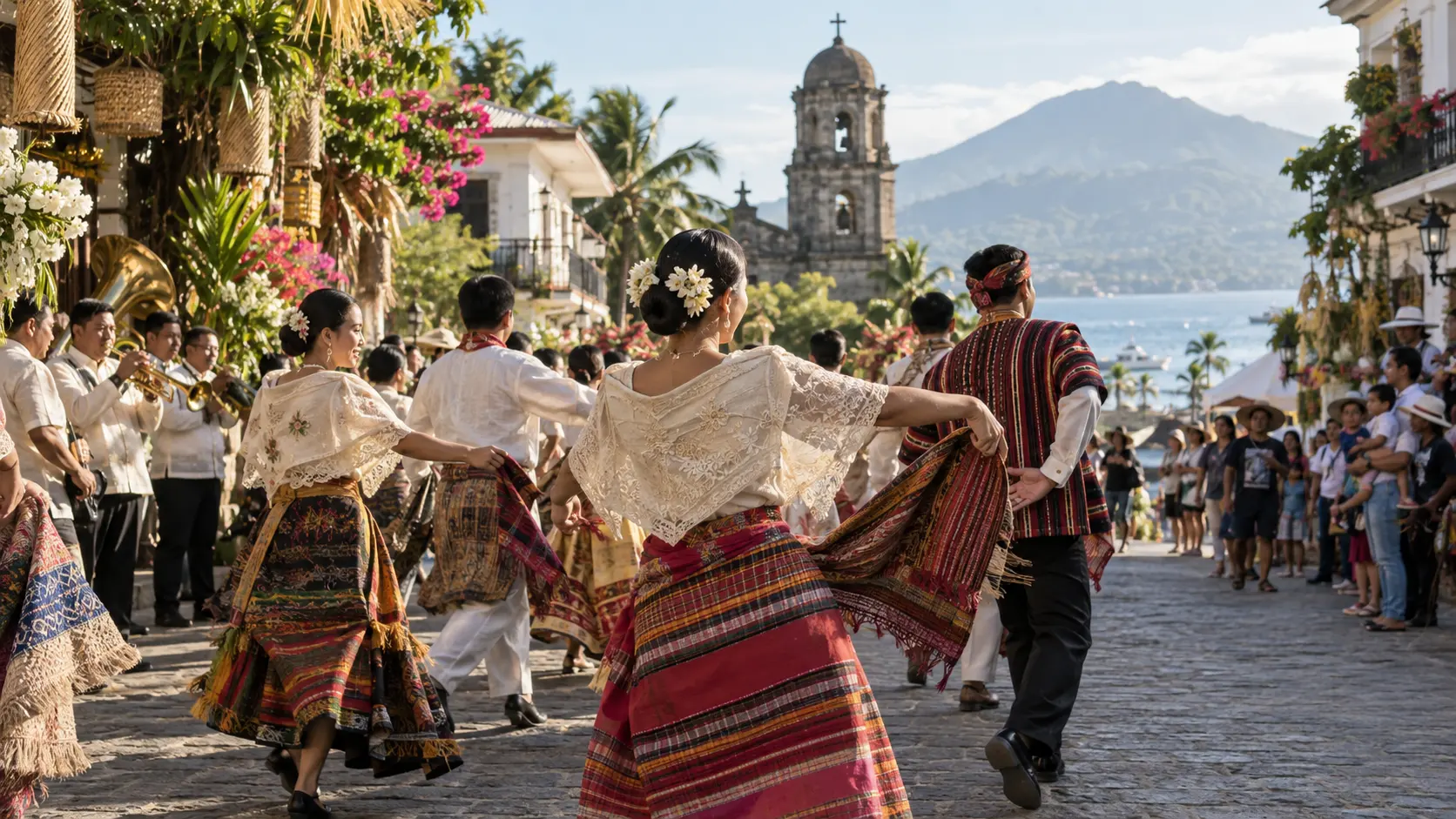
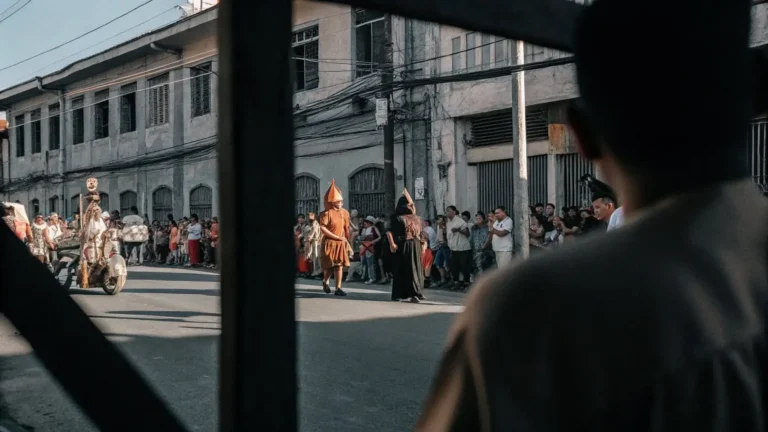
Festivals in the Philippines are local public celebrations shaped by faith, livelihood, history, and community identity. They are not one national show that moves from city to city. Some centre on a Catholic patron and parish rites.
Others are civic carnivals, harvest thanksgivings, founding commemorations, or living cultural showcases. If you understand the type and the organisers, you can plan with respect and avoid treating every street dance as the same event.
This overview explains types, history layers, and travel intents. For month-by-month dates and a traveler calendar, use the separate complete guide by month. The two pages work together: this one helps you choose what kind of festival fits your purpose; that one helps you place it on a calendar.
Key facts
- A Philippine festival may be religious, civic, agricultural, historical, or a blend of several purposes.
- Church authorities usually lead liturgy and processions; LGUs and foundations usually lead competitions, traffic, and public programmes.
- “Fiesta,” “feast day,” and “festival” overlap in everyday speech but are not identical concepts.
- Many well-known celebrations have modern civic layers built around older devotion or local history.
- Exact day-by-day programmes change by edition; confirm with the host city or parish.
What “festival” means in the Philippine context
In English travel writing, “festival” is a broad label. In Filipino communities, people may say fiesta, pista, feast, or festival depending on whether they mean the patron’s day, the whole town celebration, or a named civic event.
The Komisyon sa Wikang Filipino records pista as an annual town celebration for a patron or another important local occasion. That definition is wider than a single Mass and narrower than “any party with music.”
Spanish colonial history helps explain why many calendars grew around Catholic patrons, but it does not explain every custom. Older local practices, family hospitality, municipal government, tourism offices, schools, and cultural programmes can all meet in one celebration.
Each layer needs its own evidence. For the meaning and etiquette of town fiestas themselves, see what are fiestas.
Main types of Philippine festivals
1. Patronal and other religious celebrations
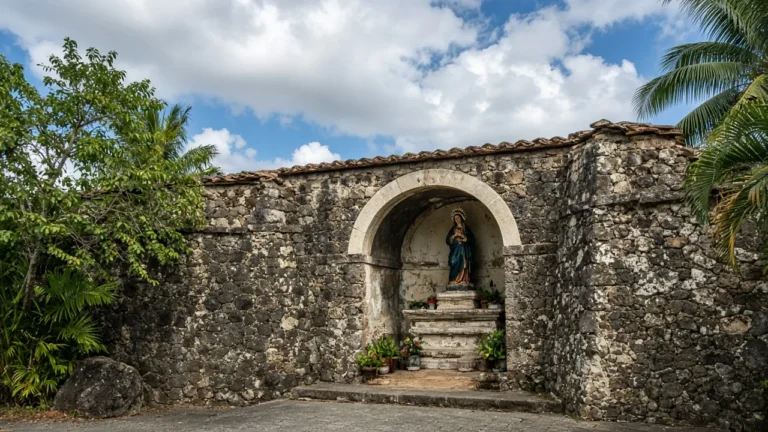
These honour Christ, Mary, a saint, or a sacred image connected with a locality. Typical elements include novenas, Masses, processions, and vows.
Examples include Fiesta Señor and Sinulog’s religious cycle in Cebu, Ati-Atihan’s Santo Niño devotion in Kalibo, Dinagyang in Iloilo, Peñafrancia in Naga, Pahiyas’ San Isidro thanksgiving in Lucban, and Quiapo’s Jesus Nazareno feast on 9 January.
The public spectacle is secondary to worship for many participants.
2. Civic carnivals and city identity festivals
These are organised mainly by city governments or foundations to express civic pride, attract visitors, and stage competitions. MassKara in Bacolod is a clear example: a mask-and-dance carnival that began in 1980 during hard years in the sugar industry.
Civic festivals may include concerts, pageants, sports, and food events. They are not automatically parish feasts, even when they fall near a religious season.
3. Harvest, craft, and livelihood festivals
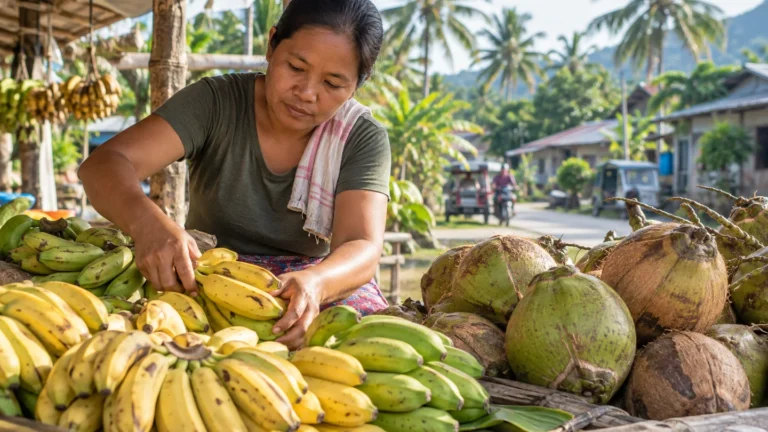
These celebrate what a place grows, makes, or sells: milkfish in Dagupan, flowers in Baguio, lanterns in San Fernando, textiles in South Cotabato, house displays of produce in Lucban. Visitors learn most when they notice labour, not only colour. Ask vendors before entering work areas. Buy from credible makers.
4. Historical and founding commemorations
Sandugo in Bohol commemorates the 1565 blood compact between Datu Sikatuna and Miguel López de Legazpi. Many provinces also mark foundation anniversaries with cultural programmes. Historical memory and modern entertainment should still be separated: a reenactment or parade is a present-day event about the past, not a time machine.
5. Cultural community celebrations
Kadayawan in Davao City includes thanksgiving and recognition of ethnolinguistic communities within the city’s framework. Kaamulan in Bukidnon and similar gatherings present living cultures. Stage presentations are curated.
They do not give outsiders permission to imitate identity, wear sacred-looking designs as costume, or invent meanings for patterns.
| Type | Usually led by | Visitor priority | Example pages |
|---|---|---|---|
| Religious / patronal | Parish, shrine, basilica | Worship space, procession rules | Sinulog, Peñafrancia |
| Civic carnival | City / festival foundation | Competition venues, closures | MassKara |
| Harvest / craft | LGU and makers | Respect for homes and workshops | Pahiyas, Giant Lantern |
| Historical founding | Provincial or city tourism | Separate history from programme fluff | Sandugo |
| Cultural community | LGU with cultural bearers | Consent, accurate names | Kadayawan, Kaamulan |
At a glance
| Aspect | Detail |
|---|---|
| What | Local public celebrations shaped by faith, livelihood, history, and community identity; not one national show |
| Where | Towns and cities across Luzon, Visayas, and Mindanao; each festival has its own host |
| Usual timing cue | Patron feast days, civic foundation weeks, harvest seasons, or Holy Week; many civic windows move yearly |
| Who to confirm | Parish or shrine for religious rites; city, province, or festival foundation for civic programmes |
| Best for | Travelers who choose by intent (devotion, dance, craft, history, or lower-intensity family days) rather than by a single ranking |
How religious and civic programmes share a week
Many famous names cover two structures at once. In Cebu, Fiesta Señor is the Basilica-centred religious cycle for Señor Santo Niño, while Sinulog also names the traditional prayer dance and the wider civic festival.
In Iloilo, Dinagyang joins Santo Niño observance with formal performance competitions and Kasadyahan presentations. In Naga, Peñafrancia’s Traslacion, novena, and fluvial procession sit beside civic activities published by the city.
Planning tip: Ask two questions. Who leads the prayer or procession? Who leads the street competition or concert? If the answers are different offices, read both calendars.
A short history without forced national myths
Catholic patronal calendars shaped many town years for centuries. Local evidence still matters more than a single national origin story.
The Basilica Minore del Santo Niño records that Cebu’s feast was first associated with 28 April (linked to the 1565 finding of the image) and later transferred to January’s third Sunday.
Panagbenga’s modern flower festival began in the mid-1990s as Baguio recovered after the 1990 earthquake. MassKara’s smiling masks emerged in Bacolod in 1980 as a civic response to economic and public grief. These are different timelines.
They should not be flattened into one “ancient Filipino festival” claim.
Promotional phrases such as “Mother of All Philippine Festivals” or exact medieval founding years belong to storytelling and branding unless a primary record supports them. Visitors can enjoy tradition without repeating unverified ages as fact.
The Tourism Promotions Board publishes a national festivals calendar of customary dates and short descriptions; it is useful orientation, not a substitute for a dated LGU or church release.
Choose by travel intent, not by ranking
| Your intent | Better festival type | What to prepare for |
|---|---|---|
| Join or observe devotion | Patronal / shrine feast | Modest dress, long standing, security screening |
| Watch polished dance competitions | Civic carnival or foundation festival | Tickets or viewing zones, late finishes |
| See craft and making | Harvest, lantern, textile, house-display festivals | Walking routes, no-touch rules |
| Learn local history | Founding or commemorative festivals | Official historical notes, not only floats |
| Family trip with lower intensity | Daytime civic or craft events away from peak processions | Shade, toilets, exit plans |
January travelers comparing Santo Niño destinations should use the January festivals guide, which expands the Sinulog vs Ati-Atihan vs Dinagyang choice inside one page. American and first-time visitors may also find practical orientation in festivals for American visitors and the best time to visit guide.
Shared etiquette across festival types
- Enter churches as worship spaces, not as empty photo studios.
- Stay outside procession lanes unless directed by marshals.
- Ask before close portraits of people praying, working, or performing.
- Do not touch images, props, household decorations, or textiles.
- Avoid skin darkening and Indigenous imitation.
- Use community names accurately; use community names accurately and avoid vague tribal labels for dance teams.
- Accept food only when clearly invited into a private celebration.
How to verify information before you travel
- Identify the occasion type: patronal, civic, harvest, historical, or cultural.
- Identify the authority for each activity you care about.
- Require a year on every schedule you trust.
- Separate history articles from this year’s route map.
- Recheck close to departure for weather, safety, and cancellation notices.
Regional starting points include festivals in Bicol and festivals in Pampanga. For October civic energy, open the MassKara page. For December craft light, open the San Fernando lantern guide.
Quick summary
What are festivals in the Philippines? They are local celebrations that may be religious, civic, agricultural, historical, or cultural, often with separate church and city organisers. How do fiestas differ from festivals?
A fiesta often points to a town or patronal celebration, while “festival” is the broad English label that can include civic carnivals and craft events; local usage overlaps, so follow the organiser’s own words. How should travelers choose one?
Match your intent (devotion, dance competition, craft, history, or lower-intensity family viewing) to the festival type, then confirm the current edition with the host city or parish rather than relying on rankings.
FAQ
What are the main types of festivals in the Philippines?
Common types include patronal and other religious celebrations, civic carnivals, harvest and craft festivals, historical or founding commemorations, and cultural community celebrations. Many events combine more than one type.
Are all Philippine festivals religious?
No. Many are Catholic patronal feasts, but others centre on civic identity, agriculture, craft, founding history, or cultural communities. Some weeks include both worship and separate public programmes.
Who organises Philippine festivals?
Roles may be divided among a parish or shrine, local government, festival foundation or committee, barangays, schools, and community groups. Check the office responsible for the activity you want to attend.
How is this page different from the complete month guide?
This overview explains types, history layers, and travel intents. The complete guide is the month-by-month planning calendar with traveler timing patterns and confirm-host notes.
Where should I confirm festival details?
Confirm with the host city or municipality for civic events, and with the parish, shrine, or basilica for religious rites. Use notices that name the year you plan to attend.
—